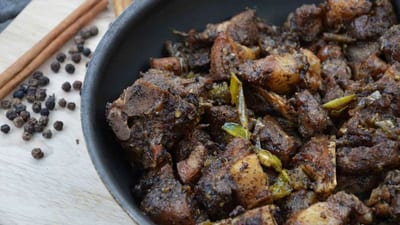
Chicken curry, known in Sinhala as kukul mas curry (කුකුල් මස් ව්යංජනය), is one of the most frequently cooked meat curries in Sri Lankan homes. It is the kind of dish that appears at a Sunday lunch of rice and curry, at a family celebration, or with string hoppers or roti for dinner. What sets the Sri Lankan version apart is the roasted curry powder, which gives the gravy a darker colour and a toasty depth, together with curry leaves, a piece of pandan leaf and whole spices fried in coconut oil.
Households cook it two broad ways: finished with coconut milk for a milder, creamier gravy, or with water only for a sharper, spicier curry. The recipe below uses coconut milk; the notes after the card explain how to make the spicier version.
How to make Sri Lankan chicken curry
- Serves 4
- Prep: 20 minutes (+ 30 minutes marinating)
- Cook: 45 minutes
- Difficulty: Easy
For the marinade
- 1 kg chicken, bone-in, skinned and cut into curry pieces
- 2 tbsp roasted Sri Lankan curry powder
- 1 tbsp chilli powder (use less for a milder curry)
- 1/2 tsp ground turmeric
- 1 tsp crushed black pepper
- 1 tsp salt
- 1 tbsp vinegar, or 2 pieces goraka (Garcinia cambogia) soaked in a little hot water
For the curry
- 3 tbsp coconut oil or vegetable oil
- 1 sprig curry leaves
- 5 cm piece pandan (rampe) leaf
- 5 cm piece cinnamon stick
- 4 green cardamom pods, lightly crushed
- 4 cloves
- 1 large red onion, thinly sliced
- 4 garlic cloves, finely chopped
- 2.5 cm piece ginger, finely chopped
- 2 green chillies, slit lengthways
- 1 medium tomato, chopped
- 250 ml water
- 200 ml thick coconut milk
- 1 tsp roasted Sri Lankan curry powder, to finish
Method
- Marinate. Mix the chicken with the curry powder, chilli powder, turmeric, pepper, salt and vinegar (or the goraka with its soaking water). Cover and leave for at least 30 minutes, or overnight in the fridge.
- Temper the spices. Heat the oil in a heavy pan or clay pot over a medium heat. Add the curry leaves, pandan, cinnamon, cardamom and cloves and fry for about 1 minute, until they sizzle and smell fragrant.
- Soften the onion. Add the onion, garlic, ginger and green chillies. Cook for 5 to 7 minutes, stirring, until the onion is soft and just turning golden at the edges.
- Add the tomato. Stir in the tomato and cook for about 3 minutes, until it breaks down into the onions.
- Seal the chicken. Add the chicken with all its marinade. Raise the heat to medium-high and stir for 5 to 8 minutes, until the pieces are coated and have lost their raw colour.
- Simmer. Pour in the water, bring to the boil, then cover and simmer on a low heat for 25 minutes, stirring now and then, until the chicken is almost tender.
- Add the coconut milk. Stir in the coconut milk and simmer uncovered on a low heat for 8 to 10 minutes, without boiling hard, until the gravy thickens and the chicken is cooked through.
- Finish. Sprinkle over the finishing curry powder, taste for salt, then take the pan off the heat and rest for 5 minutes before serving.
Why is roasted curry powder used?
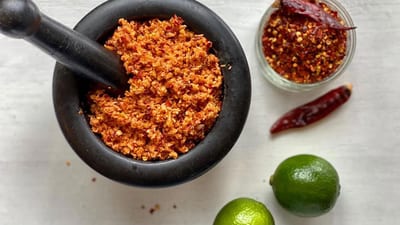
Sri Lankan kitchens keep two kinds of curry powder. The unroasted blend is used mostly for vegetable curries, while the roasted one, in which coriander, cumin, fennel, Ceylon black pepper, cloves and other whole spices are dry-roasted until dark before grinding, is the standard choice for meat and fish. Roasting gives the powder a deeper, toasted flavour and turns the gravy a rich brown. A small sprinkle at the end, as in the card above, refreshes the aroma that long simmering softens. Some cooks also use roasted chilli powder for extra depth.
Should you add coconut milk?
Both styles are traditional. Cooked with coconut milk from the coconut palm, the curry is rounder and gentler, which suits children and anyone new to Sri Lankan food. For the spicier style, leave out the coconut milk, use 350 ml water in step 6 and simmer uncovered at the end until the gravy clings to the meat. Either way, add the coconut milk late and keep the heat low so that it does not split.
Which aromatics make it taste Sri Lankan?
- Curry leaves. Fried at the start, curry leaves give a savoury, slightly citrus note.
- Pandan. A short piece of rampe leaf adds a grassy, sweet fragrance. Some cooks also add a bruised stalk of lemongrass.
- Whole spices. Ceylon cinnamon, cardamom and cloves fried in the oil perfume the whole pot.
- Sourness. Vinegar, tamarind or goraka balances the richness. Goraka is a dried fruit rind widely used in southern Sri Lankan cooking, especially with fish.
What do you serve it with?
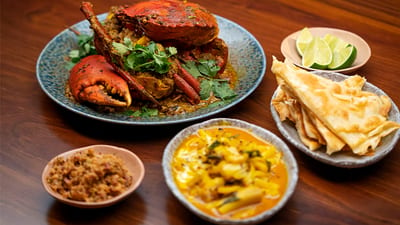
The classic plate is white or red rice with chicken curry, dhal curry, a vegetable curry and a coconut sambol. It is equally good with string hoppers, hoppers, coconut roti or plain bread, and leftover curry is often chopped into kottu roti. A spoonful of seeni sambol alongside is a popular addition.
How do you store and reheat it?
Cool the curry quickly, cover it and refrigerate for up to 2 days; like most curries it tastes fuller the next day. It also freezes well for up to 2 months in an airtight container. Thaw in the fridge overnight and reheat gently until piping hot, adding a splash of water if the gravy has thickened.
Tips for the best result
- Use bone-in pieces. Thighs and drumsticks stay juicy through the long simmer and give a fuller gravy than breast meat.
- Do not rush the onions. Soft, lightly golden onions make a rounder, sweeter gravy.
- Control the heat with the chilli powder and green chillies. The quantities above give a medium curry by Sri Lankan standards.
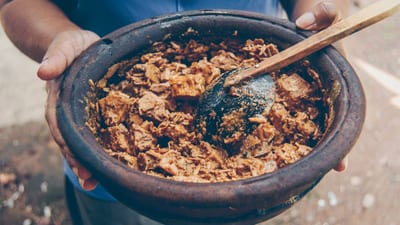
- A clay pot holds heat evenly and is still used in many homes, but any heavy-based pan works.
Related reading
2 pages on closely related subjects.