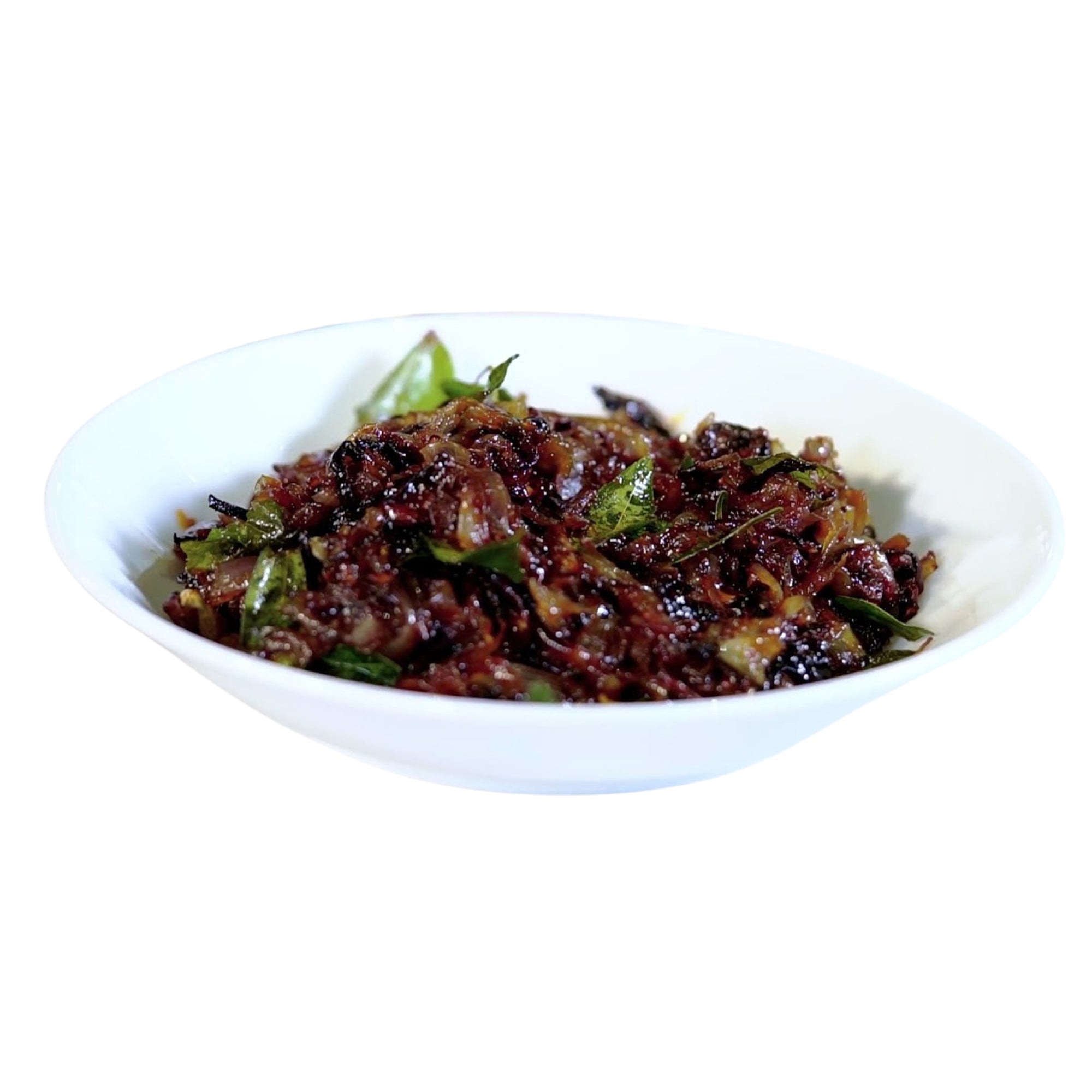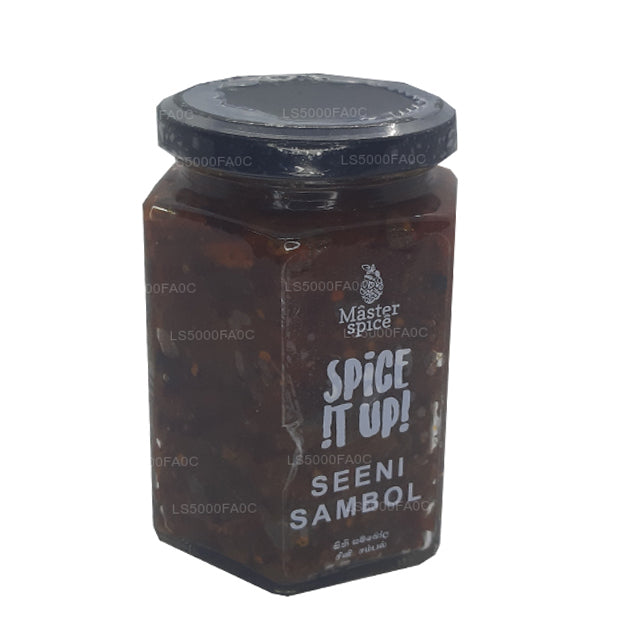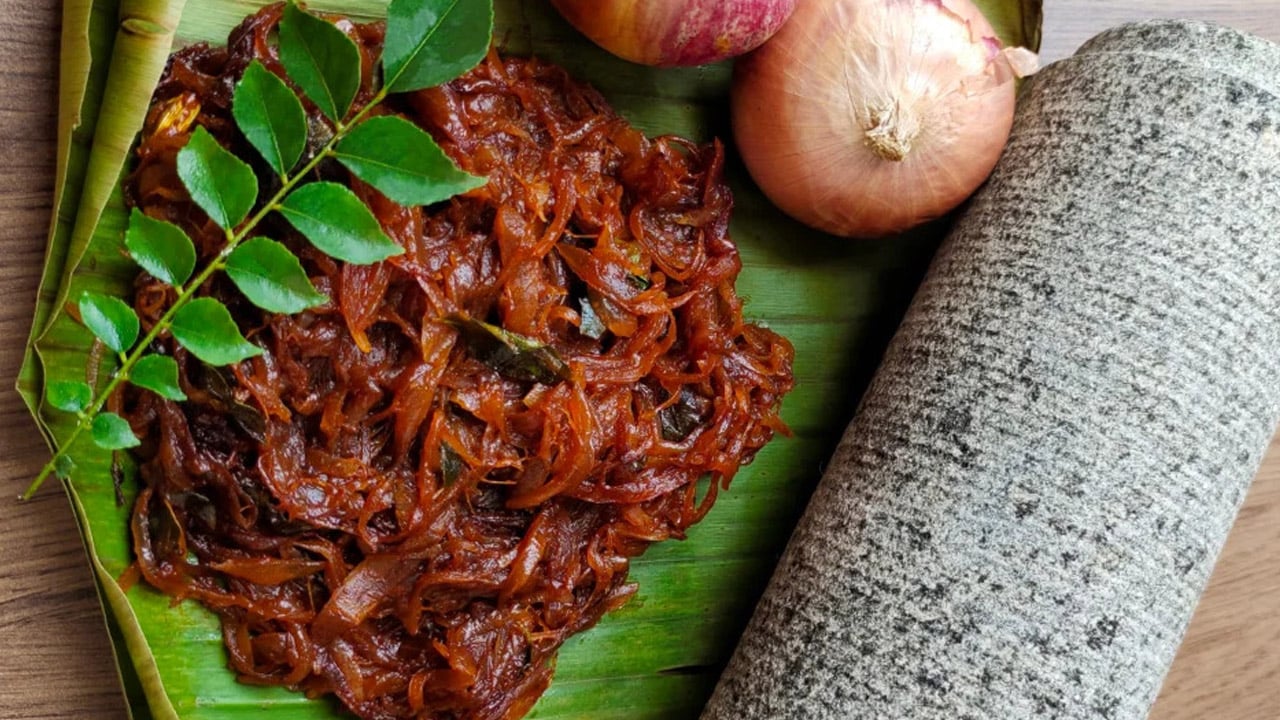


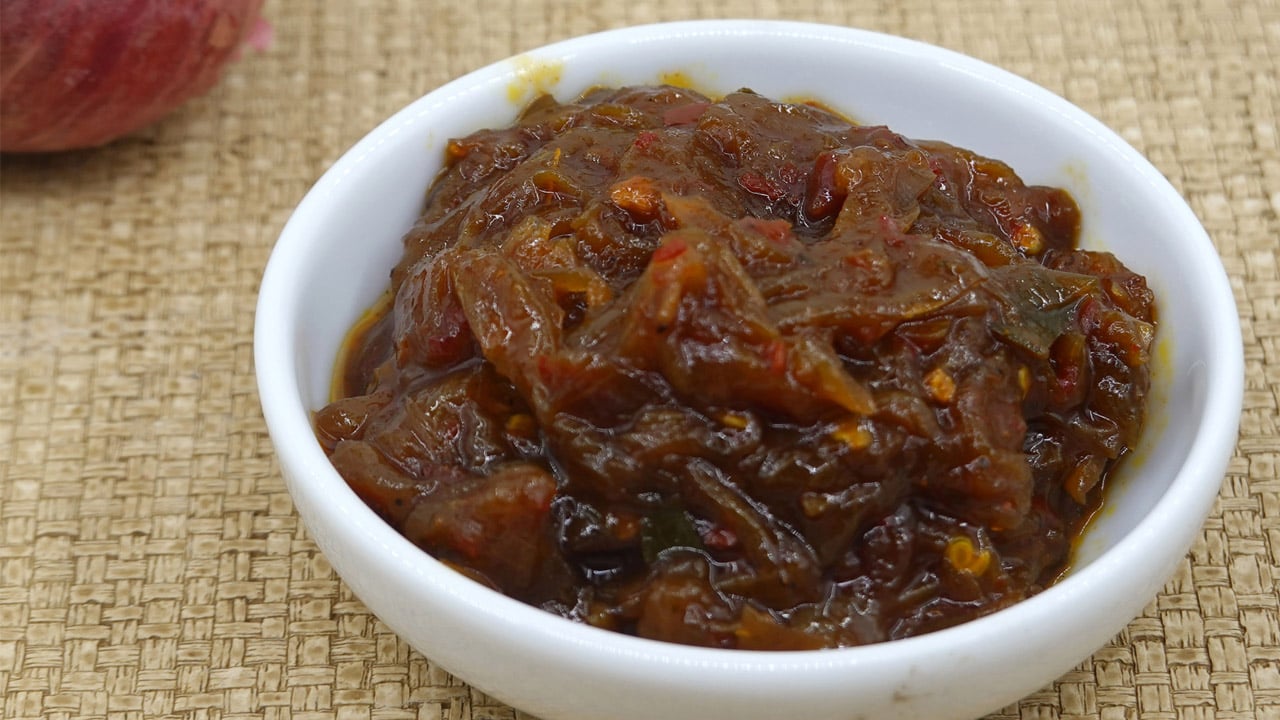

Seeni sambol (සීනි සම්බෝල) is Sri Lanka's sweet, sour and spicy onion relish. Sliced onions are cooked slowly in oil with chilli, whole spices, curry leaves and pandan until they collapse into a dark, jammy tangle, then balanced with tamarind and a little sugar. Seeni means sugar in Sinhala and Tamil, and the sweetness is what sets it apart from the sharp, raw sambols such as lunu miris and pol sambol.
It is a favourite with hoppers and string hoppers at breakfast, a spread for bread, and a standard part of lamprais. Sri Lankan bakeries also sell seeni banis, soft buns filled with it. Many cooks add a little Maldive fish for a savoury note; others leave it out, which makes the relish vegan.
How to make seeni sambol
- Serves 8 (about 2 cups)
- Prep: 15 minutes
- Cook: 45 minutes
- Difficulty: Easy
Ingredients
- 1 kg red onions, halved and thinly sliced
- 20 g seedless tamarind, soaked in 60 ml warm water
- 60 ml (4 tbsp) coconut oil or vegetable oil
- 5 cm piece cinnamon stick
- 4 green cardamom pods, lightly crushed
- 4 cloves
- 1 sprig curry leaves
- 5 cm piece pandan (rampe) leaf
- 1 tbsp dried red chilli flakes
- 1 tsp chilli powder
- 1 tbsp Maldive fish (umbalakada) chips, pounded (optional)
- 1 tsp salt
- 1 to 2 tbsp sugar
Method
- Make the tamarind pulp. Squeeze the soaked tamarind in its water, then strain it to get a thick pulp and discard the fibres.
- Temper the spices. Heat the oil in a wide, heavy pan over a medium heat. Add the cinnamon, cardamom and cloves and fry for about 30 seconds, then add the curry leaves and pandan and fry until they crackle.
- Soften the onions. Add the onions, chilli flakes, chilli powder and Maldive fish, if using. Stir well and cook over a medium heat for about 10 minutes, stirring often, until the onions wilt and release their liquid.
- Cook them down. Add the salt, lower the heat to medium-low and cook for 25 to 30 minutes, stirring every few minutes, until the liquid has evaporated and the onions are soft, deep brown and starting to catch on the pan.
- Balance sweet and sour. Stir in the tamarind pulp and 1 tbsp sugar and cook for 5 minutes more, until the relish turns glossy and jammy and the oil begins to separate.
- Taste and finish. Taste and add more sugar if it is too sour, or a little more tamarind if it is too sweet. Remove the whole spices and pandan, and cool before serving or storing.
How is seeni sambol different from other sambols?
Most Sri Lankan sambols are pounded raw and eaten the same day. Seeni sambol is cooked, which gives it a soft, spreadable texture, a sweet-sour flavour and a much longer life in the fridge. Lunu miris and katta sambol use the same dried chilli but are fiercely hot and sharp with lime; pol sambol is fresh coconut with chilli and onion. Our guide to dried red chilli sambols compares them side by side. It is also quite unlike lunu dehi, which is limes cured in salt.
What gives it its flavour?
- Slow-cooked onions. Cooking the onions until all their liquid evaporates brings out their sweetness and is also what lets the relish keep.
- Whole spices. Cinnamon, cardamom and cloves add a warm background, with curry leaves and a piece of rampe (pandan) for fragrance. Some cooks add a stalk of lemongrass.
- Tamarind and sugar. The two are adjusted against each other at the end until neither sour nor sweet dominates.
- Maldive fish. Optional, but it adds a savoury depth that many households consider essential.
How hot is it?
With the quantities above it is gently warm rather than fiery, because the sweetness softens the chilli. Use more chilli powder for a hotter relish, or halve the chilli flakes for children. Cooks who want more heat sometimes add a fresh chilli; our guide to nai miris and kochchi compares two of Sri Lanka's hottest fresh chillies.
What do you eat it with?
Seeni sambol is at its best with plain, soft starches: hoppers and egg hoppers, string hoppers, coconut roti, bread and sandwiches. It is also served beside rice and curry, with kiribath, and in the lamprais parcel alongside the rice and curries.
How do you store it?
Cool it completely and keep it in a clean, airtight glass jar in the fridge for up to a week, always serving with a dry spoon. Cooks who reduce it until it is quite dry say it keeps longer, but a week is a safe guide for a home batch. Warm it briefly, or let it come to room temperature, before serving.