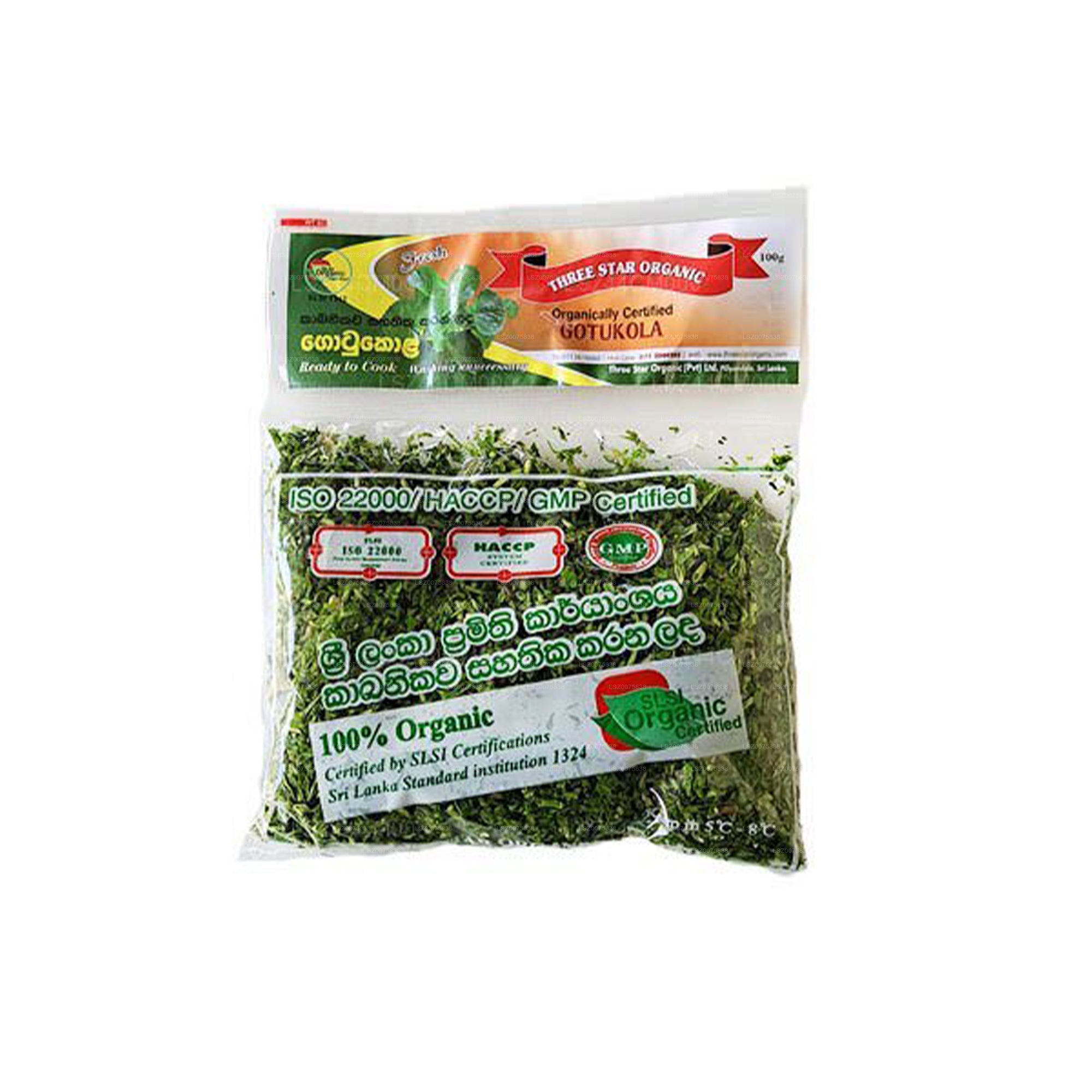
Gotu kola sambol is a fresh Sri Lankan leaf salad: finely shredded gotu kola leaves tossed with grated coconut, shallots, green chilli, lime and salt, often with a spoonful of Maldive fish. Gotu kola is the Sinhala name for Centella asiatica, a creeping plant with small, rounded, fan-shaped leaves, sold in English as Asian or Indian pennywort. In Tamil the plant is called vallaarai. It is one of the most widely eaten leafy greens in Sri Lankan cooking.
The leaves taste mildly herbal with a slight bitterness, which the sweet coconut and sharp lime balance. The sambol is served as a side dish with rice and curry, adding a green, crunchy contrast to the curries on the plate. Nothing is cooked, and it is made just before the meal.
How to make gotu kola sambol
- Serves 4
- Prep: 15 minutes
- Cook: none
- Difficulty: Easy
Ingredients
- 80 g gotu kola (Centella asiatica, Asian pennywort) leaves with their tender stems, about 1 bunch
- 80 g (about 1 cup) freshly grated coconut
- 6 shallots or 1/2 small red onion, thinly sliced
- 1 green chilli, finely sliced
- 1/2 medium tomato, finely diced (optional)
- 1/2 tsp coarsely ground black pepper
- 1/2 tsp salt
- 1 tbsp Maldive fish (umbalakada) chips, crushed (optional)
- 1 to 2 tbsp lime juice (about half a lime)
Method
- Pick over the leaves. Discard any yellowed or spotted leaves and the tough lower stems, keeping the leaves with their soft upper stems.
- Wash and dry. Wash the gotu kola in several changes of cold water, then drain well and dry in a salad spinner or on a clean cloth; wet leaves make a soggy sambol.
- Shred finely. Bunch the leaves tightly and slice them as thinly as you can with a sharp knife, so they are cut cleanly rather than bruised.
- Season the coconut. In a bowl, rub the coconut with the shallots, green chilli, pepper, salt and Maldive fish, if using, for about 1 minute, until the coconut is evenly seasoned.
- Toss with the leaves. Add the shredded gotu kola and the tomato and mix gently with your fingertips until evenly combined.
- Dress and serve. Add 1 tbsp lime juice, toss, taste and add more lime or salt if needed. Serve straight away.
What does gotu kola taste like?
Raw gotu kola is fresh and green, slightly grassy and a little bitter, with a crisp texture when the leaves are young. On its own the bitterness is noticeable, which is why it is almost always paired with coconut, onion and lime, and a little coarsely ground black pepper adds warmth. The same leaf is used in kola kenda, a green rice porridge, and in mallung, where the shredded leaves are mixed with coconut and often lightly cooked.
How is it different from pol sambol?
The two share a base of grated coconut, onion, chilli, salt and lime. Pol sambol is mostly coconut, reddened with dried chilli and pounded together. Gotu kola sambol is mostly leaf, uses fresh green chilli, and is tossed rather than pounded, so it stays light and crunchy like a salad.
What do you serve it with?
It is a side dish for a rice and curry meal: white or red rice with dhal curry, a fish or chicken curry and a vegetable curry, with perhaps a little lunu dehi (salted lime pickle) on the side. Some people also eat it with roti, or mixed into hot rice.
Where does gotu kola grow, and what can you use instead?
The plant grows wild in wet, marshy ground, including the damp margins of paddy fields, and is also grown in home gardens. In Sri Lanka it is sold in bunches at markets and supermarkets; abroad, look for it in Asian grocers labelled pennywort or gotu kola, choosing bright leaves without dark spots. If you cannot find it, finely shredded kale or flat-leaf parsley makes a similar salad, though the flavour is different.
Can you make it ahead?
Not fully. Once the salt and lime go in, the leaves start to wilt and darken, so dress it just before serving. You can wash, dry and shred the leaves and slice the shallots and chilli an hour or two ahead and keep them covered in the fridge. Leftovers can be refrigerated and eaten within a day, though they will be softer. Without the Maldive fish, which is cured tuna, the recipe is vegan and gluten-free.
Related reading
1 pages on closely related subjects.