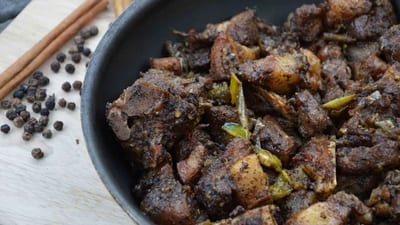
Kottu roti, also spelt koththu, is chopped flatbread stir-fried on a hot griddle with egg, vegetables, meat and a generous splash of curry gravy. The name comes from the Tamil word for "to chop", and on the street the dish is made with two heavy metal blades that cut and turn everything together on a flat iron plate, with a rapid clatter you can hear from down the road. It is sold from late afternoon into the night by roadside eateries all over Sri Lanka and is a full meal on its own.
The bread is godamba roti, a soft, thin wheat flatbread made from a well-oiled dough that is stretched and folded. At home, frozen paratha or roti canai makes a good substitute, and a large wok or frying pan and two metal spatulas do the work of the griddle and blades. The most important part is a well-spiced chicken curry with plenty of gravy, made in advance.
How to make Sri Lankan chicken kottu roti
- Serves 4
- Prep: 20 minutes (with chicken curry made ahead)
- Cook: 20 minutes, in 2 batches
- Difficulty: Moderate
Ingredients
- 450 g godamba roti or frozen paratha (about 6), cooked, cooled and cut into thin 1 cm strips
- 300 g cooked chicken from a Sri Lankan chicken curry, taken off the bone and shredded
- 250 ml chicken curry gravy
- 3 eggs
- 3 tbsp vegetable oil
- 1 medium red onion, thinly sliced
- 3 garlic cloves, finely chopped
- 2 cm piece ginger, finely chopped
- 2 green chillies, sliced
- 1 sprig curry leaves
- 1 leek (about 150 g), finely sliced
- 1 medium carrot (about 100 g), cut into thin matchsticks
- 150 g white cabbage, finely shredded
- 1/2 tsp ground black pepper
- Salt, to taste
Method
- Prepare everything first. Cut the roti, shred the chicken, slice the vegetables and warm the gravy. The cooking is fast, so have it all beside the stove. Divide the ingredients into two batches.
- Fry the aromatics. Heat half the oil in your largest wok or frying pan over a medium-high heat. Add half the onion, garlic, ginger, green chilli and curry leaves and stir-fry for 2 to 3 minutes, until the onion softens.
- Cook the vegetables. Add half the leek, carrot and cabbage with a pinch of salt and stir-fry for 3 to 4 minutes, until softened but still with some bite.
- Scramble the egg. Beat the eggs. Push the vegetables to the side, pour half the egg into the space and scramble for about 1 minute until just set, then mix into the vegetables.
- Add the chicken and gravy. Add half the chicken and about three quarters of that batch's gravy and stir for 1 to 2 minutes, until hot.
- Chop in the roti. Add half the roti and the pepper. With two metal spatulas, chop, toss and press everything together continuously for 3 to 5 minutes, until the roti is broken into small pieces, evenly coated and hot, with a few crisp edges.
- Adjust and serve. Taste for salt and add a little more gravy if it seems dry. Serve at once, then wipe the pan and repeat with the second batch. Offer any remaining gravy at the table.
Why cook it in batches?
Kottu needs high heat and room to move. A crowded home pan steams the roti instead of frying it, and the result turns soggy and clumped. Two batches in a large wok, or a heavy frying pan at least 30 cm across, keep the texture right. The gravy matters for the same reason: add it gradually, since the roti soaks it up and too much at once makes the kottu wet.
What goes into the curry gravy?
Street kottu uses the same gravy as the stall's meat curry, so it is worth making a well-seasoned Sri Lankan chicken curry with extra gravy the day before. Roasted curry powder, Ceylon black pepper, curry leaves and pandan give it the typical flavour; some cooks enrich it with coconut milk. If you only have a little gravy, loosen it with chicken stock and a teaspoon of curry powder.
Which kinds of kottu are there?
- Chicken, beef or mutton kottu. Made with the matching curry and its gravy.
- Egg kottu. No meat, with extra egg.
- Vegetable kottu. Leeks, carrot and cabbage with a vegetable curry gravy; ask for it without egg if you want it meat- and egg-free.
- Seafood kottu. Made with fish or prawn curry.
- Cheese kottu. A newer, very popular version with cheese melted through at the end.
- String hopper kottu. Chopped string hoppers replace the roti for a lighter, noodle-like dish.
When and where is kottu eaten?
Kottu is mainly an evening and late-night meal. The griddles at most roadside eateries start up towards the end of the day, and the sound of chopping is part of the evening in towns across the island. Kottu shops are easy to find in both cities if you are on a Kandy city tour or a Galle city tour. It is usually served with a small bowl of extra curry gravy on the side.
Is kottu the same as kothu parotta?
They are close relatives. Kothu parotta from Tamil Nadu is made the same way, by chopping flaky parotta with egg, meat and gravy on a griddle. Sri Lankan kottu uses godamba roti and Sri Lankan curry flavours, especially roasted curry powder. Other Sri Lankan roti, such as the thick, coconut-rich coconut roti, are not used for kottu.
Can you make it ahead?
Kottu is best eaten straight from the pan. Leftovers keep covered in the fridge for up to 2 days; reheat them in a hot pan with a spoonful of gravy or water, stirring until piping hot. The chicken curry can be made up to 2 days in advance, and the roti can be cut a few hours ahead and kept covered.