Hoppers, called appa (ආප්ප) in Sinhala and appam in Tamil, are bowl-shaped pancakes made from a fermented batter of rice flour and coconut milk. Cooked in a small, deep, rounded pan, each one has a thin, crisp, lacy rim and a thicker, soft centre. They are eaten for breakfast and, even more often, in the evening, when hopper stalls and small eating houses cook them to order.
The plain hopper is the base for several well-known versions: the egg hopper (bittara appa), with an egg cooked in the middle; the milk hopper (kiri appa), with a spoonful of thick coconut milk set in the centre; and the sweet treacle hopper (pani appa). The recipe below makes plain hoppers and shows how to turn some of them into egg hoppers.
How to make Sri Lankan hoppers
- Makes about 12 hoppers (serves 4)
- Prep: 15 minutes (+ 8 to 12 hours fermenting)
- Cook: 40 minutes, one at a time
- Difficulty: Moderate
For the batter
- 250 g fine white rice flour (about 1 2/3 cups)
- 1/2 tsp instant dried yeast
- 2 tsp sugar, divided
- 220 ml lukewarm water
- 250 ml coconut milk
- 3/4 tsp salt
To cook
- 1 tbsp coconut oil or vegetable oil, for wiping the pan
- 4 eggs, for egg hoppers (optional)
- Salt and ground black pepper, for the eggs
Method
- Make the starter paste. Mix the rice flour, yeast and 1 tsp of the sugar in a large bowl. Stir in the lukewarm water to make a thick, smooth paste. Do not add the salt yet.
- Ferment. Cover the bowl and leave it in a warm place for 8 to 12 hours, or overnight, until the paste has risen, looks bubbly and smells pleasantly sour.
- Finish the batter. Stir in the coconut milk and the remaining 1 tsp sugar to make a smooth batter about as thick as single cream. Cover and rest for 30 minutes.
- Season. Just before cooking, stir in the salt. If the batter has thickened, loosen it with a spoonful or two of water or coconut milk.
- Heat the pan. Heat a hopper pan over a medium heat and wipe the inside with a little oil on a folded paper towel.
- Swirl the batter. Pour in a small ladle of batter (about 60 ml), then at once lift the pan and rotate it so the batter runs up and coats the sides in a thin layer, with a pool left in the base.
- Cook. Cover with a lid and cook for 2 to 3 minutes, until the rim is golden and crisp and it lifts away from the pan, and the centre is set but still soft.
- Make egg hoppers. For an egg hopper, use slightly less batter, swirl, then crack an egg into the centre, season with salt and pepper, cover and cook for 3 to 4 minutes on a medium-low heat, until the white is set.
- Serve. Ease the hopper out with a thin spatula, wipe the pan with oil again and repeat. Serve each hopper as soon as it is cooked.
What kind of pan do you need?
A hopper pan (appa thachchiya) is a small, deep, round-bottomed pan about 18 to 20 cm across, with a lid. Traditional ones are cast iron, which needs wiping with oil before every hopper; non-stick versions are easier for beginners. A very small wok with a lid can stand in, although the hoppers will be shallower. Keep the heat at medium: if the pan is too hot, the batter sets before you can swirl it up the sides.
What are the main types of hoppers?
- Plain hopper (appa). The everyday version, eaten with sambols and curries.
- Egg hopper (bittara appa). An egg cooked in the bowl of the hopper, usually eaten with a sambol.
- Milk hopper (kiri appa). A spoonful of thick coconut milk is added to the centre after swirling, which gives a creamy middle.
- Treacle hopper (pani appa). A spoonful of palm treacle, such as kithul treacle, is added to the centre for a sweet hopper.
What do you serve with hoppers?
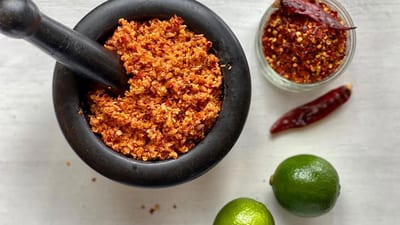
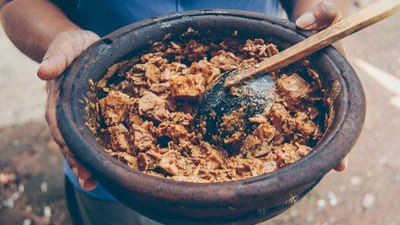
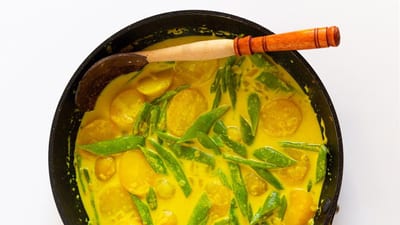
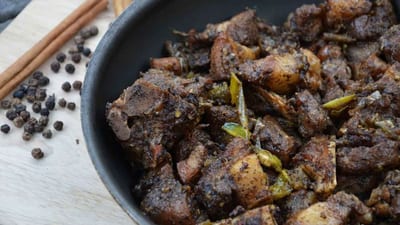
A plain hopper is mild, so the side dishes carry the flavour. The classic partners are lunu miris, the fiery red onion and chilli relish, and seeni sambol, a sweet and spicy onion relish. Pol sambol, dhal curry, chicken curry or a fish curry are common too. Hoppers are eaten by hand: tear off a piece of the crisp rim and use it to scoop up the curry or sambol. Made with fresh coconut milk and without eggs, plain hoppers contain no animal products.
Why ferment the batter for so long?
Fermentation makes the batter light and gives hoppers their mild tang and lacy edge. Sri Lankan cooks traditionally fermented it with palm toddy; at home, a pinch of yeast does the same job. Keep the salt out until the end, because salt slows the yeast. In a cool kitchen the batter can take the full 12 hours or longer to rise; in a warm one, 8 hours is often enough. Batter that has fermented too far tastes sharp and makes flat hoppers, so cook it once it is bubbly and smells gently sour.
What is the difference between hoppers and string hoppers?
They share a name but not a method. Hoppers are pan-cooked from a poured, fermented batter. String hoppers (indiappa) are made from an unfermented rice-flour dough pressed into fine strands and steamed in small nests. Both are eaten for breakfast and dinner with sambols and curries.
Can you make hoppers ahead?
Hoppers are best eaten straight from the pan, while the rim is still crisp; they soften as they cool. The part you can plan is the fermentation: mix the paste the evening before for breakfast hoppers, or in the morning for dinner. Once the coconut milk is in, cook the batter within a few hours, because it keeps souring as it stands. If you are cooking for a crowd, two pans on the stove speed things up.