Arugam Bay sits on Sri Lanka's south-eastern shore, 314 km from Colombo and roughly 2.5 km south of the small market town of Pottuvil in the Ampara District. Long a word-of-mouth secret among travelling surfers, it has matured into one of Asia's most talked-about coastal destinations without entirely losing the unhurried pace that made it famous. The bay itself is a broad, south-facing crescent; the surrounding landscape is flat dry-zone scrub punctuated by lagoons, paddy fields, and the edge of Kumana National Park — a combination that makes it as rewarding for wildlife watchers and slow travellers as it is for people chasing waves.
History and Character
Pottuvil and Arugam Bay have been inhabited for centuries — the Pottuvil Lagoon area contains the partly excavated Mudu Maha Vihara, a Buddhist temple complex dating to at least the 7th century CE, and ancient irrigation tanks dot the inland plain. The modern settlement grew as a fishing village, and surfing only arrived seriously in the late 1970s when itinerant travellers on the overland route from Europe began reporting the point break. The 2004 Indian Ocean tsunami was catastrophic for the area, destroying most structures close to the waterline, but reconstruction brought a generation of guesthouses and cafés that gradually created the low-key resort strip visible today. The civil conflict that closed the east coast for much of the 1990s and early 2000s has long since ended; the region has been freely accessible since 2009 and road infrastructure has improved markedly since then.
Demographically, the Ampara District is mixed Tamil, Muslim, and Sinhalese. Pottuvil town is predominantly Muslim; the bay itself has a more transient, cosmopolitan feel during the surf season. The contrast between the fishing-village fabric of daily life and the international surf culture is part of what gives Arugam Bay its particular texture.
Orientation and Areas
"Arugam Bay" is used loosely to describe a string of places spread over roughly 10 km of coast. Understanding the geography prevents confusion when choosing where to stay.
- Main Bay / The Strip: The central kilometre of road running parallel to the beach. This is where the majority of guesthouses, restaurants, surf-hire shops, and cafés are concentrated. Busy in high season, but still quieter than comparable beach strips in Thailand or Bali.
- Pottuvil Town (2.5 km north): The functional hub — bus stand, pharmacy, banks with ATMs, hardware shops, the main mosque. Most travellers pass through rather than stay here, but it is where everyday life actually happens.
- Whisky Point (approx. 3 km north of the main bay): A quieter beach with its own surf break and a handful of guesthouses. Popular with intermediate surfers and travellers seeking more space.
- Peanut Farm / Elephant Rock (4–6 km south): More remote accommodation, closer to Kumana. A longer right-hand point break draws experienced surfers; the relative isolation suits those who want to escape the main strip entirely.
- Crocodile Rock and Okanda (further south toward Kumana): Accessed by jeep track; more expedition than day trip, but possible with the right vehicle.
Key Sights and Experiences
The Main Point Break
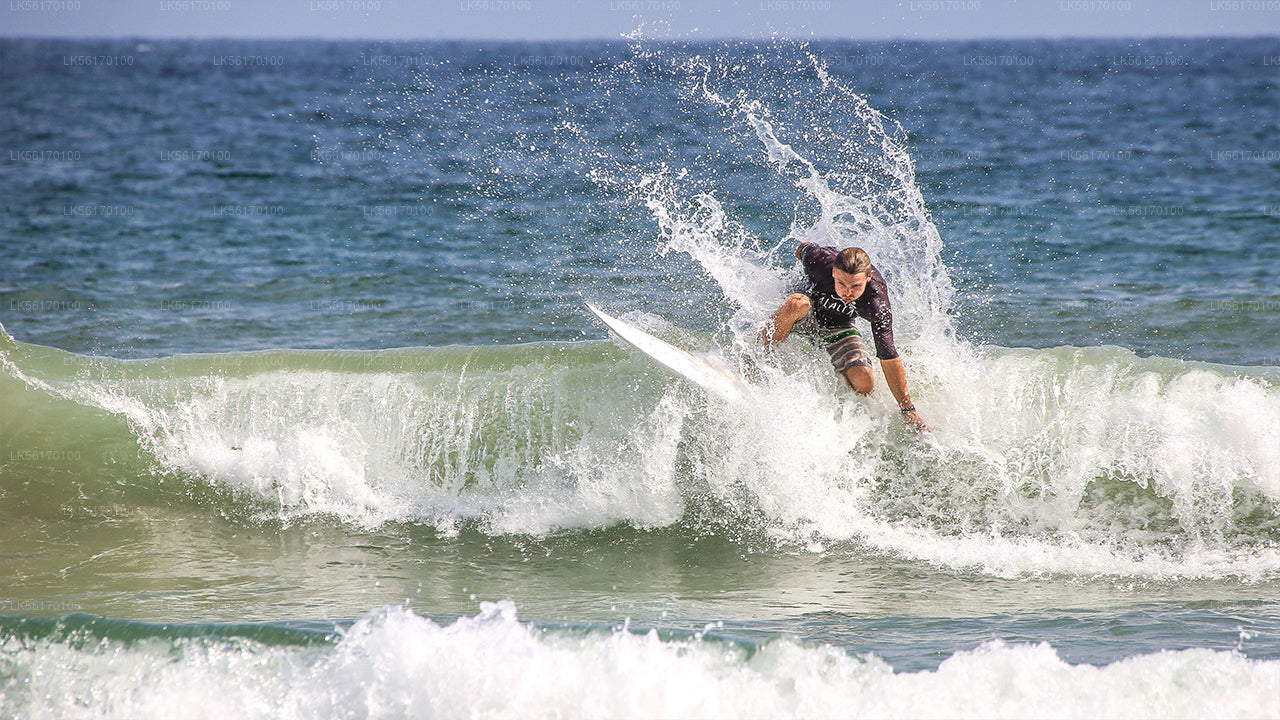
Arugam Bay's signature wave is a right-hand point break that can run for 200 metres or more when conditions align. Consistent and forgiving in the lower range of swell, it works for beginners in the 2–4 ft range but holds shape through larger swells that suit experienced surfers. The peak is in front of the southern end of the main strip. Boards can be hired for roughly USD 5–8 per day; lessons typically run USD 15–25 for two hours. The break becomes crowded during peak season (August–September); early mornings before 7 am offer the best combination of uncrowded conditions and offshore winds.
Pottuvil Lagoon and Pottuvil Point
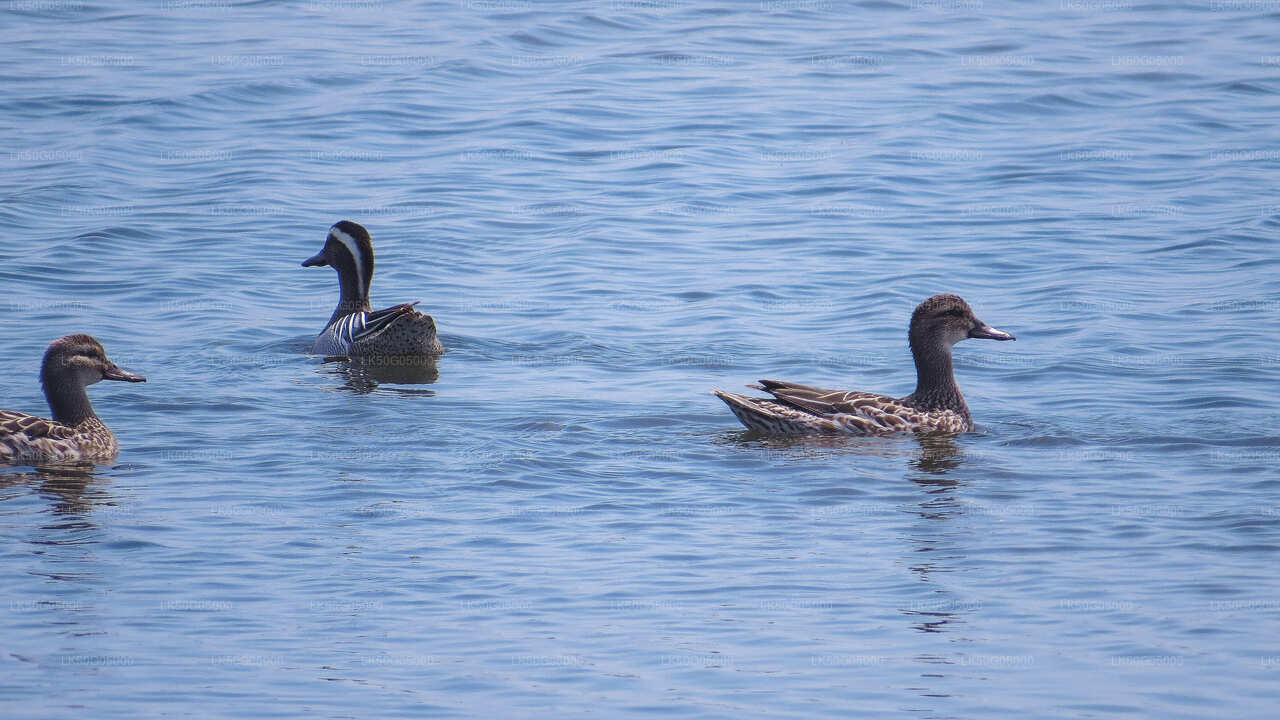
The lagoon separating the bay from the hinterland is one of the more undervisited assets of the area. Kayak tours lasting 2–3 hours pass through mangrove channels with reliable sightings of monitor lizards, crocodiles, and a wide range of wading birds. Sunrise kayak trips (departing around 5:30 am) are particularly rewarding. Pottuvil Point itself is a further surf break, accessible by tuk-tuk.
Mudu Maha Vihara
Located near the lagoon shore, this ancient Buddhist temple with its brick dagoba and reclining Buddha image is actively used for worship. Entry is free; dress modestly and remove footwear. It is visited by a fraction of the people who come to the bay, which makes it a worthwhile half-hour detour for anyone with an interest in Sri Lanka's archaeological heritage.
Kumana National Park
The northern section of Yala's block VI, Kumana covers approximately 356 sq km and is best known for its bird sanctuary — a flooded mangrove basin that hosts tens of thousands of nesting waterbirds between April and July. Leopard, elephant, and sloth bear are also present. The park entrance is roughly 35 km south of Arugam Bay via a rough track; a 4WD jeep is essential. Full-day safaris depart from the main bay for around USD 60–90 per vehicle (holding four passengers). Booking a day ahead is advisable in peak season. Kumana is less visited than Udawalawe National Park and offers a more secluded wildlife experience as a result.
Elephant Rock and Inland Exploration
The rocky outcrop south of the bay gives its name to both a surf break and a viewpoint with broad coastal views. The flat dry-zone interior holds ancient tank reservoirs, remote temples, and villages rarely seen by visitors; hiring a tuk-tuk driver who knows the back roads for a half-day is a good way to spend an afternoon away from the beach.
Food and Drink
The main strip has evolved a reliable range of options across a dozen or so small restaurants and cafés. Sri Lankan rice and curry — fish or dhal-based — remains the best value and is available at local-facing "hotels" (short-eat diners) in Pottuvil town for LKR 300–600 per plate. On the strip itself, expect LKR 800–2,000 for a full meal at the mid-range places catering to international visitors.
- Kottu and hoppers: Available from evening stalls and small local restaurants; egg hoppers with coconut sambol and dhal for breakfast is a reliable and cheap start to the day.
- Seafood: Freshly caught tuna, kingfish, and prawn feature prominently; grilled fish with garlic butter has become a staple on the tourist menus. Quality is generally high given the proximity to active fishing boats.
- International options: Wood-fired pizza, smoothie bowls, falafel, and pasta are all available, reflecting the international surf crowd. Quality varies; the Sri Lankan dishes almost always represent better value.
- Alcohol: The Ampara District has licensing restrictions that change periodically. Beer is available in most guesthouses and in licensed restaurants on the main strip but is not sold openly in Pottuvil town. Stock up if you are heading to remote accommodation south of the bay.
Where to Stay
Arugam Bay has no large resort hotels; accommodation is concentrated in three categories across the areas described above.
- Budget guesthouses and surf camps (main strip): Basic rooms or cabanas, often with fans rather than air conditioning, shared or private bathrooms. LKR 2,500–5,000 per night. Suitable for surfers prioritising proximity to the break and social atmosphere.
- Mid-range boutique guesthouses (main strip and Whisky Point): Air-conditioned rooms, small pools in some properties, better breakfasts. LKR 5,000–12,000 per night. This tier has expanded significantly since 2018.
- Eco-lodges and remote stays (Peanut Farm / Elephant Rock area): Cabanas or tented accommodation in quiet, wildlife-adjacent settings. Often better-designed and more expensive despite the remoteness. USD 40–100 per night. A tuk-tuk or vehicle is needed for access to the main beach.
Booking ahead is strongly advisable from July to October; in the low season (November to April), walk-in rates drop considerably and many properties close entirely.
Getting There
- By bus from Colombo: Direct intercity buses run from the Bastian Mawatha bus stand in Colombo to Pottuvil, taking 8–10 hours. Air-conditioned express services run on selected days; standard services run daily. Fare approximately LKR 600–1,200. Travellers from the hill country often route via Badulla.
- By train then bus: The most scenic option is the train to Ella or Badulla, then a bus or shared taxi to Pottuvil (2.5–3 hours from Badulla). This allows a logical journey combining hill-country and east-coast stages.
- By private vehicle or taxi: Around 6–7 hours driving from Colombo; 3 hours from Trincomalee. The A4 and A25 roads are in reasonable condition. Note that fuel stations thin out considerably east of Monaragala.
- From the south coast: Travellers coming from Mirissa or Unawatuna via Hambantota and Tissamaharama can reach Arugam Bay in around 3–4 hours by road — a natural route for those doing a coastal loop.
Getting Around
The main strip is walkable in under 15 minutes. Tuk-tuks cover trips to Pottuvil (LKR 150–250), Whisky Point (LKR 300–400), and the southern breaks (LKR 500–800). Agree a price before setting off. Bicycles and scooters are available for hire on the strip (scooters LKR 1,500–2,500 per day); a scooter is the most practical tool for exploring north and south independently. Jeep hire for Kumana safaris is arranged through guesthouses or independently at the park entrance.
Best Time to Visit
| Month | Surf | Weather | Crowds | Notes |
|---|---|---|---|---|
| May | Building | Hot, occasional rain | Low | Season opening; good value |
| Jun | Good | Hot, dry | Medium | Reliable waves begin |
| Jul | Very good | Hot, dry | High | School holidays; book ahead |
| Aug | Excellent | Hot, dry | Peak | Prime surf month; most crowded |
| Sep | Excellent | Hot, dry | High | Second-best month; slightly quieter |
| Oct | Declining | Changeable | Medium | Season winding down |
| Nov–Apr | Flat / blown out | North-east monsoon | Very low | Most guesthouses closed; not recommended |
The surf season runs May to October, driven by the south-west monsoon generating swells from the Indian Ocean. August and September see the most consistent, cleanest waves but also the highest prices and most competition for rooms. May and June offer a quieter alternative with shorter, less reliable surf but far fewer people. The north-east monsoon brings rain and rough seas from November through April; visiting outside the season is possible but expect limited services and a deserted feel.
Practical Information
Money
ATMs are available in Pottuvil at branches of the major Sri Lankan banks, but they run out of cash during peak season. Withdraw enough for several days when you arrive. Credit cards are accepted only at a handful of the better guesthouses. Carry LKR for tuk-tuks, local food, and small shops.
Connectivity
Mobile data coverage (Dialog and Mobitel 4G) is adequate on the main strip and in Pottuvil. Signal weakens in the areas south of Peanut Farm. Most guesthouses offer wi-fi, but speeds vary. Download offline maps before arrival.
Safety
Arugam Bay is generally safe and petty crime is low. Rip currents are a genuine hazard; swim only in the patrolled section near the main beach and ask local surfers about conditions before entering the water at unfamiliar breaks. Crocodiles are present in the lagoon and in waterways south of the bay — do not wade in lagoon edges after dark. Road quality deteriorates on tracks toward Kumana; travel with a reliable vehicle and water.
Etiquette
Pottuvil is a Muslim-majority town; dress modestly when visiting — covering shoulders and knees is appropriate. Friday prayer times affect shop openings in the town. At Mudu Maha Vihara, remove shoes and avoid turning your back to the Buddha images for photographs.
Health
Mosquitoes are active at dusk and dawn; dengue has been recorded in the district. Use repellent and consider a mosquito net if your accommodation is in a basic bungalow with open-air gaps. Drinking tap water is not advisable; bottled water is widely available.
Suggested Itineraries
One Day
Arrive by mid-morning. Morning surf session or beach walk at the main break. Late morning kayak tour of Pottuvil Lagoon. Lunch at a local diner in Pottuvil town. Afternoon: visit Mudu Maha Vihara, then return for a second surf session or hire a bike to ride to Whisky Point. Watch the sunset from the northern end of the main beach.
Two Days
Day one as above. Day two: pre-dawn departure for a Kumana National Park safari (returning by midday), lunch on the strip, afternoon in the water, evening meal with fresh grilled fish.
Three Days
Add a half-day inland exploration by tuk-tuk through the tank country and paddy villages west of Pottuvil. Consider an evening boat trip on the lagoon to watch birds returning to roost at sunset. Three days gives enough time to surf multiple breaks at different states of tide and wind without feeling rushed.
Day Trips and Onward Travel
Arugam Bay fits naturally into two broader Sri Lanka circuits. On the east-coast route, travellers move north to Trincomalee for its deep harbour beaches and temples, or south through the dry-zone parks. On the cross-island route, the hill-country towns of Ella and Nuwara Eliya are accessible via Badulla and make logical preceding or following stops. Those following the Cultural Triangle combine the east coast with Polonnaruwa — Sri Lanka's medieval capital — reachable in around 4 hours via Batticaloa. The south coast resorts at Mirissa and Galle are a full day's drive through Tissamaharama and Hambantota, making a natural opposite bookend to an east-coast stay.