Unawatuna sits on Sri Lanka's southern coast roughly 140 km from Colombo, tucked into a sheltered bay just a few kilometres from the historic port city of Galle. Its crescent of sand, flanked by rocky headlands and backed by palm groves, has made it one of the country's best-known beach destinations — yet it retains a pace that feels more village than resort strip. Whether you are after calm-water swimming, wreck diving, coastal hikes or simply a base from which to explore the south, Unawatuna delivers without fuss.
How do I get to Unawatuna from Colombo?
The most straightforward route is the A2 coastal highway, which connects Colombo to Galle and continues past Unawatuna. By private car or taxi the drive takes roughly two and a half to three hours, depending on traffic around Colombo and Hikkaduwa. The southern railway line — one of the most scenic train journeys in Sri Lanka — also serves the area, with the nearest station at Galle (approximately 4 km away) or the smaller halt at Unawatuna itself. Trains from Colombo Fort run several times daily; the ride to Galle takes around two to three hours on an intercity express. From Galle you can reach Unawatuna by tuk-tuk in under ten minutes.
What is Unawatuna beach like?
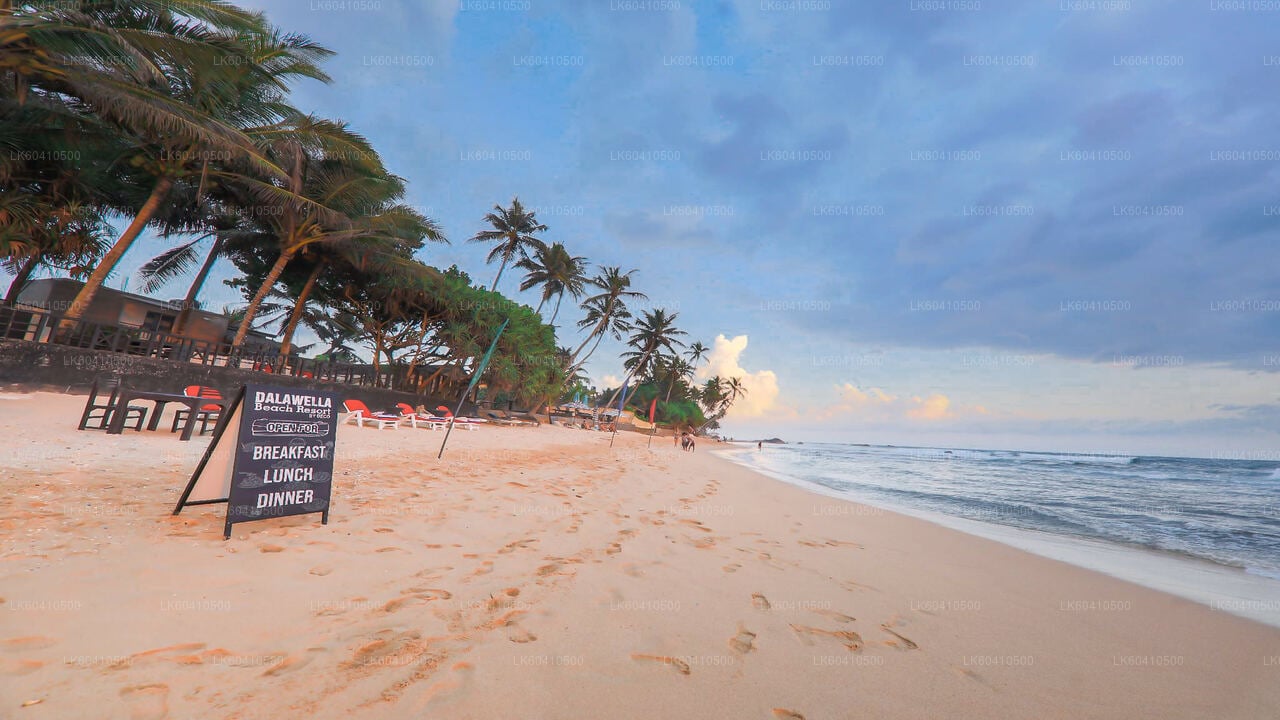
The beach curves for just under a kilometre between two rocky headlands, forming a natural bay that keeps the surf relatively gentle — a quality that makes it suitable for swimmers of most confidence levels during the right season. The northern headland is crowned by a small Buddhist stupa, a detail that distinguishes the bay from nearly every other beach in Sri Lanka and gives the skyline a quietly distinctive character. The shoreline is lined with guesthouses, restaurants and dive shops rather than large hotel towers, so the overall scale stays human.
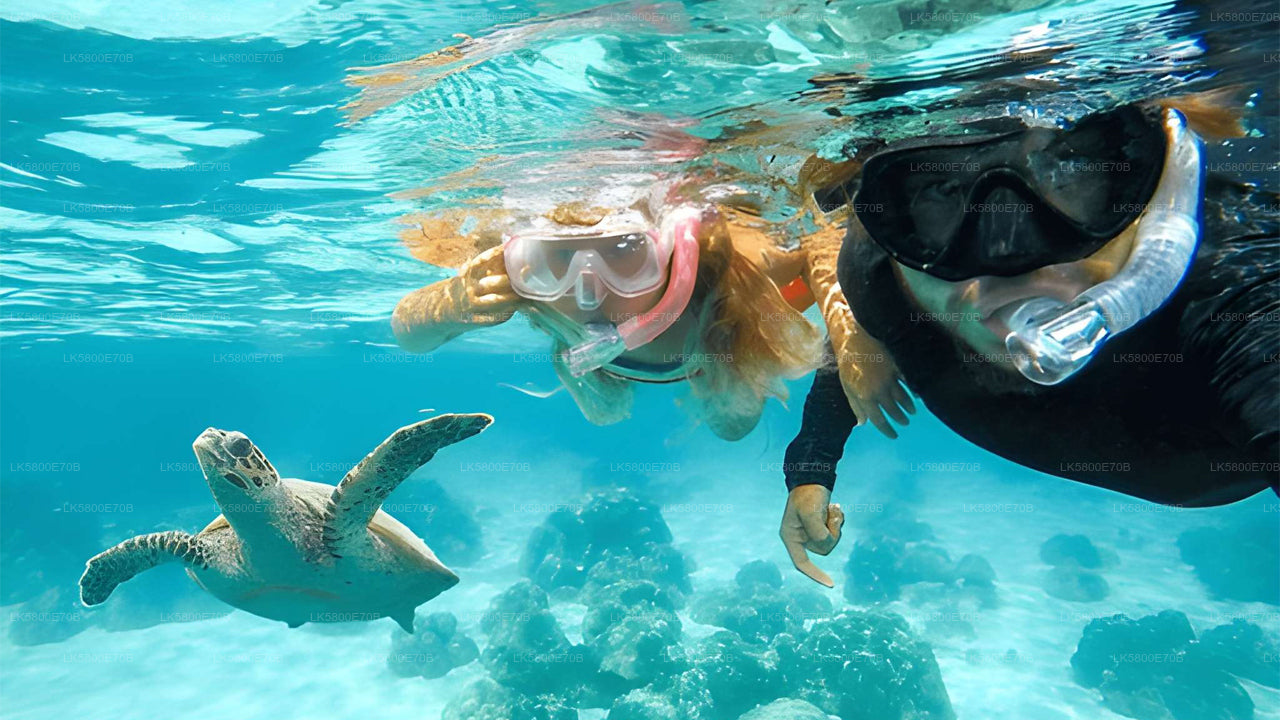
The sea floor shelves gradually close to shore, and patches of reef extend from both headlands. Colourful parrotfish, surgeonfish and sea turtles are common sightings even for casual snorkellers. Koggala Sea Turtle Conservation Project, a short drive east along the coast, provides context on the nesting turtles that visit these southern beaches.
When is the best time to visit Unawatuna?
The south-west coast, including Unawatuna, enjoys its calmest and sunniest conditions between November and April, when the north-east monsoon keeps the island's western shores sheltered. Sea visibility for diving and snorkelling is typically at its best from December through March. The south-west monsoon arrives around May and can bring rough surf and overcast skies through to September or October, though the beach remains open and some visitors appreciate the quieter atmosphere and lower accommodation rates during that period. If water sports are a priority, plan for the dry season.
What water sports can I do at Unawatuna?
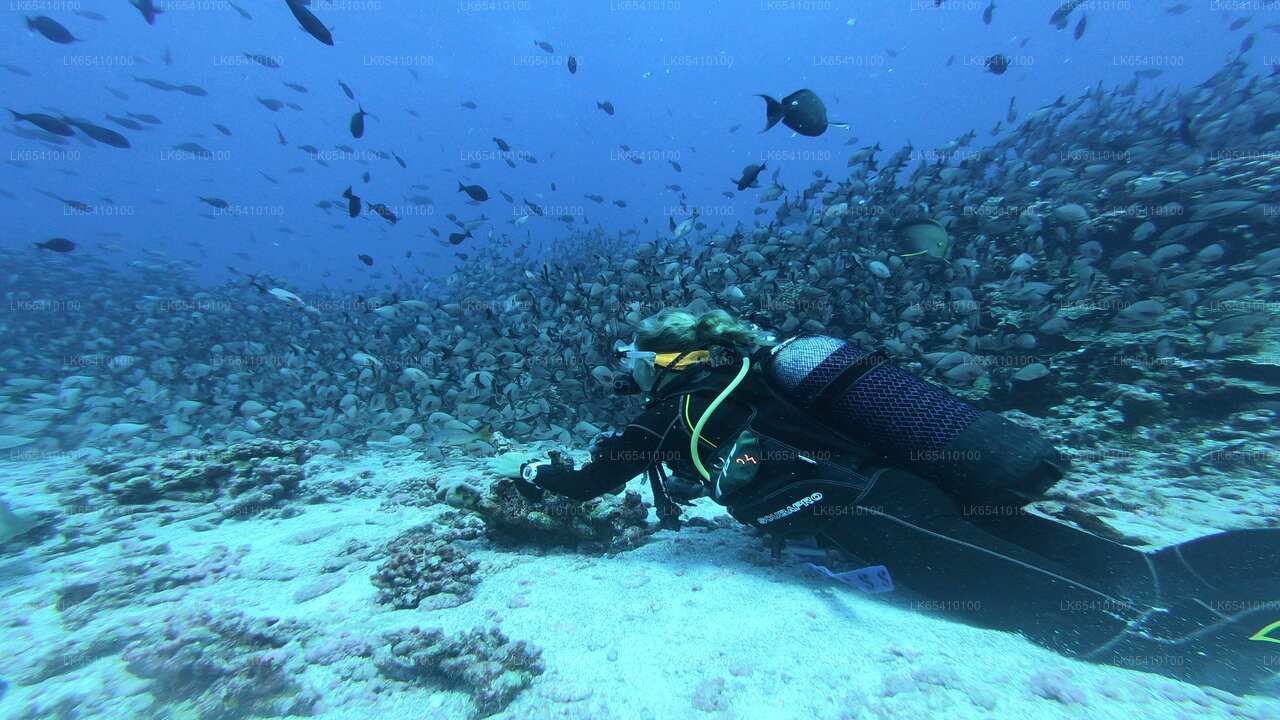
Scuba diving is the most popular activity, supported by several dive centres operating along the beach. Two wreck dives are particular draws: the Lord Nelson, a cargo vessel resting at manageable depth, and the Rangoon, a 33-metre-long wreck that provides a more substantial exploration. Reef dives around the headlands suit beginners and certified divers alike.
Snorkelling can be done independently from the beach or as a guided trip with equipment hire from local operators. Sea turtle encounters are common at specific reef sites, and guided snorkelling excursions to these spots are available. Surfing exists at Unawatuna but is less consistent than at nearby Hikkaduwa; experienced surfers generally prefer the breaks a few kilometres up the coast. Kayaking and glass-bottom boat rides are also offered by beach vendors.
- Scuba diving — wreck and reef dives for all certification levels
- Snorkelling — guided turtle-spotting trips and independent reef exploration
- Kayaking — available from beach operators seasonally
- Glass-bottom boat tours — a low-effort way to see the reef life below
- Baby turtle release — a conservation-led activity tied to local hatchery programmes
What can I do near Unawatuna beyond the beach?
Galle Fort, a UNESCO World Heritage Site and one of the best-preserved Dutch colonial fortifications in Asia, is a natural half-day outing. The fort's ramparts, cobbled lanes and independent boutiques make for easy, absorbing wandering. Lakpura's Galle City Tour covers the main points of interest with an informed local guide.
The Jungle Beach (Rumassala) sits on the far side of the northern headland and can be reached on foot via a short coastal path through forested land — a peaceful contrast to the main bay. Local legend associates the Rumassala hill with the Ramayana epic, and the area's dense vegetation is said to contain a variety of medicinal plants.
Further afield, the Sinharaja Forest Reserve — Sri Lanka's last viable tract of primary lowland rainforest and a UNESCO World Heritage Site — lies roughly 60 km inland and makes a rewarding day trip for birdwatchers and nature lovers. The Madu River Safari on the Madu Ganga estuary north of Unawatuna is another popular excursion, passing through mangrove islands and offering close-up views of monitor lizards, water birds and small fishing communities.
Is Unawatuna good for hiking?
The hills and coastal paths around Unawatuna reward walkers who venture beyond the beach. The Rumassala headland trail is the most accessible route, taking around 30 to 45 minutes at a gentle pace with views back over the bay. More structured hiking excursions into the surrounding countryside — taking in tea smallholdings, spice gardens and quiet villages — are available as guided half-day outings. These are particularly good for visitors who want to understand the agricultural landscape of Sri Lanka's Southern Province rather than simply moving between beach towns.
Where should I stay in Unawatuna?
Accommodation in Unawatuna skews toward small boutique hotels, beach resorts and family-run guesthouses rather than large international chains. Options range from simple rooms a short walk from the sand to well-designed boutique properties with pools and sea views. The beach road and the lanes running parallel to it are the most convenient locations, putting most restaurants, dive shops and the beach itself within easy walking distance.
Guests seeking a quieter setting sometimes prefer properties on the Rumassala hillside, which offer elevated views over the bay with a short tuk-tuk ride to the beach. Prices vary significantly between the high season (December to March) and the shoulder or low seasons, so booking in advance is advisable for the peak Christmas and New Year period.
What should I eat in Unawatuna?
The restaurant scene is diverse by Sri Lankan beach-town standards. Fresh seafood — grilled or prepared in Sri Lankan-style curries — is the local staple, and most beach restaurants update their catch board daily. Rice and curry lunches at smaller local eateries offer good value and genuine flavour. International options are plentiful enough that visitors not yet adventurous with Sri Lankan spicing will find comfortable alternatives. The beach road comes alive in the evening, with restaurants setting tables close to the sand.