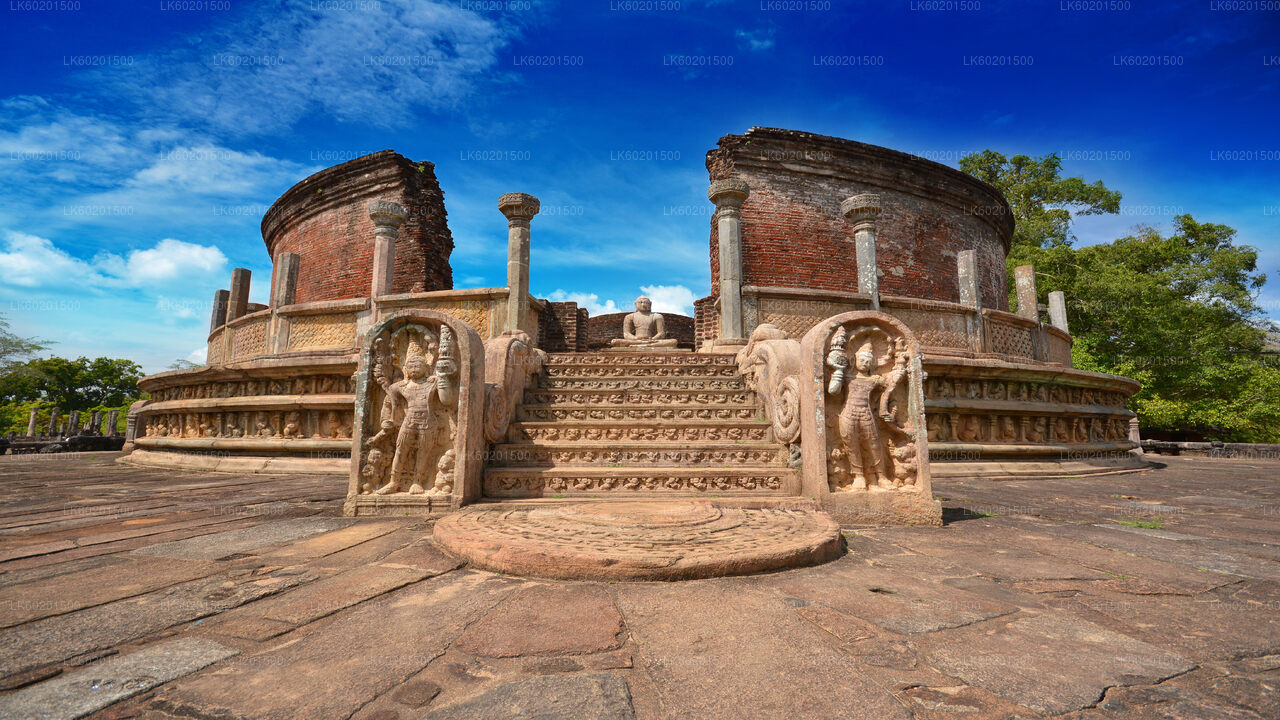
Trincomalee sits on a dramatic peninsula on Sri Lanka's northeastern coast, commanding one of the deepest and most sheltered natural harbours in the world. It is a city of layered histories — Hindu pilgrimage site, colonial prize, wartime naval base — and of exceptional natural assets: warm-water coral reefs, whale-shark feeding grounds, and some of the island's least-crowded beaches. Despite all of this, it remains far quieter than Galle or Kandy, which makes the timing of a visit matter more here than almost anywhere else in Sri Lanka.
Orientation & Character
The town occupies a narrow peninsula that separates Trincomalee Bay (historically Koddiyar Bay) to the south from Back Bay to the north. Fort Frederick, at the peninsula's tip, anchors the eastern end of the urban area. The main commercial streets — Inner Harbour Road and Main Street — run roughly parallel along the peninsula's spine. Immediately south of the fort headland, a string of beaches extends toward Uppuveli (about 4 km north of the town centre) and Nilaveli (another 12 km beyond that). Most travellers base themselves in this coastal corridor rather than in the town itself, using Trincomalee as a day-trip hub.
The population is ethnically mixed — Tamil, Sinhalese, and Muslim communities have coexisted here for centuries, though the civil war (which formally ended in 2009) left lasting marks on infrastructure and inter-community relations. Today the mood is calm and commerce is rebuilding steadily.
History in Brief
The site was known in ancient chronicles as Gokanna, a significant port for Indo-Aryan settlers and later for Tamil seafarers. The Koneswaram Temple, dedicated to Shiva, is believed to have been a place of worship by at least the 7th century CE, and regional tradition places its origins considerably earlier. The Portuguese arrived in 1624, demolished much of the temple complex, and used the cut stone to build Fort Fredrick. The Dutch seized the fort in 1639, the French briefly held it in 1672, and thereafter control oscillated between the Dutch and British until the latter secured permanent possession in 1795 — confirming what every maritime power already understood: this harbour is strategically invaluable.
During the Second World War, Trincomalee served as the principal Royal Navy base east of Suez after the fall of Singapore. Japanese carrier aircraft bombed the town and harbour on 9 April 1942, sinking HMS Hermes off the coast. Britain continued to operate the base after independence before handing it over to the Sri Lanka Navy in 1957. The 2004 Indian Ocean tsunami struck the coastline hard, killing hundreds and destroying low-lying neighbourhoods; the reconstruction effort reshaped much of the seafront.
Areas & Neighbourhoods
The Fort Peninsula & Town Centre
The dense urban core contains the bus and rail terminals, the fish market on Inner Harbour Road, and most of the practical services — banks, pharmacies, mobile-network shops. Fort Frederick itself is an active military installation: entry is permitted to civilians (bring your passport), and the road through it leads directly to Swami Rock and the Koneswaram Temple.
Uppuveli
About 4 km north of the town centre, Uppuveli is the more developed beach village, with guesthouses, small restaurants, and dive centres strung along a calm sandy bay. The atmosphere is relaxed rather than resort-like. This is the most practical base for most travellers: close enough to town for half-day excursions, close enough to Nilaveli for full-day beach trips.
Nilaveli
Twelve kilometres north of Uppuveli, Nilaveli has a wider, quieter beach and a handful of accommodation options at varying price points. The sea here can be rougher and the beach is more exposed, but it is the departure point for Pigeon Island National Park, a short boat ride offshore. Infrastructure is thinner than in Uppuveli, so stock up on supplies before arriving.
Key Sights & Experiences
Koneswaram Temple (Thirukonamalai)
Perched on Swami Rock at the peninsula's eastern tip, with a sheer 130-metre cliff dropping to the sea below, Koneswaram is one of the Paadal Petra Sthalangal — the ancient Shaivite temples referenced in Tamil devotional literature. The current structure was rebuilt in the mid-20th century using stones recovered from the original temple, which the Portuguese had thrown into the sea. Divers later retrieved carved pieces from the bay. The temple is active and draws pilgrims year-round; remove footwear at the entrance, dress modestly (sarongs available for hire at the gate), and visit early morning or late afternoon to avoid coach groups.
Fort Frederick
The Portuguese-built, Dutch-expanded, British-reinforced fort is in reasonable condition and worth a slow walk. Inside the compound, beyond the deer that roam freely, there is a plaque marking Wellington's brief posting here before his Mysore campaigns — a historical footnote that feels improbably grand for the setting.
Pigeon Island National Park
Two small islands roughly 1 km off Nilaveli beach constitute this marine national park, one of only two marine parks in Sri Lanka. The reef hosts blacktip reef sharks, spotted eagle rays, green and hawksbill turtles, and extensive coral gardens. Snorkelling is the primary activity; scuba diving requires prior certification and is arranged through dive operators in Uppuveli. Boat transfer from Nilaveli beach (around USD 5–8 per person return) is handled by the park's authorised boatmen. Entry fees are payable at the park office: approximately USD 15 for foreign adults in 2024. Visit in the morning before wind and waves pick up, and before the day-tripper boats arrive. Note that parts of the coral were damaged by the 2004 tsunami and by subsequent bleaching events; the reef is recovering but is not pristine.
Dutch Bay & Back Bay
The town-side beaches — Dutch Bay on the western flank of the peninsula and Back Bay to the north — are used mainly by local families and fishermen. They are not swimming beaches (currents can be unpredictable), but the evening light over the harbour, particularly from the Dutch Bay breakwater, is worth seeing.
Whale & Dolphin Watching
Trincomalee Bay is one of the most reliable whale-watching locations in the Indian Ocean. Blue whales and sperm whales are regularly sighted from roughly February to April, and spinner dolphins are present throughout the calmer months. Boat trips depart from Uppuveli beach, typically at 06:00–06:30, lasting three to four hours; expect to pay USD 30–50 per person. Go with a licensed operator and ask whether the boat keeps a 50-metre distance from animals — many do not. This is not a guaranteed sighting, but probability is genuinely high in season.
Hot Springs at Kanniya
Seven kilometres west of the town centre, the Kanniya hot springs are a modest archaeological and religious site: seven stone-rimmed wells of varying temperatures, associated with local Hindu and Buddhist traditions. Entry is free. The pools are small and the setting is unglamorous, but the water genuinely is hot (around 38–42°C depending on the well) and the site has an unhurried, local character. Tuk-tuks from the town centre cost around LKR 600–900 each way.
Food & Drink
Trincomalee's food scene is rooted in Tamil and Muslim traditions, which means rice-and-curry lunches, excellent string hoppers (idiyappam) at dawn, and kottu roti at night. The fish market on Inner Harbour Road supplies most of the town's restaurants; the yellowfin tuna, seer fish, and prawns are all caught locally and genuinely fresh. Small Muslim-run cafés near the bus stand serve biryani at lunchtime that ranks among the best on the island. Along Uppuveli and Nilaveli beaches, guesthouse restaurants have adapted to traveller tastes — expect competent Western breakfasts and wood-fired pizza alongside local staples. Prices are modest: a full rice-and-curry meal rarely exceeds LKR 500–700 in a local place. Alcohol is available in licensed establishments (mostly beach guesthouses); it is absent or discreet in the Muslim commercial quarter near the town centre, where it is respectful not to carry or consume it openly.
Where to Stay
Town centre: Basic guesthouses, primarily used by business travellers and pilgrims. Inexpensive (USD 10–25 per night), close to transport, but away from the beach.
Uppuveli: The widest range of mid-range guesthouses and small boutique properties (USD 30–90). Most are within walking distance of the beach and a short tuk-tuk ride from town. Recommended as the default base for most visitors.
Nilaveli: A mix of budget guesthouses and a small number of larger resort-style properties (USD 25–150). Quieter and more isolated; best suited to travellers prioritising beach and Pigeon Island over other activities.
Getting There
From Colombo
The overnight train from Colombo Fort (departing around 19:45, arriving around 06:30) is the most comfortable and scenic option, passing through the Cultural Triangle. Book second-class reserved or first-class observation seats at least a week ahead, especially in season. The daytime train is slower and less practical for most itineraries. By road, the distance is approximately 260 km; a private car takes five to six hours via the A6 through Dambulla. Long-distance buses run from Colombo's Bastian Mawatha terminal but involve transfers and take seven to eight hours.
From the Cultural Triangle
From Dambulla or Sigiriya, Trincomalee is around two to three hours by road. From Polonnaruwa — which most visitors combine with a Trincomalee trip — it is roughly 100 km and two hours.
Getting Around
Tuk-tuks are the primary mode of local transport; negotiate the fare before boarding (town centre to Uppuveli: LKR 400–600; town centre to Nilaveli: LKR 900–1,300). Bicycles can be hired from several Uppuveli guesthouses for LKR 500–800 per day — practical for the Uppuveli–Nilaveli coastal road, which is flat and light on traffic. There is a local bus service between the town centre, Uppuveli, and Nilaveli, running roughly every 30–40 minutes and costing under LKR 100, though schedules are informal outside morning rush hours.
Best Time to Visit
| Month | Weather | Sea & Activities | Crowd Level |
|---|---|---|---|
| Jan–Mar | Dry, warm (28–32°C) | Calm seas; whale watching peaks Feb–Apr | Low–moderate |
| Apr–May | Hot, transitional | Best whale watching; seas still navigable | Moderate |
| Jun–Sep | Dry, sometimes windy | Peak beach season; Pigeon Island accessible; strong afternoon winds | High (Jul–Aug) |
| Oct–Nov | Northeast monsoon begins; heavy rain | Seas rough; boat trips unreliable; some flooding | Very low |
| Dec | Wet early, improving | Transitional; most businesses reopen by late Dec | Low |
The east coast receives its rainfall from the northeast monsoon (October–January), which is the opposite pattern from the south and west coasts. This means Trincomalee is sunny when Galle or Mirissa is rainy, and wet when they are dry — a useful consideration when planning a multi-destination itinerary. The sweet spot is April to early September, with whale watching best in February–April and beach conditions best in June–August.
Practical Tips
- Money: ATMs are available in the town centre (Commercial Bank and People's Bank branches on Main Street); Uppuveli has one ATM that can be unreliable. Carry cash before heading to Nilaveli.
- Connectivity: Dialog and Hutch SIM cards give the best 4G coverage in the coastal strip; coverage weakens inland. Buy and register a SIM at Colombo airport or a major town for the smoothest experience.
- Sun: The northeast coast receives intense direct sun from May to August. Reef-safe SPF 50+ sunscreen is advisable both for personal protection and for coral health at Pigeon Island.
- Temple etiquette: Koneswaram requires shoulders and legs covered. Photography inside the inner sanctum is restricted; follow signage rather than what other tourists do.
- Scams: Unlicensed boat operators at Nilaveli sometimes approach independently and undercut park boats; they may bypass the entry-fee system and overload boats. Use the park office's registered boatmen.
- Safety: The city is safe for independent travel. The only consistent nuisance reported is persistent attention from tuk-tuk drivers near the train station. Set your own pace and agree prices before boarding.
- Tsunami memorial: A memorial park at the seafront commemorates the 2004 disaster. It is a quiet, reflective space and worth a brief visit.
Suggested Itineraries
One Day
Early morning boat trip for whale or dolphin watching from Uppuveli (depart 06:00). Return by 10:00; tuk-tuk to Fort Frederick and Koneswaram Temple (1.5 hours). Lunch at a fish restaurant on Inner Harbour Road. Afternoon at Uppuveli beach or, if basing in Nilaveli, a snorkelling trip to Pigeon Island (book the afternoon slot to avoid crowds). Sundowner from the Dutch Bay breakwater.
Two to Three Days
Day 1 as above. Day 2: full-day Pigeon Island trip from Nilaveli (morning), afternoon cycling along the coastal road or visit to Kanniya hot springs. Day 3: side trip to Polonnaruwa (100 km, early start essential) for the mediaeval city ruins — a logical pairing given the proximity and the Cultural Triangle context. Alternatively, combine with Anuradhapura for a longer Cultural Triangle loop before returning to the coast.
Day Trips & Onward Travel
Polonnaruwa, Sri Lanka's best-preserved mediaeval capital, is the strongest single day trip from Trincomalee — the road is good and the site rewards a full half-day. Dambulla and Sigiriya are feasible in a long day by private car and make natural stepping stones on the route back to Kandy or Colombo. Travellers continuing south through the hill country can link Trincomalee to Kandy (approximately four hours by road), then Ella or Nuwara Eliya — completing a clockwise circuit of the island that avoids backtracking.