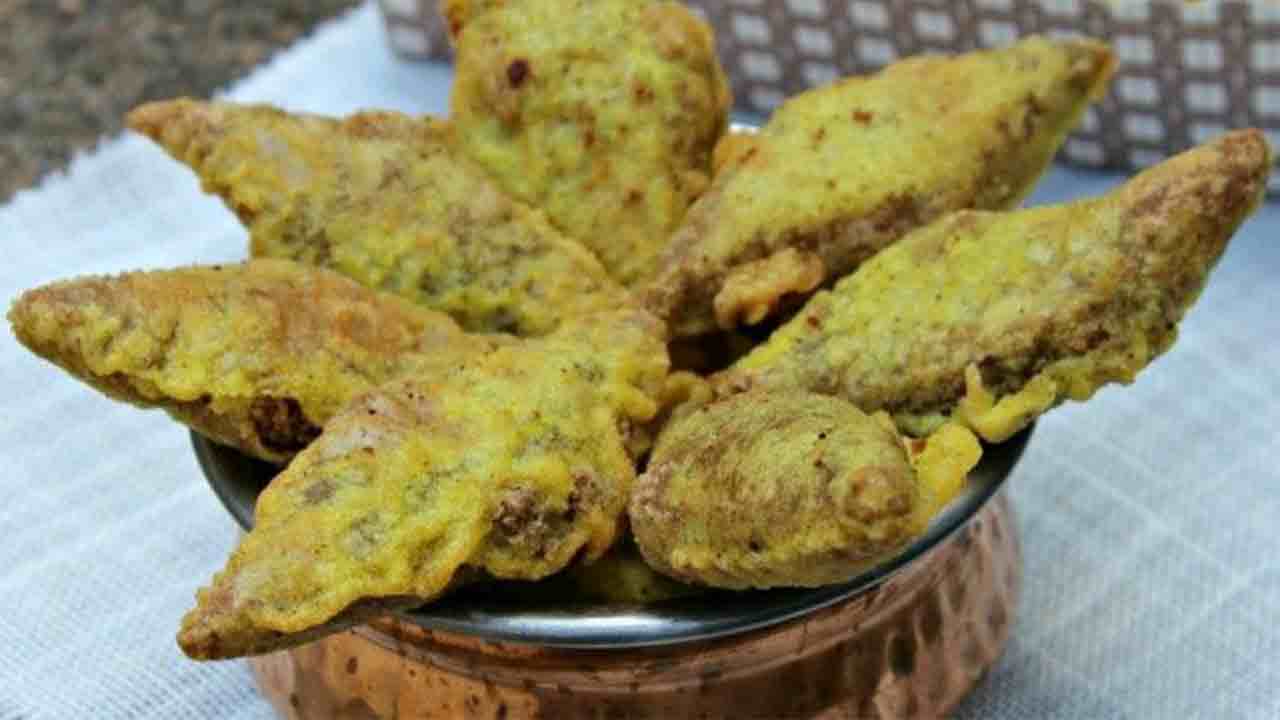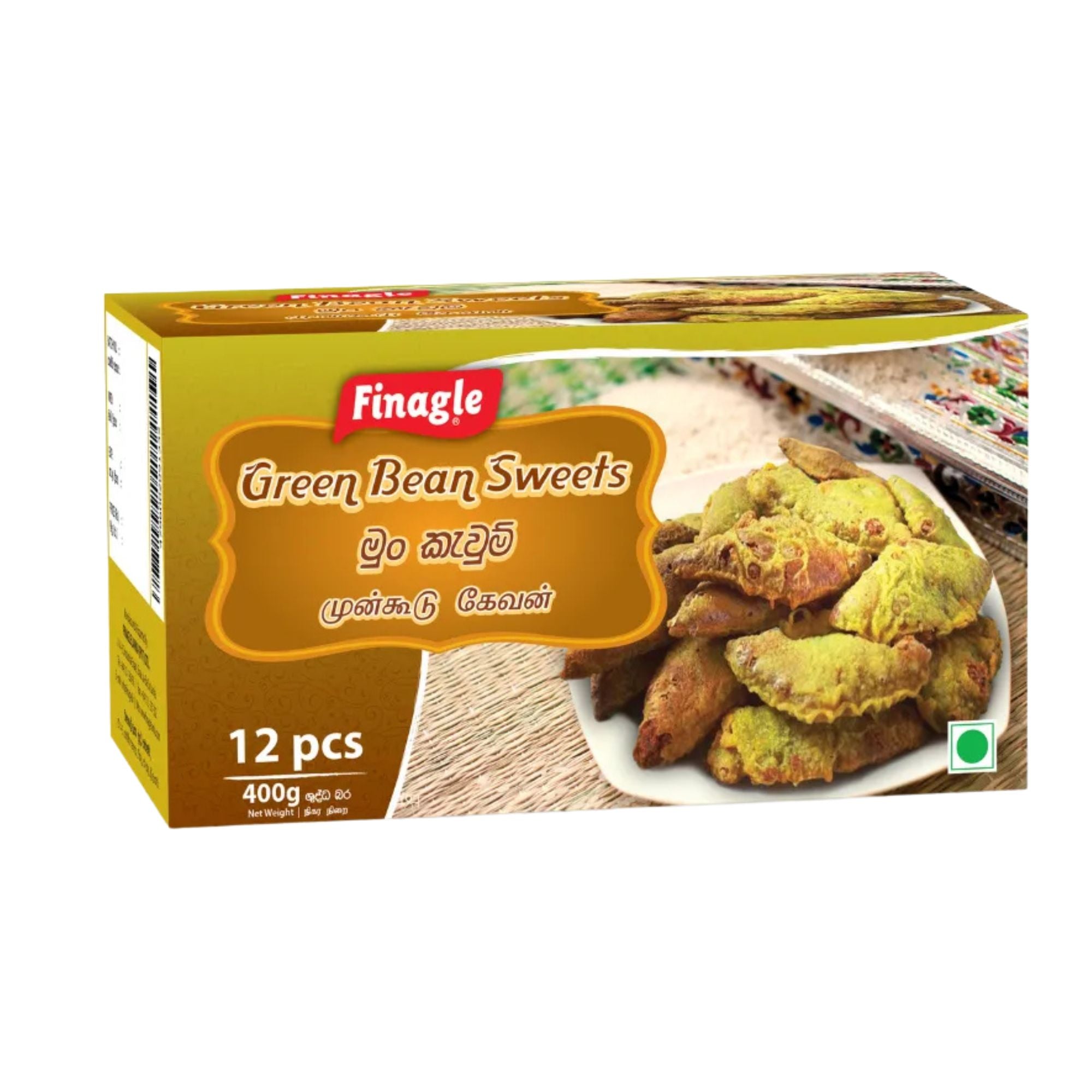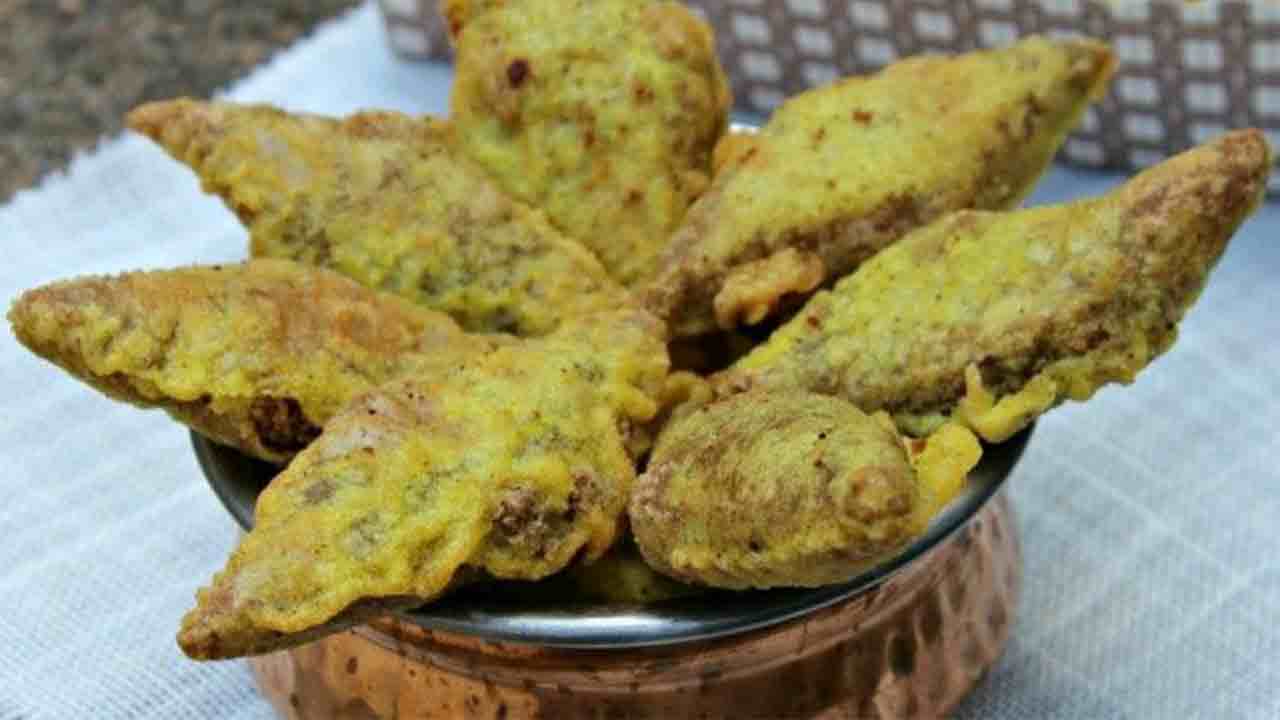
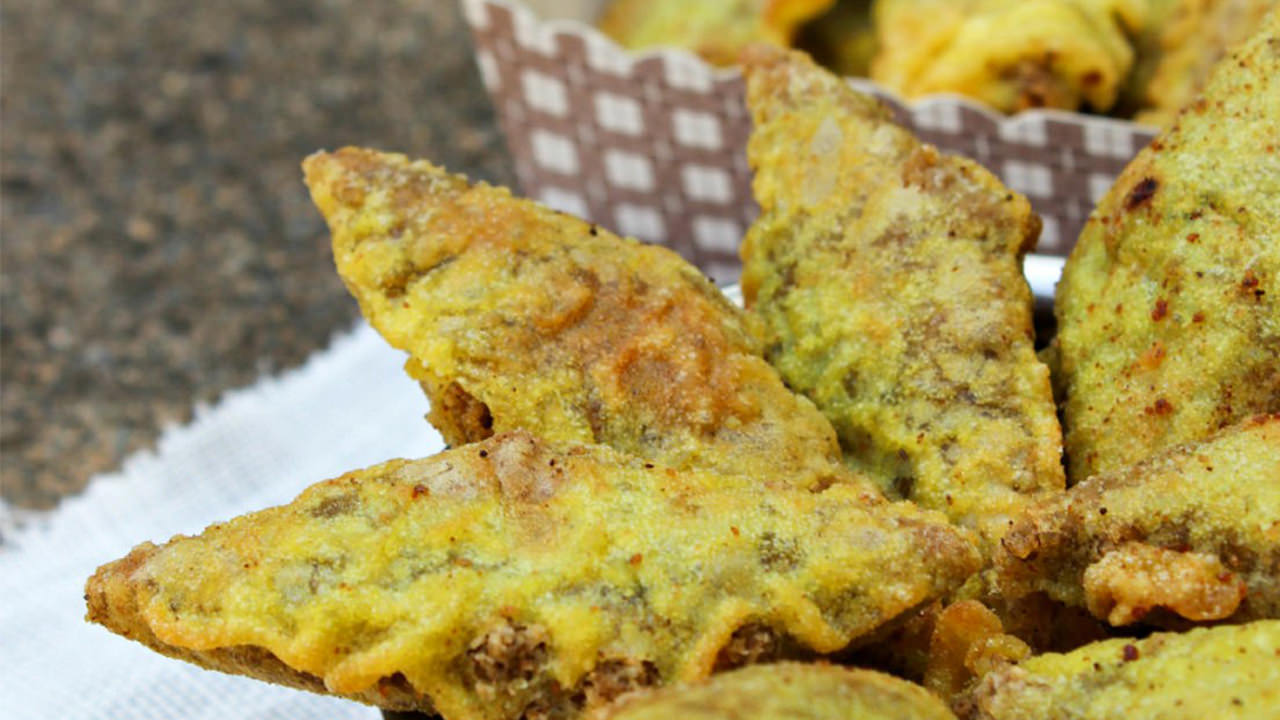
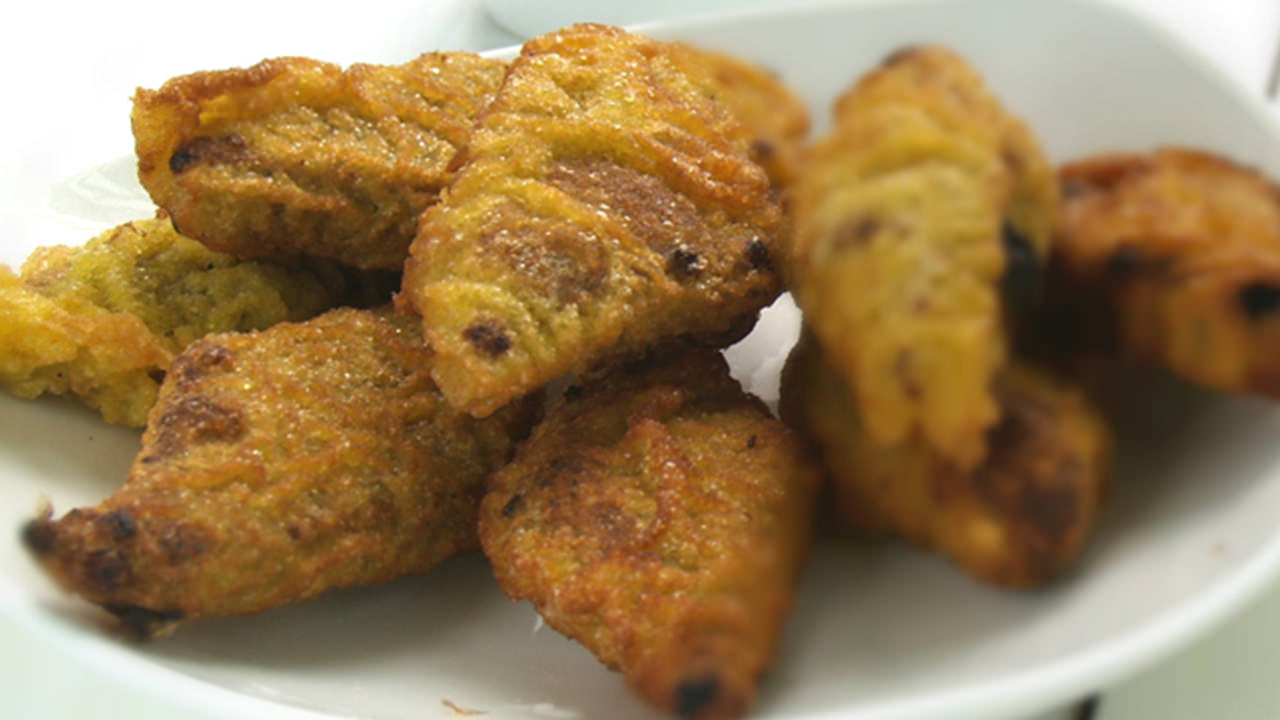
Mung kevum (මුං කැවුම්), often written mung kavum, is a Sri Lankan sweet made from roasted mung bean (green gram) flour and rice flour bound with kithul treacle, cut into diamonds, coated in a turmeric-yellow batter and fried. It belongs to the kevum family of treacle sweets fried in oil, and it is one of the sweets families make for the Sinhala and Tamil New Year in April.
This page is about the sweet itself: its place at Avurudu, its shape and how it differs from other kevum. A short recipe card follows; for full step-by-step instructions and troubleshooting, see the full mung kavum recipe.
What part does mung kevum play at the New Year?
Avurudu, the Sinhala and Tamil New Year, falls in mid-April, and its rituals follow auspicious times published each year as the Avurudu nakath. In the days before, households cook the festive sweets, known together as kavili, in batches large enough to last the holiday. On the day they are laid out on the New Year table around the kiribath: mung kevum beside konda kavum, kokis, aluwa, aasmi and fruit such as bananas. Plates of the same sweets are carried to neighbours and relatives as the visits of the New Year begin.
Mung kevum keeps for several days in a tin, which suits this rhythm of cooking ahead and sharing. It is not restricted to April: sweet shops and bakeries sell it through the year, and it is made for other special occasions too.
Why is mung kevum diamond-shaped?
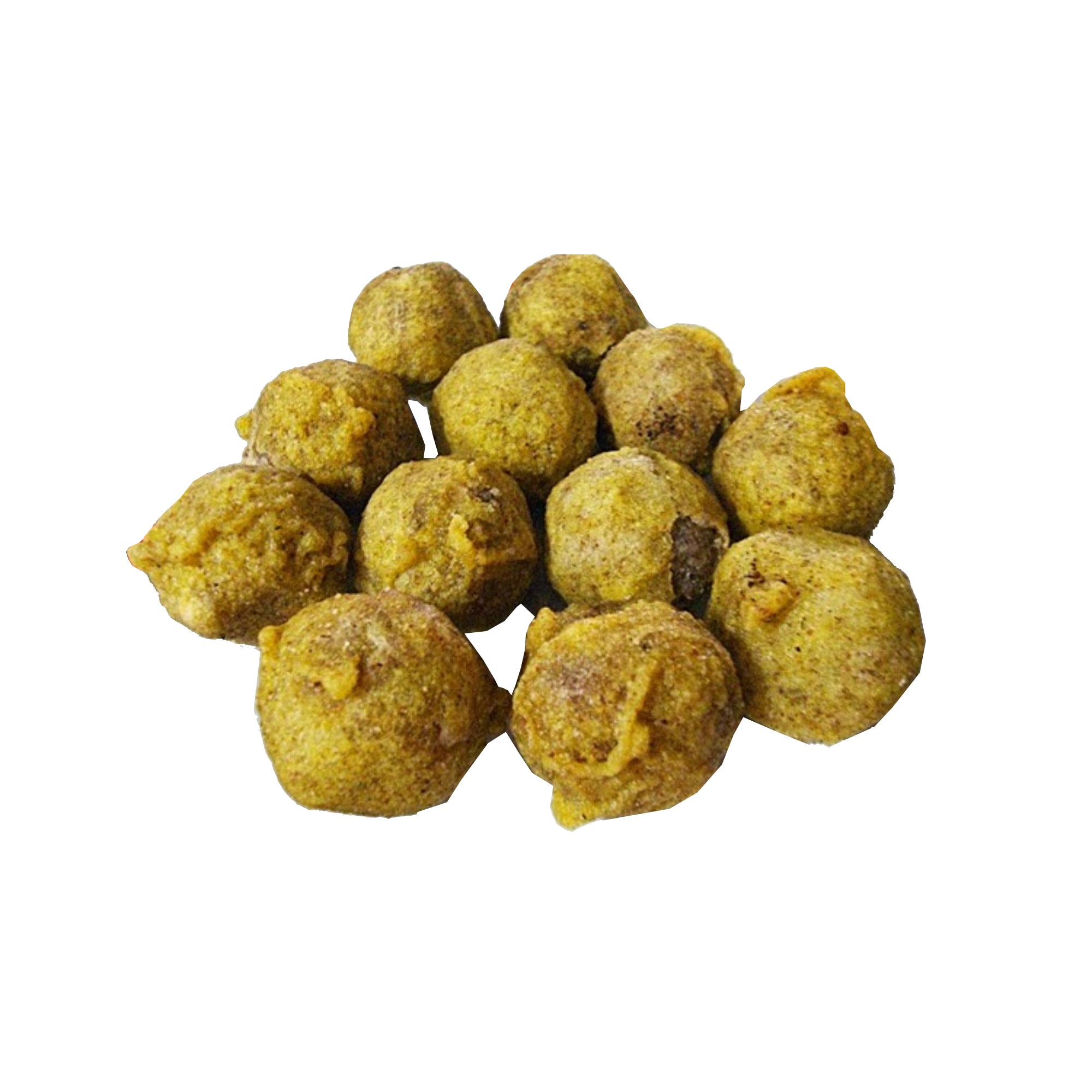
The shape follows from the method. Unlike konda kevum, which starts as a pourable batter, mung kevum starts as a firm dough that is pressed into a sheet about a centimetre thick and cut with a knife, first into strips and then across on the diagonal. The result is the lozenge or diamond that makes mung kevum easy to pick out on a crowded tray. Each piece is then dipped in batter, so the finished sweet is a smooth, golden diamond with a dark, dense centre. Some families roll the dough into balls instead, but the diamond is the classic form.
How is it different from other kevum?
The word kevum (or kavum) covers a whole group of sweets. The basic mixture is rice flour and treacle, and the old Sinhala chronicle Dhathuwansaya is often cited as naming eighteen kinds. The ones most often made today differ like this:
- Konda kevum is a rice flour and treacle batter fried into a round cake with a raised knot, the konde, in the middle. There is no separate coating.
- Mung kevum is a mung and treacle dough, cut first and then coated in batter before frying. The roasted mung gives it a nutty flavour and a soft, dense bite.
- Naran kevum is a round kevum, also made with green gram flour and grated coconut.
A general introduction to the whole family is on the page about kavum.
Where does the name come from?
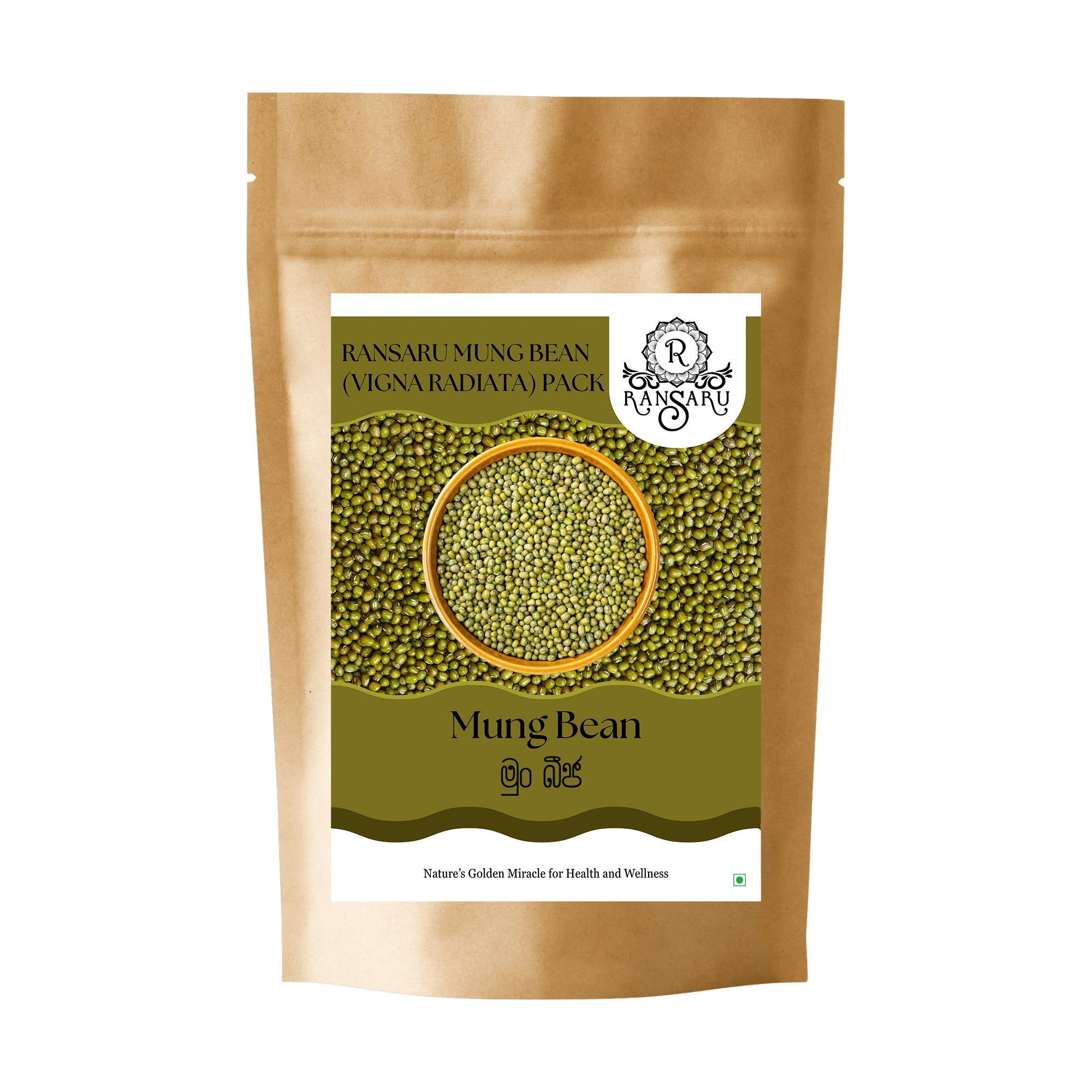
Mung, or mun in Sinhala, is the mung bean, the small green gram that also goes into mung kiribath and curries. Kevum is the family name for these fried treacle sweets. Mung kevum is counted among the older Sinhala sweets: writers on the Avurudu table group it with athirasa and naran kevum as native sweets mentioned in old Sinhala literature, as opposed to later arrivals such as kokis, whose name is thought to be Dutch.
Mung kevum recipe card
- Makes about 20 pieces
- Prep: 30 minutes
- Cook: 45 minutes
- Difficulty: Moderate
For the mung dough
- 250 g mung bean (green gram) flour, roasted, or 250 g whole mung beans to roast and grind
- 150 g fine white rice flour, plus extra for dusting
- 350 ml kithul treacle
- 1/2 tsp salt
- 1 tsp ground cardamom
For the batter
- 150 g fine white rice flour
- 200 ml thick coconut milk, plus up to 50 ml extra to adjust
- 1/2 tsp ground turmeric
- A pinch of salt
- About 1 litre coconut oil or vegetable oil, for deep frying
Method
- Make the dough. Mix the roasted mung flour, rice flour, salt and cardamom. Simmer the treacle over a medium heat for 5 to 8 minutes until it falls from a spoon in a thick thread, then stir it into the flour to a stiff dough.
- Cut the diamonds. On a board dusted with rice flour, press the warm dough into a sheet about 1 cm thick and cut it into diamonds 4 to 5 cm long.
- Make the batter. Whisk the rice flour, turmeric and salt with the coconut milk until thick enough to coat the back of a spoon.
- Fry. Heat the oil to about 160 to 170°C. Dip each diamond in the batter and fry 4 or 5 at a time for 3 to 4 minutes, turning once, until crisp and golden.
- Cool and store. Drain on kitchen paper, cool completely and keep in an airtight tin.
How long does it keep, and how is it eaten?
In an airtight tin at room temperature mung kevum keeps for about 4 to 5 days; the fridge softens the coating. It is eaten at room temperature, by hand, usually with a cup of plain tea, and its nutty sweetness sits well beside the barely sweet kokis on the same plate.
Related reading
7 pages on closely related subjects.