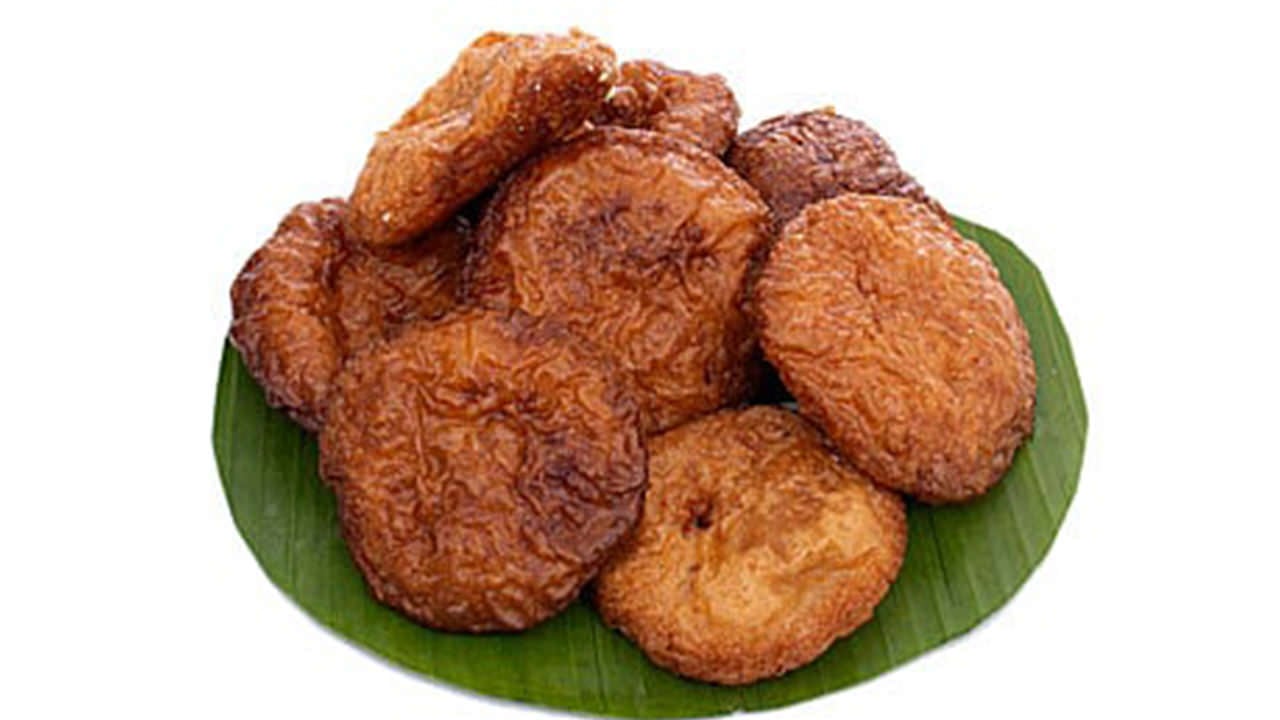
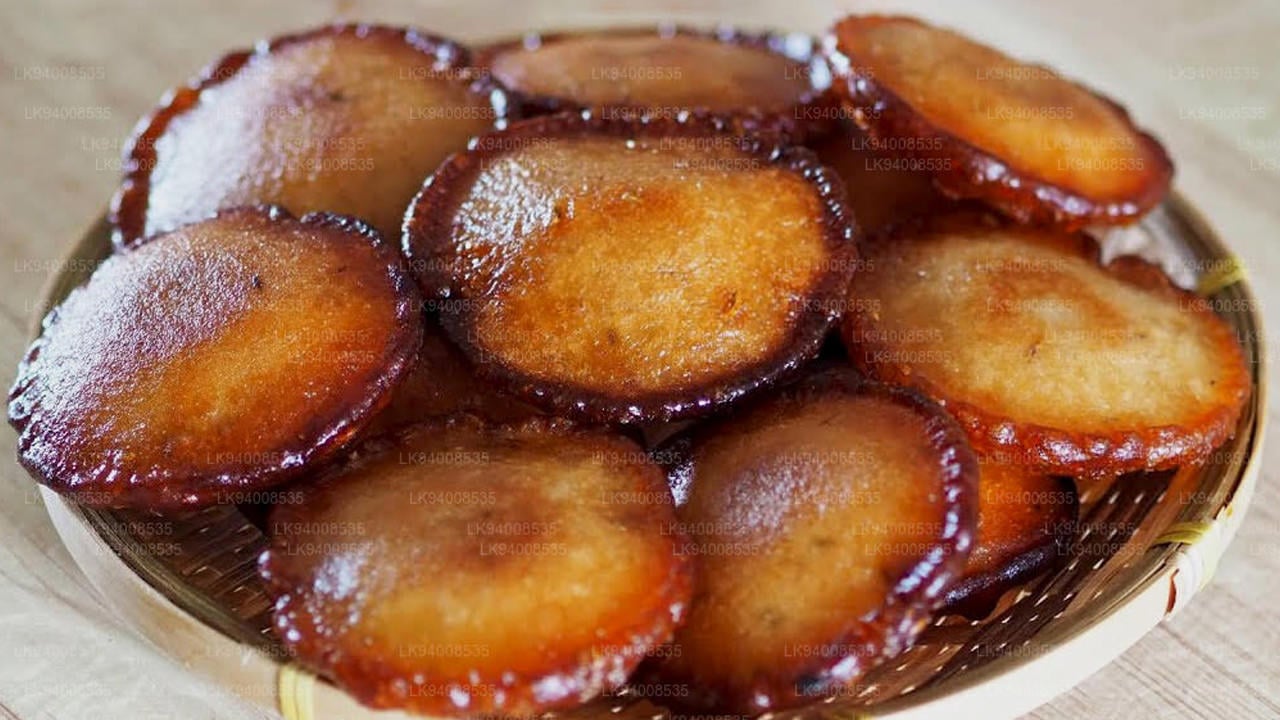
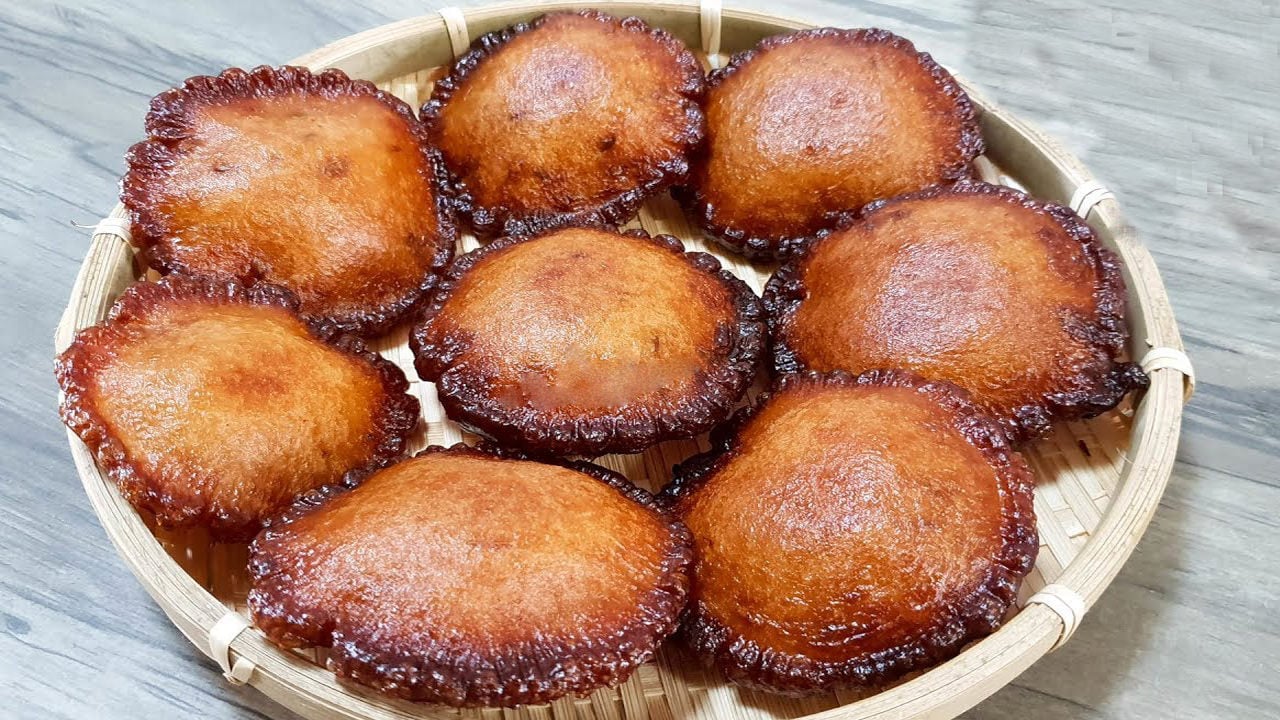

Kavum (කැවුම්), also spelt kevum and known in English as oil cake, is the classic deep-fried sweet of the Sri Lankan New Year. The basic kavum is made from rice flour and kithul treacle, beaten into a thick batter, rested and then fried in spoonfuls in hot oil until it puffs into a small, dark-golden cake with crisp, caramelised edges and a soft, moist centre. Cardamom and fennel are the usual flavourings.
Kavum is made for the Sinhala and Tamil New Year in April and set out on the New Year table with kokis, aluwa and other sweets. The word covers a whole family: konda kavum with its raised knot, mung kavum, naaran kavum and others. The recipe below is the simplest form, the flat, spoon-poured hendi kavum.
How to make kavum (hendi kavum)
- Makes about 20 kavum
- Prep: 15 minutes (+ 1 hour resting)
- Cook: 40 minutes
- Difficulty: Moderate
Ingredients
- 250 g fine white rice flour, from raw rice
- 50 g plain flour
- 250 ml kithul treacle
- 50 g sugar
- 1/2 tsp salt
- 1/2 tsp ground cardamom
- 1/2 tsp fennel seeds (maduru), dry-roasted and crushed
- Up to 100 ml water or thin coconut milk, to adjust the batter
- About 1 litre coconut oil or vegetable oil, for deep frying
Method
- Warm the treacle. Heat the treacle and sugar in a small pan over a low heat, stirring, for 3 to 4 minutes until the sugar has dissolved. Take it off the heat and let it cool until just warm.
- Mix the dry ingredients. Sift the rice flour and plain flour into a large bowl and stir in the salt, cardamom and fennel.
- Make the batter. Pour in the warm treacle a little at a time, beating with a wooden spoon until smooth. Add water or coconut milk a spoonful at a time until the batter is slightly thicker than pancake batter and falls from the spoon in a heavy ribbon.
- Rest. Cover the bowl and leave the batter at room temperature for at least 1 hour, or up to 5 hours. It thickens as it stands; stir it well and loosen with a spoonful of water if needed.
- Heat the oil. Pour the oil into a wok or deep pan to a depth of about 5 cm and heat over a medium-low heat to about 160°C, until a drop of batter sinks briefly and then rises with gentle bubbles.
- Spoon in the batter. Drop a heaped tablespoon of batter into the oil from close to the surface. It will spread into a round cake about 7 to 8 cm across. Fry 2 or 3 at a time.
- Baste and fry. Spoon hot oil over the top of each cake so it puffs and sets, then fry for 1 to 2 minutes a side, turning once, until deep golden-brown with crisp edges.
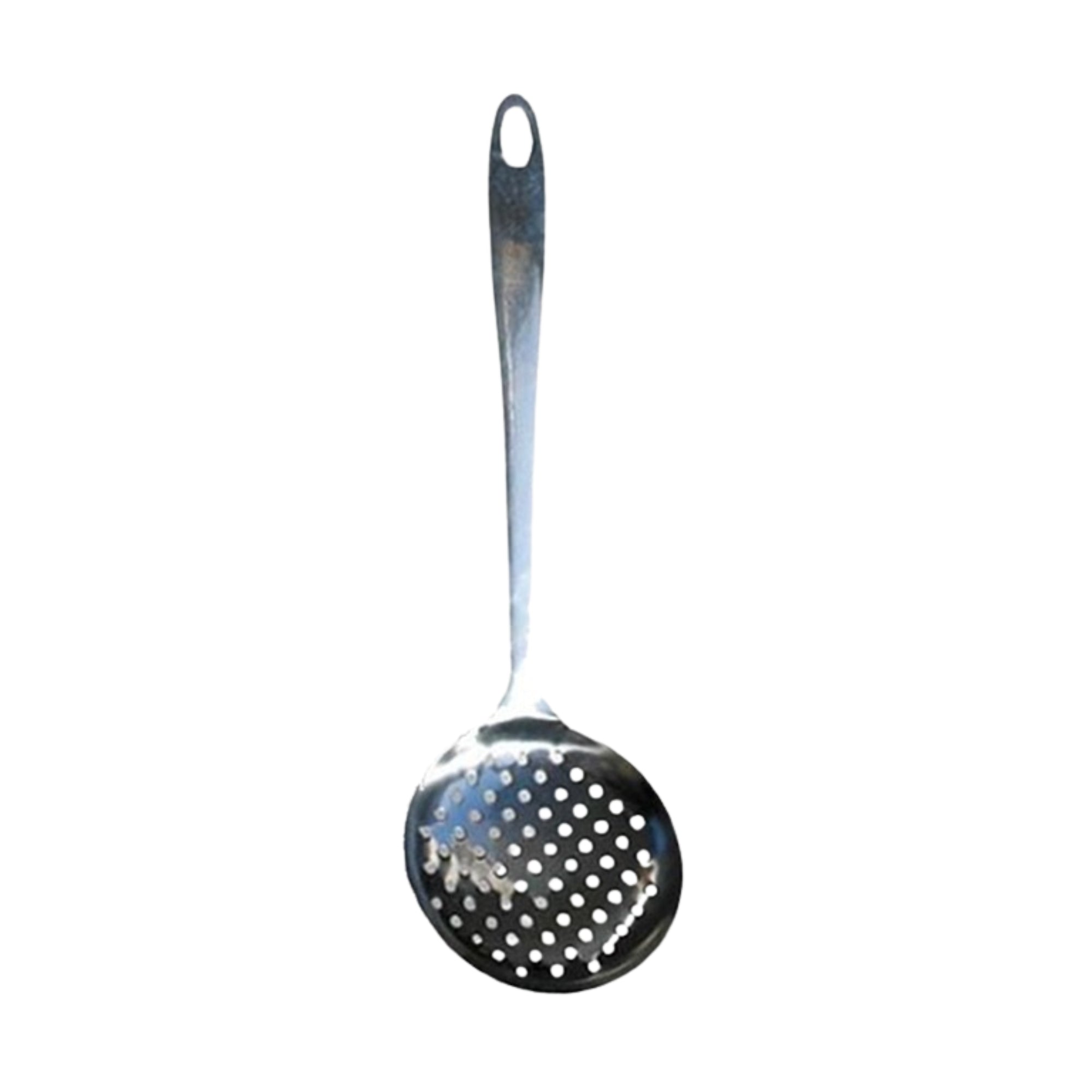
- Drain. Lift each kavum out, press it gently against the side of the pan with a slotted spoon to squeeze out the excess oil, and drain on kitchen paper or a rack.
- Cool. Leave to cool completely before stacking; the edges crisp up as they cool.
What are athirasa, hendi kavum and pethi kavum?
- Hendi kavum: hendi means spoon. Instead of being shaped by hand or with a skewer, the batter is simply dropped into the oil from a spoon and fried as a flat, round cake. This is the everyday kavum in the recipe above.
- Pethi kavum: a name widely used for the same flat, spoon-poured oil cake. In many homes hendi kavum and pethi kavum are the same thing.
- Athirasa (අතිරස): a related but different sweet. Instead of a pourable batter, rice flour and jaggery are worked into a thick paste that is pressed into flat discs by hand and then fried. Athirasa is closely related to kavum in flavour but differs in shape and texture, and the name is usually translated as very tasty. A similar sweet, adhirasam, is made in South India.
How is hendi kavum different from konda kavum?
They use much the same rice flour and treacle batter. For konda kavum a thin skewer is held in the middle of the frying batter and twirled, or the top is pulled to one side, so that a raised knot forms, like the hair bun (konda) the name refers to. Hendi kavum skips that step and is left as a flat cake, which makes it the easiest kavum to start with.
What other kinds of kavum are there?
The family is large. Mung kavum is a mung bean and treacle dough cut into diamonds and fried in a yellow batter. Naaran kavum is a coconut filling rolled into a mandarin-sized ball and coated in batter. Other kinds include thala kavum with sesame and undu kavum made with urad dal. Kavum is also mentioned in old Sinhala literature, including the Ummagga Jataka and the Pujavaliya.
Why is my kavum hard, greasy or flat?
- Hard and dark outside, raw inside: the oil is too hot. Lower the heat and fry more slowly.
- Greasy: the oil is too cool, or the batter is too thin. Let the oil recover between batches and thicken the batter with a little rice flour.
- Spreads too thin or breaks up: the batter has not rested long enough or is too runny. Rest it for longer, or beat in a spoonful of rice flour.
What treacle should you use?
Kithul treacle, made from the sap of the kithul palm, gives kavum its dark colour and deep, smoky sweetness; the page on kitul tapping explains how the sap is collected. Coconut treacle or kithul jaggery melted with a little water can be used instead. Frying in coconut oil is traditional and adds its own fragrance.
How long does kavum keep?
In an airtight tin at room temperature, kavum keeps for about a week, and some cooks keep it for up to two. Do not refrigerate it, as it hardens. Families usually fry it a few days before the New Year, which begins at the auspicious times set each year in the Avurudu nakath.
Related reading
2 pages on closely related subjects.