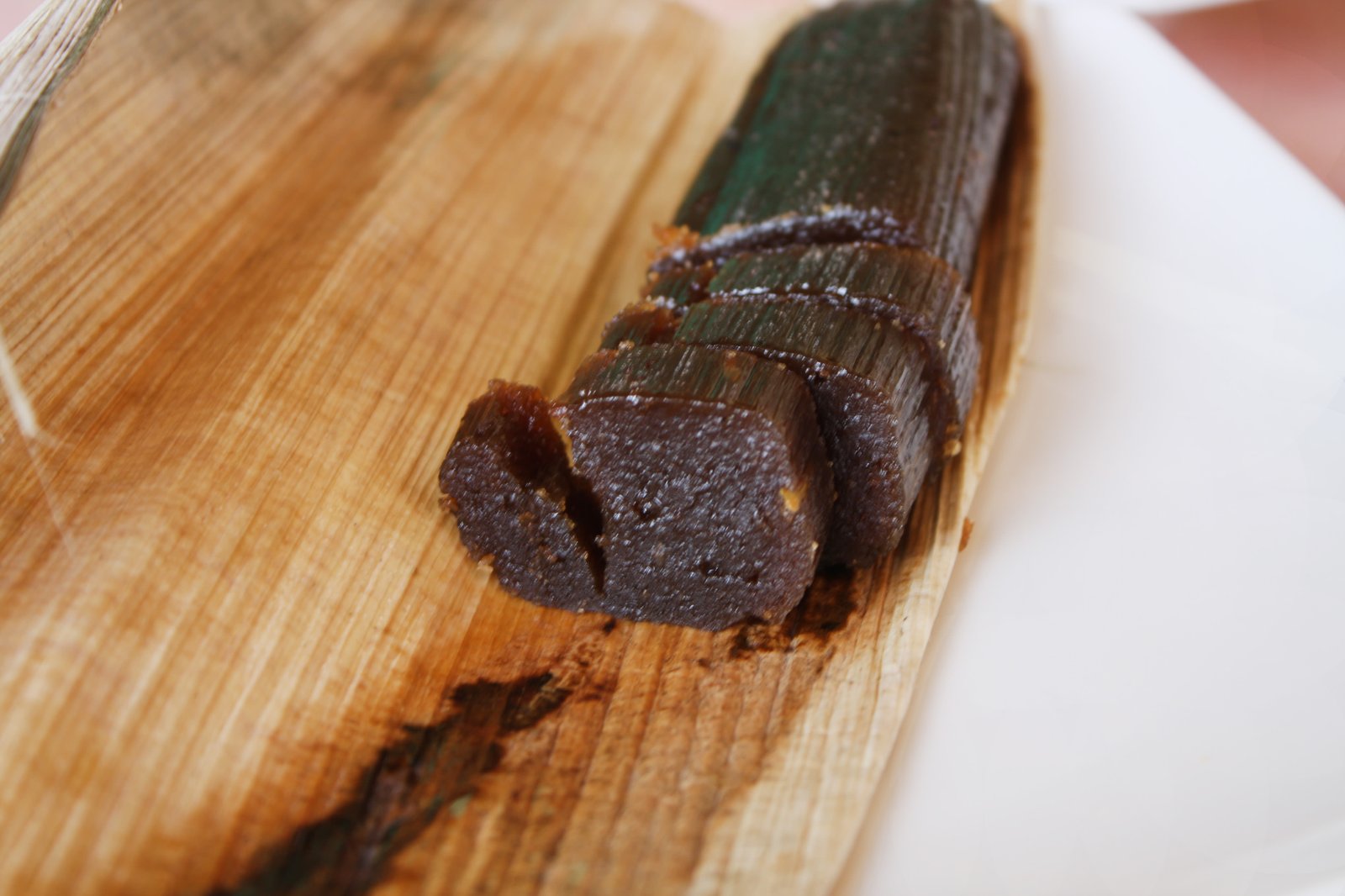
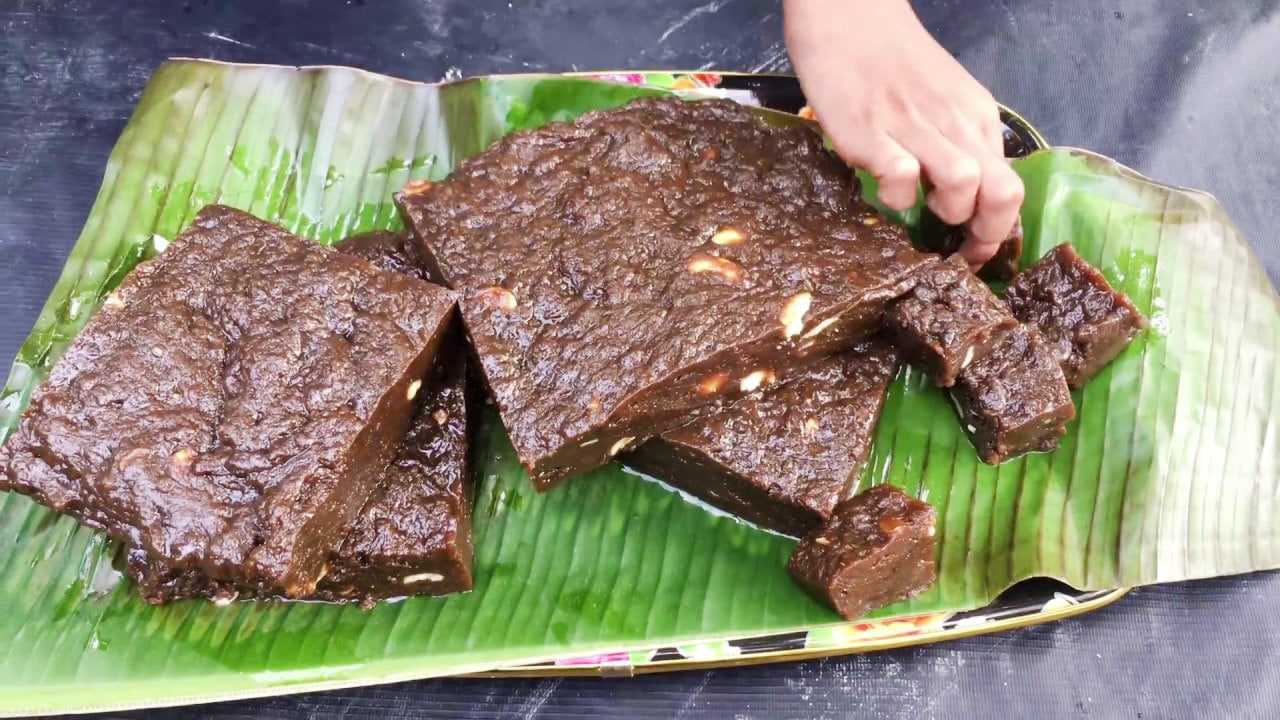
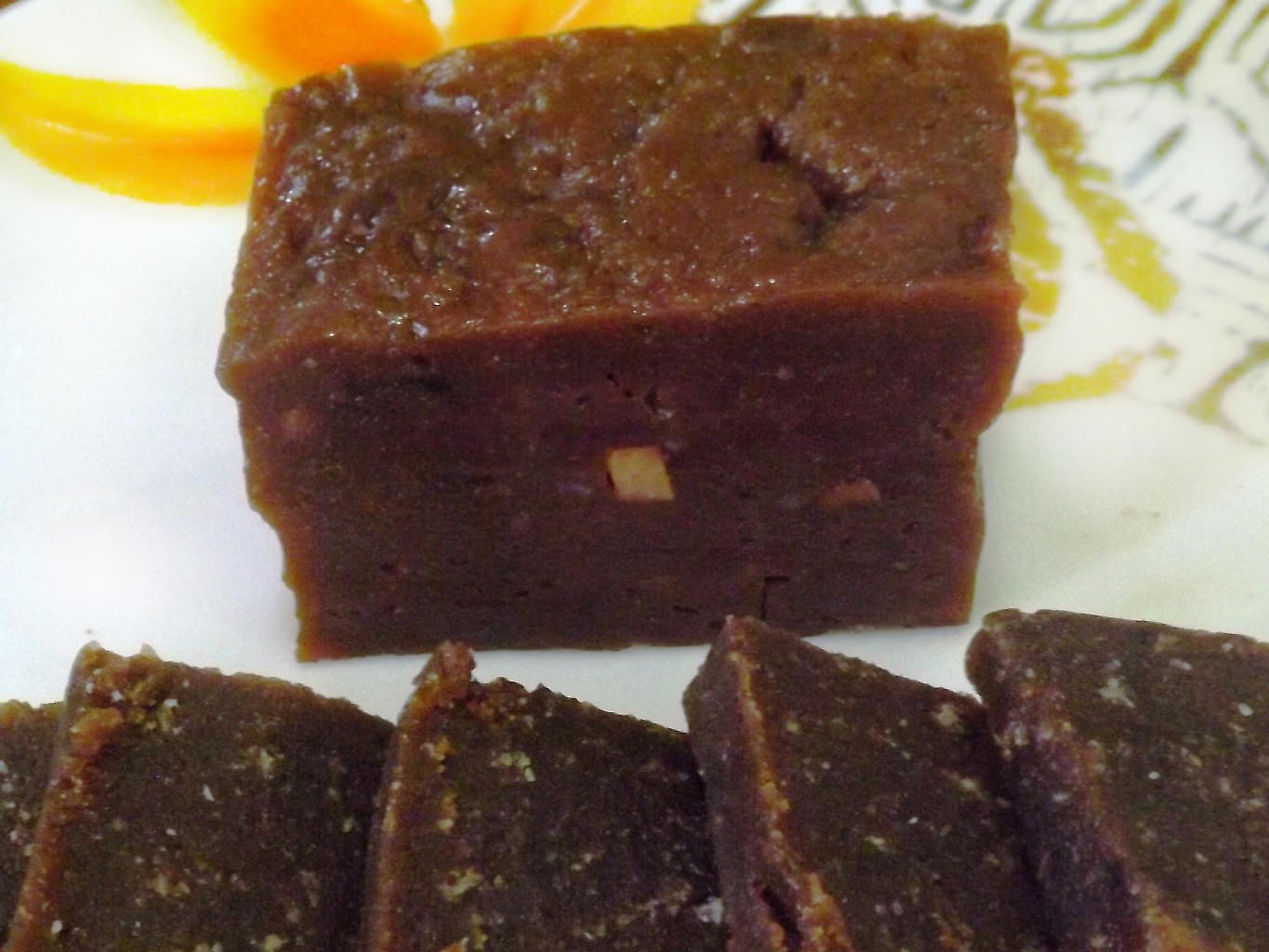

Kalu Dodol is one of Sri Lanka's most recognisable traditional sweets — a dense, dark confection made from kithul jaggery, thick coconut milk and rice flour, slow-cooked until it sets into a firm, sliceable slab. The name translates roughly as "black dodol", a nod to the deep mahogany colour that kithul jaggery gives the finished sweet. It appears at Sinhala New Year celebrations, weddings, almsgivings and festive gatherings, where a tray of neatly cut Kalu Dodol pieces signals care and tradition in equal measure.
What makes Kalu Dodol different from other Sri Lankan sweets?
Most Sri Lankan festival sweets — kokis, pani kadju, aluwa — come together quickly. Kalu Dodol is the exception. The mixture must be stirred continuously over low to medium heat for well over an hour, demanding patience and a steady hand. That unbroken stirring is what gives the sweet its famously smooth, gelatinous texture and prevents the rice flour from catching on the pan.
The key flavour difference is kithul jaggery. Tapped from the kithul palm (Caryota urens), this dark, slightly smoky sugar carries a complexity that refined sugar cannot replicate. You can learn more about the traditional craft of kitul tapping, which has been practised in Sri Lanka's wet zone for generations. Combined with cardamom and cashew, the result is a sweet that is rich without being cloying — earthy, lightly spiced and deeply satisfying in small portions.
What are the ingredients for Kalu Dodol?
The classic recipe uses pantry staples that have remained unchanged for centuries. Quantities below yield a standard home batch.
| Ingredient | Quantity |
|---|---|
| White raw rice flour | 350 g |
| Thick coconut milk | 3 litres |
| Kithul jaggery | 900 g |
| Brown sugar | 250 g |
| Green cardamom pods, ground | 12 pods |
| Raw cashew nuts, roughly chopped | 200 g |
| Salt | A pinch, to taste |
Sourcing matters. Freshly pressed coconut milk produces a noticeably richer result than tinned versions, and authentic kithul jaggery — rather than palmyra or cane jaggery — is essential for the characteristic colour and depth of flavour.
How do you make Kalu Dodol at home?
Set aside a full afternoon. The active cooking time is roughly 90 minutes, and the sweet then needs six to seven hours to cool and set completely before it can be cut.
- Prepare the jaggery and cashew. Finely chop the kithul jaggery and set it aside. Roughly chop the cashew nuts and keep them separate.
- Mix the batter. Sieve the rice flour. Reserve about 500 ml of coconut milk. Whisk the rice flour into the remaining coconut milk until smooth, then strain through a fine sieve to remove any lumps.
- Melt the jaggery. In a large, heavy-bottomed pan, melt the jaggery in the reserved 500 ml of coconut milk over low heat. Add the brown sugar and stir until fully dissolved.
- Combine and cook. Pour the rice flour and coconut milk mixture into the jaggery pan. Add the salt and ground cardamom. Raise the heat to medium and stir continuously without stopping — scraping the bottom and sides of the pan at all times.
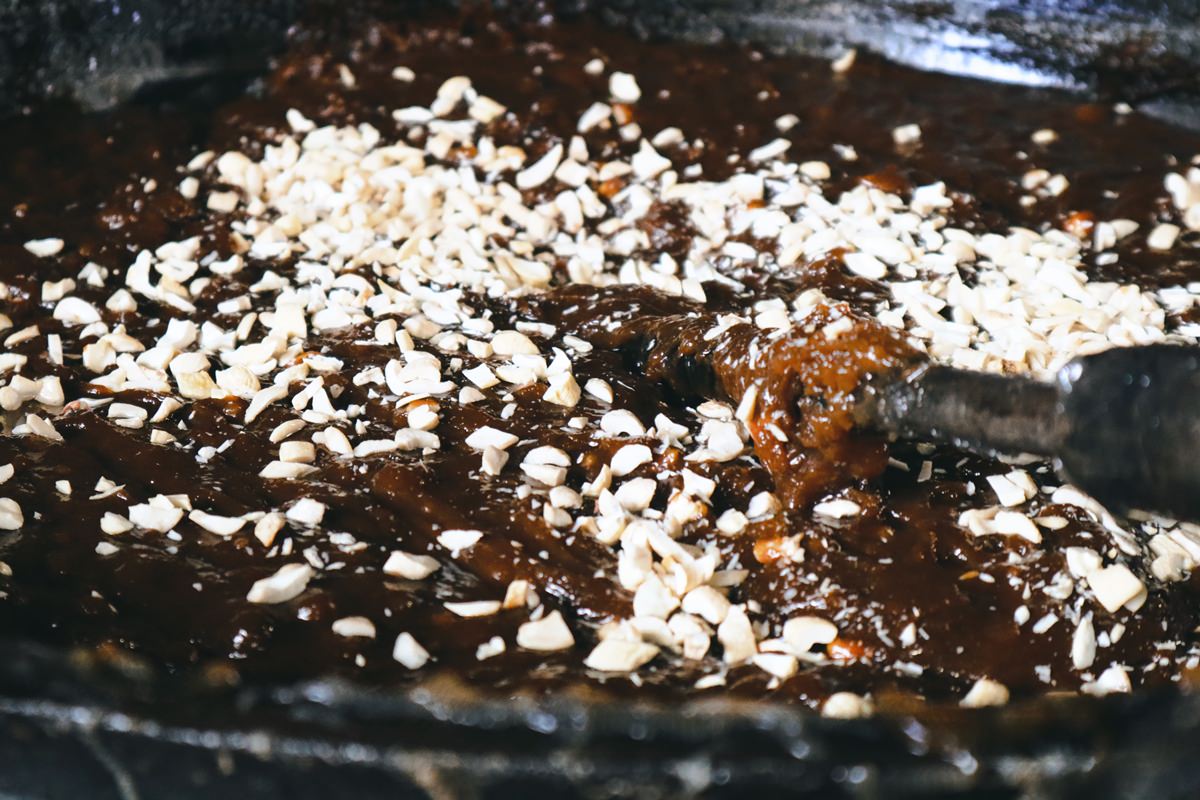
- Watch for the signs. After around 30 minutes, the mixture will begin to bubble and pull away from the sides. Continue stirring. When the Kalu Dodol no longer sticks to the pan walls and has become very thick, stir in the chopped cashew. If oil begins to separate and pool on the surface, skim it off with a spoon — this is normal and indicates the mixture is close to done.
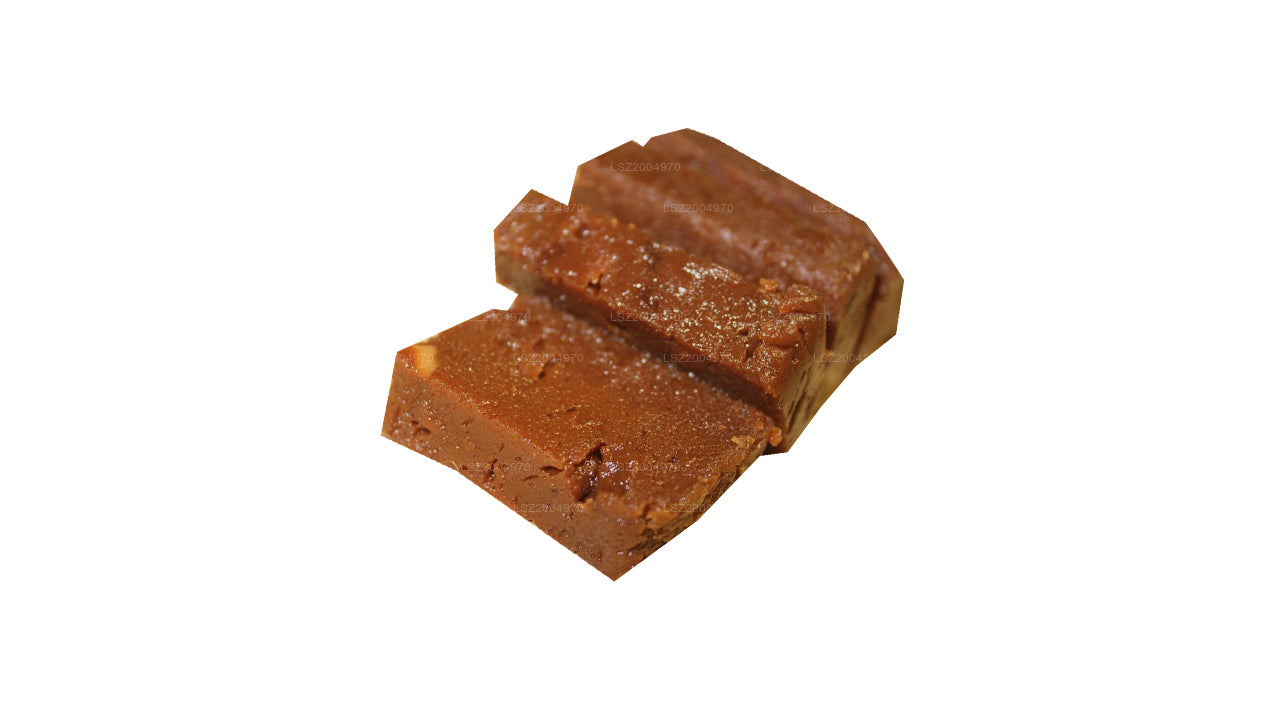
- Set and slice. Transfer the finished mixture onto a lightly greased flat surface or tray. Press it down into an even layer and leave it undisturbed at room temperature for six to seven hours. Once fully cooled and firm, cut into pieces of your preferred size.
When is Kalu Dodol traditionally made in Sri Lanka?
Kalu Dodol is closely associated with the Sinhala New Year in April, when families prepare trays of traditional sweets to share with neighbours and offer at temples. It also appears at Buddhist almsgivings, weddings and milestone family ceremonies. In the Southern Province — particularly in and around Galle — it remains a staple of home confectionery, and small artisan producers still make it to order for special occasions.
The Esala season, marked by the famous Esala Perahera Festival in Kandy, is another time when traditional sweets circulate widely, though Kalu Dodol's deepest roots are in the New Year rituals of April.
Where can you buy Kalu Dodol in Sri Lanka?
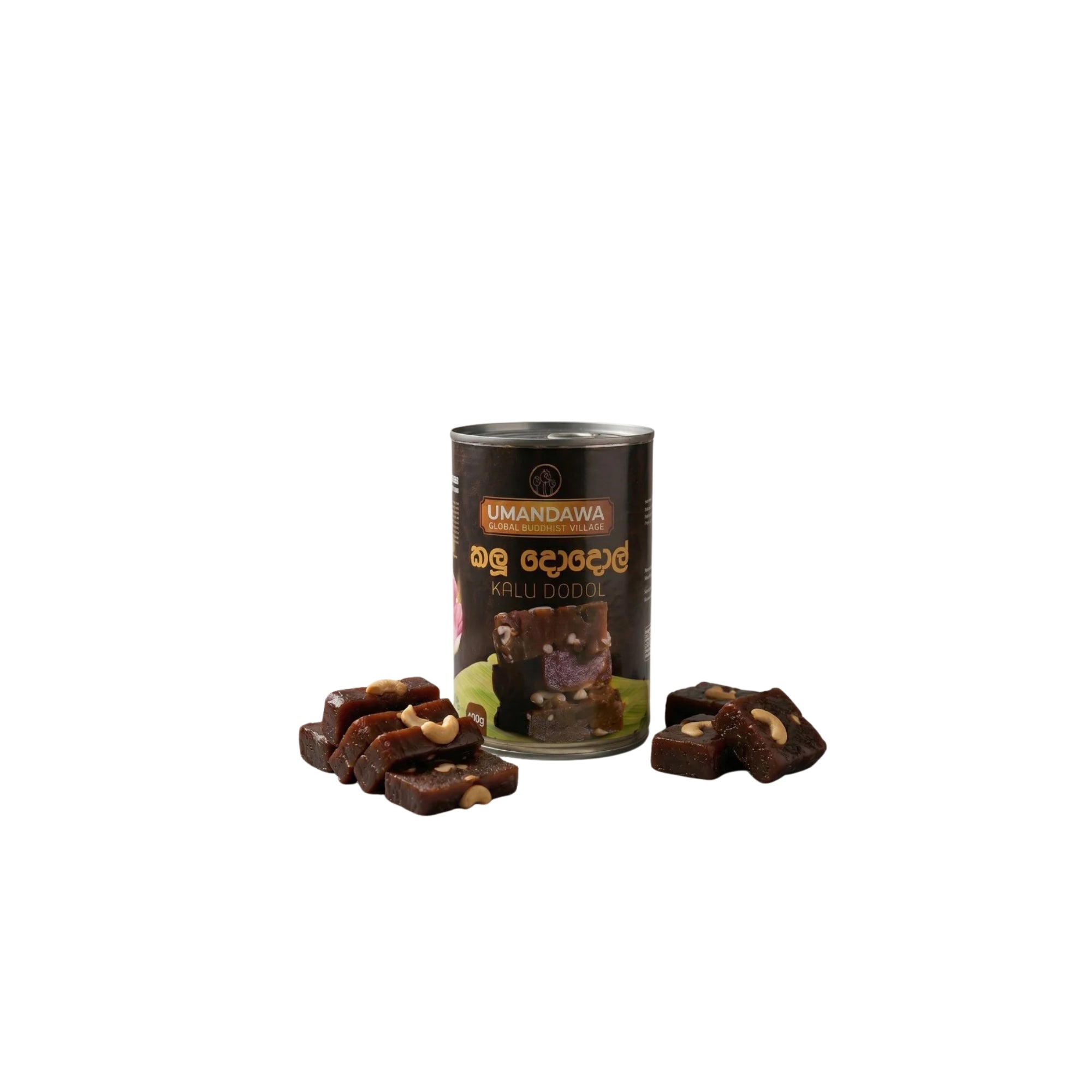
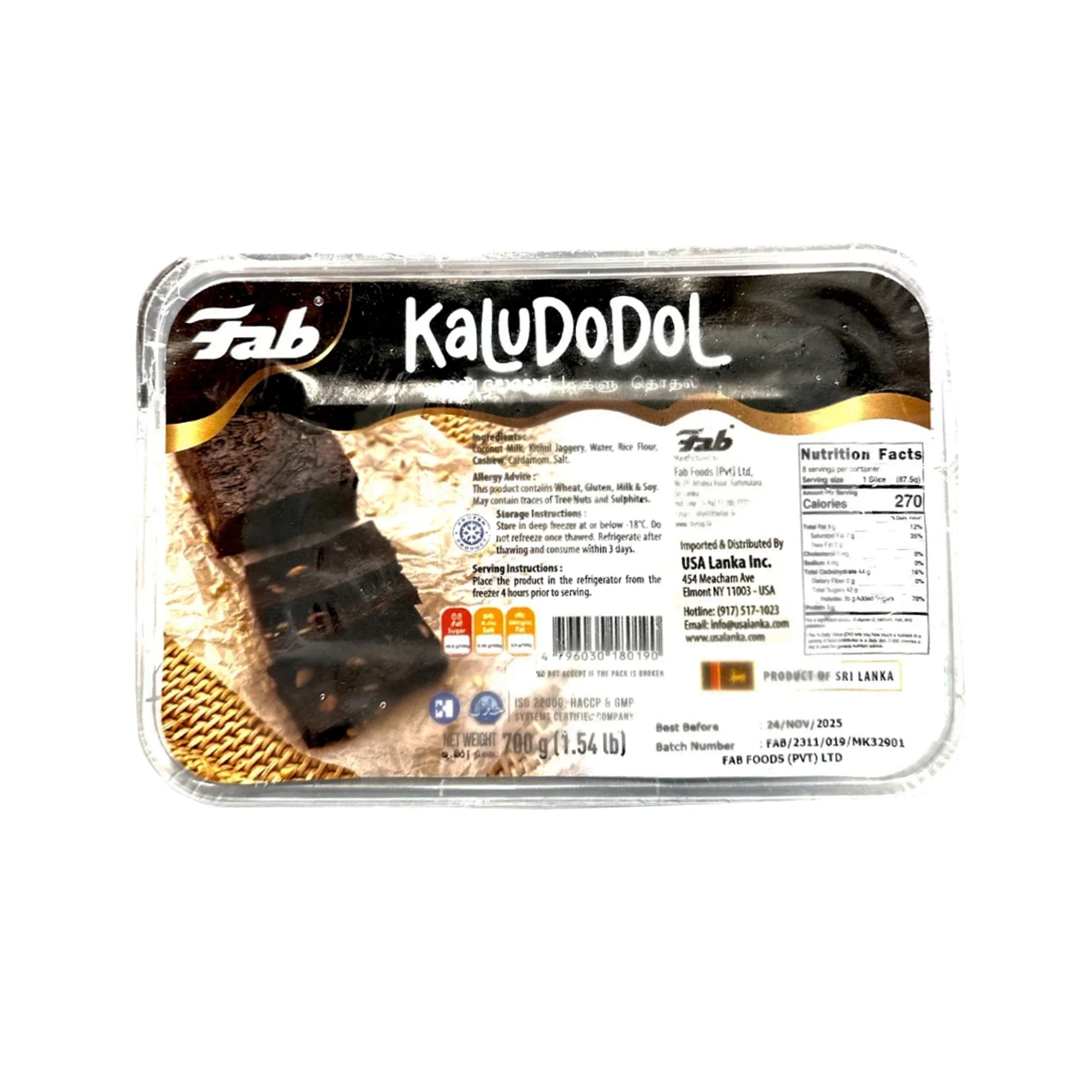
Commercially produced Kalu Dodol is available in vacuum-sealed packs at supermarkets and specialty food shops throughout the island. Quality varies considerably: artisan batches made with genuine kithul jaggery taste markedly different from versions that substitute refined sugar. Colombo's Manning Market, Galle's old-town provisioners and roadside stalls along the Southern Expressway are reliable places to find well-made versions. Alternatively, several Sri Lankan brands produce packaged Kalu Dodol that travels well — useful for visitors who want to take it home as a gift.
How should Kalu Dodol be stored?
Kept in an airtight container at room temperature, Kalu Dodol will stay fresh for around a week. In a humid climate — which describes most of Sri Lanka — refrigeration extends its shelf life to two to three weeks, though the texture firms up noticeably when chilled. Allow refrigerated pieces to come to room temperature for 15 to 20 minutes before eating. Commercially sealed packs carry their own best-before dates, which are typically more generous.
Is Kalu Dodol suitable for visitors with dietary restrictions?
The traditional recipe is naturally gluten-free, as it uses rice flour rather than wheat flour. It is also vegetarian and vegan — no animal products are involved beyond the coconut milk. However, it contains tree nuts (cashew), making it unsuitable for people with nut allergies. The sugar content is high, so it is best enjoyed in modest portions. Travellers managing diabetes should treat it as an occasional indulgence rather than a daily snack.