


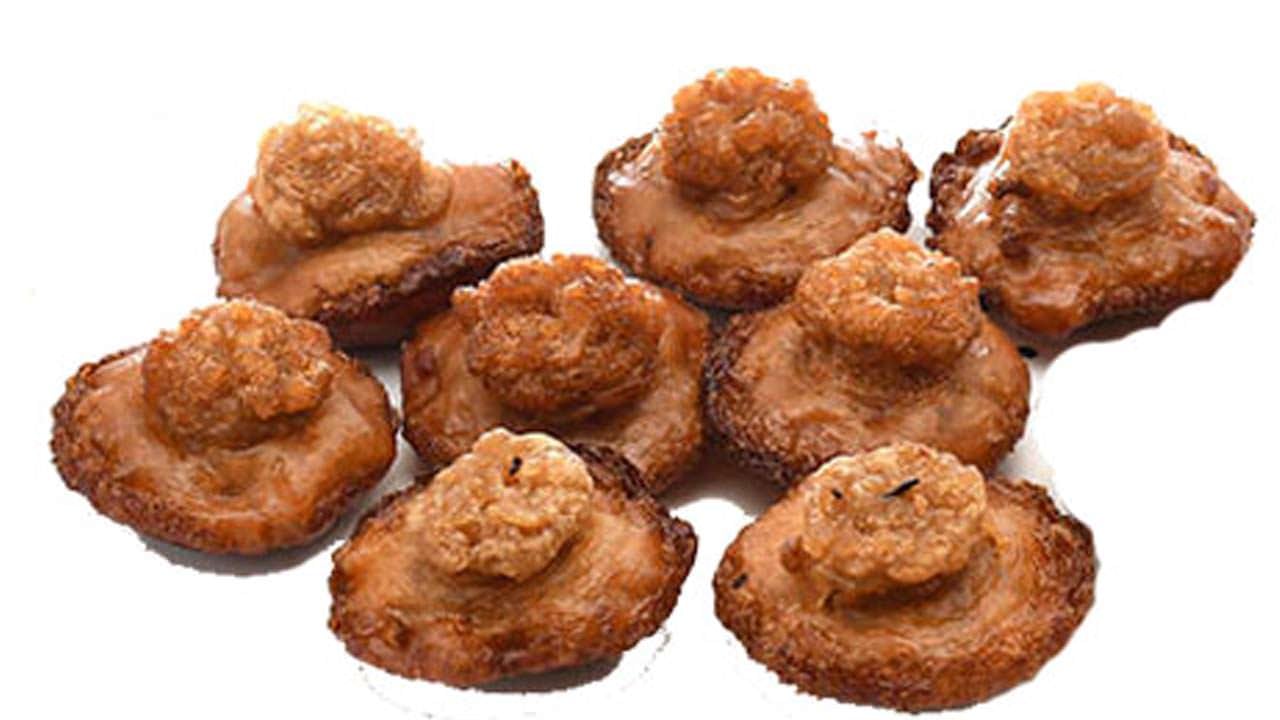
Konda kavum is the best known of the kavum, the Sri Lankan oil cakes made from rice flour and kithul treacle. A ladle of batter is fried in a small, deep pan while a skewer held in its centre draws the top up into a raised knot. That knot is the konde, named after the bun of hair tied at the back of the head, and getting it to stand up neatly is the skill every cook is judged on. The finished cake is reddish-brown, crisp at the edges and soft and chewy inside, with the smoky sweetness of treacle.
Konda kavum is one of the sweets made for the Sinhala and Tamil New Year in April and set out on the New Year table with kokis, aluwa and mung kavum. It is also sold in sweet shops through the year.
How to make konda kavum
- Makes about 15 kavum
- Prep: 10 minutes (+ 1 hour resting)
- Cook: 1 hour
- Difficulty: Challenging
Ingredients
- 250 g fine white rice flour
- 50 g plain wheat flour
- 50 g white sugar
- 150 ml kithul treacle
- 1/4 tsp salt
- 1/2 tsp fennel seeds, or a pinch of ground cardamom (optional)
- About 150 ml water or thin coconut milk, as needed
- About 750 ml coconut oil, for frying
Method
- Mix the dry ingredients. Sift the rice flour and plain flour into a bowl and stir in the sugar, salt and fennel or cardamom.
- Make the batter. Stir in the treacle, then add the water a little at a time, beating until smooth. It should be thicker than pancake batter but still flow slowly off a spoon, somewhere between pancake and cake batter.
- Rest. Cover and leave for about 1 hour. Stir well and check the consistency again before frying, adding a spoonful of water if it has thickened.
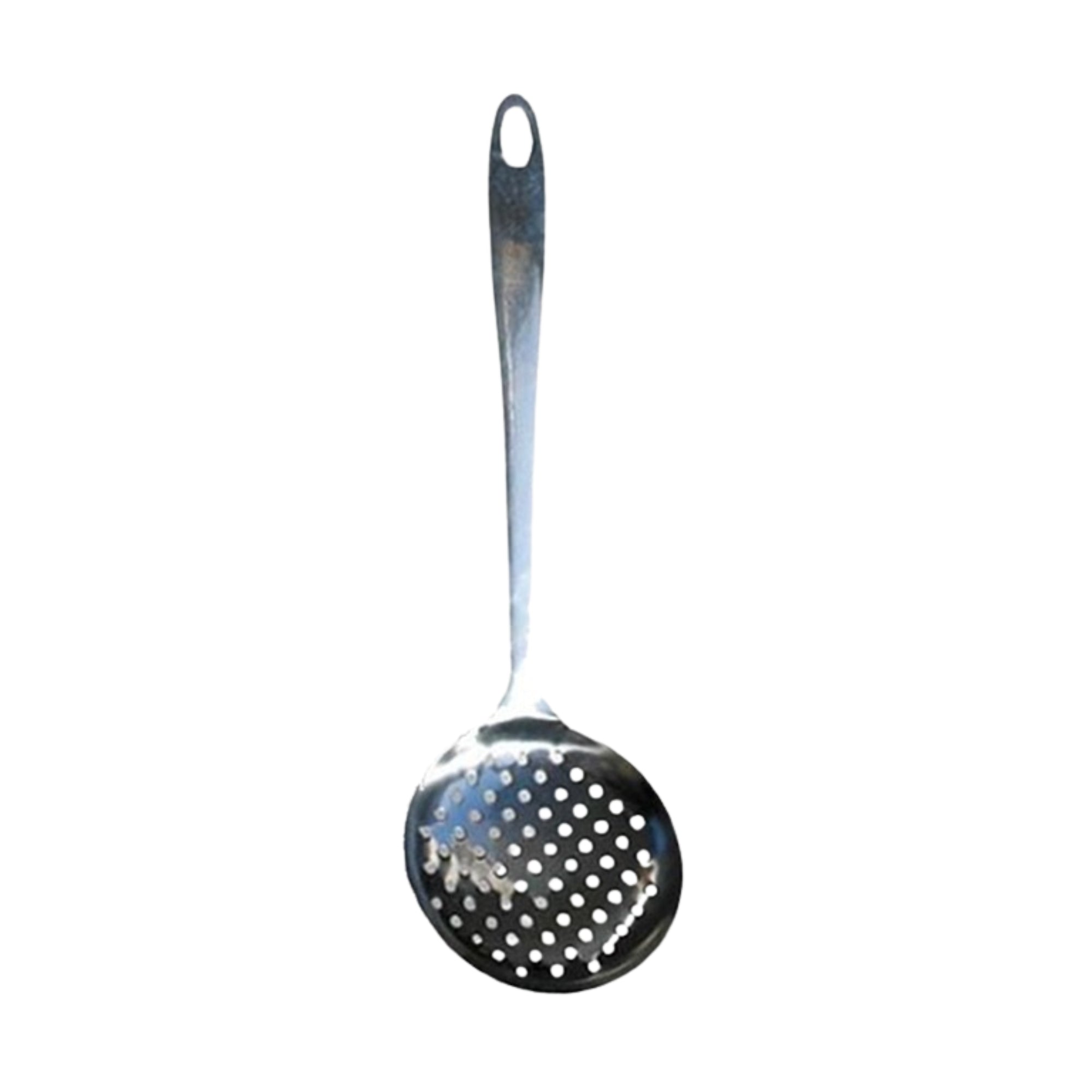
- Heat the oil. Pour the oil into a small, deep, round-bottomed pan, such as a cheena chatti, to a depth of about 5 cm. Heat over a low to medium heat, to about 160°C, until a drop of batter floats up steadily without browning at once.
- Pour the batter. Pour in about 3 tablespoons of batter from a small cup or ladle. It will spread into a round.
- Raise the konde. Straight away, push a thin skewer into the centre of the batter and hold it upright. With a spoon, splash hot oil over the top of the cake towards the skewer while rotating the skewer, 3 or 4 turns, until the centre gathers and rises into a knot around it. Slide the skewer out.
- Fry. Fry for 3 to 4 minutes in total, turning once, until the cake is an even reddish-brown and the edges are crisp.
- Drain. Lift out with the spoon, tilt to let the oil run off the knot, and drain on kitchen paper. Fry the rest one at a time, stirring the batter between cakes.
Why won't my kavum form a konde?
- Batter too thin: it spreads flat and the knot collapses. Beat in a spoonful of rice flour.
- Batter too thick: it sits in a lump and does not spread or rise. Loosen it with a little water.
- Oil too shallow or too cool: the cake sinks and soaks up oil. The pan should be small and deep enough for the cake to float, and the oil hot enough for batter to rise at once.
- Oil too hot: the outside darkens before the centre cooks. Keep the heat at low to medium; treacle burns easily.
Expect the first few to be uneven. The konde is a matter of practice, so fry a test cake first and adjust the batter or heat before the rest.
Do you have to make your own rice flour?
Traditionally the flour is made at home from raw rice soaked for 2 to 3 hours, drained, dried and ground fine, and some cooks warn that soaking it much longer spoils the batter. Fine bought rice flour works well and is what the recipe above assumes. Some cooks use red rice for a darker cake.
How is konda kavum different from other kavum?
Kavum is a whole family. The old Sinhala chronicle Dhathuwansaya is often cited as naming eighteen kinds, and several are still made at the New Year. Konda kavum is the plain rice flour and treacle cake, shaped only by the skewer and the hot oil. Mung kevum is quite different in build: a firm mung bean and treacle dough cut into diamonds and coated in batter before frying. Naran kavum adds green gram flour and coconut. Others are flavoured with sesame or urad dal.
What oil should you use?
Coconut oil is the traditional frying fat for kavum and gives them their familiar flavour; the coconut palm supplies both the oil and, in some versions, the milk in the batter. A neutral vegetable oil also works. A small, deep pan keeps the oil deep enough for the cake to float without needing a large volume of it.
How long does konda kavum keep?
Once completely cool, konda kavum keeps for up to 5 days in an airtight container at room temperature. Do not seal them while warm, or the steam softens the crisp edges. This is why households fry them a few days before Avurudu, whose rituals follow the auspicious times published each year as the Avurudu nakath.
Related reading
2 pages on closely related subjects.