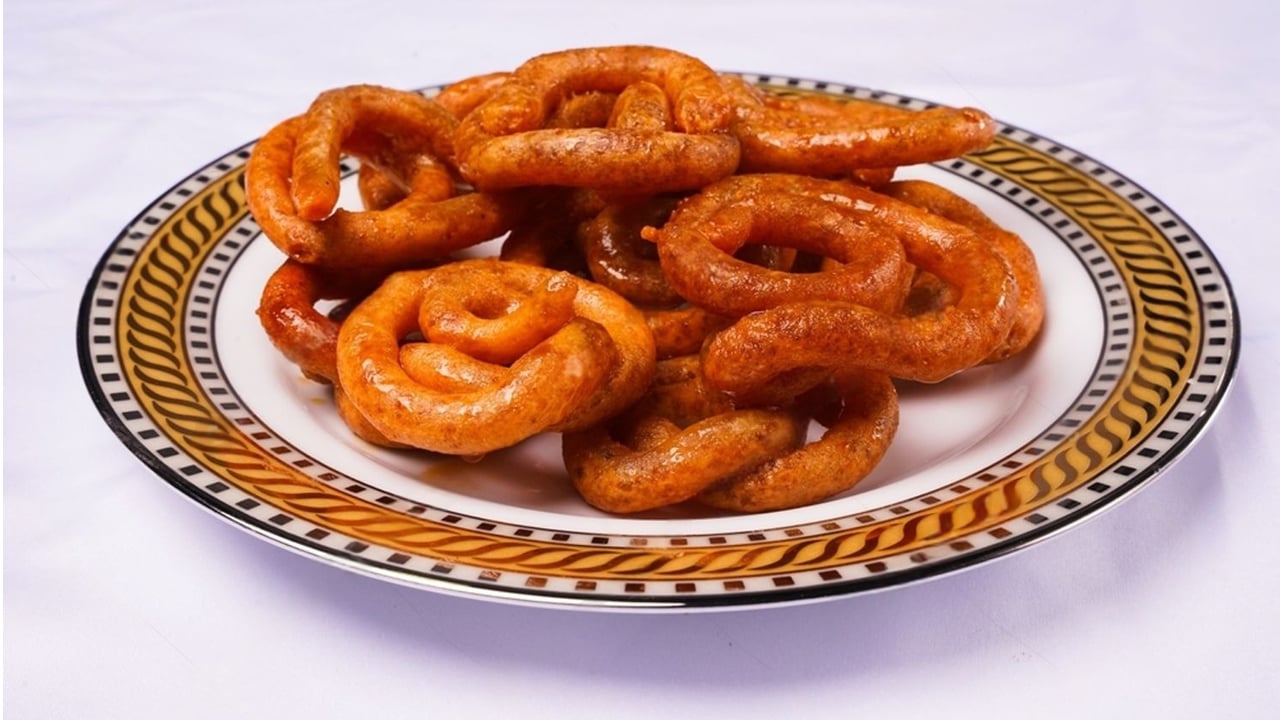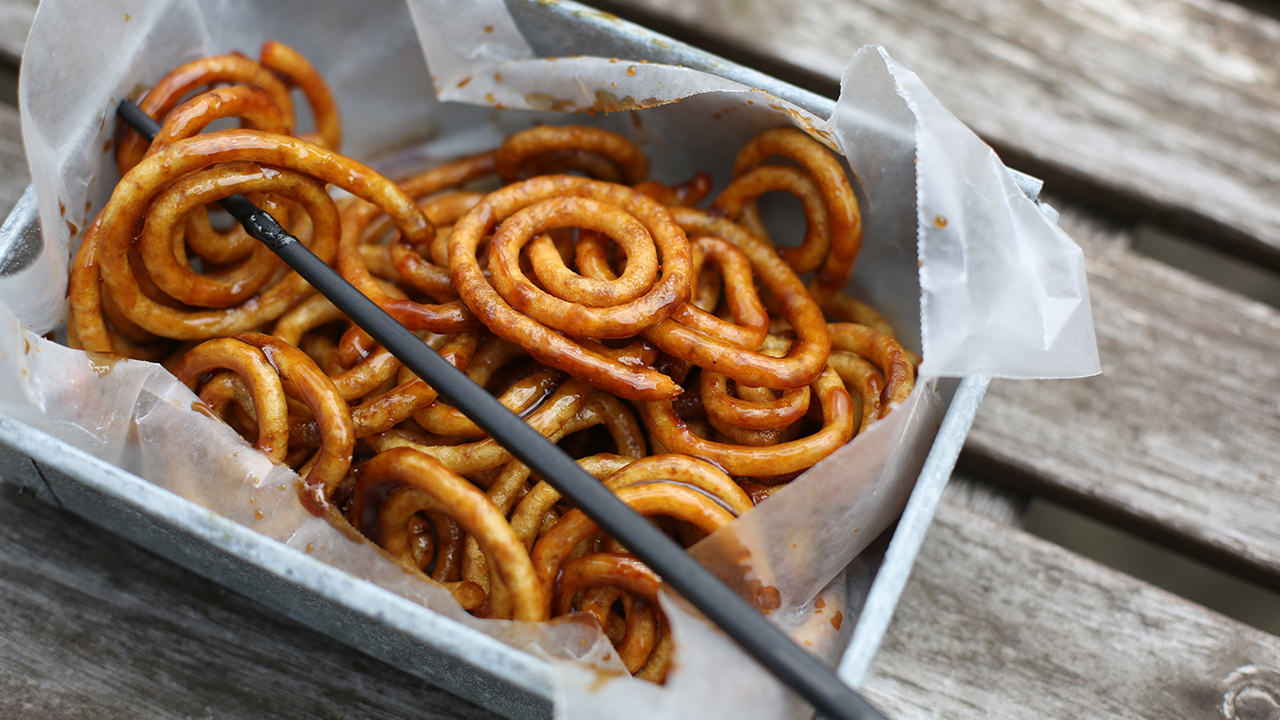

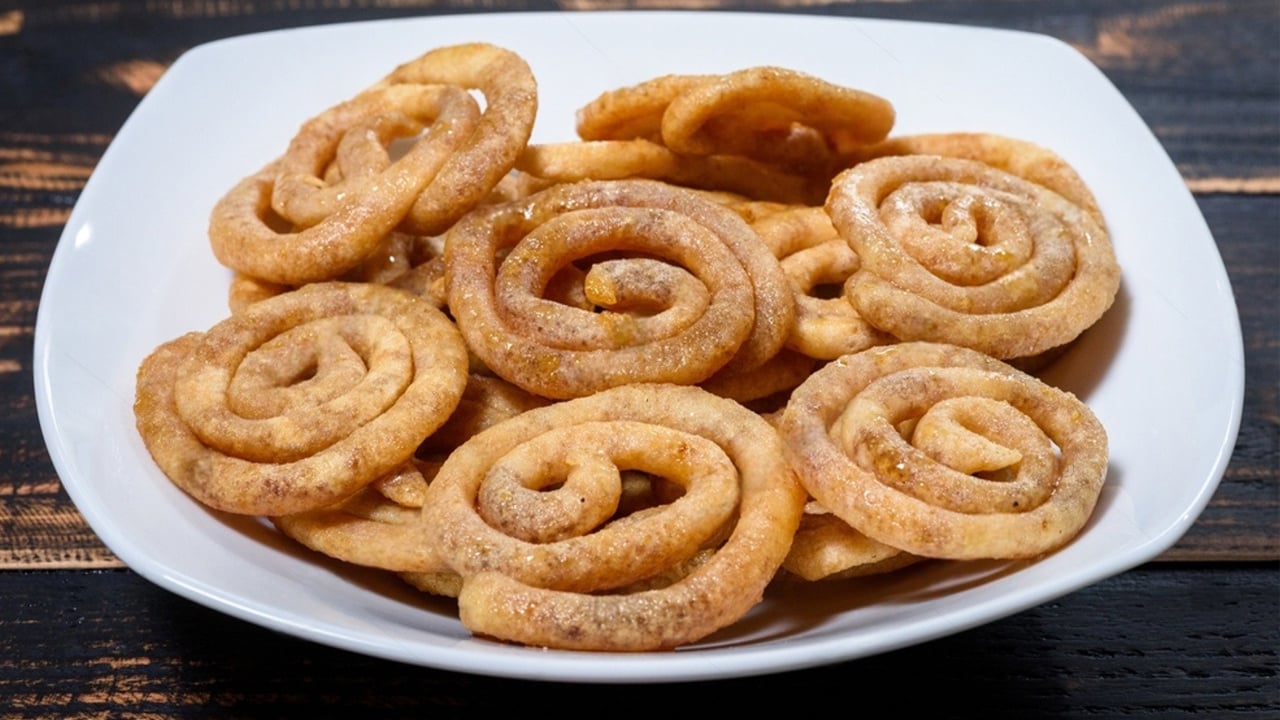

Uduwel, widely known as Pani Walalu, is one of Sri Lanka's most recognisable traditional sweetmeats. Deep-fried coils of lentil-and-rice batter, soaked in a warm treacle-and-cinnamon syrup, appear at weddings, New Year celebrations, and religious occasions across the island. Every family has its own version, and regional variations in sweetness, spice, and texture reflect the richness of Sri Lankan culinary heritage.
What is Uduwel (Pani Walalu)?
The name tells you most of what you need to know: pani means sweet syrup and walalu describes the coiled shape. The batter is made from ground white lentils (urad dal) and rice flour, thinned with coconut milk, then piped into hot oil in a loose spiral. The fried coils are immediately transferred into a simmering syrup of kitul treacle, sugar, and cinnamon, where they absorb sweetness while keeping a subtle chew.
Because the recipe relies on a few simple ingredients, its quality depends almost entirely on technique — the consistency of the batter, the temperature of the oil, and the thickness of the syrup. Get those right and the result is a treat that is simultaneously crisp on entry and soft at the centre.
What ingredients do you need for Pani Walalu?
The ingredient list is short, but sourcing matters. Kitul treacle (drawn from the kitul palm) gives a deeper, slightly smoky sweetness that plain sugar cannot replicate. Coconut oil is the traditional frying medium and adds a faint nuttiness, though a neutral vegetable oil works if coconut oil is unavailable. Cinnamon from Sri Lanka — often called true cinnamon — has a softer, more floral character than the cassia variety common elsewhere.
| Component | Ingredient | Quantity |
|---|---|---|
| Batter | White lentils (urad dal / ulundu) | 150 g |
| Rice flour | 150 g | |
| Coconut milk | 1 cup | |
| Salt | To taste | |
| Frying | Coconut oil (or vegetable oil) | Enough to deep-fry |
| Syrup | Kitul treacle | 100 ml |
| Sugar | 125 g | |
| Water | Around 80 ml | |
| Cinnamon powder | 1½–2 tablespoons |
How do you make Uduwel step by step?
The process spans two days in the loosest sense — the lentils need an overnight soak — but the active cooking time is modest once everything is prepared.
- Soak the lentils. Cover the white lentils with cold water and leave them overnight, or for at least 5–6 hours. They will swell and soften enough to grind smoothly.
- Grind to a thick paste. Drain the lentils and grind them until you have a dense, smooth mixture. No coarse grains should remain.
- Mix the batter. Combine the ground lentils with the rice flour, coconut milk, and a pinch of salt. The batter should be roughly twice as thick as a typical pancake batter — thick enough to hold its shape when piped, but not so stiff it clogs the nozzle.
- Rest the batter. Set it aside for around three hours. This rest allows the rice flour to hydrate fully and the flavours to meld.
- Make the syrup. Combine the kitul treacle, sugar, water, and cinnamon in a small saucepan over medium heat. Bring to a gentle boil, then simmer, stirring occasionally, until the syrup thickens slightly. Remove from heat and keep warm.
- Fry the coils. Heat the oil in a deep frying pan or wok. Transfer the batter to a piping bag fitted with a round nozzle. Pipe the batter directly into the hot oil in a continuous circular motion to form a loose coil roughly the size of your palm. Fry until golden brown on both sides.
- Soak in syrup. Using a slotted spoon, lift the coils straight from the oil into the warm syrup. Turn them gently so every surface is coated, and allow them to absorb the syrup for a few minutes.
- Drain and serve. Remove the coils and let excess syrup drip away before arranging on a plate. Serve at room temperature — the texture improves as they cool slightly.
What makes Pani Walalu different across regions of Sri Lanka?
In the hill country around Kandy, recipes tend to favour a thicker batter that produces a denser coil, while coastal communities sometimes use fresh coconut milk from locally grown palms, lending a richer flavour. Kokis, another Sri Lankan festive treat, is often made alongside Pani Walalu during the Sinhala and Tamil New Year, and the two are frequently presented together on celebratory trays.
Some households add a small amount of turmeric to the batter for colour, while others blend a touch of cardamom into the syrup. These variations are passed down within families rather than standardised, which is precisely what keeps the tradition alive and personal.
When is Uduwel traditionally prepared?
Pani Walalu is closely associated with the Sinhala and Tamil New Year in April, when households prepare an array of traditional sweetmeats to share with neighbours and offer at the family altar. It also appears at weddings, pirith ceremonies, and other Buddhist and Hindu rituals where sweet offerings hold symbolic importance. Because it keeps well at room temperature for a day or two, it travels easily to celebrations and communal gatherings.
What tips help first-time cooks get Pani Walalu right?
- Batter consistency is critical. If the batter is too thin, the coils will spread and lose their shape in the oil. Test with a small spoonful — it should hold together when it hits the hot oil.
- Oil temperature matters. Oil that is too cool produces greasy, pale coils; oil that is too hot burns the outside before the inside cooks through. A moderate, steady heat gives the best result.
- Work quickly. Transfer fried coils to the syrup while they are still hot so they absorb the flavours more readily.
- Keep the syrup warm. A cool syrup will not penetrate the coils effectively. Keep the saucepan on the lowest possible heat while you fry in batches.
- Grind the lentils very smoothly. Coarse batter leads to uneven frying and a grainy texture. If your blender struggles, add just a tablespoon or two of water to help.
How does Uduwel fit into Sri Lanka's broader food culture?
Sri Lanka's traditional sweetmeat repertoire draws heavily on three pillars: coconut, rice, and palm-derived sweeteners. Coconut contributes both milk and oil to Pani Walalu, making it a natural expression of the island's culinary DNA. Kitul treacle — tapped from the kitul palm in much the same way maple syrup is drawn from trees — adds a complexity that refined sugar alone cannot provide. Together, these ingredients tell a quiet story about an island where the land has always shaped what goes on the table.
For visitors keen to experience this culture directly, traditional cooking demonstrations are available through various village and homestay experiences across Sri Lanka, particularly in the Cultural Triangle and the hill country.