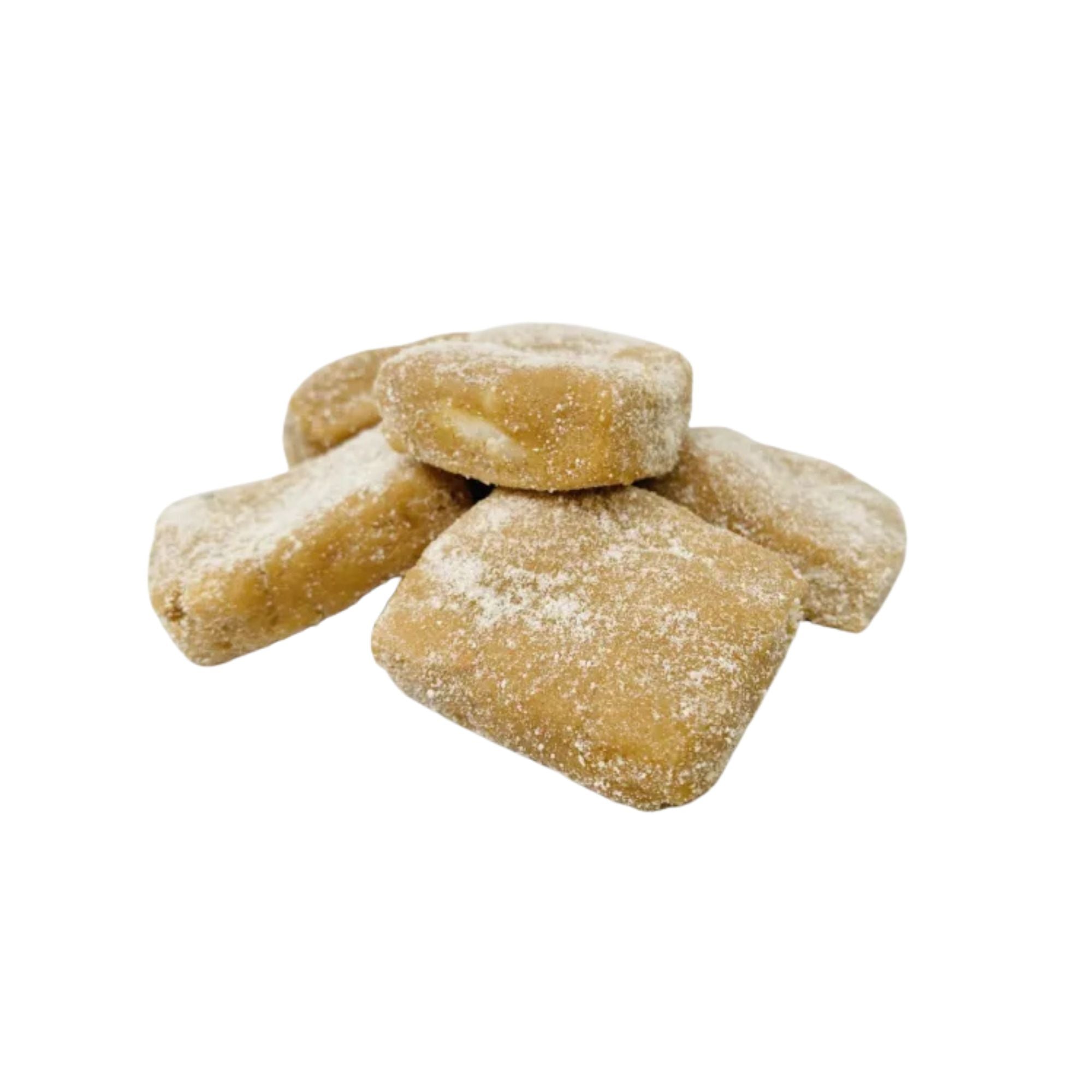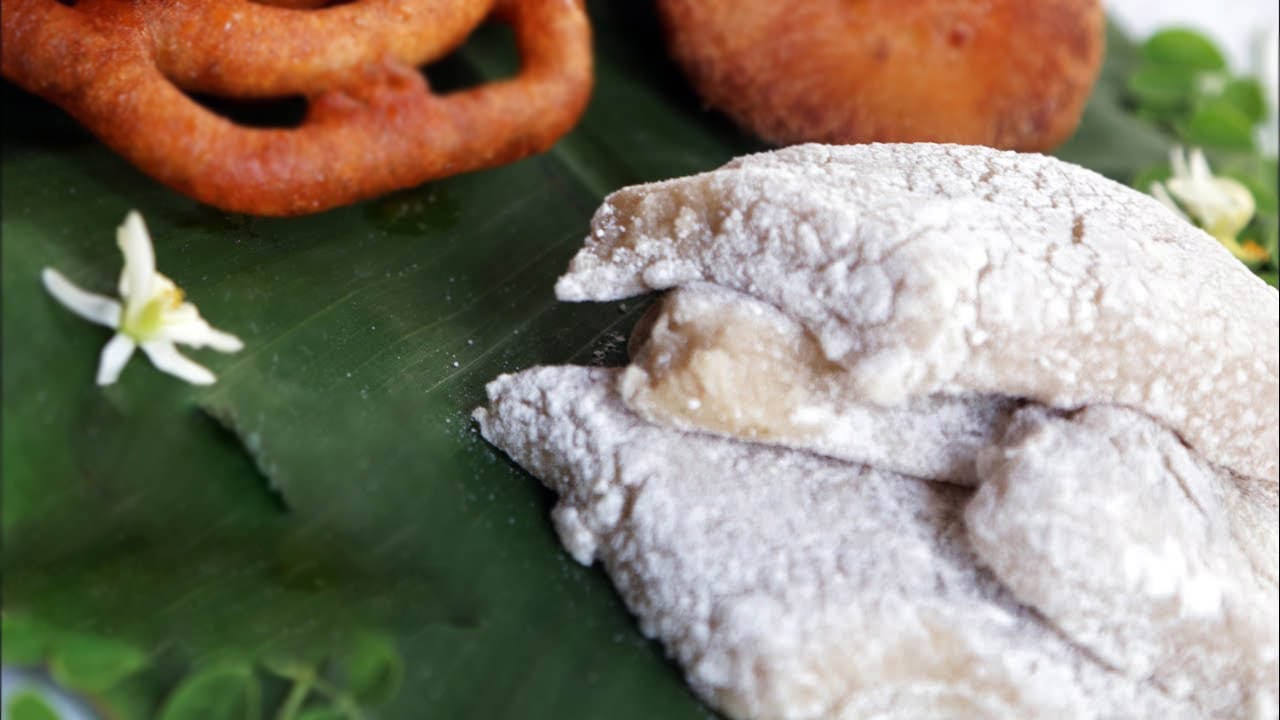
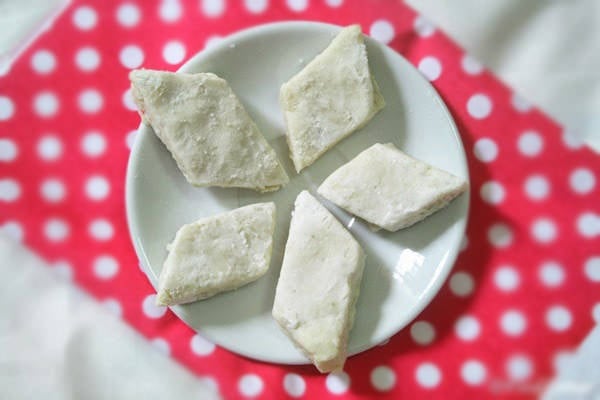
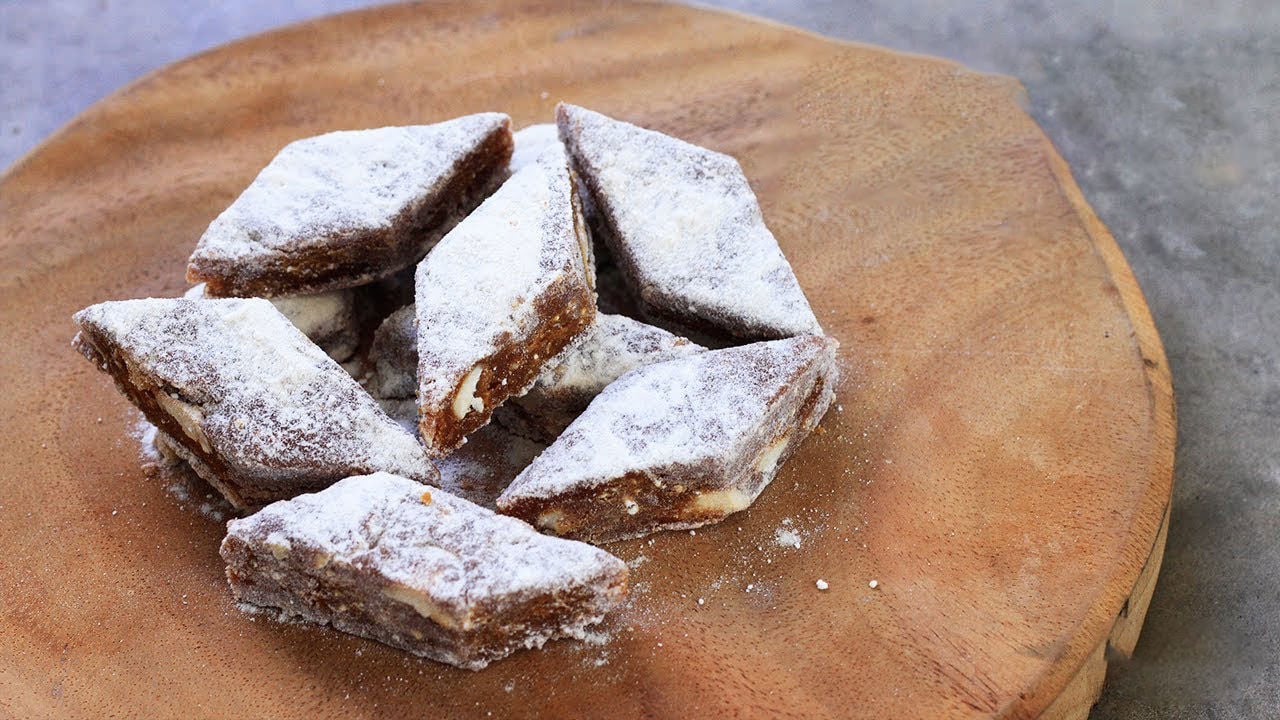

Aluwa is a firm, pale Sri Lankan sweet made by folding roasted rice flour into a hot, thick syrup with chopped cashews and cardamom, then pressing the mixture flat and cutting it into diamonds or squares while it is still warm. The cashew version, often called kaju aluwa, is one of the sweets that households make for the Sinhala and Tamil New Year in April and set out on the New Year table, alongside kokis, kavum and mung kavum. It is also sold in sweet shops through the year.
Aluwa needs no oven and no special equipment, but it moves fast: once the flour meets the syrup, the mixture stiffens within minutes. Have everything measured and the board floured before you start.
How to make aluwa
- Makes about 25 pieces
- Prep: 10 minutes
- Cook: 25 minutes (+ 15 minutes setting)
- Difficulty: Moderate
Ingredients
- 250 g fine white rice flour, plus about 50 g extra for the board and dusting
- 200 g white sugar
- 250 ml water
- A pinch of salt
- 75 g raw cashews, chopped
- 4 green cardamom pods, seeds only, finely ground
Method
- Prepare the board. Dust a wooden board or tray generously with some of the extra rice flour and keep a knife ready.
- Roast the flour. Dry-roast the 250 g rice flour in a heavy pan over a medium-low heat, stirring constantly, for 5 to 8 minutes, until it is hot, free-flowing like fine sand and smells toasted but has not coloured. Sieve it into a bowl.
- Make the syrup. Boil the sugar, water and salt in a heavy pan over a medium heat for 10 to 12 minutes, until the syrup is thick and falls from a lifted spoon in a single heavy thread.
- Add the cashews. Take the pan off the heat and stir in the cardamom and chopped cashews for about 30 seconds.
- Fold in the flour. Add the roasted flour a few spoonfuls at a time, stirring hard with a wooden spoon, until the mixture comes away from the pan as a soft, smooth dough. Stop adding flour as soon as it holds together.
- Spread and level. Turn the dough straight out onto the floured board and press it into an even slab about 1 cm thick with a floured spatula or the base of a glass.
- Cut while warm. Cut into diamonds or squares at once, before the slab sets. After a few minutes, separate the pieces and dust the undersides with rice flour.
- Cool and store. Leave for about 15 minutes to cool and firm up completely, then pack into an airtight tin.
What goes wrong with aluwa?
- Syrup too thin: the dough stays soft and sticky and the pieces run together. Boil it until it trails a heavy thread before adding the flour.
- Syrup too far gone: it crystallises and the dough turns crumbly. Take it off the heat as soon as it threads.
- Flour not roasted enough: the sweet tastes raw and turns gummy. Roast until the flour is dry and sandy.
- Cut too late: the slab cracks under the knife. Cut within a minute or two of spreading it.
Is aluwa made with sugar or treacle?
Both. The pale cashew aluwa sold in most shops is made with white sugar, as here. Pani aluwa replaces the sugar syrup with treacle, which gives a darker colour and a deeper caramel flavour; simmer about 300 ml kithul treacle or coconut treacle to the same thread stage instead of making the syrup. Some cooks prefer it for exactly that flavour. For a different treacle sweet with the same cashews, see pani kadju, roasted cashews coated in treacle.
What other variations are there?
Peanuts can replace cashews for an everyday version. Some cooks add a pinch of ground fennel or cumin with the cardamom, or a teaspoon of butter for a softer bite. Named regional styles such as Meegamu aluwa also exist, and a version made with potato rather than rice flour is known too. Aluwa should not be confused with kiri aluwa, which is a milk toffee rather than a rice flour sweet.
How is aluwa served at the New Year?
The sweets are made in the days before Avurudu, whose rituals follow the auspicious times published each year as the Avurudu nakath. Aluwa keeps well, so it can be made ahead and set out with the other sweets when the family sits down together, and plates of it are shared with neighbours and visiting relatives. It is eaten at room temperature, by hand, often with plain tea.
How long does aluwa keep?
In an airtight tin at room temperature, aluwa keeps for about a week. Keep it away from humidity and out of the fridge, where it absorbs moisture and turns sticky. A light dusting of rice flour between layers stops the pieces sticking together.