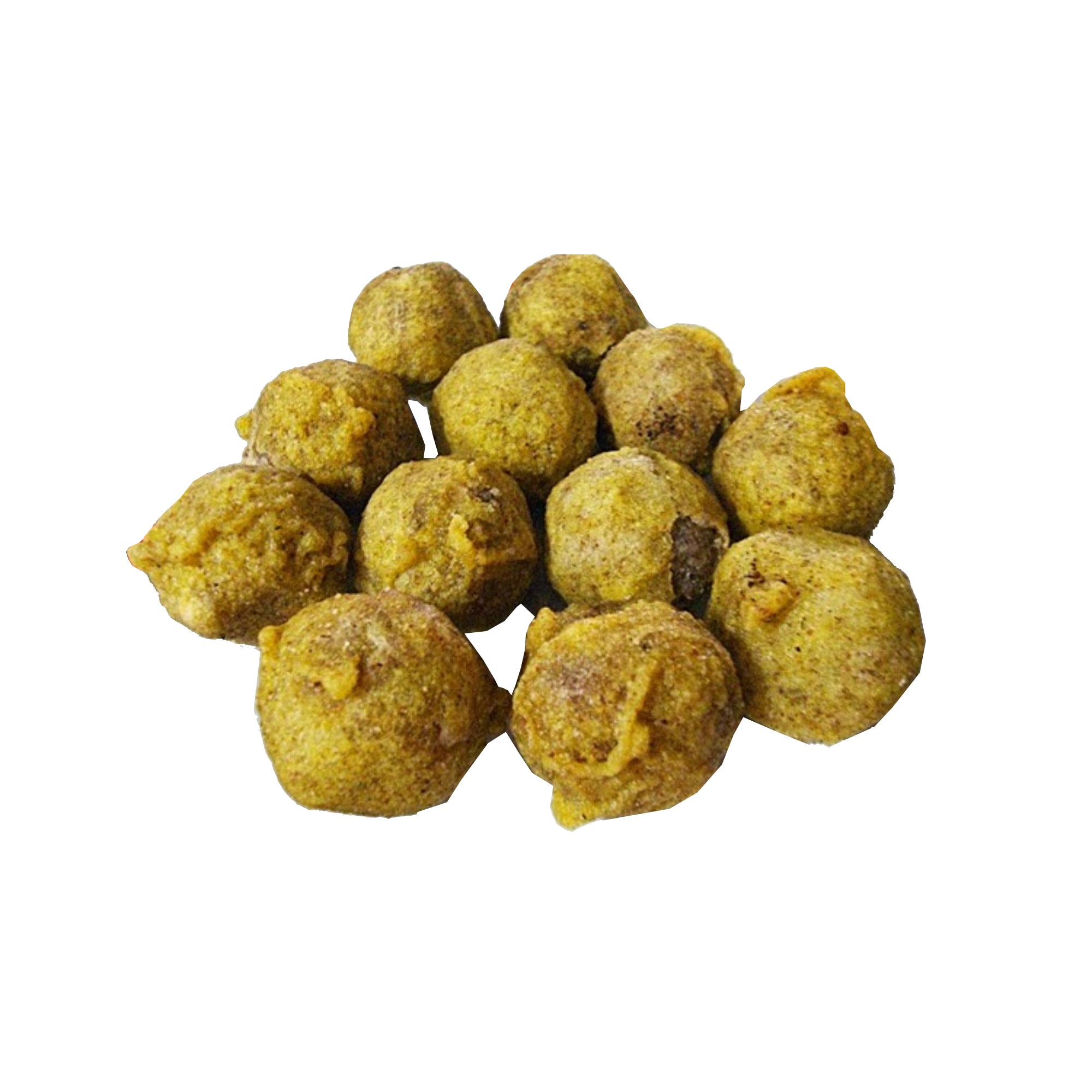
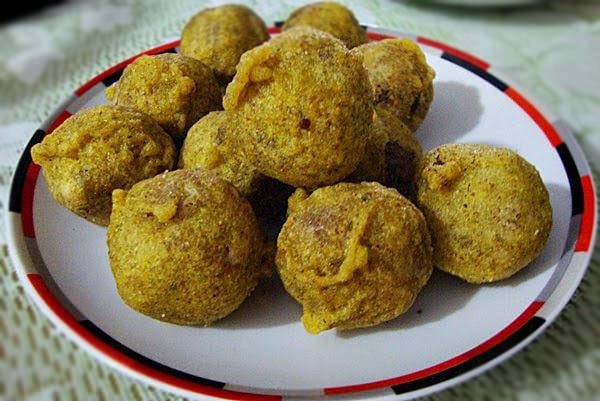
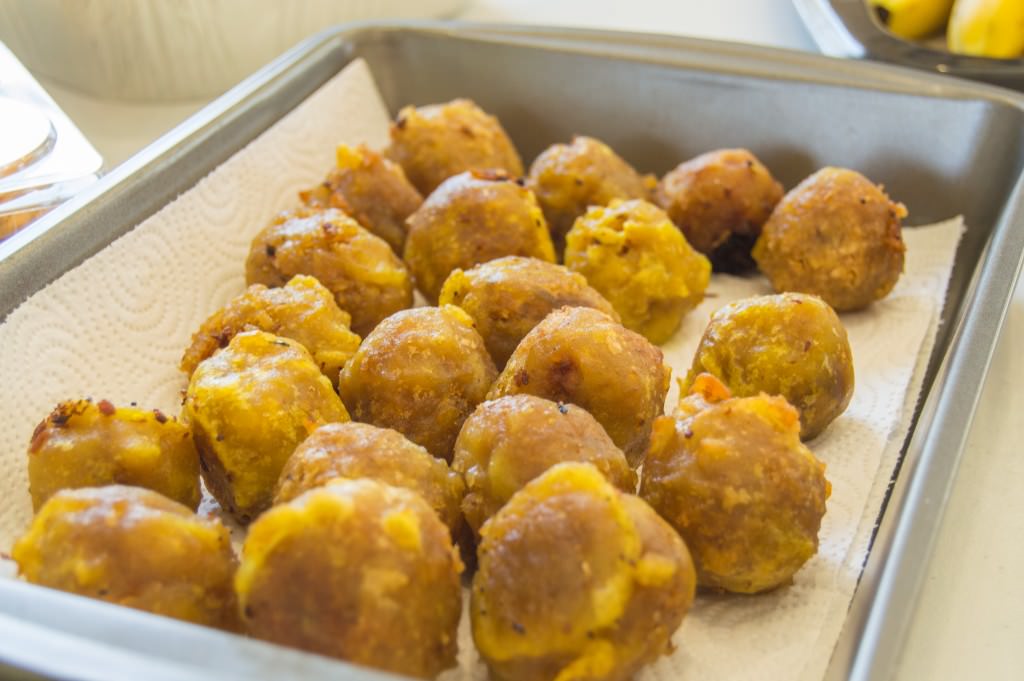
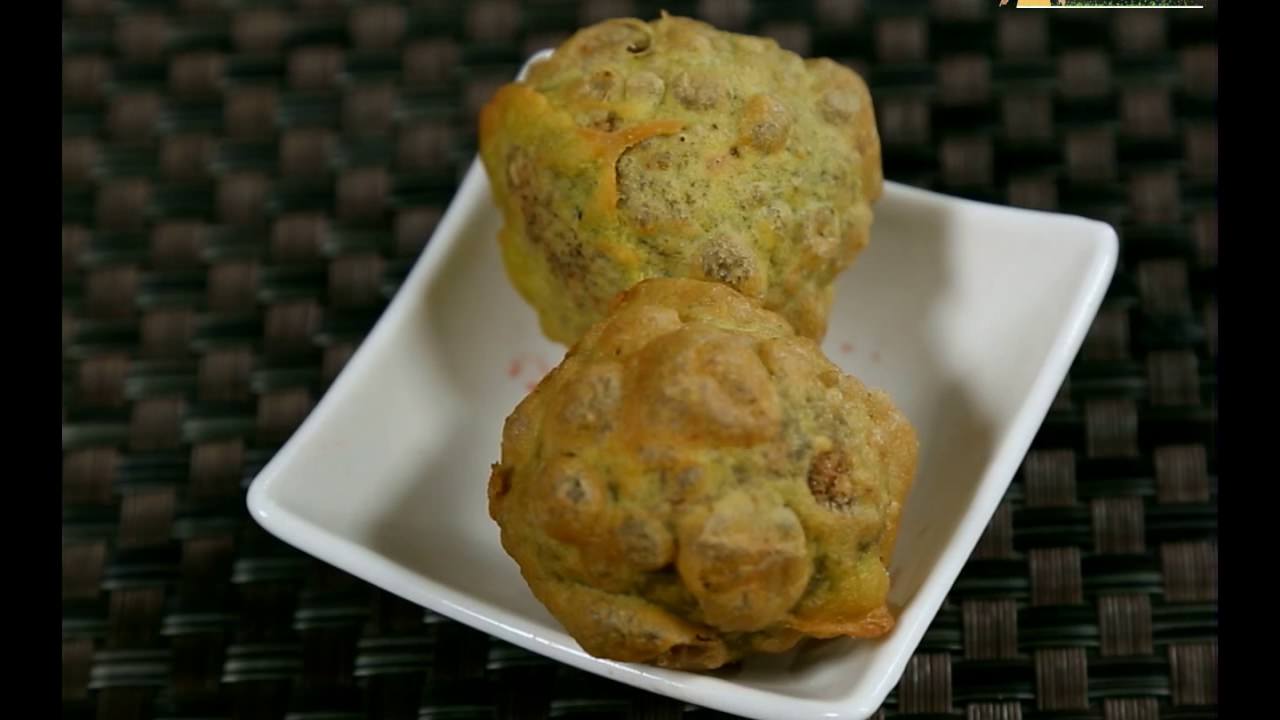

Mung guli (මුං ගුලි) are small, round Sri Lankan sweets made from roasted mung bean (green gram) flour and rice flour, bound into a firm dough with kithul treacle. Each ball is dipped in a yellow batter of rice flour, turmeric and coconut milk and deep-fried, so it has a thin, crisp shell around a soft, dense and nutty centre. Guli simply means balls in Sinhala.
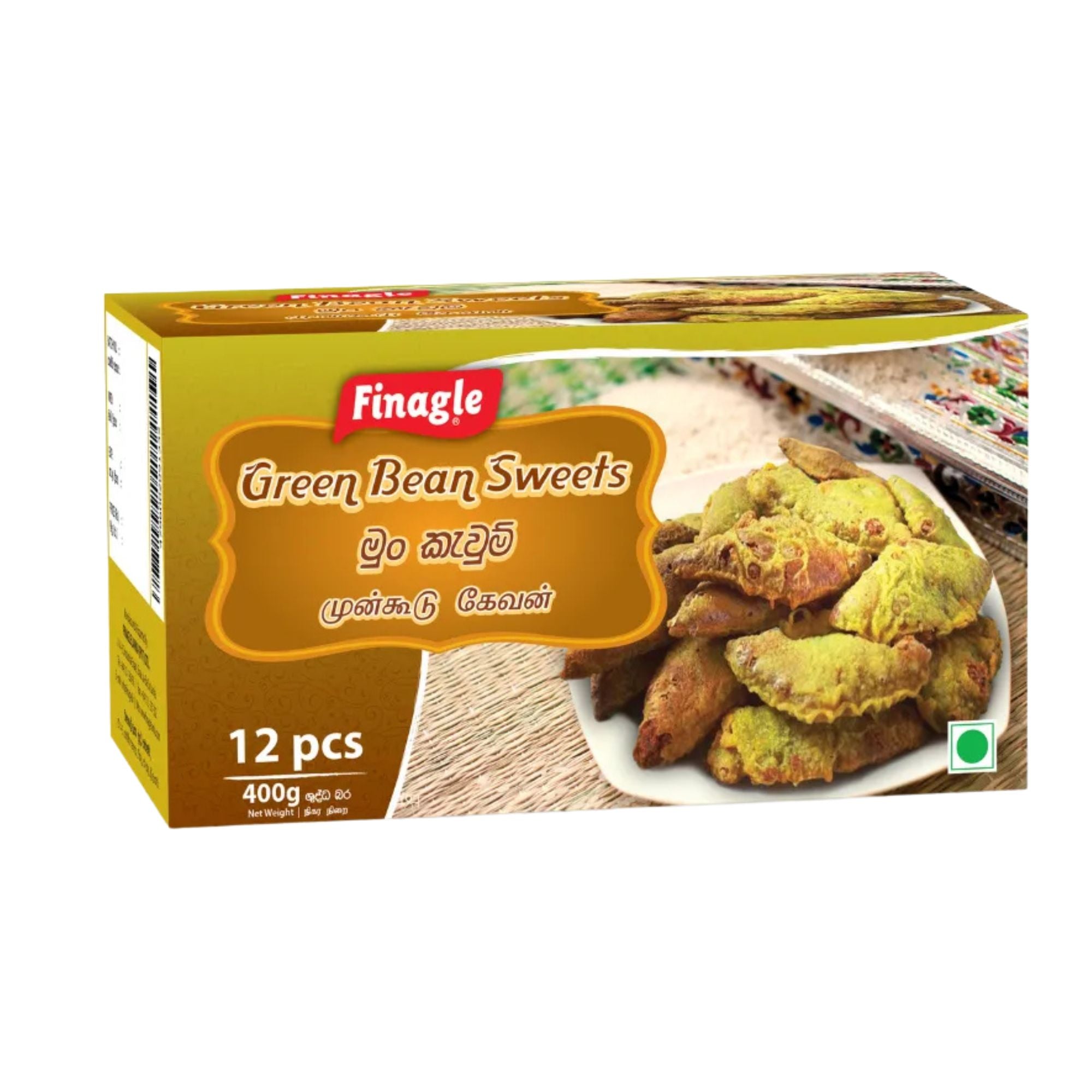
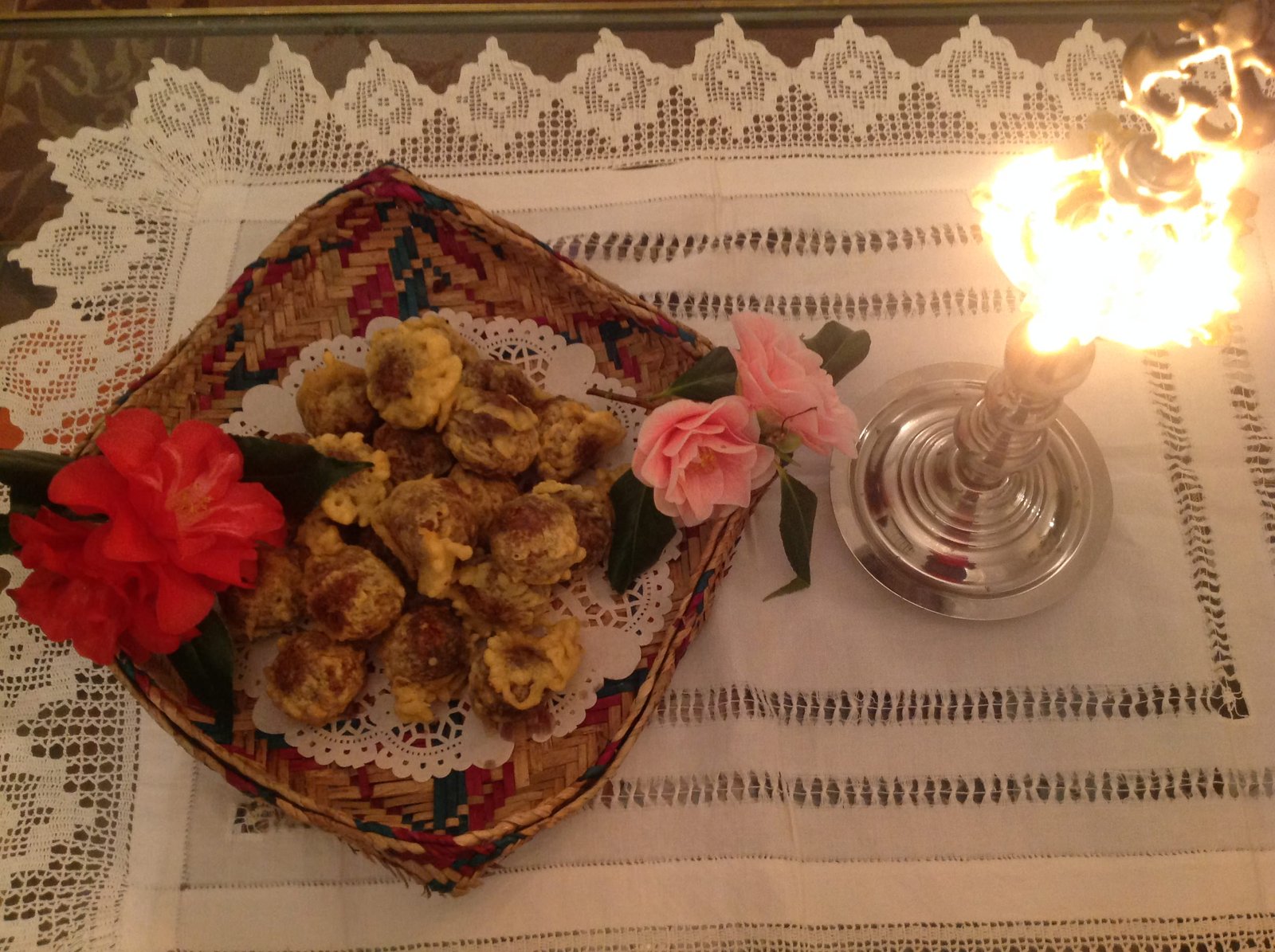
Mung guli is made from the same dough as mung kavum; the difference is the shape. Mung kavum is cut into diamonds, while mung guli is rolled into balls, which many home cooks find quicker. Both are made for the Sinhala and Tamil New Year in April and served on the New Year table with kokis, kavum and other sweets, usually with a cup of plain tea.
How to make mung guli
- Makes about 25 balls
- Prep: 30 minutes
- Cook: 45 minutes
- Difficulty: Moderate
For the mung dough
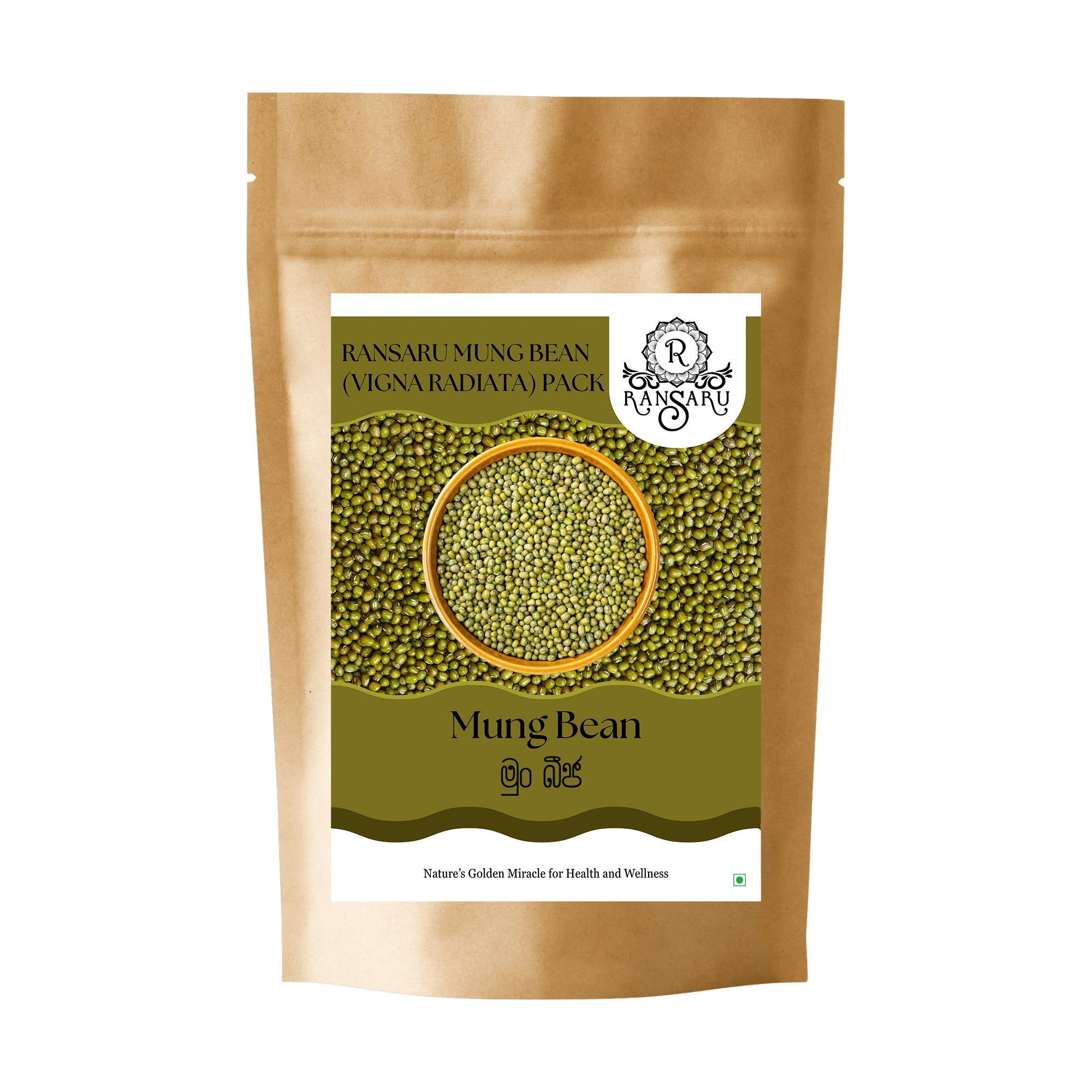
- 250 g whole mung beans (green gram), or 200 g roasted mung flour plus 50 g whole beans
- 150 g fine white rice flour, plus extra for dusting
- 350 ml kithul treacle
- 1/2 tsp salt
- 1 tsp ground cardamom, or 1/2 tsp roasted and crushed fennel seeds (maduru)
For the batter
- 150 g fine white rice flour
- 200 ml thick coconut milk, plus up to 50 ml extra to adjust
- 1/2 tsp ground turmeric
- A pinch of salt
- About 1 litre coconut oil or vegetable oil, for deep frying
Method
- Roast the mung. Dry-roast the whole beans in a heavy pan over a medium heat, stirring all the time, for about 10 minutes until light golden and nutty. Leave to cool.
- Grind two textures. Grind about four-fifths of the roasted beans to a fine flour and sieve out the husks. Pulse the rest briefly so it stays coarse, with small pieces; these give the centre its texture. Mix both with the 150 g rice flour, salt and cardamom in a heatproof bowl.
- Cook the treacle. Simmer the treacle in a heavy pan over a medium heat for 5 to 8 minutes, until it thickens and falls from a lifted spoon in a slow, thick thread. Set aside 2 tablespoons of it.
- Make the dough. Pour the hot treacle into the flour a little at a time, stirring with a wooden spoon, until it comes together as a stiff, glossy dough that leaves the sides of the bowl. Add reserved treacle if it is crumbly, or a spoonful of rice flour if it is sticky.
- Roll the balls. When the dough is cool enough to handle but still warm, pinch off pieces the size of a large marble, about 3 cm across, and roll them smooth between lightly floured palms.
- Make the batter. Whisk the rice flour, turmeric and salt with the coconut milk until smooth and thick enough to coat the back of a spoon. Thin it with a little of the extra coconut milk if needed.
- Heat the oil. Heat the oil in a deep pan or wok over a medium heat to about 160 to 170°C, until a drop of batter sizzles and rises steadily.
- Coat and fry. Roll each ball in the batter, lift it out with a fork and let the excess drip off, then lower it into the oil. Fry 5 or 6 at a time for 3 to 4 minutes, turning them, until evenly crisp and golden.
- Drain and cool. Lift out onto kitchen paper and leave to cool completely before storing, so the shell stays crisp.
How is mung guli different from mung kavum?
The dough, batter and frying are the same; only the shape changes. For mung kavum the warm dough is pressed into a sheet and cut into diamonds, while for mung guli it is rolled into balls. A ball has no sharp corners to catch the oil, so the coating tends to be more even. For more on the diamond-shaped version and its place at Avurudu, see the page on mung kevum.
Why roast and grind the mung two ways?
Roasting gives the mung its nutty, toasty flavour and removes the raw, beany taste. Most of the beans are ground fine so the dough binds smoothly, and a small part is left coarse so there are little pieces of bean in the soft centre. If you start from bought mung flour, warm it in a dry pan for 2 to 3 minutes and stir in 50 g of roasted, coarsely ground beans.
What if my dough will not hold together?
- Crumbly or cracking balls: the treacle was cooked too far or there is too much flour. Work in the reserved treacle while the dough is warm.
- Sticky dough that slumps: the treacle was not cooked to thread stage. Knead in rice flour a spoonful at a time.
- Greasy balls: the oil was too cool or the pan was crowded. Fry a few at a time at a steady medium heat.
What variations are there?
Many Sri Lankan cooks beat an egg into the batter for a crisper, sturdier shell, which makes the sweet no longer vegan. Some sweeten the dough with part sugar and part treacle, or use coconut treacle or melted kithul jaggery instead of kithul treacle. Scraped coconut or a little butter in the dough are other home touches. Another round New Year sweet, made from sesame and jaggery with no frying, is thala guli.
How long does mung guli keep?
In an airtight tin at room temperature, mung guli keeps for about 4 to 5 days. The shell is crispest on the first day and softens a little after that. Avoid the fridge, which softens the coating and hardens the centre. Families often fry them a few days before the New Year, which begins at the auspicious times set each year in the Avurudu nakath.
Related reading
7 pages on closely related subjects.