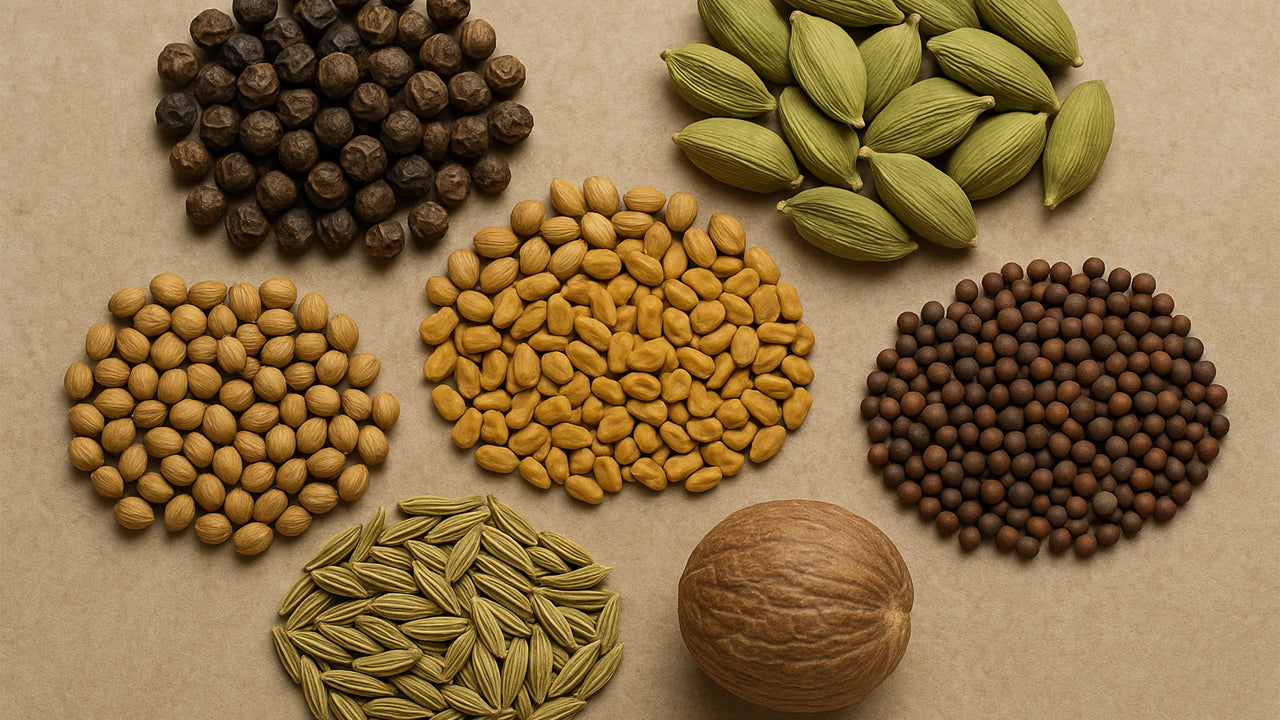
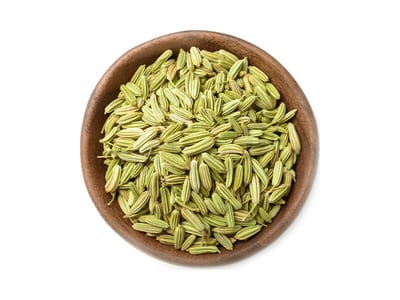
Curry powder in Sri Lanka is not one thing. Most kitchens keep at least two home-ground blends side by side, known in Sinhala as thuna paha, plus a jar of chilli powder, and cooks choose between them according to the curry. Thuna means three and paha means five, a name usually explained as three to five core spices. Whatever else goes in, the base is always the same three seeds: coriander, cumin and fennel.
This page explains the main Sri Lankan curry powders, how they differ and which to reach for when. A compact card for the roasted blend follows; for detailed roasting cues and variations, see the full thuna paha recipe.
What is raw (unroasted) curry powder?
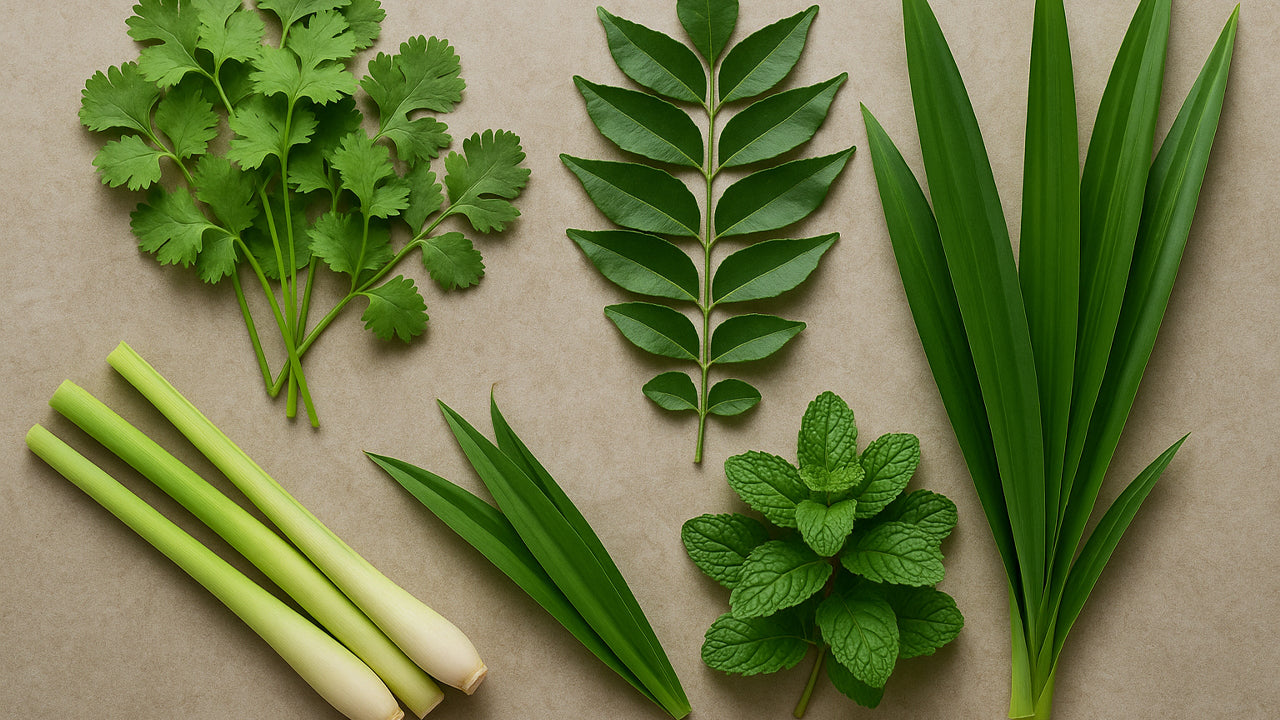
Raw curry powder, amu thuna paha, is ground from untoasted seeds. A typical home blend is coriander, cumin and fennel in a ratio of roughly 4 to 2 to 1, with a little cinnamon and a handful of curry leaves. Some cooks warm the seeds briefly in a dry pan, without letting them colour, just to make sure they are dry before grinding. The powder is a pale khaki colour with a fresh, mild, grassy aroma. It is used for vegetable curries, dhal curry and gentle coconut-milk dishes such as potato curry, where a roasted blend would overpower the main ingredient.
What is roasted curry powder?
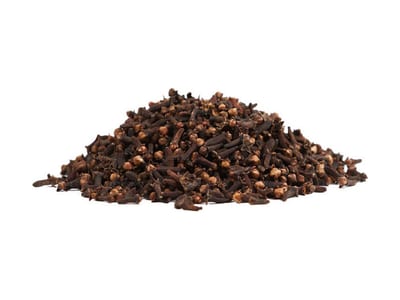
Roasted curry powder, badapu thuna paha, starts from the same three seeds but each spice is dry-roasted separately until deep brown before grinding. Most roasted blends also include a spoonful of raw rice, black pepper, a little fenugreek, cardamom, cloves, cinnamon, curry leaves and pandan (rampe). The result is dark brown, toasty and much stronger. It is the standard powder for meat and fish, including chicken curry and dark pork curry, and a pinch is often sprinkled in at the end of cooking to refresh the aroma.
Roasted Sri Lankan curry powder: recipe card
- Makes about 140 g
- Prep: 10 minutes
- Cook: 25 minutes (+ 20 minutes cooling)
- Difficulty: Easy
Ingredients
- 60 g coriander seeds (about 1 cup)
- 30 g cumin seeds (about 1/3 cup)
- 15 g fennel seeds (about 2 1/2 tbsp)
- 1 tbsp uncooked white rice
- 1 tbsp black peppercorns
- 1 tsp fenugreek seeds
- 5 cm piece Ceylon cinnamon, broken into small pieces
- 6 green cardamom pods
- 6 cloves
- 3 dried red chillies, stalks removed (optional)
- 2 sprigs curry leaves (about 20 leaves), picked off the stems
- 5 cm piece pandan (rampe) leaf, cut into 1 cm pieces
Method
- Roast the seeds. In a heavy, dry pan over a medium-low heat, roast the coriander for 5 to 6 minutes, then the cumin and the fennel for 2 to 3 minutes each, stirring constantly until each is deep brown and toasty. Tip each onto a plate as it is done.
- Roast the rice and small seeds. Roast the rice for about 3 minutes until golden brown, adding the peppercorns and fenugreek for the last minute; stop before the fenugreek turns black.
- Toast the rest. Toast the cinnamon, cardamom, cloves and chillies for 1 to 2 minutes until fragrant, then the curry leaves and pandan on a low heat for 1 to 2 minutes until dry and crumbly.
- Cool. Leave everything on the plate for about 20 minutes, until completely cold.
- Grind and store. Grind in batches to a fine powder, sift and regrind the husks, then store in a clean, dry, airtight jar.
What is Jaffna curry powder?
Jaffna curry powder is the northern, Tamil-style blend. It uses the same seeds as the roasted Sinhala blend but with a large proportion of dried red chillies, often as much by weight as the coriander, plus black pepper, fenugreek and warm spices. The powder is red rather than brown and much hotter, so it is used as an all-in-one seasoning for meat, chicken and seafood, most famously Jaffna crab curry. See Jaffna curry powder for a recipe.
Where does chilli powder fit in?
Sri Lankan curry powders are mostly about aroma, not heat. Heat comes from chilli powder, which is simply ground dried red chillies, kept in its own jar and added separately so each curry can be made as hot as the cook wants. Some kitchens also keep a roasted chilli powder, ground from chillies toasted until dark, for black meat curries. A typical Sri Lankan curry uses curry powder and chilli powder together. Turmeric is added separately too: the Sri Lankan blends above contain little or none, which is one reason they taste so different from yellow, turmeric-heavy supermarket curry powders.
Which curry powder should you use?
- Raw curry powder. Dhal, green vegetables, pumpkin, potato, and mild white curries finished with coconut milk.
- Roasted curry powder. Chicken, beef, pork, mutton and fish curries, and robust vegetables such as young jackfruit.
- Jaffna curry powder. Northern-style crab, prawn, meat and chicken curries, when you want a hot, red gravy without adding chilli separately.
- Chilli powder. Any of the above, in whatever quantity suits your taste.
If a recipe just says Sri Lankan curry powder, look at the main ingredient: meat and fish usually mean the roasted blend, vegetables and lentils the raw one. Ceylon black pepper is also often added to a curry on its own, alongside the curry powder.
How do you store curry powder?
Keep every blend in a clean, completely dry, airtight jar in a cool, dark cupboard, away from the stove, and always use a dry spoon. Homemade powders are at their best for about 2 to 3 months; after that they are still safe to use but lose aroma. Ground spices fade much faster than whole seeds, so many cooks grind small batches often.
Related reading
4 pages on closely related subjects.