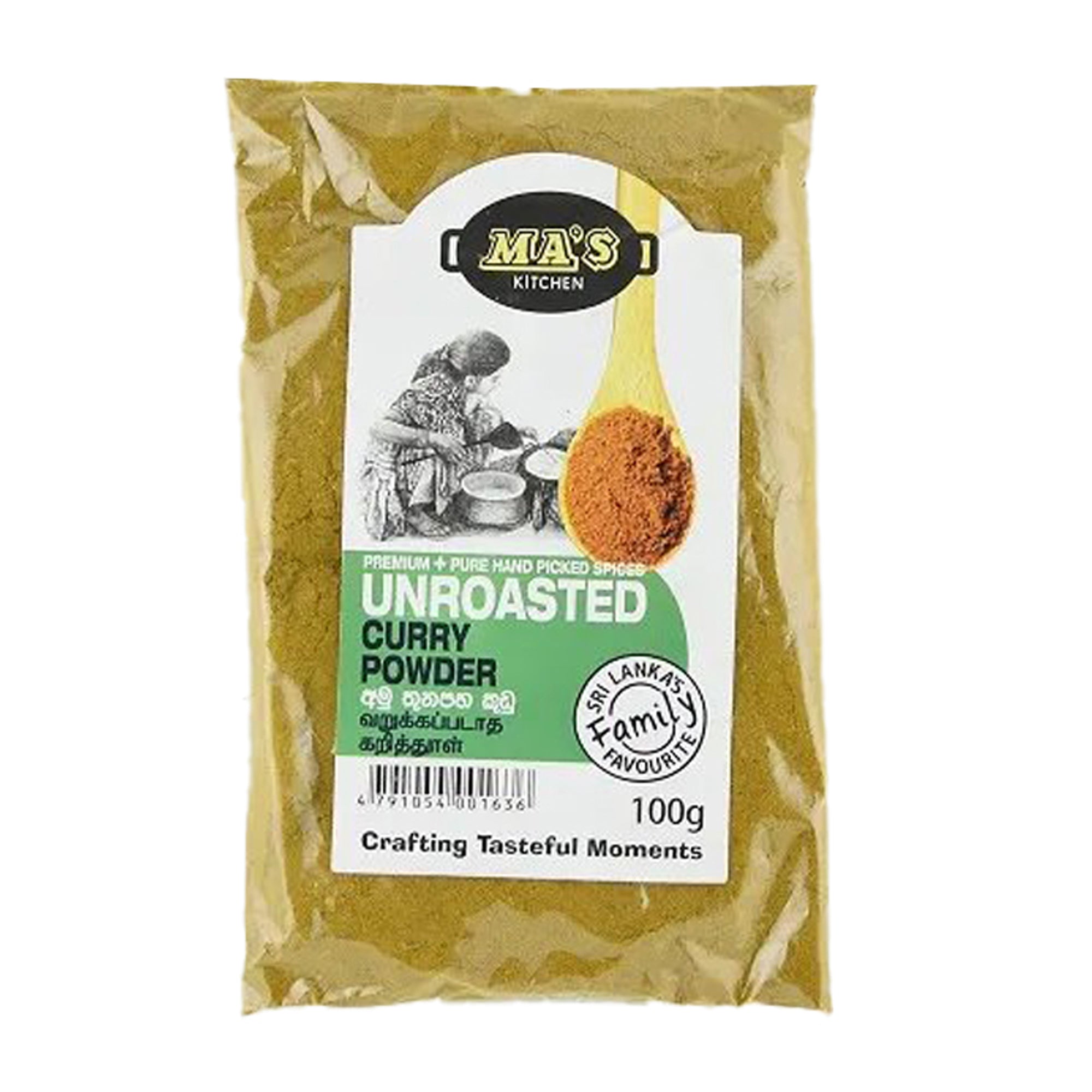
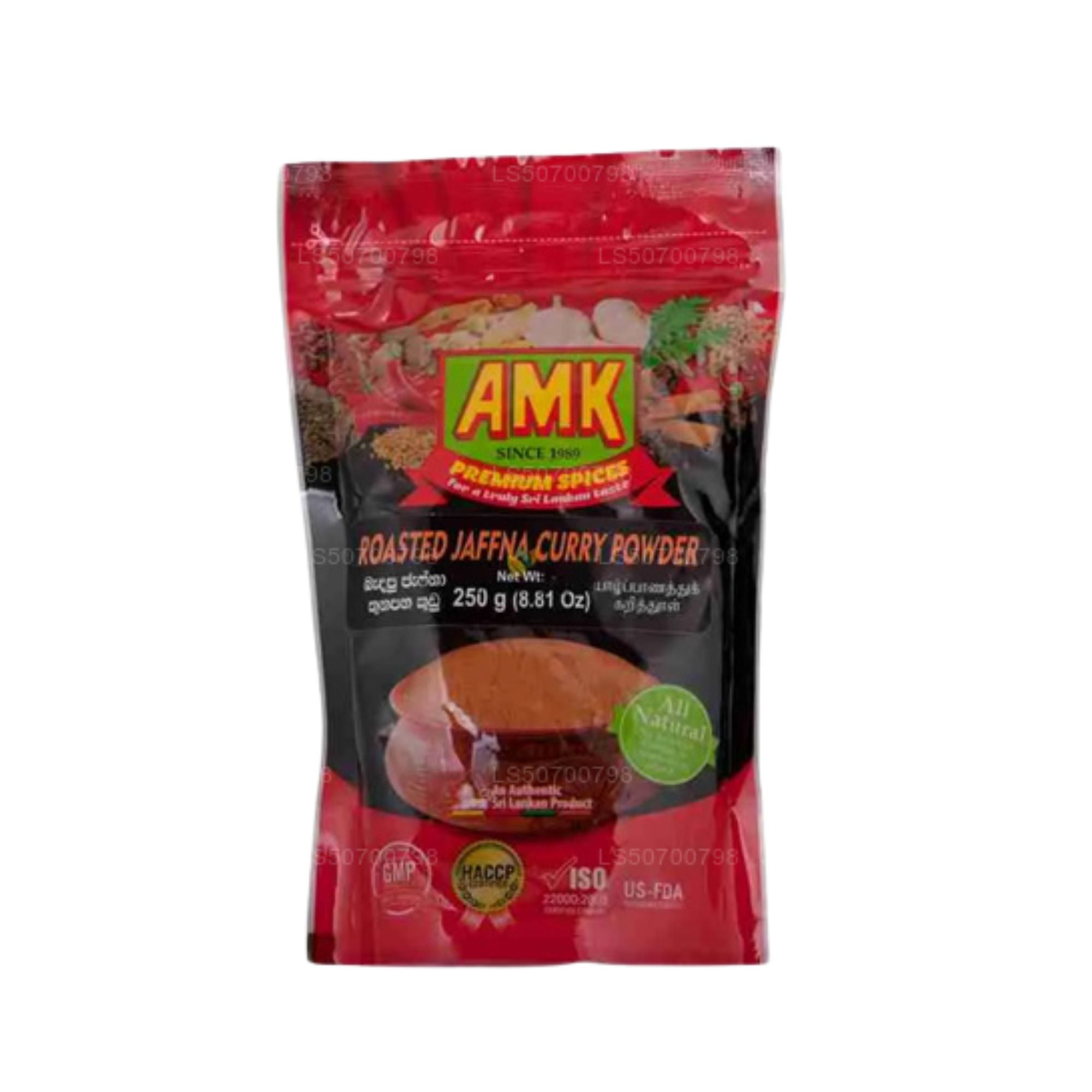
Thuna paha is the Sinhala name for Sri Lankan curry powder. Thuna means three and paha means five, and the name is usually explained as a blend of three to five core spices: coriander, cumin and fennel, with other whole spices added according to the cook. Sri Lankan kitchens keep it in two forms. The raw blend, amu thuna paha, is ground from untoasted seeds and used mainly for vegetable curries. The roasted blend, badapu thuna paha, is the one on this page: every spice is dry-roasted until deep brown before grinding, which gives a darker, toastier powder that is the standard choice for meat, fish and richer vegetable curries.
Homemade roasted curry powder smells far stronger than most shop-bought packets, and it takes under an hour. The key is to roast each spice on its own, because small seeds scorch while larger ones are still pale. For how the roasted blend compares with the raw one, with Jaffna curry powder and with plain chilli powder, see our guide to Sri Lankan curry powders.
How to make roasted Sri Lankan curry powder (thuna paha)
- Makes about 140 g
- Prep: 10 minutes
- Cook: 25 minutes (+ 20 minutes cooling)
- Difficulty: Easy
Ingredients
- 60 g coriander seeds (about 1 cup)
- 30 g cumin seeds (about 1/3 cup)
- 15 g fennel seeds (about 2 1/2 tbsp)
- 1 tbsp uncooked white rice
- 1 tbsp black peppercorns
- 1 tsp fenugreek seeds
- 5 cm piece Ceylon cinnamon, broken into small pieces
- 6 green cardamom pods
- 6 cloves
- 3 dried red chillies, stalks removed (optional, for a little heat)
- 2 sprigs curry leaves (about 20 leaves), picked off the stems
- 5 cm piece pandan (rampe) leaf, cut into 1 cm pieces
Method
- Get ready. Set out a large plate to cool the spices on. Wipe the curry leaves and pandan dry if they are damp; any moisture makes the powder clump.
- Roast the coriander. Put the coriander seeds in a heavy, dry frying pan over a medium-low heat. Stir constantly for 5 to 6 minutes, until they turn an even deep brown and smell toasty, then tip them onto the plate.
- Roast the cumin and fennel. Roast the cumin seeds the same way for 2 to 3 minutes, until a few shades darker and fragrant, and add them to the plate. Repeat with the fennel seeds.
- Roast the rice and small seeds. Roast the rice for about 3 minutes, until golden brown. Add the peppercorns and fenugreek for the last minute, stirring, and take them off as soon as the fenugreek turns reddish brown; black fenugreek tastes bitter.
- Toast the whole spices. Toast the cinnamon, cardamom, cloves and dried chillies together for 1 to 2 minutes, until fragrant and the chillies are crisp.
- Dry the leaves. Lower the heat and toss the curry leaves and pandan for 1 to 2 minutes, until they are completely dry and crumble between your fingers.
- Cool. Spread everything out on the plate and leave for about 20 minutes, until completely cold. Grinding warm spices traps steam and turns the powder damp.
- Grind. Grind in two or three batches in a spice grinder to a fine powder. Sift, regrind any husky pieces left in the sieve, and mix well.
- Store. Spoon into a clean, dry, airtight jar and keep it in a cool, dark cupboard.
How dark should the spices be?
Aim for a deep, even brown, like strong coffee beans for the coriander, with a toasty smell rather than a burnt one. The finished powder should be dark brown, clearly darker than raw curry powder, which is a pale khaki. If any spice turns black or smells acrid, roast a fresh handful: one burnt batch makes the whole jar bitter. Roasting on a lower heat for longer is safer than rushing it on a high flame.
Why add rice?
A spoonful of raw rice roasted with the spices is a traditional addition in Sri Lankan roasted blends. It adds a nutty, toasted note and a little body to the powder. Some cooks use a spoonful of red lentils or mung beans instead, roasted the same way.
What do you cook with roasted curry powder?
It is the curry powder for meat and fish: Sri Lankan chicken curry, a dark pork curry, beef and mutton curries, and fish curries cooked without much coconut milk. Hearty vegetables that are treated like meat, such as young jackfruit in polos curry, also take the roasted blend. A typical curry for four uses 1 to 2 tablespoons, and many cooks add a final pinch just before serving to lift the aroma. For mild coconut-milk vegetable curries and dhal, the raw blend is usually preferred.
What goes into the blend, and what can you change?
- The core. Coriander is the largest share, with about half as much cumin and a quarter as much fennel. Keep that ratio and the powder will taste Sri Lankan.
- Warm spices. Ceylon cinnamon, cardamom and cloves give the blend its fragrance; use a light hand, as they can dominate.
- Heat. Ceylon black pepper and a few dried chillies give gentle warmth. Most cooks add chilli powder to the curry separately, so they can control the heat dish by dish.
- Leaves. Dried curry leaves and rampe are what make a Sri Lankan blend smell like one. Some cooks also add a pinch of fenugreek or mustard seed, or a spoonful of roasted desiccated coconut.
For a much hotter, chilli-red northern blend, see Jaffna curry powder.
How long does it keep?
In an airtight jar away from heat, light and steam, roasted curry powder keeps its full aroma for about 2 to 3 months; after that it is still safe to use but tastes flatter. Always use a dry spoon, and do not keep the jar next to the stove. Because ground spices fade faster than whole ones, it is better to make this quantity often than a large batch once a year.
Related reading
3 pages on closely related subjects.