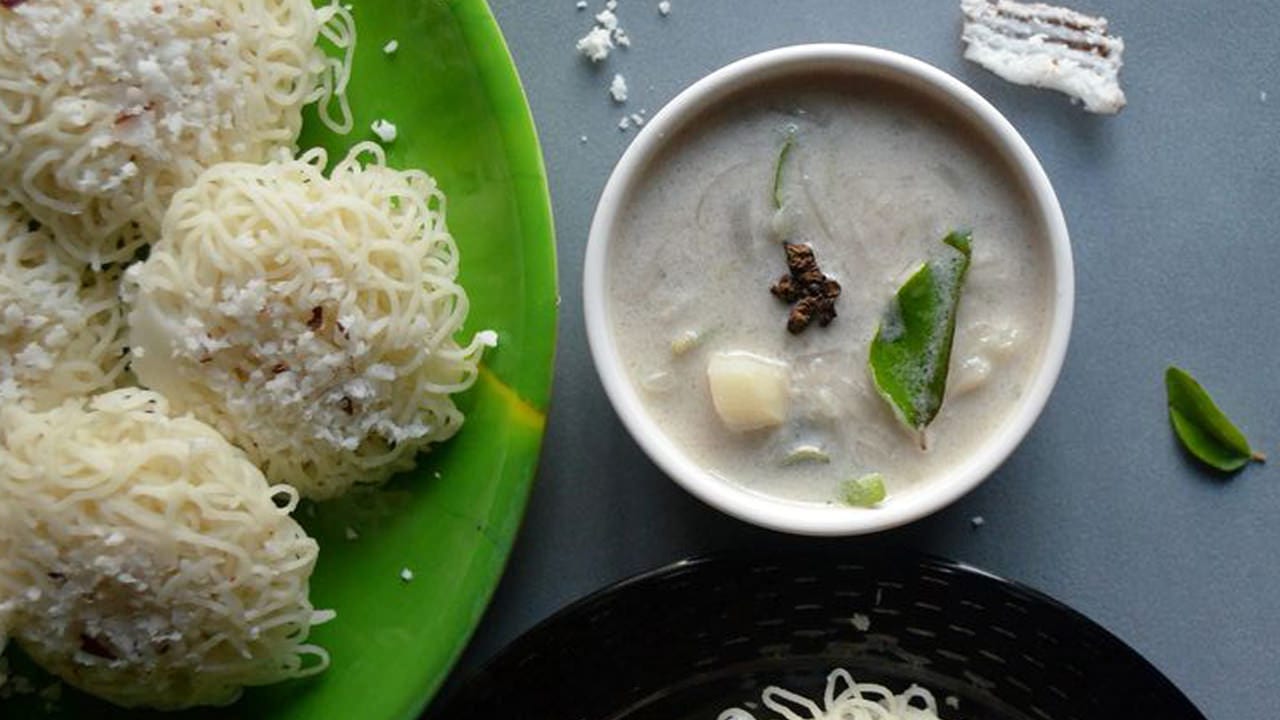
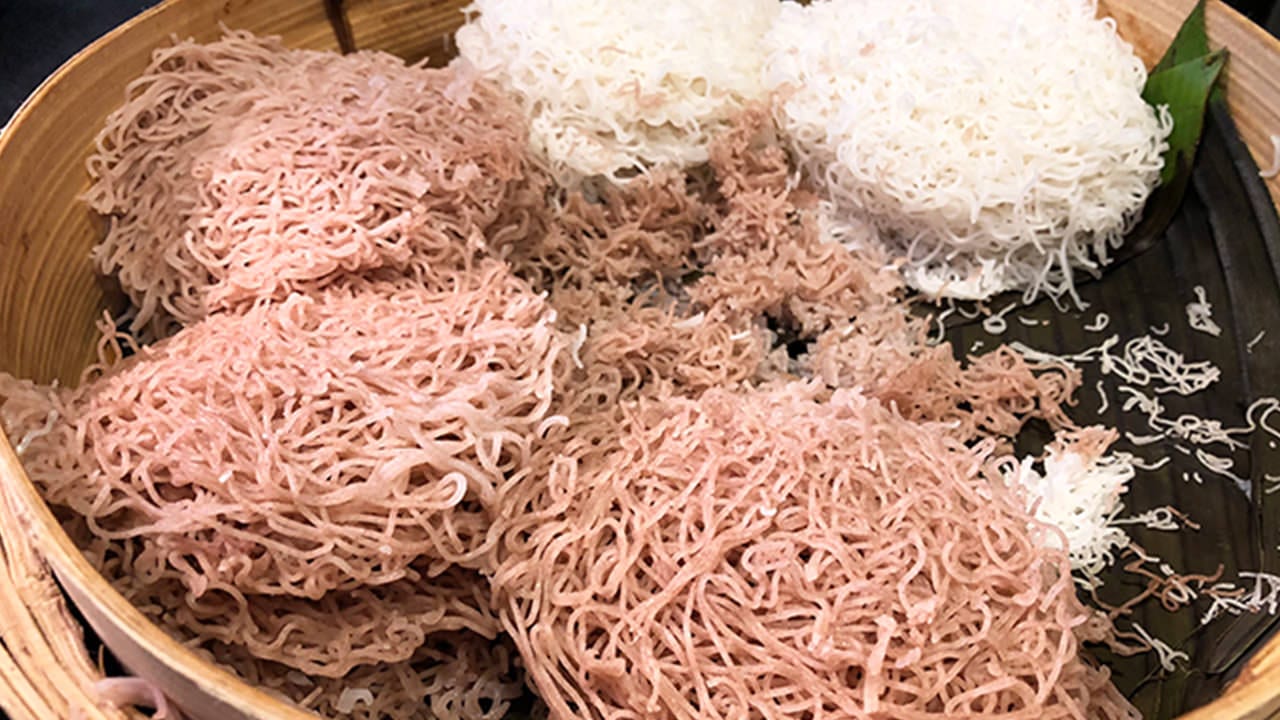
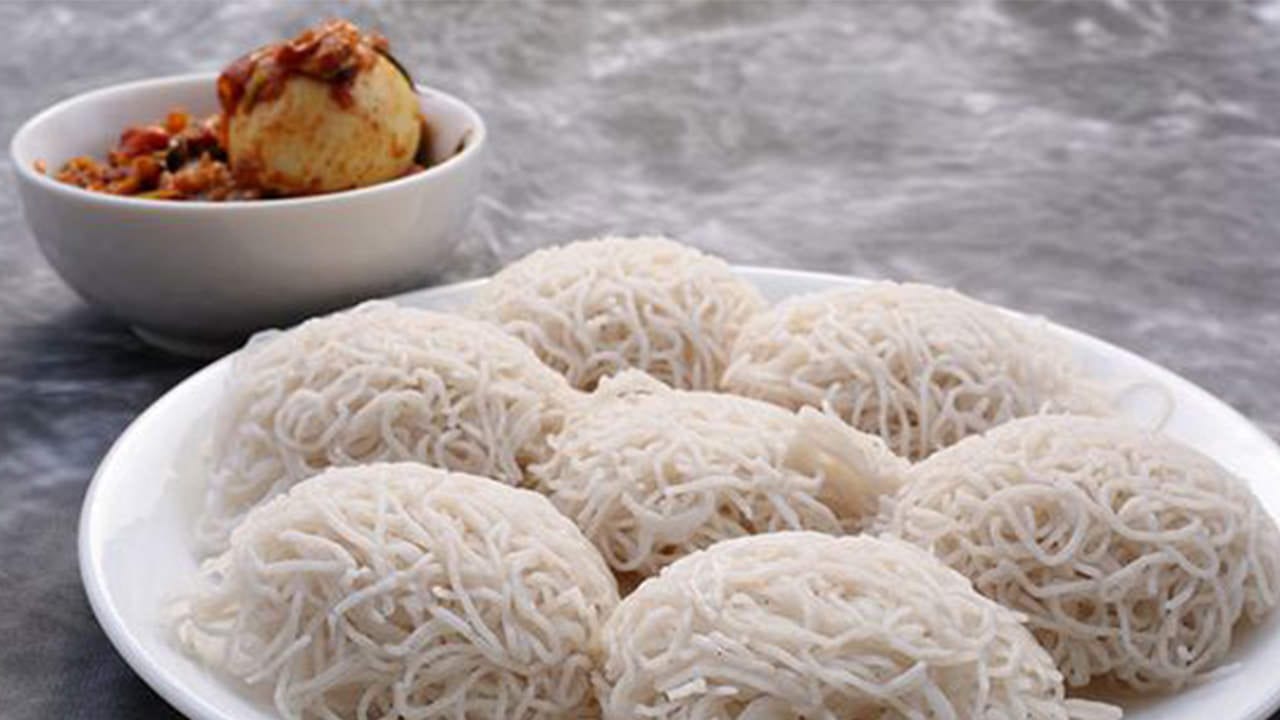
String hoppers are small, flat nests of steamed rice noodles, pressed from a soft dough through a fine-holed mould and steamed on little woven mats. In Sinhala they are called indiappa (ඉඳිආප්ප) and in Tamil idiyappam, and the same dish is eaten in Kerala and Tamil Nadu. In Sri Lanka they are a breakfast and dinner food rather than a lunch one, served in a stack of ten or more with a thin coconut milk gravy, a sambol and a curry.
The dough needs only three things: fine rice flour, salt and hot water. Most Sri Lankan households buy flour sold specifically for string hoppers, either white or red rice, which is ground finely and already roasted. The recipe below uses that flour and notes how to toast ordinary rice flour if it is all you have.
How to make Sri Lankan string hoppers
- Serves 4 (about 25 string hoppers)
- Prep: 15 minutes
- Cook: 30 minutes, in batches
- Difficulty: Moderate
Ingredients
- 350 g string hopper flour (roasted white or red rice flour), about 2 1/2 cups
- 1 tsp salt
- About 400 ml hot water, just off the boil, added gradually
- 1 tsp coconut oil or vegetable oil, for the mats
Method
- Prepare the mats. Rub each mat very lightly with oil and put water on to boil in the steamer so it is ready when the dough is.
- Season the flour. Sift the flour into a large bowl and mix in the salt.
- Add the water. Pour in about three quarters of the hot water and stir with a wooden spoon until the flour clumps together. Add the rest a little at a time only if dry flour remains.
- Knead. When the dough is cool enough to handle, knead it for 2 to 3 minutes into a soft, smooth dough that is tacky but does not stick to your fingers. If it cracks when pressed, work in a few drops more water.
- Fill the press. Roll a portion of dough into a log and pack the press about three quarters full, with no air pockets.
- Press the nests. Hold the press over a mat and squeeze out the strands in two overlapping circles, about 8 cm across. One filling usually covers 3 or 4 mats.
- Steam. Stack the mats in the steamer over boiling water, cover and steam on a medium-high heat for 5 to 8 minutes, until the strands look opaque and feel firm and springy.
- Unmould and repeat. Turn the string hoppers out onto a plate, keep them covered with a cloth so they stay soft, and repeat with the remaining dough.
What equipment do you need?
You need a string hopper press, a small hand-held mould with a disc of fine holes at one end, and a set of round woven mats (made of cane, bamboo or plastic) that each hold one nest while it steams. About 20 to 25 mats lets you steam a full batch in two or three rounds. Any steamer or wide pan with a rack and a tight lid will do. Without mats, you can press the dough onto small squares of banana leaf set in a bamboo steamer.
Which flour should you use?
Packaged string hopper flour gives the most reliable result because it is milled finely enough to pass through the small holes of the press. White rice flour makes softer, paler nests; red rice flour gives a slightly nuttier, firmer string hopper. Finger millet (kurakkan) flour is also used, alone or mixed with rice flour, and gives dark brown nests.
If you only have plain, unroasted rice flour, dry-toast it first in a heavy pan over a low heat for 6 to 8 minutes, stirring all the time, until it smells toasty but has not changed colour. Let it cool before making the dough. Some packet flours ask for lukewarm rather than hot water, so read the instructions on the pack; the dough should feel the same either way.
What do you serve with string hoppers?
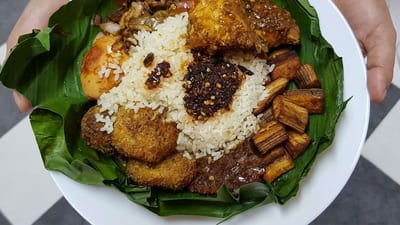
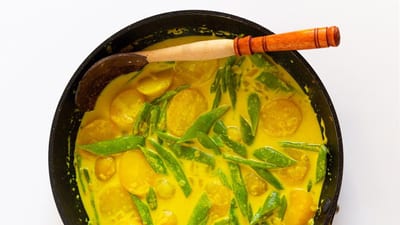
- Kiri hodi, a thin, mildly spiced coconut milk gravy that the nests soak up. It is the most common partner.
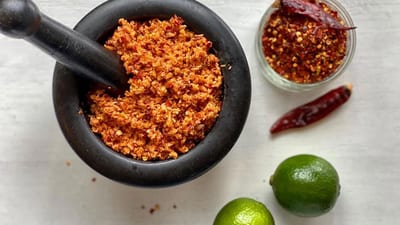
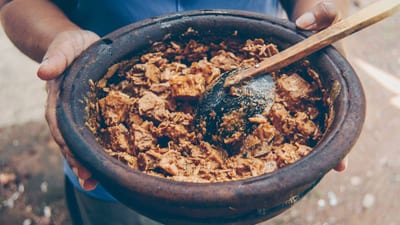
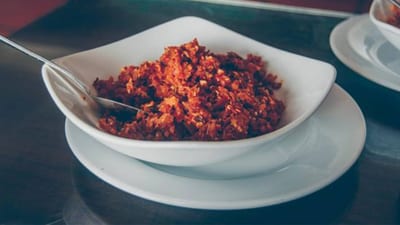
- Pol sambol, the fresh coconut, chilli and lime relish, or a spoonful of seeni sambol.
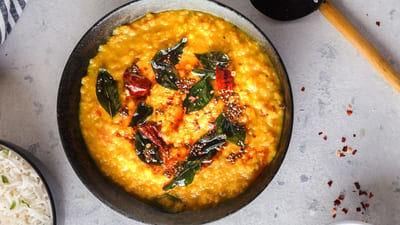
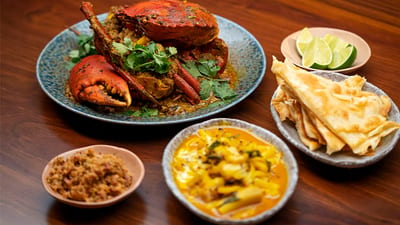
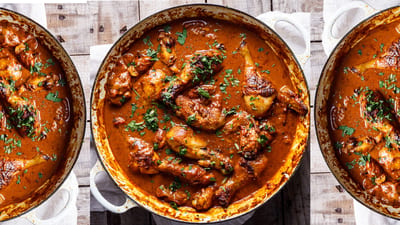
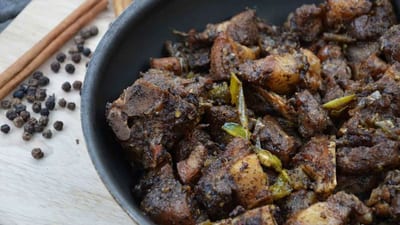
- A curry: dhal curry, potato curry, chicken curry or a fish curry.
Most people eat them by hand, tearing the nests and mixing them with the gravy and sambol on the plate.
What is the difference between hoppers and string hoppers?
Although the names sound alike, they are different foods. Hoppers (appa) are bowl-shaped pancakes cooked from a fermented rice and coconut milk batter in a small curved pan, with a crisp edge and a soft centre. String hoppers use no batter and no fermentation: the dough is pressed into strands and steamed. Both are typical of a Sri Lankan breakfast or dinner table.
Tips for soft string hoppers
- Keep the dough covered while you work, so the part waiting to be pressed does not dry out and crack.
- If the press is very hard to squeeze, the dough is too stiff; knead in a little more hot water.
- Do not over-steam. Once the strands are opaque and springy they are done; longer steaming makes them tough.
- Oil the mats only lightly, or line them with small pieces of banana leaf, so the nests turn out cleanly.
Can you make them ahead or use leftovers?
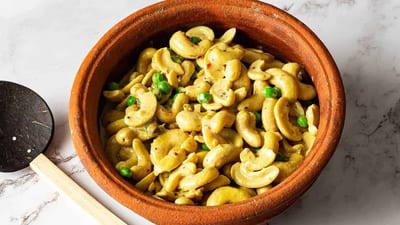
String hoppers are best eaten warm on the day they are made. Keep cooled ones covered in the fridge for up to 2 days and re-steam for 2 to 3 minutes until soft and hot. Leftovers are commonly broken up and stir-fried with onion, curry leaves, egg or vegetables, or tossed with a little curry, much like a quick fried-noodle dish.