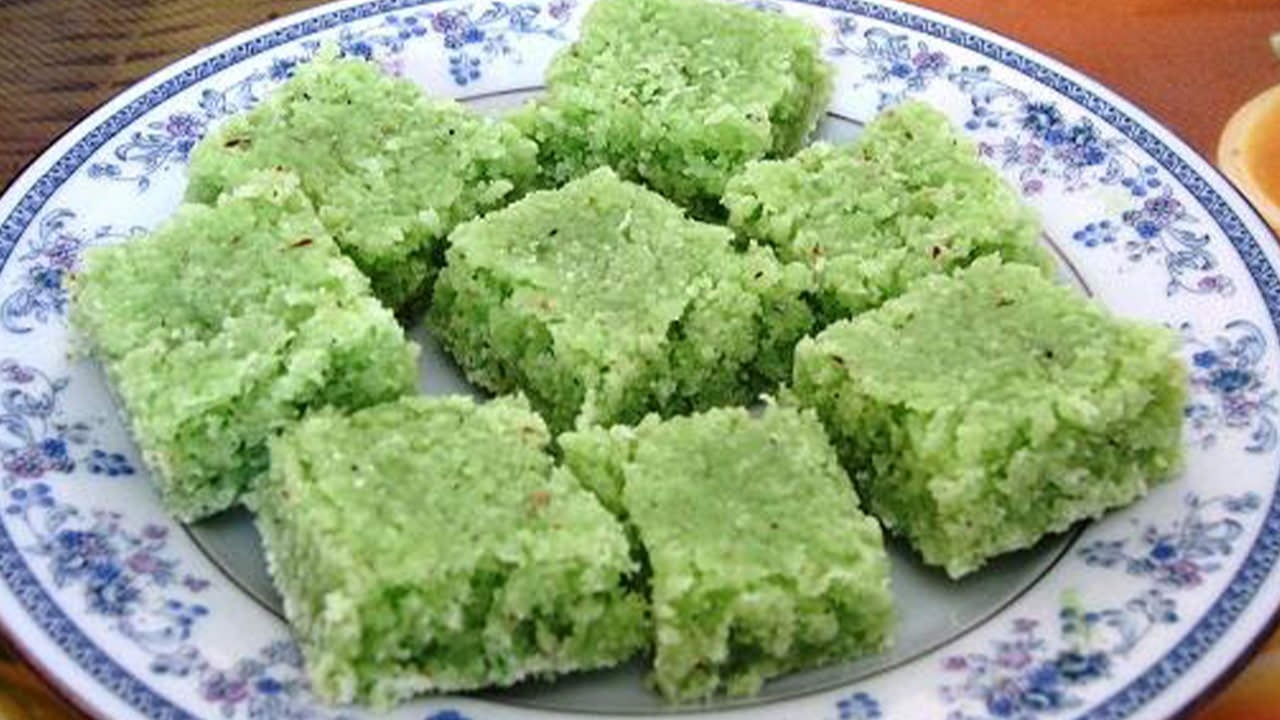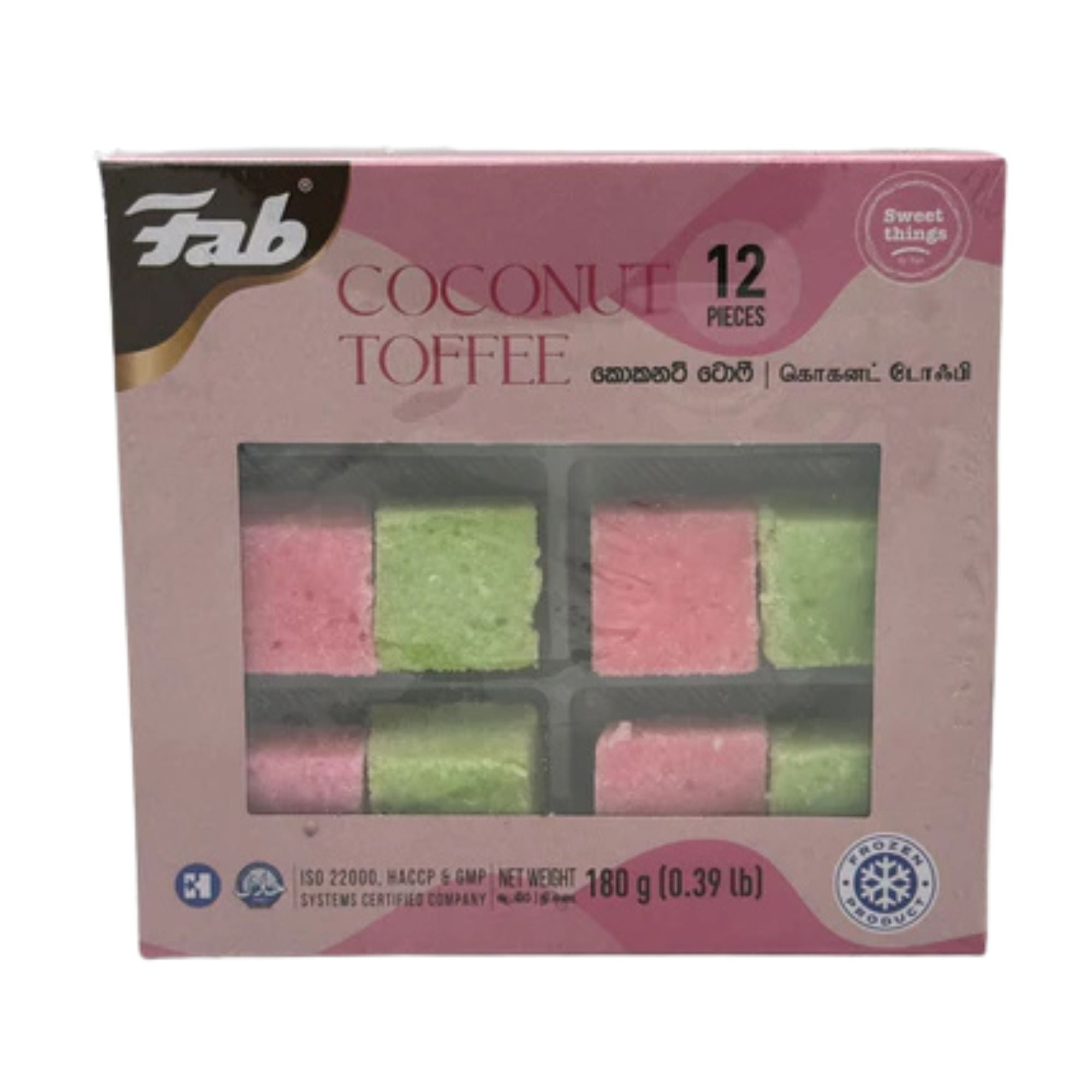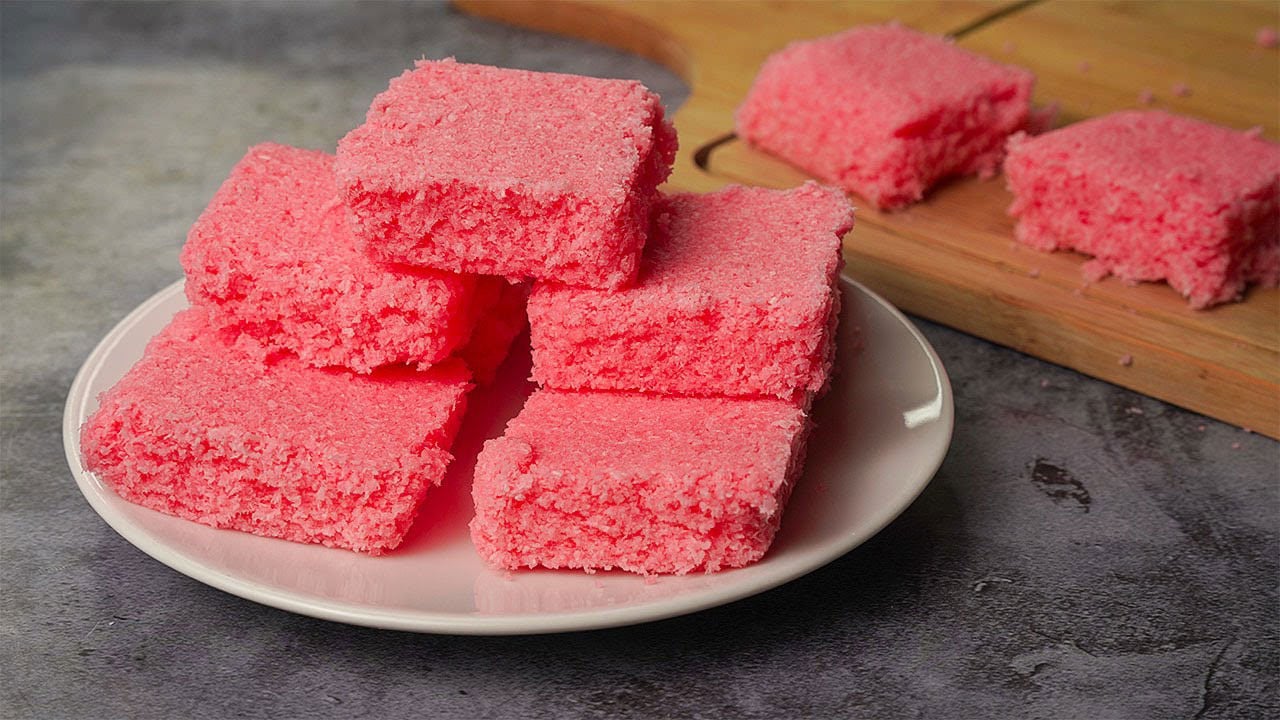
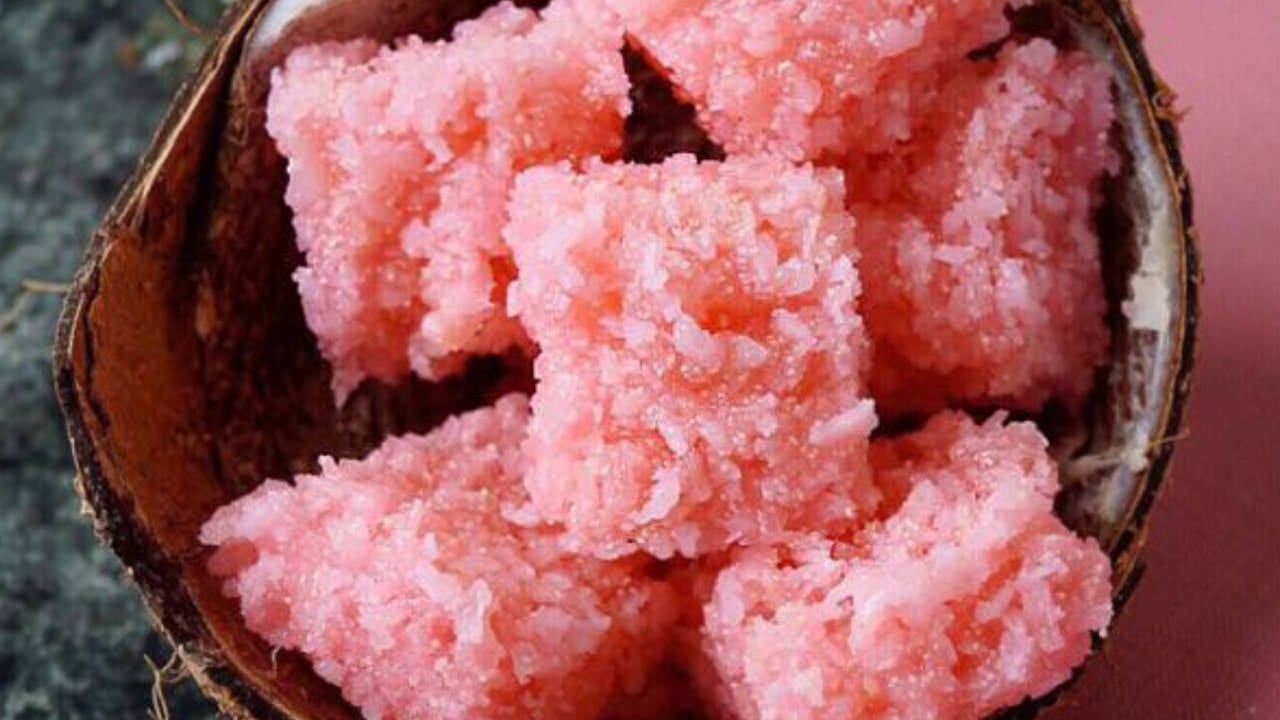
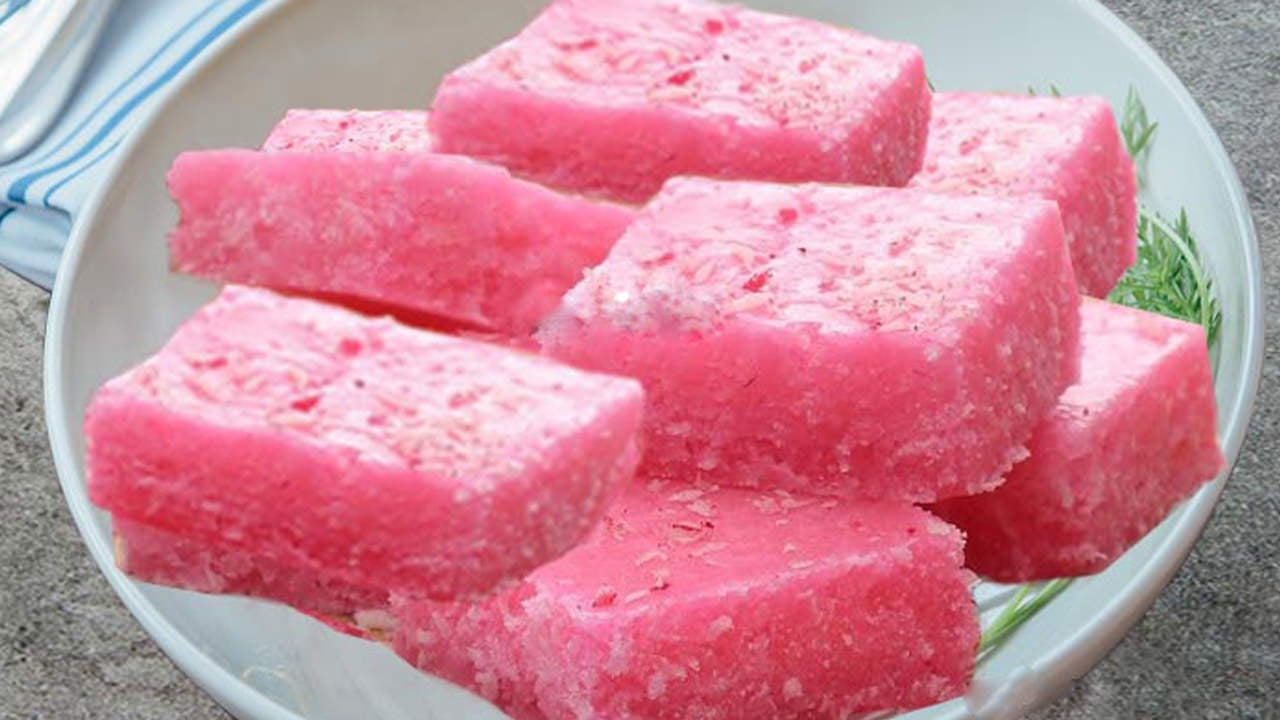

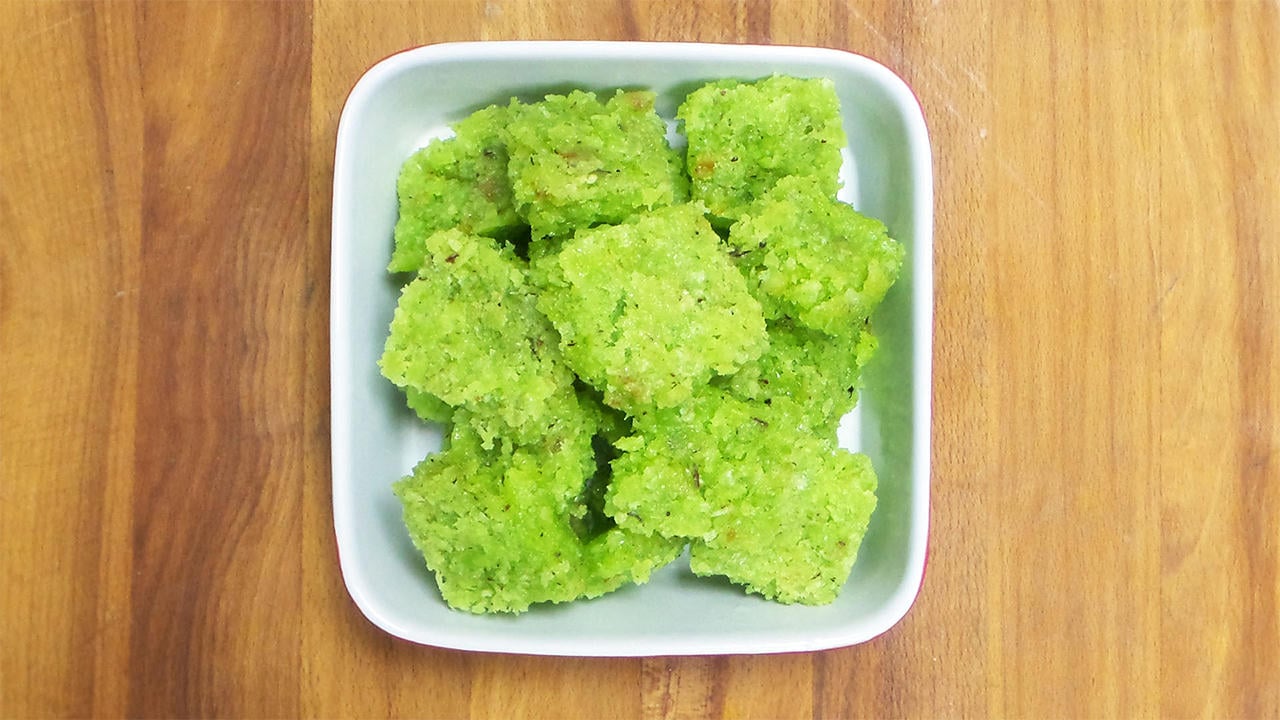
Coconut toffee, known in Sinhala as pol toffee (පොල් ටොෆී), is a firm, sugary square of grated coconut bound in cooked sugar and scented with cardamom or vanilla. It is usually tinted a pale pink, sometimes green, and is one of the simplest sweets on the Sri Lankan New Year table in April. It is also made for weddings, almsgivings and other family occasions, and packed into jars as a treat to share.
Despite the name, pol toffee is not a chewy butter toffee. Coconut and sugar are cooked together in a wide pan and stirred until the moisture has gone and the mixture gathers into one heavy mass; it is then pressed into a tray and cut while warm. The result is sweet and slightly grainy, with a soft crumble rather than a snap.
How to make Sri Lankan coconut toffee
- Makes 16 pieces
- Prep: 10 minutes (+ 30 minutes setting)
- Cook: 20 minutes
- Difficulty: Easy
Ingredients
- 250 g freshly grated coconut (about 2 1/2 cups), white part only
- 300 g white sugar
- 3 tbsp water
- 1 pinch salt
- 1/2 tsp ground cardamom
- 1 tsp vanilla extract
- 1 to 2 drops pink food colouring (optional)
- 1 tsp coconut oil, for greasing the tray and knife
Method
- Prepare the tray. Grease a 20 cm square tray, a knife and a flat spatula with the coconut oil, or line the tray with baking paper. Have everything ready, as the toffee sets quickly.
- Refine the coconut. If the grated coconut is coarse, pulse it briefly in a food processor so it is finer but not a paste. This gives a smoother, neater square.
- Combine. Put the coconut, sugar, water and salt in a heavy, wide pan or non-stick wok over a medium-low heat and stir. As the sugar melts, the coconut releases its moisture and the mixture turns wet and bubbling.
- Cook down. Keep stirring every minute or so for about 10 minutes, until the liquid has mostly cooked away and the mixture begins to thicken.
- Flavour and colour. Stir in the cardamom, vanilla and food colouring, if using, until the colour is even.
- Cook to the set. Stir continuously for another 5 to 10 minutes, until the mixture no longer sticks to the sides of the pan and follows the spoon as one heavy clump. A little dropped into cold water should form a soft but firm ball.
- Press. Tip it straight into the tray and press it flat and level, about 1 cm thick, with the greased spatula.
- Cut while warm. After 2 to 3 minutes, score it into 16 squares with the greased knife, pressing right through to the bottom.
- Set. Leave for about 30 minutes to cool and firm up, then break along the cuts and store.
Can you use desiccated coconut?
Yes. Use 200 g of unsweetened desiccated coconut and raise the water to about 175 ml, so the coconut has enough liquid to soften while the sugar dissolves. The method is the same, though the mixture may need a few more minutes to cook down. Avoid sweetened desiccated coconut, which makes the toffee too sweet and harder to judge.
Why is my pol toffee sticky, or too hard?
- Sticky and will not set: it came off the heat too soon. It must pull away from the pan as one clump before you pour it out.
- Dry and crumbly: it was cooked too long, or left too long before pressing. Take it off as soon as it clumps, and press it at once.
- Pieces break unevenly: it was cut too late. Score it within a few minutes, while it is still warm and soft.
What variations are there?
Many home cooks add 1 to 2 teaspoons of butter near the end for a richer taste, and some stir in a couple of tablespoons of milk powder. A popular modern version replaces much of the sugar with sweetened condensed milk and adds chopped cashew nuts; it cooks to a golden colour and a softer, fudgier bite. Green colouring is a common alternative to pink, and a pinch of ground fennel seed sometimes replaces the cardamom.
How long does coconut toffee keep?
Once completely cool, pol toffee keeps for about 1 week in an airtight container at room temperature. Fresh coconut shortens its life compared with desiccated, and humid weather softens it, so keep the lid tight and store it somewhere cool and dry.
What else is served with it?
At the New Year it shares the table with other home-made Sri Lankan sweets, such as kokis, aluwa and kavum. For another quick coconut and sugar sweet, try pani kadju, cashews cooked in syrup.
Related reading
7 pages on closely related subjects.