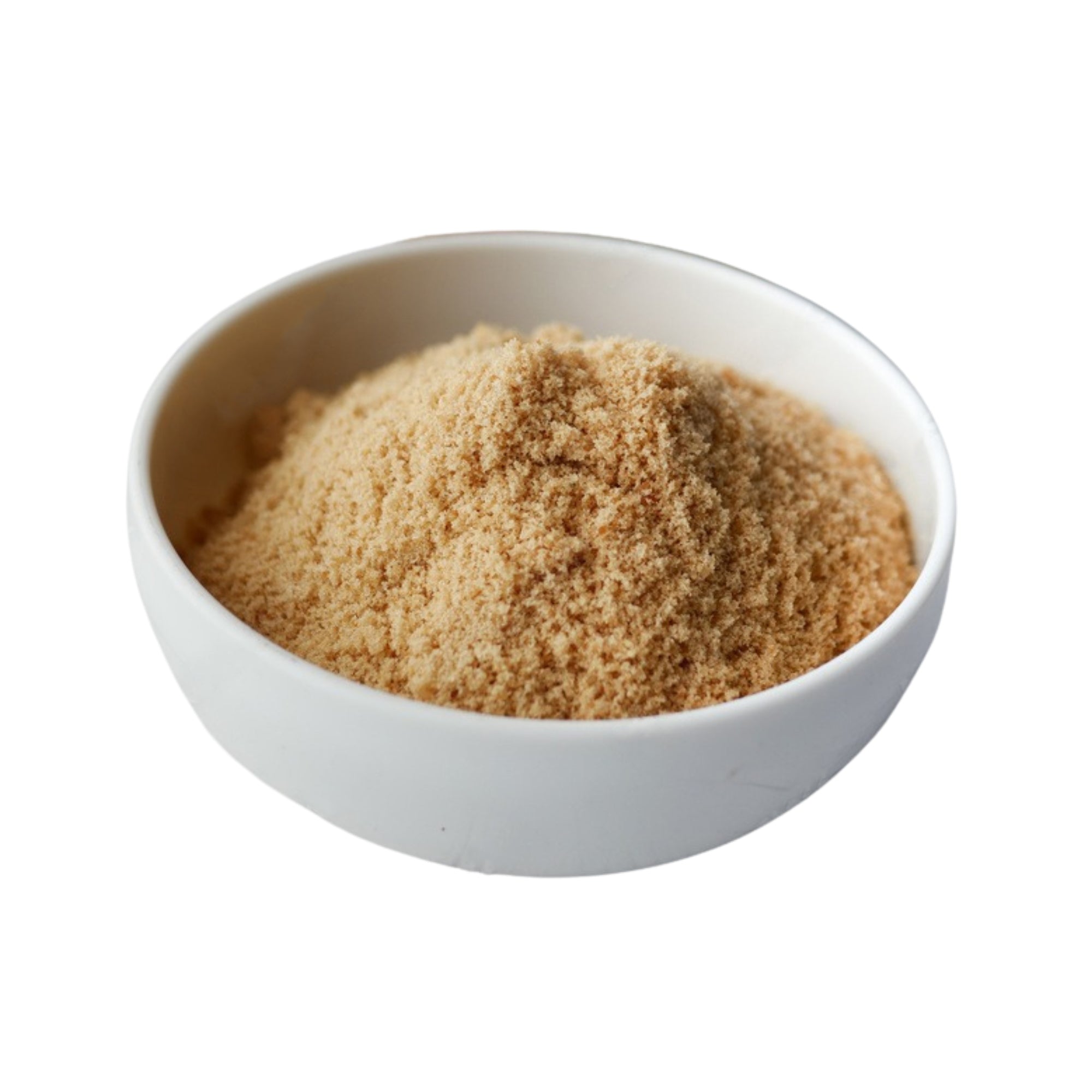
Coconut sugar is one of Sri Lanka's most quietly celebrated natural products. Made from the sap of coconut flower blossoms, it has been used across the island for generations as both a sweetener and a pantry staple. Today, growing international interest in low-glycaemic and minimally processed foods has brought Sri Lankan coconut sugar to kitchens around the world.
How is coconut sugar made?
The process begins with skilled tappers who make a careful incision in the flower blossom of the coconut palm and collect the sap — a clear, slightly sweet liquid — into bamboo or clay containers. This sap is then transferred to open pans and heated at a low, steady temperature. As the water evaporates, the liquid thickens and darkens, eventually setting into a soft, golden-brown mass that can be moulded into blocks or broken into granules.
Organically produced coconut sugar undergoes no bleaching or chemical refining. The result is a natural sweetener that retains trace minerals present in the original sap, along with a mild caramel flavour and a faint tropical aroma that distinguishes it clearly from refined white sugar or even conventional brown sugar.
What does coconut sugar taste like, and how does it compare to other sugars?
Coconut sugar has a warm, lightly caramelised sweetness — closer to unrefined cane sugar or jaggery than to white sugar, but noticeably lighter than either. It dissolves smoothly in both hot and cold liquids and does not carry the sharp edge that some people find in refined white sugar. Its colour ranges from light amber to deep golden brown depending on how long the sap was reduced.
| Sweetener | Glycaemic Index (approx.) | Processing level | Key minerals |
|---|---|---|---|
| Coconut sugar | 35–54 (lower than most) | Minimal | Potassium, zinc, iron, inulin |
| White cane sugar | ~65 | Heavily refined | Negligible |
| Honey | ~58 | Natural | Trace enzymes, antioxidants |
| Maple syrup | ~54 | Minimal | Manganese, zinc |
Note: glycaemic index figures vary by product and individual response. Coconut sugar is still a source of sugar and calories; moderation remains important for anyone managing blood glucose levels.
What are the nutritional benefits of coconut sugar?
Coconut sugar is often highlighted for its relatively lower glycaemic index compared with refined white sugar, which means it causes a slower rise in blood glucose when consumed in equivalent amounts. This makes it a popular choice among those following paleo diets or looking to reduce their intake of highly processed sweeteners.
The sap retains small amounts of minerals — including potassium, iron, and zinc — as well as inulin, a natural dietary fibre that may support gut health and slow glucose absorption. While these amounts are modest and coconut sugar should not be treated as a health supplement, they represent a meaningful advantage over nutritionally empty refined sugar.
It is worth noting that coconut sugar still contains fructose and sucrose, so it is not calorie-free and should be used in reasonable quantities, particularly by people managing diabetes or metabolic conditions.
How can you use coconut sugar in cooking and baking?
One of coconut sugar's practical advantages is its versatility. It behaves very similarly to brown sugar in most recipes, making it straightforward to substitute in a one-to-one ratio without adjusting other ingredients. Common uses include:
- Baking: cookies, cakes, muffins, and banana bread all absorb coconut sugar well; it contributes a slightly deeper colour and flavour than white sugar.
- Beverages: it dissolves readily in tea, coffee, and smoothies, adding sweetness without an artificial aftertaste.
- Sri Lankan cooking: coconut sugar is a traditional ingredient in local sweets such as kokis and in certain rice-based desserts and curries where a gentle caramel note is welcome.
- Coconut sugar syrup: heating coconut sugar with a small amount of water produces a pourable syrup suitable for pancakes, porridge, and yoghurt — a useful alternative to commercial syrups.
- Eaten as is: soft block coconut sugar can be nibbled directly as a less processed sweet snack.
Where is Sri Lankan coconut sugar produced?
Sri Lanka's coconut-growing belt stretches through the North Western, Western, and Sabaragamuwa provinces, where the climate and soil conditions favour dense coconut cultivation. Many smallholder farmers in these areas have practised traditional sap tapping and sugar-making for generations, and the craft has been passed down largely unchanged.
Organic certification — verifying that no synthetic fertilisers or pesticides were applied to the palms — has become increasingly common as export demand has grown. Certified organic coconut sugar from Sri Lanka is now exported to markets in Europe, North America, and East Asia, where it is prized both for its flavour and its origin credentials.
How should coconut sugar be stored?
Coconut sugar is hygroscopic — it readily absorbs moisture from the surrounding air, which can cause granules to clump together. Store it in an airtight container in a cool, dry place, away from direct sunlight. Under these conditions, granule or block coconut sugar typically keeps well for up to two years. If clumping occurs, it does not indicate spoilage; the sugar can simply be broken apart or briefly warmed.
Is coconut sugar the same as palm sugar or kithul sugar?
These terms are sometimes used interchangeably, but they are distinct products. Coconut sugar comes specifically from the sap of the coconut palm (Cocos nucifera). Palm sugar can be derived from several different palm species, and its flavour and mineral content vary accordingly. Kithul sugar — a Sri Lankan speciality — comes from the Caryota urens (fishtail palm) and has a richer, more complex flavour than coconut sugar. If you are interested in Sri Lanka's broader tradition of palm-sap based sweeteners, the practice of kitul tapping is worth exploring.
How does coconut sugar fit into sustainable agriculture?
Coconut palms are perennial trees that require no replanting between harvests. A single tree can be tapped for sap over many years without being cut down, making coconut sugar production considerably less land-intensive than cane sugar cultivation. The trees also support biodiversity in mixed-crop farming systems common across Sri Lanka's coconut triangle. For producers who maintain organic certification, the environmental footprint of the product is further reduced by eliminating synthetic chemical inputs from the supply chain.
Related reading
7 pages on closely related subjects.