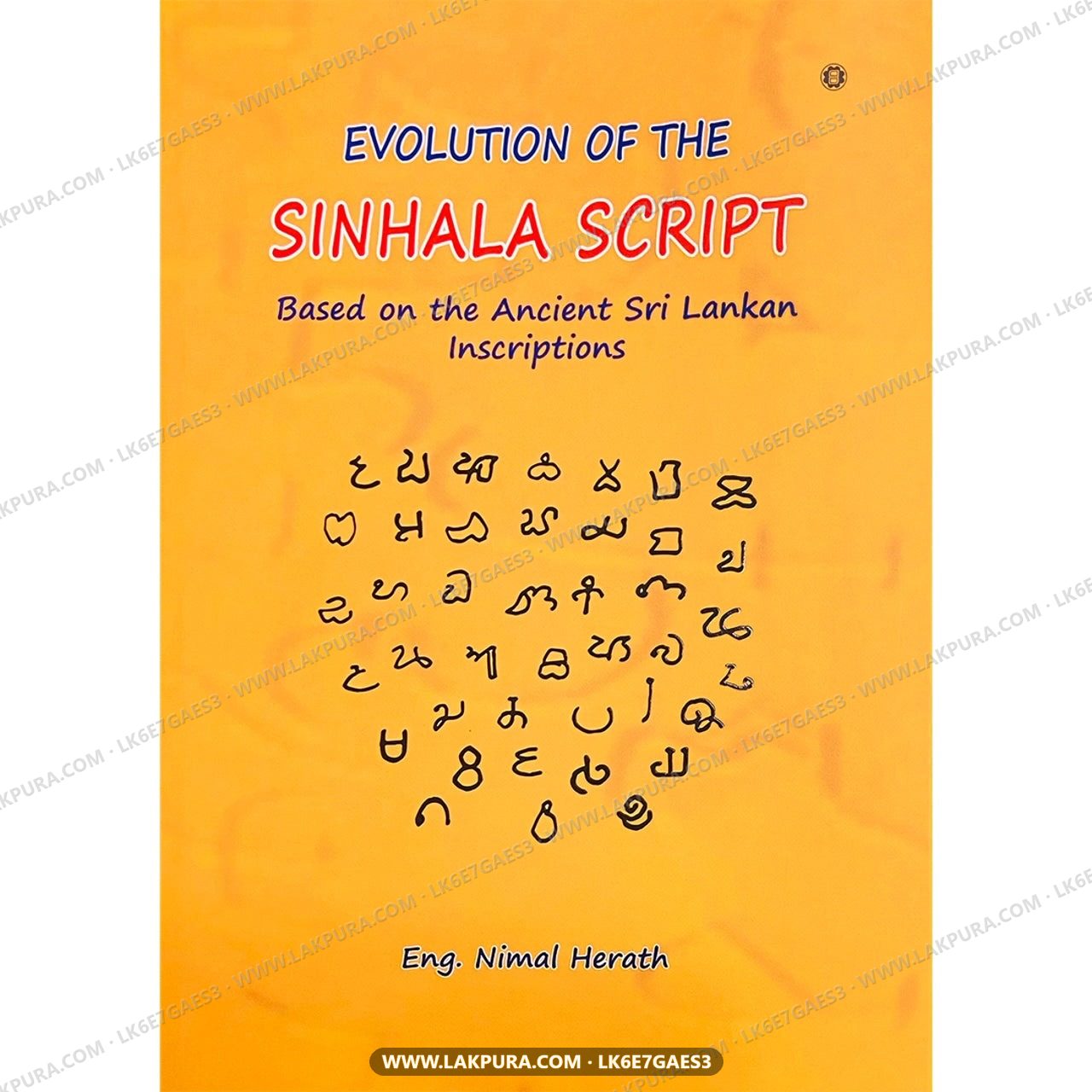
The Sinhala language occupies an oral tradition of at least 2,500 years and a written tradition of 2,300 years, making it a unique example of a language with antiquity and unbroken historical continuity. Identified as early Sinhala, it emerged as a blend of the Hela basa spoken by the Veddãs and a Prakrit language used by Indo-Aryan settlers who arrived on the island around the 6th Century BCE.
The Sinhala script in Brähmi characters, believed to have emerged in Sri Lanka since the 3rd Century BCE, is a derivative of the Ashoka Brähmi northern India. Its gradual and continuous evolution into modern Sinhala spanned nearly twenty centuries. This comprehensive volume showcases a curated selection of seventy inscriptions spanning from the 3rd Century BCE to the 18th Century CE. With meticulous attention to detail, the book delves into the intricate evolution of script characters, providing a thorough analysis of their progression over centuries. Furthermore, the book explores the development of Sinhala as a literary language from its very origins, offering a profound insight into its development over time
Supplied by the Barefoot Bookshop, Galle Road, Colombo.