Lakpura
Lakpura®

Buddhist Sites

AI-generated image · not an actual photograph

Sri Lanka's relationship with Buddhism stretches back more than 2,300 years, making it one of the oldest continuous Buddhist cultures on earth. When the Indian prince Mahinda introduced the Theravada tradition to the island in the 3rd century BCE, it took root so deeply that it shaped the architecture, governance, and daily rhythms of every subsequent kingdom. Today, hundreds of temples, stupas, cave monasteries, and sacred trees mark that long inheritance — concentrated around the former royal capitals of Anuradhapura, Polonnaruwa, and Kandy, but scattered across every district of the island as well.

Whether you are a Buddhist pilgrim tracing the stupa circuits of the ancient north-central plains, or a cultural traveller curious about the art and theology encoded in centuries-old rock carvings, Sri Lanka offers a depth of sacred heritage that rewards careful exploration.

What are the most important Buddhist sites in Anuradhapura?

Anuradhapura served as Sri Lanka's first great capital for roughly 1,400 years and remains the spiritual heart of Theravada Buddhism on the island. The city's sacred precinct — a UNESCO World Heritage Site — contains several structures of global religious significance.

  • Sri Maha Bodhi: A fig tree grown from a cutting of the original Bodhi Tree under which the Buddha attained enlightenment. Planted in the 3rd century BCE, it is considered the oldest historically documented tree in the world. Pilgrims arrive around the clock to offer flowers and observe sil.
  • Ruwanwelisaya (Mahathupa): A colossal white-washed stupa begun by King Dutugamunu in the 2nd century BCE. Its hemispherical dome, visible from kilometres away, is one of the tallest ancient structures in the world.
  • Jetavanaramaya: Once the tallest brick structure on earth, this stupa was built in the 3rd century CE and still rises to over 70 metres despite centuries of weathering.
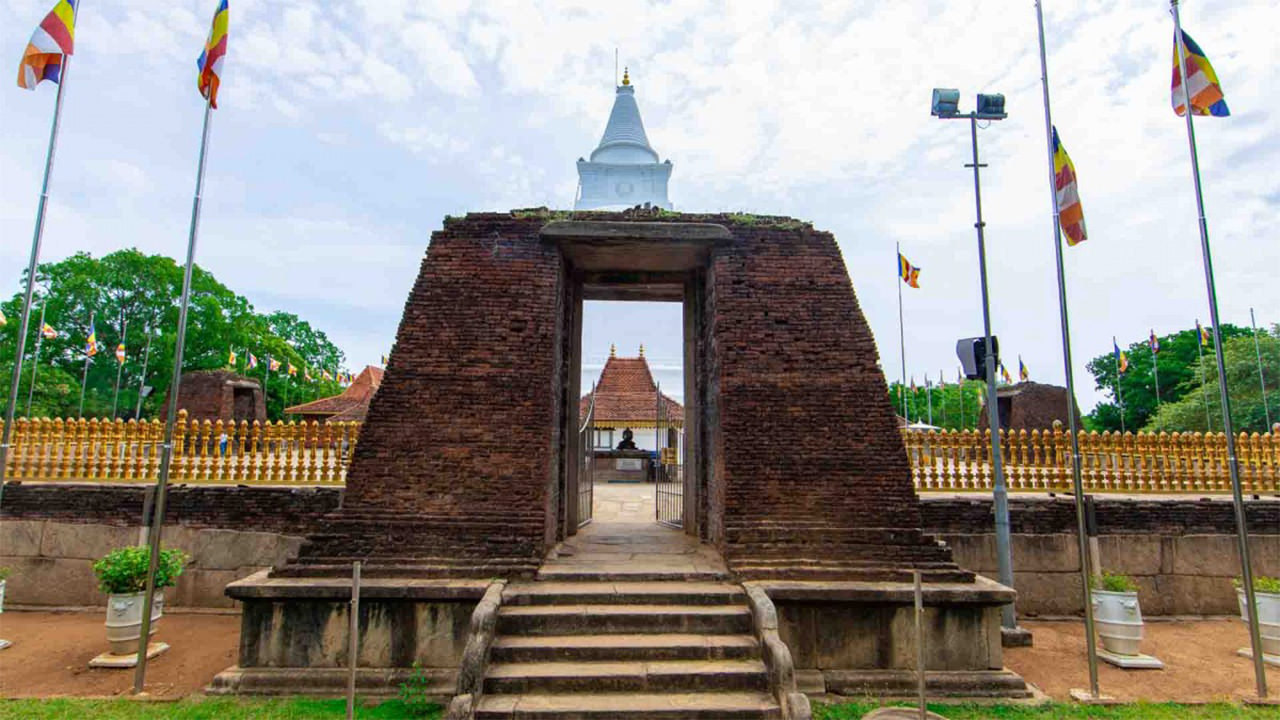
  • Thuparamaya: Regarded as the first stupa built in Sri Lanka after the introduction of Buddhism, it is said to enshrine the right collarbone of the Buddha.
  • Isurumuniya Vihara: A rock temple known for its carved rock-face bas-reliefs, including the famous "Isurumuniya Lovers" panel now housed in the on-site museum.
  • Mirisavetiya Stupa: Also attributed to Dutugamunu, built — according to tradition — to atone for eating a meal without first offering it to the Sangha.

Which Buddhist sites should I visit in Polonnaruwa?

After Anuradhapura's decline, Polonnaruwa became the second great capital of Sri Lanka and flourished between the 10th and 13th centuries CE. Its compact, largely intact ruins make it one of the most rewarding half-day circuits in the country.

  • Gal Vihara: Four colossal Buddha figures — two seated, one standing, one reclining — carved directly into a single granite face. The craftsmanship, dating from the reign of King Parakramabahu I, is considered the finest example of Sinhalese rock sculpture.
  • Rankoth Vehera: The largest stupa in Polonnaruwa, comparable in scale to the great stupas of Anuradhapura.
  • Lankatilaka Image House: A roofless brick shrine enclosing a towering standing Buddha figure; its walls retain intricate plasterwork reliefs.
  • Kiri Vehera: A particularly well-preserved stupa whose original lime-plaster surface has remained largely intact — unusual among Polonnaruwa's monuments.
  • Tivanka Image House: Home to Sri Lanka's largest ancient indoor Buddha image in a walking pose, along with vivid Jataka story frescoes.

What Buddhist heritage can I find in and around Kandy?

Kandy, the last royal capital before British rule in 1815, holds the most venerated Buddhist relic in the Theravada world. Visiting the Kandy city area gives access to both the central temple and a ring of important monasteries in the surrounding hills.

  • Sri Dalada Maligawa (Temple of the Sacred Tooth Relic): Said to house a tooth of the Buddha brought to Sri Lanka in the 4th century CE, the temple is a UNESCO World Heritage Site and a living place of daily worship. The inner shrine is opened three times a day for puja ceremonies that draw hundreds of devotees.
  • Asgiriya and Malwathu Maha Viharas: The two chapter houses — one on each bank of the Kandy Lake — that govern the Siam Nikaya, the largest monastic order in Sri Lanka. Both are active monasteries with beautiful painted audience halls.
  • Embekke Devale and Gadaladeniya Vihara: Medieval shrines a short drive from the city, notable for their intricate wooden pillars and stone carvings blending South Indian and Sinhalese craftsmanship.
  • Lankathilaka Vihara, Udunuwara: A 14th-century image house set dramatically on a granite outcrop, containing a large stucco Buddha image and medieval wall paintings.

The annual Esala Perahera Festival, held in July or August, brings the Sacred Tooth Relic out in a spectacular procession of elephants, drummers, and Kandyan dancers — one of Asia's great religious spectacles.

Are there notable Buddhist sites outside the main heritage triangle?

Beyond the three royal capitals, a wide range of sites repays a detour — some ancient, some still actively used as forest hermitages.

  • Dambulla Cave Temple (Golden Temple): A UNESCO World Heritage Site in the central hill country, comprising five cave shrines with over 150 Buddha statues and some of the most extensive ancient ceiling murals in Asia. The site has been in continuous use since the 1st century BCE.
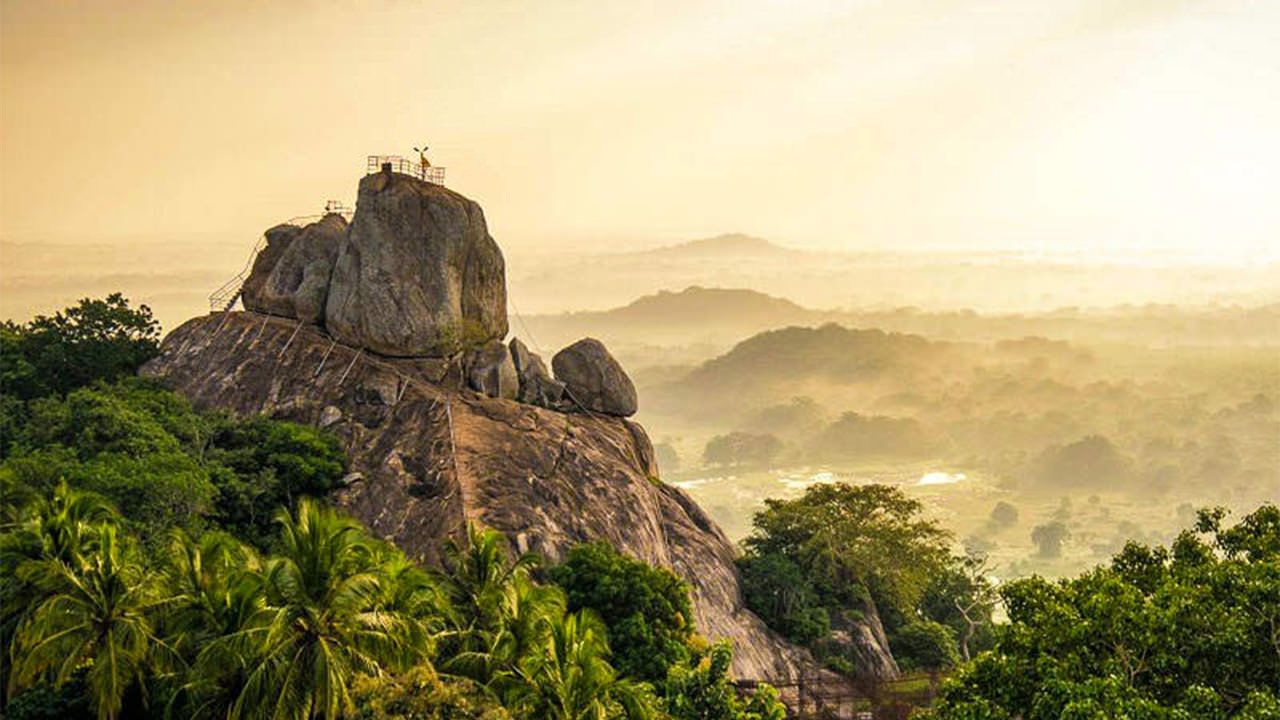
  • Mihintale: The hilltop site near Anuradhapura where, according to tradition, the monk Mahinda first preached to King Devanampiya Tissa, effectively inaugurating Buddhism in Sri Lanka. A climb of around 1,800 granite steps leads past a series of stupas and monastery ruins.
  • Yapahuwa: A 13th-century rock fortress in the North Western Province that briefly housed the Sacred Tooth Relic; its ornate stone staircase is a celebrated example of medieval Sinhalese carving.
  • Ritigala Forest Monastery: A largely unexcavated complex deep in the scrub jungle of the North Central Province, associated with the forest-dwelling ascetic tradition. Its silent, overgrown paths are a sharp contrast to the more visited heritage cities.
  • Mulkirigala: A series of cave temples carved into a dramatic rock outcrop near Tangalle in the Southern Province, containing reclining and seated Buddha figures across several terraced levels.
  • Attanagalla Raja Maha Viharaya: An ancient temple in the Western Province venerated equally by Buddhist and Hindu devotees, known for its peaceful setting and annual perahera.
  • Iranawila Rajamaha Viharaya: A coastal temple on the west coast with a long history and strong local devotional tradition.

How should I plan a Buddhist heritage itinerary in Sri Lanka?

Most visitors to the sacred sites follow a loose north-to-south arc — starting with Anuradhapura and Mihintale in the north-central plains, moving to Polonnaruwa and Dambulla in the centre, then ascending to Kandy before heading south. This route keeps driving times manageable and allows the sites to build on each other historically.

RegionKey SitesSuggested Time
Anuradhapura & MihintaleSri Maha Bodhi, Ruwanwelisaya, Jetavanaramaya, Thuparamaya, Mihintale2 full days
PolonnaruwaGal Vihara, Rankoth Vehera, Lankatilaka, Kiri Vehera1 full day
DambullaCave Temple complexHalf day
Kandy & surroundsDalada Maligawa, Gadaladeniya, Lankathilaka1–2 days
South & outskirtsMulkirigala, Yapahuwa, forest hermitages1–2 days (add-on)

What should visitors know before entering a Buddhist temple in Sri Lanka?

Buddhist temples in Sri Lanka are active places of worship, not simply heritage monuments. A few consistent customs apply across virtually all sites.

  • Remove footwear before entering any temple or sacred precinct — shoe-keeping services are available at most major sites.
  • Dress modestly: shoulders and knees should be covered. Lightweight cotton clothing that layers easily is practical for both comfort and respect.
  • Photography policies vary by inner shrine — always check signage or ask before pointing a camera at the principal relic or image.
  • Maintain quiet inside image houses and during puja ceremonies. If drums and chanting are in progress, observe from a respectful distance.
  • White clothing is worn by Sri Lankan devotees on Poya (full moon) days, which are public holidays. Visiting on a Poya day offers a vivid sense of living devotion but also larger crowds.

Nearby places

10 places within about 25 km, nearest first.

Related reading

8 pages on closely related subjects.

Temple of the Tooth Relic

In the Central Highlands, almost dead centre in the little island of Sri Lanka lays Kandy City. The crown jewel of the city is the famed Sri Dalada Maligawa, also known as the Temple of the Tooth.

Adam’s Peak
Adam’s Peak

Adam’s Peak is Sri Lanka’s fourth highest mountain at 2244m and is located 40km northeast of Ratnapura. Adam’s Peak or the Sri Pada is an important pilgrim site. Buddhist believe the impression on the summit is the footprint of lord Buddha himself.

Samadhi Statue
Samadhi Statue

The Samadhi Statue is a statue situated at Mahamevnāwa Park in Anuradhapura, Sri Lanka. The Buddha is depicted in the position of the Dhyana Mudra, the posture of meditation associated with his first Enlightenment, also called Nirvana.

Lankaramaya
Lankaramaya

The tale of the temple Lankaramaya in Sri Lanka is the stuff of legend. The year 103 BC was a memorable year for the King Walagamba of Anuraddhapura. As the rightful king he had been attacked by invaders of the kingdom, and during that year he hid out at a place called Silasobha Khandaka and planned their defeat.

Rankoth Vehera
Rankoth Vehera

Polonnaruwa was the second kingdom of the ancient kings of Sri Lanka, after the kingdom of Anuradhapura. Following the older tradition of the kings of the first kingdom, the Polonnaruwa kings too saw fit to leave their footprints in the form of stupas built during their times of reign.

Medirigiriya Vatadage

Medirigiriya Watadageya is one of the oldest ruin in South Asia, According to the historical records, Watadageya has build up before 1900 years. During the Polonnaruwa kingdom, it has build to protect the stupa from rain and sun. It’s situated 40 km s away from Polonnaruwa. These unbelievable construction still stands without falling down.

Lovamahapaya
Lovamahapaya

Lovamahapaya is a building situated between Ruvanveliseya and Sri Mahabodiya in the ancient city of Anuradhapura, Sri Lanka. It is also known as the Brazen Palace or Lohaprasadaya because the roof was covered with bronze tiles.

Gadaladeniya Vihara
Gadaladeniya Vihara

Gadaladeniya Temple in Sri Lanka is an old monastery built over a rock in Diggala in the district of Kandy. According to an inscription carved into the walls the temple was built in 1344 AD by King Buwanekabaghu the fourth.

Lankathilaka Viharaya

Lankatilaka is Buddhist temple of the 14th century in the Hiyarapitiya village, from the Udu Nuwara area of Kandy district in Sri Lanka. This historical temple was built by the Gampola king, King Buwanekabahu the fourth (1341 – 1351AD), in 1344 AD.

Embekka Devalaya
Embekka Devalaya

In the Udu Nuwara area of the Kandy district lies a temple with a history of over six centuries. Built during the reign of King Wickremabahu III (1371-1394AD) who ruled in the Kingdom of Gampola, the temple is practically covered in wood carvings.

Nagadvipa Vihara
Nagadvipa Vihara

Nagadvipa is only about 35 miles from India and the smallest Island in Gulf of Mannar. Merchants have long come here and the surrounding islands to buy the conch shells that are harvested in the warm shallow waters in the Gulf.

Mahiyangana Viharaya

Mahiyangana According to Mahavamsa, Sivuhelaya (Sri Lanka) was peopled by Sivu-Helayos. The Yakkhas (clan) were living in Mahiyangana at the time. It says that the Buddha held a discussion on Dhamma with them.

Thuparamaya
Thuparamaya

Thuparamaya, the oldest Stupa in Sri Lanka built after the introduction of Buddhism to Sri Lanka. The Thuparamaya, built by King Devanapiyatissa, enshrines the sacred collar bone of the Buddha. This relic, a gift from India, stands testimony to the cordial relations enjoyed by the then Sri Lanka ruler.

Muthiyangana Raja Maha Vihara

lies in the centre of the city of Badulla. The History of this temple goes back to the time of Buddha but this area around Badulla (especially Uva Province) goes way back in to the time of 19th -18th century BCE. Emperor Rawana was ruling this country with Badulla as the capital. It is also believed that the War of Rama and Rawana took place in this area.

Dambulla Golden Temple

Dating back to the First Century BC, the Golden Temple of Dambulla has been the centre of pilgrimage for Buddhists and Hindus alike for 22 centuries. It is Sri Lanka’s most popular historic site. The Cave monastery, home to Buddhist monks is covered with exquisite 2,000 year-old murals depicting the life and times of the Lord Buddha.

Ruwanweliseya
Ruwanweliseya

The Ruwanweliseya was built by King Dutugemunu in the 2nd century BCE. Since being restored the dome is clear and shines white in the sun. S.M. Burrows of the Ceylon Civil Service wrote in 1885, “Its present height is about 150 feet, with a diameter of 379 feet. It is now being restored by the pious contributions of pilgrims, and the zealous efforts of the Chief Priest.

Abhayagiri Monastery

Abhayagiri Monastery in Sri Lanka, Anuradhapura established in the second century B.C., by King Valagamabau, during its glorious days, was not only complex of monastic buildings, but also a great seat of learning. Unlike orthodox Mahavihara monastery, Abhayagiri Monastery accommodated the intellectual discussion on various schools of Buddhist thought in addition to Theravada Buddhism, considered as the pure words of Buddha.

Gangaramaya Temple
Gangaramaya Temple

The Most Visited temple in the city, the Gangaramaya Temple which organizes Sri Lanka’s largest and the most colourful Vesak festival annually, has a history of 120 years. It was established in 1885 by Venerable Hikkaduwe Sri Sumangala Nayaka Thera at a time when Buddhist and cultural resurgence were much needed as the country was under the colonial rule.

Kelaniya Temple
Kelaniya Temple

Kelaniya Temple built on the banks of the Kelaniya River is one of the most sacred sites of Sri Lanka. It is believed Buddha together with 500 Arahats (Supremely enlightened beings) visited Kelaniya on the Wesek day of the Buddhist Era 2531 and expounding of the Dhamma, the Buddhist doctrine to the inhabitants of the island.

Jetavana Monastery
Jetavana Monastery

Jetavana Monastery at Anuradhapura one of the major Buddhist Monasteries of Sri Lanka was founded by King Mahasena (276-303 AC). His reputation as a builder of great monasteries was somewhat tarnished by his grave misdeeds against the Mahavihara Monastery.

Mirisawetiya
Mirisawetiya

More than 2100 years old, Mirisawetiya is one of the most ancient Dagabas in Sri Lanka . Built by the great king Dutugemunu, this Maginficant Structure is a must see for any visitor to the sacred city of Anuradhapura . It is believed that the great king Dutugemunu made many wishes here that have come true during his lifetime.

Tantirimale Monastery

Tantirimale monastery can be reached by Anuradhapura-Mahavillachchiya road: 27 km along road is Sri Wimalagnana road to the right. Tantirimale is located another 18km onwards the turn. The motorable road from Anuradhapura has made Tantirimale a popular place of pilgrimage among the Sinhalese Buddhists of Sri Lanka.

Sri Maha Bodhiya
Sri Maha Bodhiya

The Sacred Bo tree; Jaya Sri Maha Bodhiya of Anuradhapura, Sri Lanka is the oldest living tree in documented history of the world. It is a sapling from the historical Bodhi tree under which Buddha enlightened. It was planted in 288 BCF and is the oldest living human-planted tree in the world with a known planting date.

Gal Vihara
Gal Vihara

Gal Vihara (Sinhala: stone temple), Buddhist Temple at (UNESCO World Heritage Site) at Polonnaruwa, Sri Lanka is the most perfect specimen of Buddha statue hewn out of solid stone. Crafted during the reign of King Parakrabahu (1153-1186 A.C), Gal Vihara statues are still in complete preservation with their irresistible charm and sublimity.

Kirivehera Temple
Kirivehera Temple

Buddhists consider that Katharagama Deviyo as one of the guardian deities of Buddhism and the presiding deity of Katharagama temple hallowed by the Buddha.

Arankele Monastery
Arankele Monastery

Arankele Forest Monastery’s sylvan environment and ruins of bathing ponds gives the impression it was once a pleasure park. Arankele, on the contrary, was a 6th century cave hermitage up a forested hillside.

Aukana Buddha Statue

Aukana Buddha statue is located at 30km northwest of Dambulla close to ancient Kala Weva man-made rainwater reservoir. It can be reached from Kekirawa on Dambulla-Anuradhapura road.

Ridi Viharaya
Ridi Viharaya

The tale of Ridi Vihara is described thus. It’s about 20 kilometres away from the ancient kingdom of Kurunegala in a small village called Ridi Gama. This temple is believed to be built by King Dutugemunu in the 2nd century BCE, as a monument to the place where he found a silver (Ridi) ore mine which was used to finance the building of the gigantic Ruwanweli Seya.

Kadurugoda Viharaya
Kadurugoda Viharaya

Among the Buddhist places in Yapa Pattana (Jaffna) Kadurugoda Viharaya or Kantarodai holds an important place in Sri Lanka‘s history. This temple is located on the Hunugama (Chunnakam) – Minipe (Manipai) road about 02 KMs from Hunugama.

Maligawila Buddha Statue

The Maligawila Buddha statue is a standing statue of the Buddha in Sri Lanka and has been carved out of a large limestone rock during the 7th century by a prince named Agrabodhi.

Rasvehera
Rasvehera

This statue of the Buddha has two names; one is Rasvehera and the other is Sasseruwa. It is called Rasvehera because on the day the Sacred Bo Tree was brought from Anuradhapura and planted at this premises the rays of Lord Buddha illuminated around the place. Rasvehera statue bears similar profiles to the Aukana Buddha statue.

Aluvihara Rock Cave Temple

Aluviharaya is a rock-cave temple where Buddhist monks during Walagamba’s rule wrote the Tripitakas in Pali on Ola leaves. The heroic reign of king Walagamba (104-77 B.C.) would go into the records of history as the Tripitakas (Buddhist scriptures) were written down on Ola leaves in Pali by a conclave of Buddhist monks of the Aluvihare Temple, lying close to Matale.

Namal Uyana
Namal Uyana

The Jathika Namal Uyana in Sri Lanka is the largest ironwood forest and pink quartz mountain in Asia. The Ironwood Tree is endemic to Sri Lanka and the replanted forest is over 260 acres in extent. According to archeological researcher’s findings, the pink quartz in this historical place has a history of more than 550 millions of years.

Mihintale Mountain
Mihintale Mountain

Mihintale Mountain, with the arrival of Buddhism in Sri Lanka, began to serve as a residential area for the venerable monks headed by Arahath Mahinda Mahathera. But soon, with the royal patronage, the sanctuary housed a multitude of with monastic buildings-stupas, uposathgharas, bodhigharas- to serve the monks.

Mulkirigala Raja Maha Vihara

Mulkirigala Raja Maha Vihara is an ancient and an archaeological Buddhist temple in Mulkirigala Sri Lanka. The temple site is situated 2 km (1.2 mi) from the Mulkirigala Junction and can be reached from either Dikwella or Tangalle. It is also known as the Little Sigiriya.

Degaldoruwa Raja Maha Vihara

Degaldoruwa Raja Maha Vihara is an ancient Buddhist rock temple, situated in Amunugama, Kandy, Sri Lanka. It is famous for its Kandyan Era Frescoes. The cave itself was said to have been excavated out of a rock which rises to a height of approximately 12.3 m (40 ft), and shelters the shrine room and entrance chamber.

Nalanda Gedige
Nalanda Gedige

Nalanda Gedige is an ancient complete stone building near Matale, Sri Lanka. This building was an ancient Hindu Temple constructed in between 8th to 10th century with dravidian architecture ( Pallava style ) and then believe to have been used by Buddhists.

Bahirawakanda Vihara Buddha Statue

The Sri Maha Bodhi Viharaya at Bahirawakanda is a very attractive and hilly place in the Kandy Town. This is a center for carrying out national as well as international Buddhist relations. Many tourists are attracted by this temple.

Bodhinagala Forest Hermitage

A group of bhikkhus clad in saffron robes walked in single file, carrying their alms bowls, silently down the pathway, for the midday Dana under a dimly-lit forest canopy.

Pilikuththuwa Raja Maha Viharaya

Pilikuththuwa Raja Maha Vihara is an ancient Cave temple situated in Mahara of Gampaha, Sri Lanka.

Varana Temple
Varana Temple

Warana Raja Maha Viharaya, or the Varana Temple got its name because it’s located in Warana village.

Maligatenna Raja Maha Vihara

Vihara Maligatenna Raja Maha Vihara is an ancient Cave temple which is located in Malwatuhiripitiya village, Gampaha District, Sri Lanka.

Asokaramaya Buddhist Temple

Ashokaramaya Buddhist Temple in Kirulapone (Colombo 05) is one of the most unassuming temples you will come across in Sri Lanka. Not to be confused with the Ashokaramaya in Kalutara; this Colombo temple is an entirely different world of color and stories.

Kande Vihara
Kande Vihara

Kande Vihara is a major Buddhist temple in Kalutara District, Sri Lanka. The temple has got its name ‘Kande vihara’ (Mountain temple) as it is built on top of a hill located near to Aluthgama town.

Yatagala Raja Maha Viharaya

Yatagala Raja Maha Viharaya. Just 4km inland from Unawatuna, the Yatagala Raja Maha Viharaya is a quiet rock temple with a 9m reclining Buddha.

Kalutara Bodhiya
Kalutara Bodhiya

Kalutara Bodhiya is a Bodhi tree (sacred fig) located in Kalutara, Western Province of Sri Lanka.

Isipathanaramaya Temple

Isipathanaramaya Temple. Isipathanaramaya Temple is one of the oldest Buddhist temples in Colombo, Sri Lanka. Located in Havelock Town.

Sambodhi Chaithya
Sambodhi Chaithya

Sambodhi Chaithya. Sambodhi Chaithya (also sometimes called Buddha Jayanthi Chaithya) is a stupa, a Buddhist shrine, built with reinforced concrete.

Fort Shri Sudarmalaya Buddhist Temple

Fort Shri Sudarmalaya Buddhist Temple. Visitors to this small and peaceful Buddhist temple have likened it to a mosque or a church.

Kataluva Purvarama Maha Viharaya

Kataluva Purvarama Maha Viharaya. Around 5 km beyond Koggala lies one of the south’s most absorbing temples, the Kataluwa Purvarama Mahavihara.

Ranawana Purana Rajamaha Viharaya

Ranawana Purana Rajamaha Viharaya. Ranawana Purana Rajamaha Viharaya was one of the largest and one of the most beautiful temples of Sri Lanka.

Galmaduwa Viharaya
Galmaduwa Viharaya

A short turn off from the Kundasala Road just outside of Kandy and you will come upon a strange sight: the unfinished Galmaduwa Viharaya. Traditionally ascribed to King Keerthi Sri Rajasinghe, it is said that while this building was being completed the king heard of the discovery of a cave at Degaldoruwa and stopped the work on Galmaduwa shifting his attention to Degaldoruwa.

Asgiriya Maha Viharaya

Asgiriya Maha Viharaya is situated north of the iconic Kandy Lake. It is the headquarters of the Asgiriya chapter of the Siyam Nikaya, which is one of the two Buddhist monasteries in custody of the sacred tooth relic of the Lord Buddha, kept at the Temple of the Tooth Relic.

Seruwawila Mangala Raja Maha Vihara

Seruwawila Mangala Raja Maha Vihara. Seruwawila Mangala Raja Maha Vihara is an ancient Buddhist temple in Trincomalee district in Eastern Province…

Velgam Vehera
Velgam Vehera

Velgam Vehera (also known as Vilgam Rajamaha Viharaya) is a historical Buddhist temple situated in Kanniya, Trincomalee District, Sri Lanka…

Lanka Pattuna
Lanka Pattuna

Also known as Lanka Putuna Viharaya in Trincomalee, it is one of the oldest Buddhist temples in Sri Lanka…

Dambakola Patuna
Dambakola Patuna

Dambakola Patuna Temple. Dambakola Patuna or Jambukola Patuna is an ancient port in the north of Jaffna which was used during pre christian times…

Vessagiri
Vessagiri

Vessagiri or Issarasamanarama, is an ancient Buddhist forest monastery that is part of the ruins of Anuradhapura, one of the ancient capitals…

Isinbessagala RajaMaha Viharaya

Isinbassagala Ruwangiri Rajamaha Viharaya. Traveling 1.4 kilometres (0.9 miles) passing the small town of Medawachchiya on the A9 (Kandy-Jaffna) highway…

Japanese Peace Pagoda Rumassala

Japanese Peace Pagoda In Rumassala Japanese Peace Pagoda In Rumassala. Rumassala , known to colonialists as Buona Vista, is the subject of many legends. It is featured in the Ramayana…

Wewurukannala Viharaya

Wewurukannala Viharaya. 15 miles east of Matara is the town of Dikwella, where there is one of the most amazing Buddhist temples in Sri Lanka…

Peraliya Buddha Statue

Peraliya Buddha Statue. Eastern and southern coastal line of Sri Lanka was badly damaged by the TSunami waves in 26th of December, 2004. More than 30,000 people died by this indecent.

Sastrawela Mani Naga Pabbatha Viharaya

Sastrawela Mani Naga Pabbatha Viharaya. Currently the village of Sastrawela is a tiny speck of habitation situated on the Panama-Pottuvil Road. The village does not even make it into the Survey General’s map.

Muhudu Maha Vihara
Muhudu Maha Vihara

Muhudu Maha Vihara. Muhudu Maha Vihara is a Buddhist temple situated at Pottuvil in Ampara District, Eastern province of Sri Lanka. This temple which is situated near a wide beach, has been built over 2000 years ago by King Kavan Tissa of Ruhuna…

Magul Maha Viharaya
Magul Maha Viharaya

Magul Maha Viharaya. Magul Maha Viharaya is an ancient Buddhist temple situated in Lahugala, Ampara District of Sri Lanka. The temple lies on the northern edge of the Lahugala National Park, about 22 km off from Siyambalanduwa town and about 11 km off Pottuvil town…

Buduruwagala Buddha Statue

Buduruwagala Buddha Statue. Buduruwagala is located about 5 km from the Wellawaya on the Thanamalwila road. The name Buduruwagala means “the rock with the statue of Buddha” And this is exactly what it is…

Pothgul Vehera
Pothgul Vehera

Pothgul Vehera. Pothgul Vehera of the ancient Polonnaruwa Kingdom is located some distance from the statue and thought to be a Buddhist library complex…

Thiriyaya Girihandu Seya

Thiriyaya Girihandu Seya. Situated about 29 miles north of Trincomalee, it was not an easy journey through bumpy dusty roads, hostile villages, jungle and ferry to travel to Thiriyaya Girihandu Seya some time ago…

Dowa Raja Maha Viharaya

Dowa Raja Maha Viharaya lies few kilometres away from the Bandarawela town on the Bandarawela – Badulla Road. This temple is thought to be done by King Walagamba…

Shop this range with Lakpura

Packed in Sri Lanka and shipped worldwide, direct from the source.

Ask Lakpura® Agent