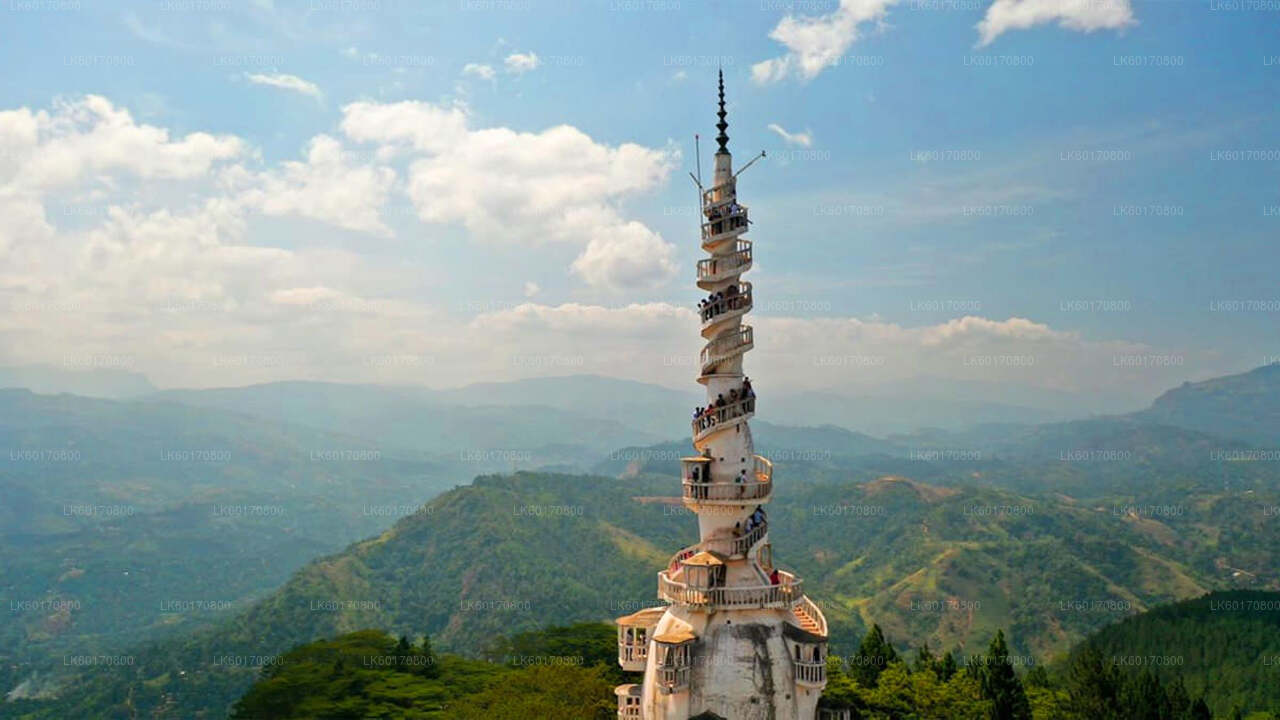




Sri Lanka's monastic complexes are among the most remarkable surviving examples of early Buddhist civilization anywhere in the world. Built across more than two millennia, these walled communities of shrines, meditation halls, refectories, and residences chart the development of Theravada Buddhism from its introduction to the island around the third century BCE to the elaborate royal patronage of the Polonnaruwa period and beyond. Visiting them is not merely a heritage exercise — the majority remain active places of worship, where monks follow routines that have changed little over centuries.
What is a monastic complex in Sri Lanka?
A monastic complex — known in Pali and Sinhala tradition as an arama or vihara — is a self-contained settlement designed to support a community of Buddhist monks. At its core you typically find a dagoba (stupa) enshrining relics, an image house (patimaghara), a preaching hall (uposathaghara), and individual monks' quarters arranged around a courtyard. Larger royal monasteries added refectories (danasala), bathing pools, libraries, and hospitals, creating small towns within a town.
The complexes were almost always endowed by royalty or wealthy merchants, and inscriptions carved into the stonework record those donations in meticulous detail. Many of these inscriptions remain readable today and represent some of the oldest Sinhala writing in existence.
Which are the most significant monastic complexes to visit?
Sri Lanka's ancient monastic heritage is concentrated in the north-central Cultural Triangle, particularly around the ruins of Anuradhapura and Polonnaruwa. The two cities together preserve dozens of distinct monastic precincts, ranging from intimate forest hermitages to the sprawling Abhayagiri complex in Anuradhapura — at its peak a community of several thousand monks.
- Abhayagiri Vihara, Anuradhapura — One of the largest ancient monasteries in the world by area, with a dagoba that rivals the Egyptian pyramids in volume. The complex included libraries, hospitals, and an advanced hydraulic system.
- Jetavanaramaya, Anuradhapura — Now a UNESCO World Heritage Site precinct, this third-century CE complex was constructed around what was then the tallest brick structure on earth.
- Alahana Pirivena, Polonnaruwa — A twelfth-century royal monastery featuring the Lankathilaka image house, the Kiri Vehera stupa, and the famous Gal Vihara rock-face sculptures. The Kiri Vehera remains an active place of veneration.
- Ritigala Strict Nature Reserve — A forest hermitage tradition in its own right, with a chain of stone platforms connected by raised pathways — the signature architecture of the pamsukulika (forest-dwelling) monks who rejected urban monasticism.
- Medirigiriya Mandalagiri Vihara — A circular vatadage (relic house) set on an isolated hilltop, considered one of the finest examples of that building type in Sri Lanka.
What architectural features define these sites?
Despite regional and chronological variation, Sri Lankan monastic complexes share several recurring elements that make them legible once you know what to look for.
| Feature | Sinhala / Pali term | Function |
|---|---|---|
| Stupa / Dagoba | Dagaba / Thupa | Enshrines relics; focal point of veneration |
| Image house | Patimaghara | Houses Buddha statues for worship |
| Chapter house | Uposathaghara | Formal recitation of the Vinaya rules |
| Monks' cells | Parivena | Individual residential units |
| Relic house | Vatadage | Circular pillared structure over a small stupa |
| Moonstone | Sandakada pahana | Carved semi-circular threshold stone at entrances |
The moonstone is arguably the most distinctive decorative invention of Sinhala Buddhist architecture. Its concentric bands — typically depicting flames, swans, elephants, lions, horses, and lotuses — encode a symbolic journey from the cycle of existence toward enlightenment. No two moonstones are identical, and studying them across sites is a rewarding exercise in iconographic difference.
How did these complexes function as communities?
A large vihara was far more than a place of prayer. Medieval monastic complexes in Sri Lanka functioned as centres of learning, manuscript copying, medicine, and trade. The Mahavihara in Anuradhapura, for example, was the institutional home of the Theravada commentarial tradition, and it was here that the fifth-century scholar Buddhaghosa compiled the Visuddhimagga — still one of the most authoritative texts in Theravada Buddhism worldwide.
Monks were supported by surrounding agricultural villages whose produce — rice, oil, cloth — was donated under formal endowment agreements. The elaborate irrigation works of the dry zone (tanks, channels, sluices) were often built or extended specifically to ensure food security for these monastic communities, linking religious patronage directly to the landscape you see today.
What is the forest monastery tradition?
Alongside the great urban monasteries, Sri Lanka maintained a parallel tradition of forest hermitages (arannayaka or tapovana), where monks practiced stricter disciplines away from populated centres. These sites tend to be architecturally austere — raised stone platforms, minimal ornamentation, natural rock caves — and are often found in ecologically rich areas that were deliberately left undisturbed as a form of environmental stewardship. The Sinharaja Forest Reserve in the wet zone, for instance, has historical associations with forest-dwelling monastic traditions.
Today several active forest monasteries continue this tradition and welcome respectful visitors at designated times. Dress modestly, remove footwear before entering shrine areas, and avoid visiting during formal meditation retreats unless specifically invited.
When is the best time to visit Sri Lanka's monastic sites?
The north-central plain — where the majority of major ruins are located — is driest and most comfortable between December and April. Temperatures can exceed 35 °C in the middle of the day, so plan visits for early morning or late afternoon when the light is also considerably better for photography. The full-moon day (poya) of each month sees the sites busiest with local worshippers, which adds authentic atmosphere but can mean more crowds at the more popular sites.
Polonnaruwa and Anuradhapura are accessible year-round, though the secondary roads to more remote sites such as Ritigala or Medirigiriya can become difficult after heavy rain. Checking road conditions locally before venturing to off-the-beaten-track hermitages is advisable.
How should visitors behave at active monastic sites?
The vast majority of Sri Lanka's ancient monastic complexes remain consecrated ground. Cover shoulders and knees, remove shoes and hats before stepping onto stupa platforms or entering shrine rooms, and never turn your back to a Buddha image for a photograph. Loud conversation and eating within the inner precinct are considered disrespectful. Photography is generally permitted in ruin areas but may be restricted inside active image houses — look for signage or ask at the entrance.
Offering a small donation at the resident monk's quarters or in the temple donation box is customary and appreciated; it directly supports the upkeep of these sites beyond what government admission fees cover.
How can Lakpura help you explore monastic Sri Lanka?
Lakpura's destination specialists can arrange private guided itineraries that move beyond the headline sites to include lesser-visited forest monasteries, arrange meetings with resident scholar-monks, and combine heritage visits with natural and cultural experiences across the island. Transport, English-speaking guides with archaeological expertise, and accommodation close to key sites can all be arranged as part of a tailored circuit.
Nearby places
9 places within about 25 km, nearest first.
- Ancient Small-Tank Irrigation Sri Lankaunder 1 km
- Anuradhapuraunder 1 km
- Anuradhapura Districtunder 1 km
- Anuradhapura Kingdomunder 1 km
- Anuradhapura Railway Stationunder 1 km
- Buddhist Sitesunder 1 km
- God Maniakkhikaunder 1 km
- Horiwiala Railway Station4 km
- Hatthikucchi Viharaya11 km
Related reading
2 pages on closely related subjects.