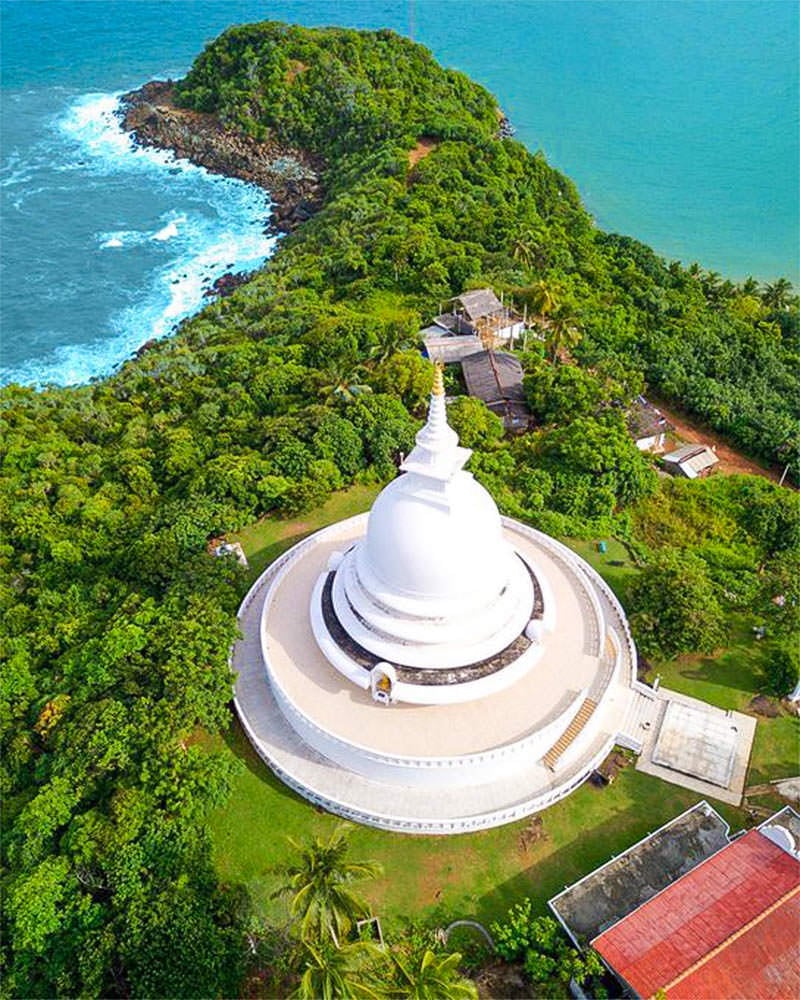

Perched on Rumassala Hill above the bay of Unawatuna, the Japanese Peace Pagoda is one of Sri Lanka's most quietly compelling landmarks. The gleaming white stupa was built by Japanese Buddhist monks belonging to the Nipponzan-Myōhōji order as part of a global mission to promote peace — a mission that has placed similar pagodas on every inhabited continent. In Sri Lanka, the Rumassala site is the most visited, though further pagodas stand near Ampara in the east.
What is the history behind the Japanese Peace Pagoda?
The worldwide Peace Pagoda movement was founded by the late Buddhist monk Nichidatsu Fujii, who believed that constructing monuments to peace in countries affected by war or division could help heal collective memory. Construction of the Rumassala pagoda was funded and carried out by Japanese monks in cooperation with local Sri Lankan Buddhist communities. It stands as a physical expression of the long spiritual and diplomatic ties between Japan and Sri Lanka — ties that were formally strengthened when Sri Lanka signed a separate peace treaty with Japan in 1952, choosing reconciliation over reparations.
The stupa form itself has deep roots in South Asian Buddhism, representing the Buddha's enlightened mind. The Japanese interpretation at Rumassala follows that tradition while adding its own architectural character: a smooth white dome, a gilded finial, and four golden Buddha images facing the cardinal directions.
Where exactly is the Rumassala Peace Pagoda located?
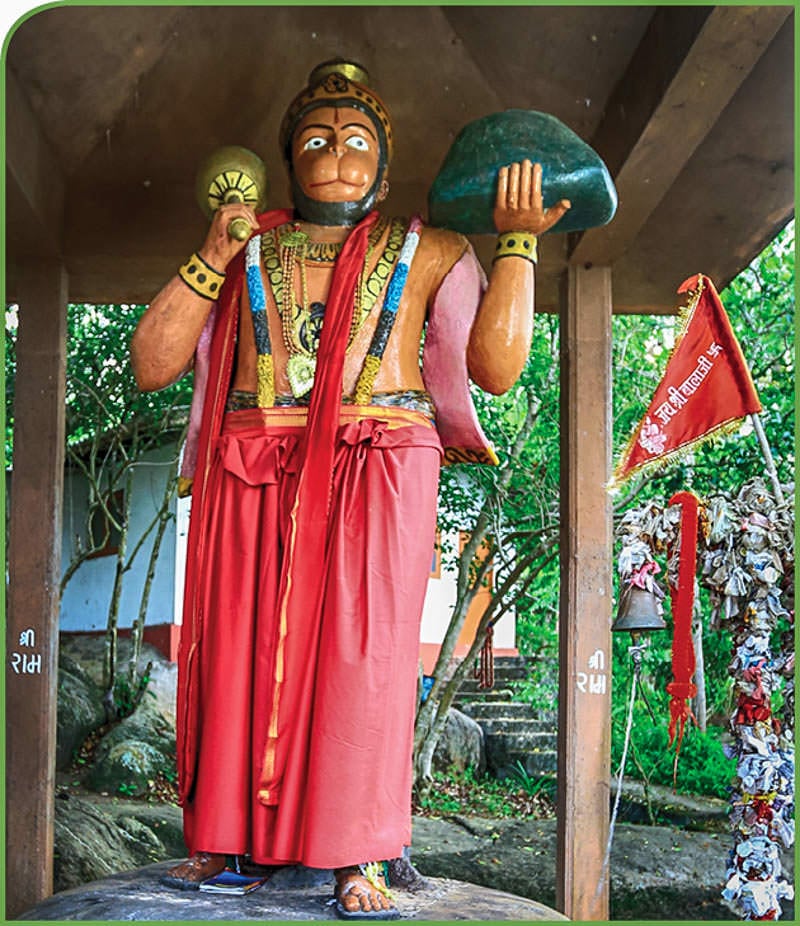
Rumassala Hill rises at the eastern end of Unawatuna Bay, roughly 6 kilometres from the centre of Galle. The hill is part of a protected forest reserve and carries its own layer of legend — local tradition holds that it is a fragment of the Himalayan mountain that the deity Hanuman dropped while carrying medicinal herbs described in the ancient epic Ramayana.
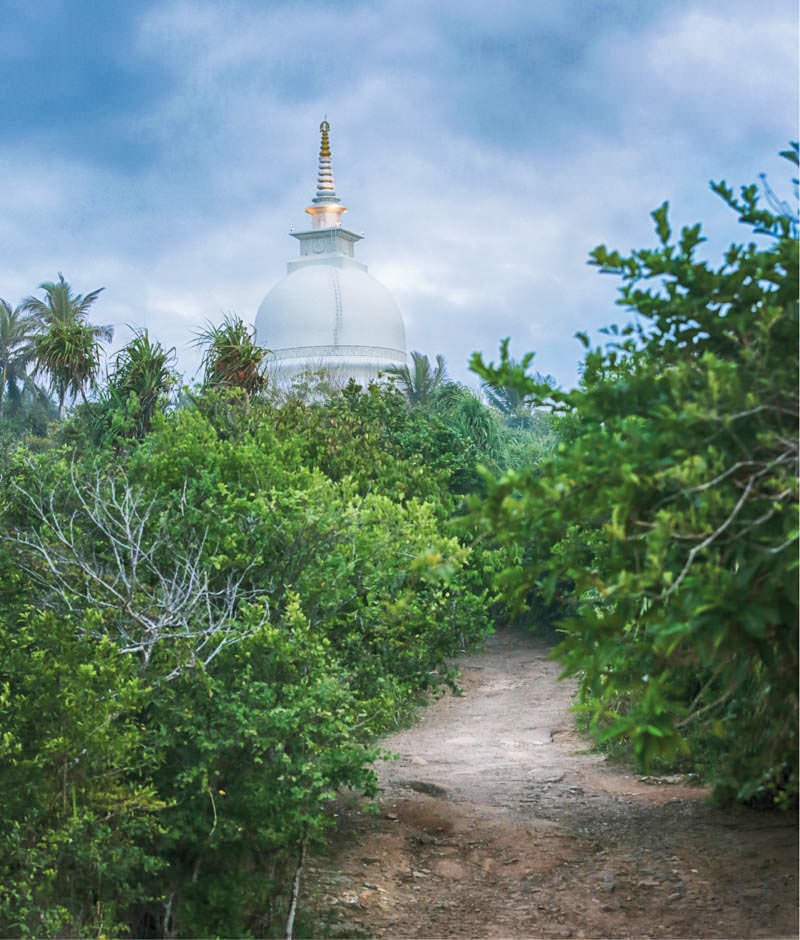
The pagoda sits near the hill's summit, surrounded by forest that also harbours a notable variety of medicinal plants. Visitors approaching from the Unawatuna side will find a signposted path that climbs steadily through the trees. A Galle city tour often includes a stop here, as it pairs naturally with the Dutch Fort and the wider Galle peninsula.
How do I get to the Japanese Peace Pagoda from Galle or Colombo?
From Galle Fort, the most straightforward route is by tuk-tuk or car along Rumassala Road to the base of the hill, followed by a 15–20 minute walk up the forest path. From Unawatuna Beach the same walk takes around 30–40 minutes and passes through shaded canopy most of the way, which makes it manageable even in warm weather.
From Colombo, Galle is around 120 kilometres south along the Southern Expressway, typically a 90-minute drive. Unawatuna is a short distance beyond Galle on the coastal road. Private drivers can drop visitors at the hill's lower entrance and wait while you complete the hike.
What can I see and do at the Rumassala Peace Pagoda?
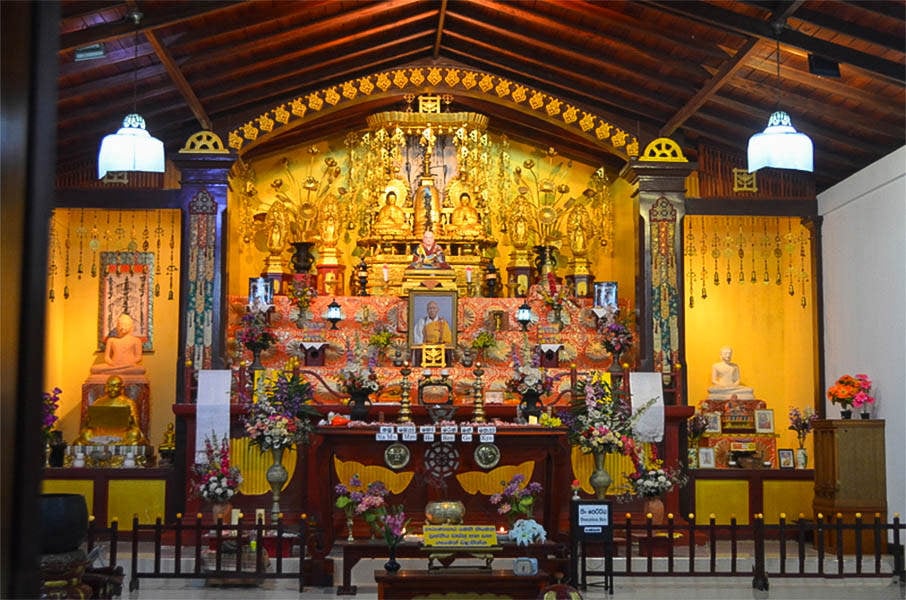
The pagoda itself rewards slow exploration rather than a quick photograph and departure. Walk the circumambulation path around the base and take time with each of the four seated Buddha figures. The interior shrine, where monks sometimes observe prayer and meditation, is open to respectful visitors.
- Panoramic views: From the platform surrounding the stupa, the Indian Ocean stretches to the south and west. On a clear day the view sweeps across Unawatuna Bay, the Galle harbour lighthouse, and the forested ridges of the Southern Province interior.
- Sunsets: The western aspect of the hill means late-afternoon light falls directly on the white dome and the sea beyond — a draw for photographers and anyone seeking a calm end to the day.
- Forest walk: The trail through Rumassala Reserve passes trees and plants that are rare elsewhere on the coast. Birdwatchers sometimes spot endemic species in the canopy during early-morning visits.
- Quiet reflection: The site has no vendor stalls immediately at the stupa, which preserves the atmosphere. Bring water for the hike.
What is the best time to visit the Peace Pagoda?
Early morning and late afternoon are the most rewarding times. Midday heat on the exposed summit platform can be intense between April and September. The Southern Province's main dry season runs roughly from November through April, which generally offers the clearest skies and easiest hiking conditions.
The monsoon (typically May through September on the south-west coast) brings cloud and occasional heavy rain, but the forest turns especially lush and the site is noticeably quieter. If you visit during the wet season, wear grip-soled shoes and allow extra time on slippery paths.
Are there any practical tips for visiting?
Dress modestly — shoulders and knees covered — as a matter of respect for an active place of worship. Remove footwear before approaching the shrine building at the base of the stupa. There is no formal entry fee charged at the Rumassala pagoda, though a voluntary donation box is typically placed near the shrine. Photography of the stupa and surrounding landscape is generally welcomed; inside the prayer hall, follow the cues of the monks or caretakers present.
The hill also sits near the Koggala Sea Turtle Conservation Project and the broader Galle area, making it easy to combine with other sites along this stretch of coastline in a single day.
What else is worth seeing near Rumassala Hill?
The Unawatuna beach itself lies a short walk from the hill's western base and is one of the calmer bays on the south coast. Galle Fort — a UNESCO World Heritage site — is less than ten minutes by road and offers a very different kind of historical atmosphere. Further west, the waterways of Madu River are accessible from Balapitiya for visitors keen on a mangrove boat safari. Inland, the Sinharaja Forest Reserve, Sri Lanka's only lowland rainforest UNESCO site, is roughly 60 kilometres north-east of Galle — a feasible half-day detour for nature-focused travellers.