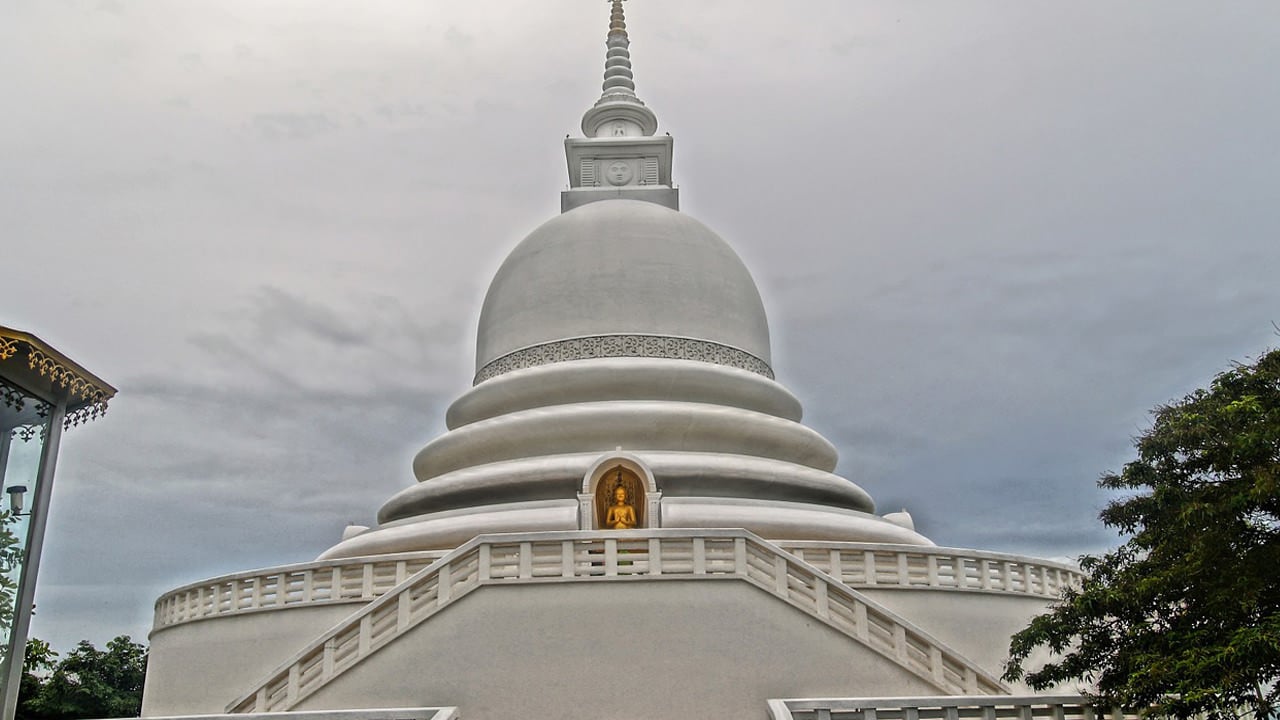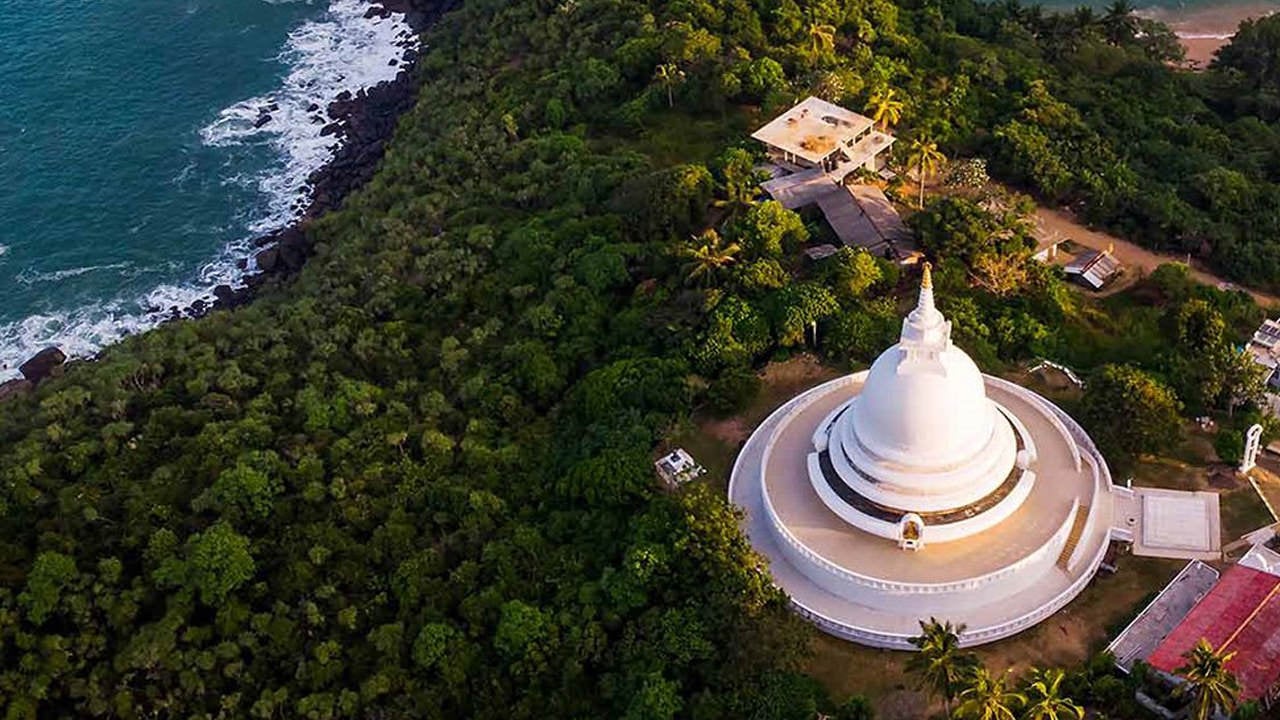

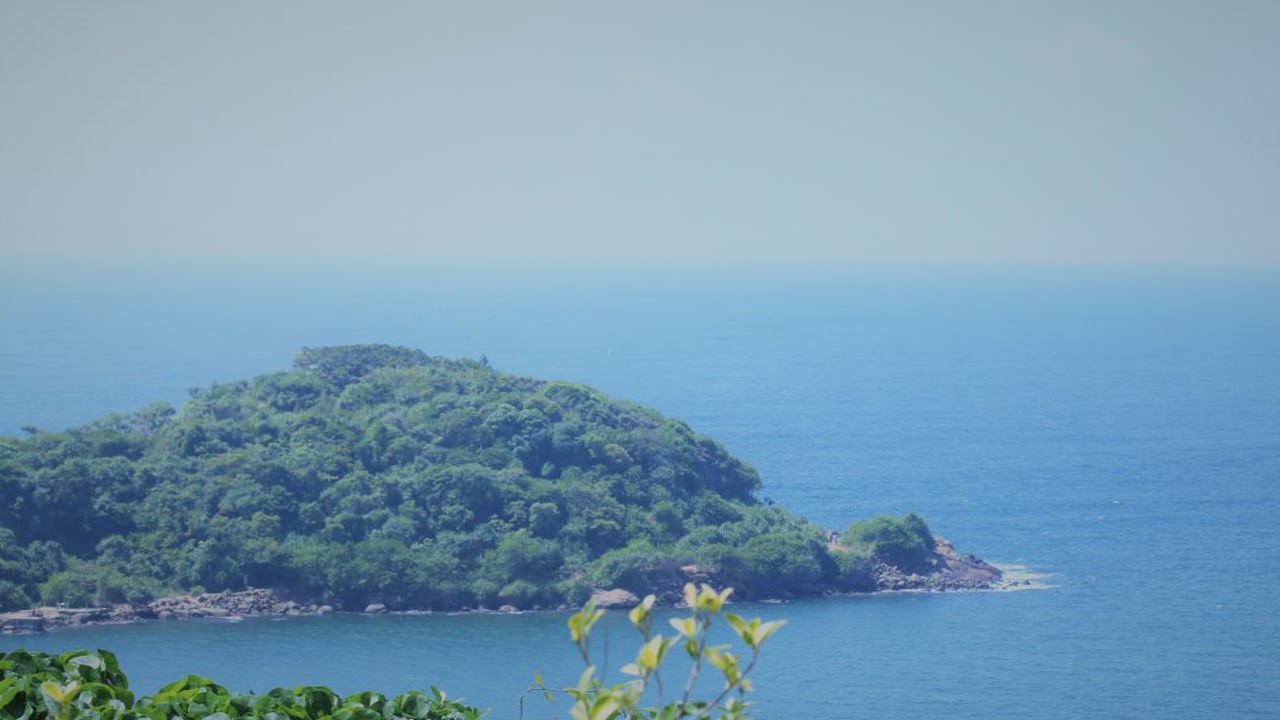

Rumassala Mountain rises quietly above Unawatuna Bay, roughly 3 km east of Galle Fort in Sri Lanka's Southern Province. It is easy to miss on a map — a low, forested promontory rather than a dramatic peak — yet it carries extraordinary weight in both mythology and ecology. For followers of the Ramayana Trail, Rumassala is one of five locations in Sri Lanka where a fragment of the sacred Dronagiri mountain is believed to have landed. For botanists, it is an open-air herb library containing around 150 species of medicinal plants that grow here and, strangely, very few places elsewhere on the island.
What is the legend behind Rumassala Mountain?
The story is rooted in the Sanskrit epic Ramayana. When Ravana, the Asura king of Lanka, abducted Sita — the consort of Prince Rama — Rama travelled south with his brother Lakshmana and the monkey demigod Hanuman to rescue her. During the ensuing battle, Lakshmana was gravely wounded and required a rare mountain herb called Sanjeevani to survive. Hanuman was dispatched to the Himalayas to fetch it, but unable to identify the exact plant, he lifted the entire Dronagiri mountain and flew back toward Lanka.
According to the legend, pieces of the mountain broke off during flight and fell at five points across the island. Rumassala is traditionally identified as one of those fragments. The other four are Dolu Kanda near Hiripitiya, Ritigala on the Habarana–Anuradhapura road, Thalladi in Mannar, and Kachchativu in the north. The plant diversity found at each of these locations is cited by some researchers as circumstantial support for the legend — though scientists attribute the unique flora to the specific microclimate and soil conditions of each hill rather than celestial origins.
What makes Rumassala significant on the Ramayana Trail?
Sri Lanka's Galle city tour typically includes Rumassala as one of its cultural stops, and the site draws a steady stream of Indian pilgrims who trace the Ramayana Yatra — a pilgrimage route connecting all major Ramayana-related sites across the country. Rumassala sits comfortably within a southern Sri Lanka itinerary alongside Galle Fort, Unawatuna, and the coastal road toward Matara.
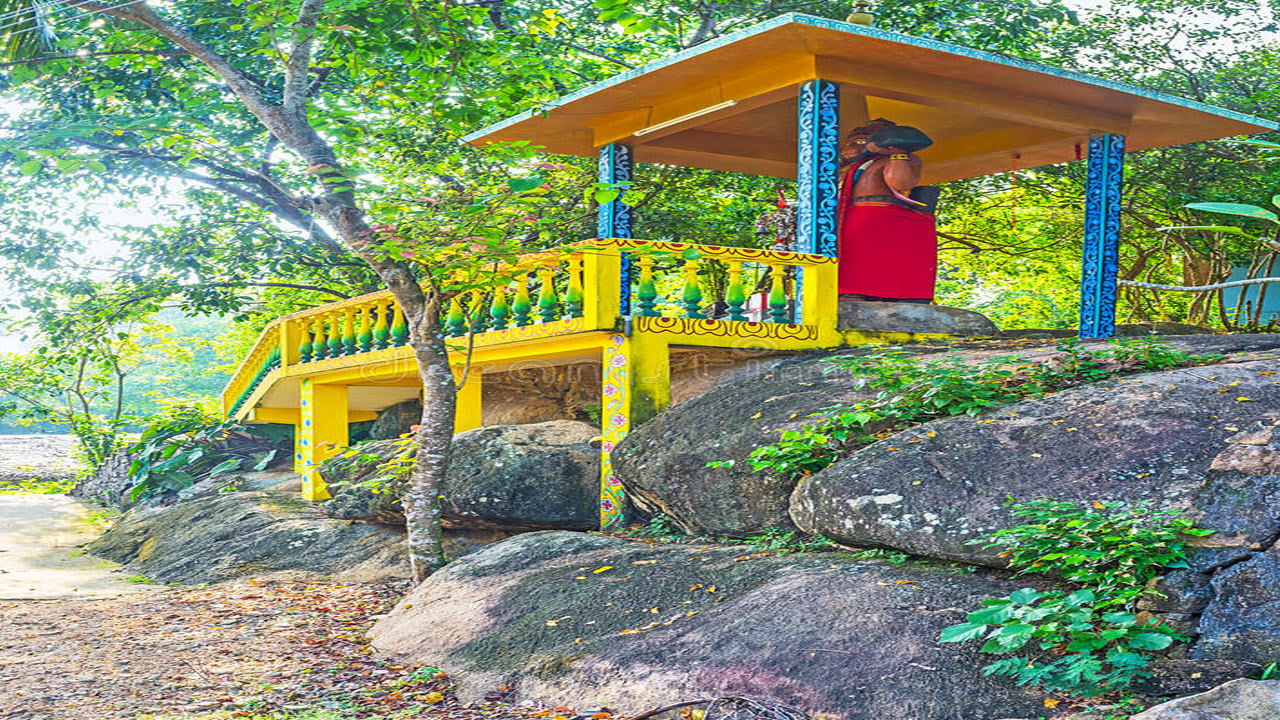
A small shrine near the summit honours Hanuman, and visitors often leave offerings of flowers and camphor. The atmosphere is contemplative rather than festive — this is a place for quiet reflection rather than a large festival ground. Morning visits are generally preferable: the light is softer, the trail through the forest is cooler, and the views over Unawatuna Bay are clearest before midday haze sets in.
What herbs and wildlife can you find at Rumassala?
The botanical interest at Rumassala is genuine and well documented. Researchers have recorded close to 150 species of medicinal herbs on the hill, many of them associated with Ayurvedic and Unani medicine systems. Among the documented species are plants from the Pongamia family — related to Pongamia pinnata, widely used in traditional medicine across South Asia — alongside a range of shrubs, climbers, and ground plants not commonly found in lowland Sri Lanka.
The forest canopy also shelters a variety of birdlife. Residents include several endemic and near-endemic species typical of Sri Lanka's southern lowland forests. The dense understorey makes Rumassala a rewarding spot for birders who want a short outing near Galle without trekking into a national park. Monitor lizards, land snails, and small mammals have also been recorded here.
- Around 150 documented herb species, many with Ayurvedic applications
- Dense secondary forest hosting lowland bird species
- Resident monitor lizards and small reptile populations
- Clear views over Unawatuna Bay from the upper slopes
How do you get to Rumassala from Galle or Unawatuna?
Rumassala lies between Galle Fort and Unawatuna Beach, making it straightforward to combine with either destination. From Galle town, the mountain is around 3 km to the east along the Matara road, before turning south toward the coast. From Unawatuna Beach, it is walkable in under 20 minutes along the coastal path, though the uphill section through the forest requires moderate fitness and sturdy footwear.
Three-wheelers (tuk-tuks) are readily available from Galle and Unawatuna. There is no formal car park at the trailhead, but roadside space is generally available. The trail itself is not officially maintained, so conditions vary by season — the path becomes slippery during the southwest monsoon (typically May to September).
| Starting Point | Approximate Distance | Typical Travel Time |
|---|---|---|
| Galle Fort | ~3 km | 10 min by tuk-tuk |
| Unawatuna Beach | ~1.5 km | 20 min on foot |
| Colombo | ~125 km | 2–2.5 hours by road |
When is the best time to visit Rumassala?
The southern coast of Sri Lanka is most accessible between November and April, when the southwest monsoon has cleared and the weather is dry and settled. During this window, the forest trail is firm underfoot, the herb species are easier to observe, and the bay views from the upper slope are at their clearest.
Visiting during the monsoon months is not impossible — the forest is dramatically green and the light is softer — but the path turns muddy quickly and the risk of slipping increases. Early morning arrivals are advisable year-round, both to avoid midday heat and to catch the best birdwatching before the canopy grows noisy with visitors.
What else is near Rumassala worth combining into an itinerary?
Rumassala works well as part of a broader southern Sri Lanka day. Galle Fort, a UNESCO World Heritage Site, is less than 10 minutes away by road. Unawatuna Beach is immediately adjacent for those who want to finish the morning with a swim. Further afield, the Sinharaja Forest Reserve — a UNESCO World Heritage rainforest and one of Sri Lanka's most biodiverse protected areas — lies roughly 60 km to the northeast and can be visited as a full-day extension from a Galle base.
For those interested in other Ramayana Trail sites, the five Sanjivani Mountains are spread across the island, meaning Rumassala is often the southernmost stop on a longer itinerary that might continue toward Ritigala in the north-central province. Planning this as a multi-day cultural circuit allows for comfortable distances between sites.
Is there an entry fee for Rumassala?
Rumassala is not a formally managed reserve with a ticketed entrance. Visitors generally walk in freely from the road. However, a small donation is customary if you visit the Hanuman shrine at the summit. As management arrangements can change, it is worth confirming locally before your visit. No special permit is required for the botanical area, though collection of plants is prohibited.