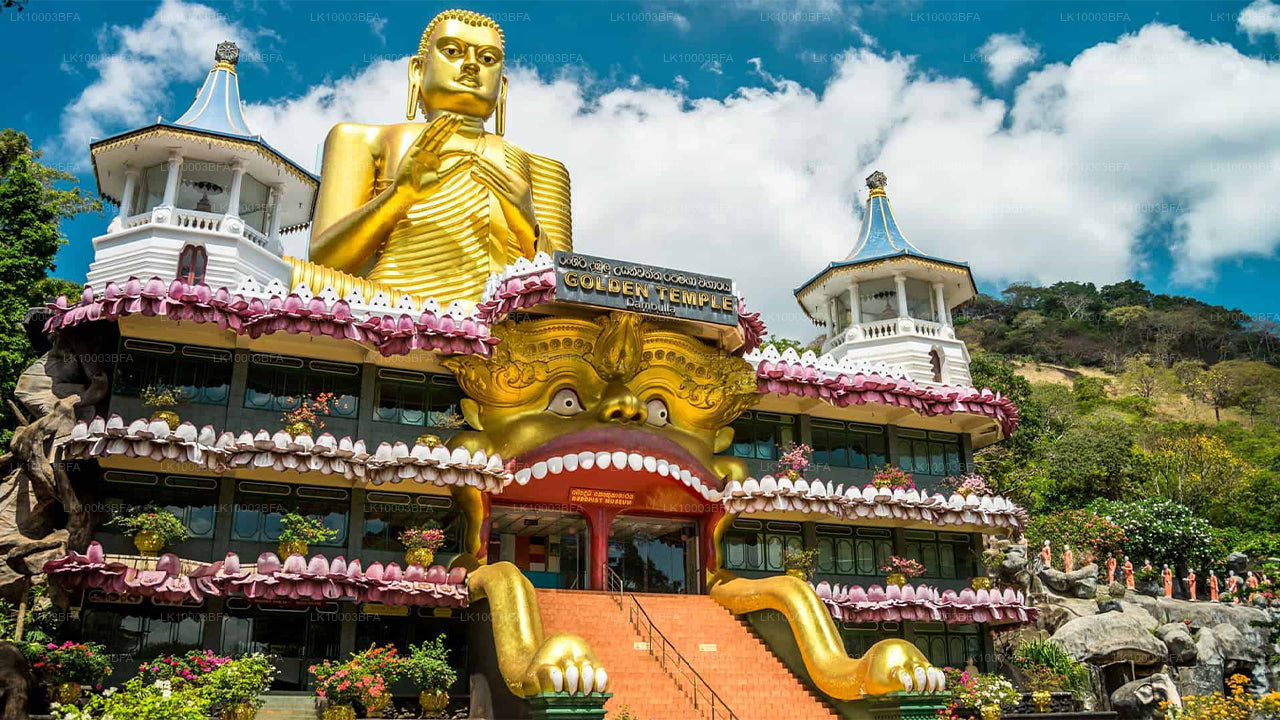
Sri Nagavihara International Buddhist Centre stands in the heart of Jaffna, offering a rare window into Buddhist heritage in a region where Hindu and Christian traditions predominate. For travellers curious about the full breadth of Sri Lanka's spiritual life, this temple provides context that few sites in the north can match. It functions simultaneously as an active place of worship, a meditation centre, and a forum for interfaith dialogue — making it genuinely worth seeking out beyond the usual Jaffna circuit.
What is the history and significance of Sri Nagavihara?
Buddhist practice in the Jaffna Peninsula has ancient roots, though centuries of shifting political and demographic change left relatively few functioning temples in the region. Sri Nagavihara International Buddhist Centre was established to restore a Buddhist presence in the north and to serve both the local Sinhala-Buddhist community and visiting pilgrims from across the island. Over time it has grown into a recognised centre for Dhamma teaching, attracting monks, scholars, and lay practitioners who see value in maintaining Buddhism's visibility in a culturally plural city.
The centre's international designation reflects its broader mission: fostering exchange between Sri Lankan Buddhism and Buddhist communities elsewhere in Asia, particularly from countries such as Thailand, Myanmar, and Japan whose nationals sometimes make their way to Jaffna as part of island-wide pilgrimages.
What can visitors see and experience at the temple?
The temple complex presents a coherent example of traditional Sri Lankan Buddhist architecture, with a principal shrine room housing a large seated Buddha image, flanked by smaller devotional spaces. The craftsmanship visible in the carvings and paintwork draws on conventions developed over centuries in the island's more established temple towns — seeing it in the context of Jaffna makes the contrast with the surrounding Tamil-Hindu aesthetic especially striking.
- Shrine and statuary: The main hall contains carefully crafted Buddha images in both seated and standing postures. Offerings of flowers, incense, and oil lamps are maintained by resident monks and lay devotees throughout the day.
- Puja ceremonies: Regular chanting sessions follow the standard Theravada schedule (typically morning and evening). Visitors are welcome to observe, provided they remain respectful and follow the guidance of the monks.
- Meditation sessions: The centre periodically offers guided meditation for both beginners and experienced practitioners. These sessions are conducted in Sinhala and, on request, with some instruction in English.
- Dhamma discussions: Monks resident at the centre are willing to speak with visitors about Buddhist philosophy and practice — an increasingly rare opportunity in temple tourism, where most visits are transactional rather than conversational.
- Grounds and atmosphere: The surrounding compound is kept quiet and well-tended. Even visitors with no particular religious interest often find the contrast between the temple's calm and the busy streets of central Jaffna worth a short stay.
How does Sri Nagavihara fit into Jaffna's broader religious landscape?
Jaffna is overwhelmingly associated with Tamil Hindu culture — the Nallur Kandaswamy Kovil dominates the city's religious calendar and draws pilgrims from across the Tamil diaspora. Christian churches, both Catholic and Protestant, also have a long presence here, a legacy of Portuguese and Dutch colonial periods. Against this backdrop, Sri Nagavihara occupies a distinctive position: it is neither a minority curiosity nor an imposing counterpoint, but rather a quiet affirmation that the island's Buddhist heritage extends to its northernmost inhabited reaches.
Visiting the centre alongside Jaffna's Hindu and Christian sites gives travellers a more accurate picture of how different religious communities share an urban space — a dynamic that has particular resonance given the civil conflict that shaped this region for several decades. The temple has positioned itself explicitly as a place of harmony rather than assertion, and that tone is noticeable from the moment you arrive.
When is the best time to visit Sri Nagavihara?
The temple is accessible year-round, but the experience varies by season. The northern peninsula is typically dry and hot between May and September, which can make extended outdoor exploration uncomfortable; visiting in the early morning hours during this period is advisable. The northeast monsoon (October to January) brings rain but also cooler temperatures and a greener landscape.
Buddhist poya (full-moon) days see elevated activity at the temple — more worshippers, more ceremonial activity, and a livelier atmosphere overall. If witnessing active religious life matters to you, timing a visit to coincide with a poya day is worthwhile. Major Buddhist observances such as Vesak (May, full moon) and Poson (June, full moon) are observed here with particular care.
How do I get to Sri Nagavihara from Colombo or elsewhere in Sri Lanka?
Jaffna is connected to the rest of the island by road and rail. The Yal Devi express train from Colombo Fort to Jaffna is the most comfortable option and typically takes around seven to eight hours, though travel times can vary. Several intercity bus services also run the Colombo–Jaffna corridor. Domestic flights operate between Bandaranaike International Airport and Jaffna's Palaly Airport, though services and schedules fluctuate — check current availability before planning around them.
Within Jaffna, tuk-tuks are the standard way to move between sites; most drivers are familiar with Sri Nagavihara. The temple sits within the city, so distances from central Jaffna are short.
What should visitors know before arriving?
As with any active Buddhist temple in Sri Lanka, a few conventions apply:
- Remove footwear before entering any shrine room or inner courtyard.
- Dress modestly — shoulders and knees should be covered. Sarongs are sometimes available to borrow at the entrance.
- Photography inside the main shrine hall should be approached with care; ask a monk or staff member before pointing a camera at sacred images.
- The centre welcomes visitors of all religious backgrounds and nationalities — no prior arrangement is typically necessary for a general visit, though meditation sessions or extended stays may require advance contact with the resident monks.
- Donations to the temple are appreciated but not formally required.
Is Sri Nagavihara suitable for travellers doing a Buddhist pilgrimage tour of Sri Lanka?
For those undertaking a dedicated Buddhist circuit — which classically includes sites such as Anuradhapura, Polonnaruwa, Kandy, and the Southern temples — Jaffna and Sri Nagavihara represent an off-the-standard-itinerary addition that rewards the extra travel time. The centre cannot rival the antiquity of the ancient capitals, but it offers something different: a living Buddhist institution in a predominantly non-Buddhist urban environment, where the faith's presence is sustained by genuine community effort rather than state infrastructure or mass tourism. That distinction resonates with many serious pilgrims.
Nearby places
8 places within about 25 km, nearest first.
- City Tours From Jaffnaunder 1 km
- Jaffna Cityunder 1 km
- Jaffna Districtunder 1 km
- Jaffna Universityunder 1 km
- Maninthalei Shivam Kovilunder 1 km
- North Coastunder 1 km
- Northern Provinceunder 1 km
- Sri Lanka Tamilsunder 1 km
Related reading
7 pages on closely related subjects.