
The Kalutara Bodhiya is one of Sri Lanka's most historically layered religious sites — a sacred Bo tree whose lineage traces back through two millennia of Buddhist history to the very tree beneath which the Buddha attained enlightenment. Located on the southern bank of the Kalu Ganga river in Kalutara town, the site draws pilgrims, historians, and curious travellers alike, offering a quiet but profound window into the island's spiritual past.
What is the Kalutara Bodhiya and why is it significant?
The Bo tree (Ficus religiosa) at Kalutara is believed to be one of the 32 saplings propagated from the Jaya Sri Maha Bodhi in Anuradhapura — itself a sapling of the original Bodhi tree at Bodh Gaya in Bihar, India. The Jaya Sri Maha Bodhi was brought to Sri Lanka around the 3rd century BC by the bhikkhuni Sanghamitta, daughter of Emperor Asoka of India and twin sister of the Venerable Mahinda, who introduced Buddhism to the island. That tree was planted in the Mahamehavana Park of Anuradhapura and is today recognised as the world's oldest tree with a continuously documented history.
According to the Bodhivamsa, a Sinhalese literary chronicle dedicated to the history of the Sri Maha Bodhi, the tree bore eight fruits, each producing four saplings — 32 in total. The locations for planting these saplings were reputedly designated by Mahinda himself, and Kalutara was among them. The significance of the Kalutara Bodhiya therefore extends well beyond a single tree: it represents an unbroken link in a chain of veneration connecting modern Sri Lanka to the Buddha's lifetime.
What is the history of the Kalutara Bodhiya?
The original sapling planted at Kalutara during the reign of King Devanampiyatissa in the 2nd century BC survived until approximately the 15th century AD. The site gained renewed importance in 1042 AD when a Pandyan prince named Wickrama Pandyan planted a new Bo tree on the lower terrace of the Kalutara Bodhi premises. Although a Hindu himself, Wickrama Pandyan served as a viceroy in the Kalutara region and is believed to have planted the tree to gain the goodwill of the predominantly Buddhist local population.
The arrival of the Portuguese along Sri Lanka's southwest coast in the 16th century brought significant disruption. As Portuguese authority over the coastal provinces expanded, care for religious sites such as the Kalutara Bodhiya deteriorated, and the tree reportedly died during this period before regenerating a few decades later. The Portuguese, recognising the site's hold over the local community, eventually converted the grounds into a fort — a strategic move to influence religious and civil life in the region simultaneously.
After the Portuguese era, the Dutch took control of the coastal territories, followed by the British. Each colonial administration left its own imprint on Kalutara. Under British rule the fort structures were gradually dismantled, and the sacred character of the site was slowly restored. Today the Kalutara Bodhi Trust administers the grounds, which have been developed into a well-maintained temple complex centred on the ancient tree.
What can visitors see at the Kalutara Bodhiya complex?
The Kalutara Bodhiya complex sits within a walled compound and includes several distinct areas worth exploring:
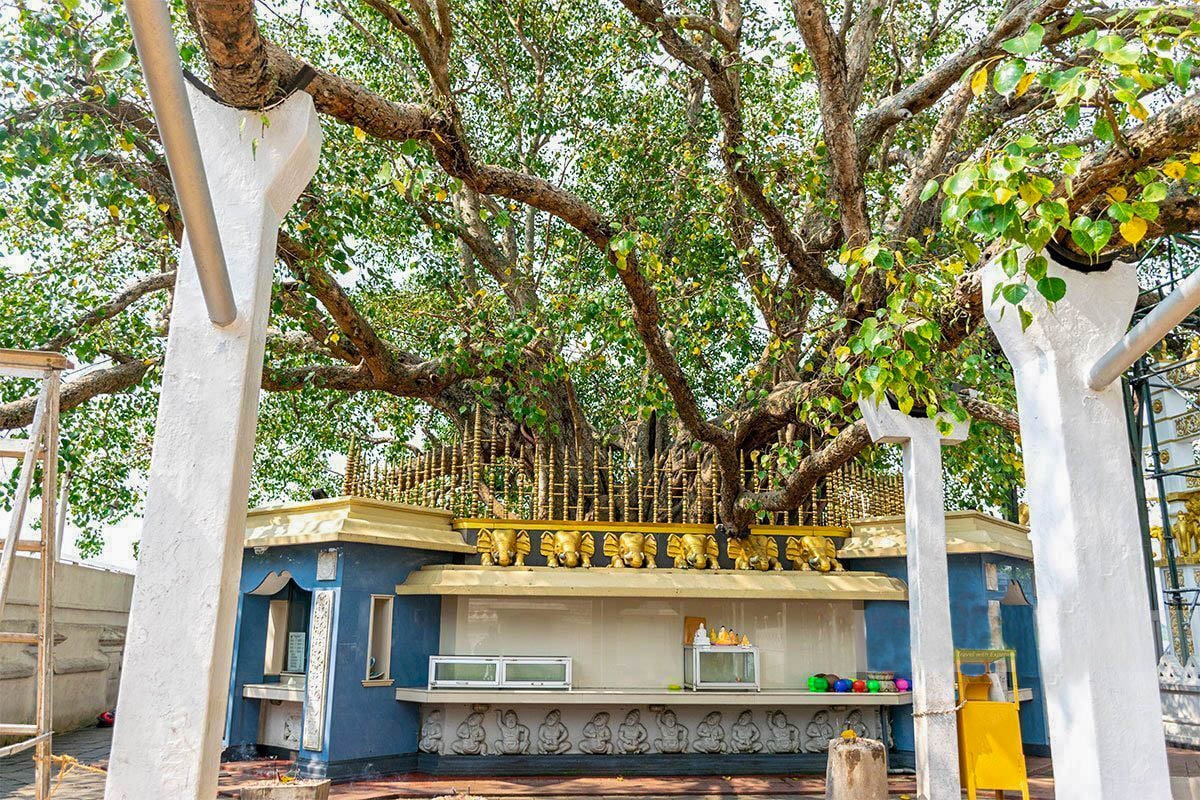
- The Sacred Bo Tree: The focal point of the entire site, draped in prayer flags and surrounded by offering platforms where pilgrims light oil lamps and lay flowers.
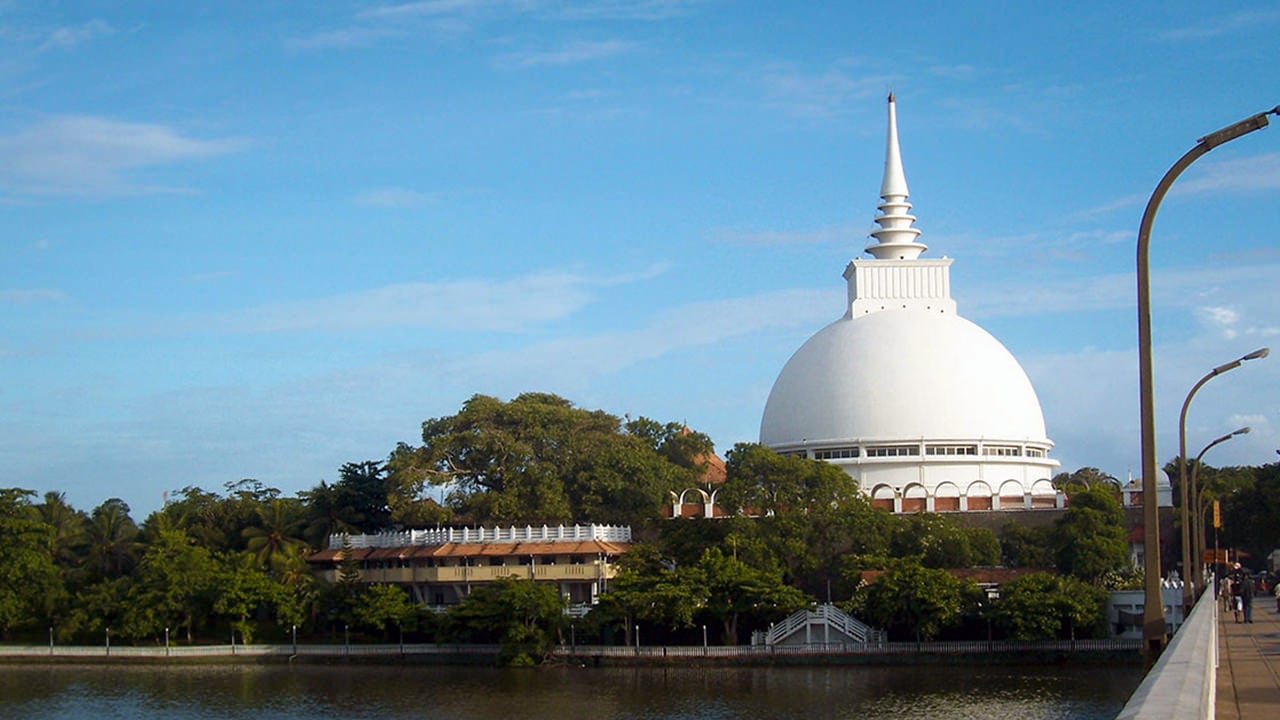
- The Stupa (Dagoba): A striking white stupa stands near the main entrance — it is hollow inside, which is relatively unusual in Sri Lankan Buddhist architecture, and contains a small shrine room that worshippers can enter.
- Lower and Upper Terraces: The complex is arranged across tiered levels, each with shrines, Bo trees of various ages, and meditation areas.
- Museum and Library: A small collection of Buddhist artefacts and manuscripts that provides additional context for the site's history.
- River Frontage: The complex borders the Kalu Ganga, and the combination of flowing water, temple bells, and the scent of incense creates a sensory experience that is markedly different from purely archaeological sites.
When is the best time to visit the Kalutara Bodhiya?
The temple is open every day of the year and receives visitors throughout the day, though early morning and late afternoon tend to be the quietest periods for personal reflection. The site becomes particularly atmospheric on full-moon Poya days, which are public holidays in Sri Lanka and occasions for intensive Buddhist observance — expect larger crowds and more ceremonial activity during these days.
Wesak (typically in May), which commemorates the Buddha's birth, enlightenment, and death, is the most significant annual occasion at the Kalutara Bodhiya. The complex is decorated with lanterns and oil lamps, and all-night Sil observance programmes are held for devout visitors. If you are travelling along the southwestern coast during Wesak, the atmosphere at Kalutara Bodhiya is worth planning around.
In terms of weather, the southwestern coast of Sri Lanka experiences its inter-monsoon season around April and May, and its main southwest monsoon from May to September. The dry season, from approximately November to April, generally offers the most comfortable conditions for sightseeing.
How do I get to the Kalutara Bodhiya from Colombo?
Kalutara lies roughly 43 km south of Colombo along the A2 coastal highway, making it an accessible half-day excursion from the capital or a natural stop on the way to Bentota, Hikkaduwa, or Galle. By private vehicle the journey takes around one to one and a half hours depending on traffic, which can be heavy on weekends. The Southern Expressway (E01) offers a faster alternative route; travellers exit at the Dodangoda interchange and head toward Kalutara town.
The train between Colombo Fort station and Kalutara South is a comfortable and scenic option, with the Kalutara South station a short three-wheeler ride from the temple. Intercity buses also run frequently along the coastal route. For those combining the Kalutara Bodhiya with a visit to the nearby Madu Ganga estuary, a private car or taxi gives the most flexibility.
Is the Kalutara Bodhiya suitable for non-Buddhist visitors?
The site is open to all visitors regardless of religion. The expected norms are standard for any Sri Lankan Buddhist temple: remove footwear before entering the inner compound, dress modestly (shoulders and knees covered), and refrain from turning your back on the sacred tree or shrine images while in the inner area. Photography is generally permitted in the outer areas; use discretion near worshippers during active prayer.
Children are welcome, and the combination of the ornate stupa, the ancient tree, the river views, and the steady rhythm of pilgrims and priests makes the Kalutara Bodhiya one of the more engaging temple visits for first-time travellers to Sri Lanka's Buddhist heritage.
What else can I do in Kalutara?
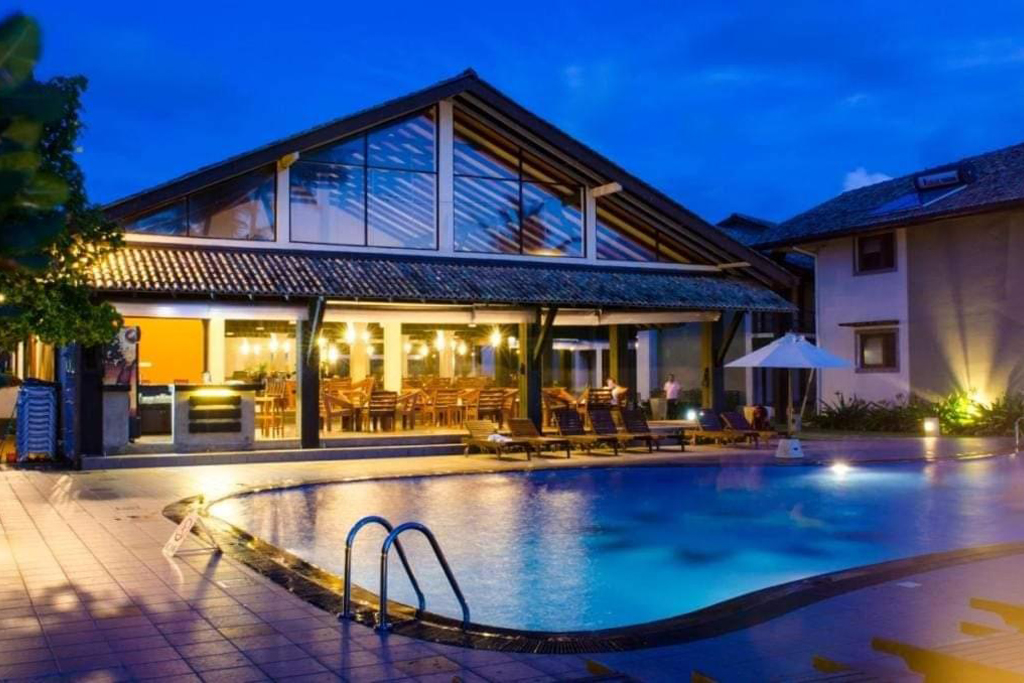
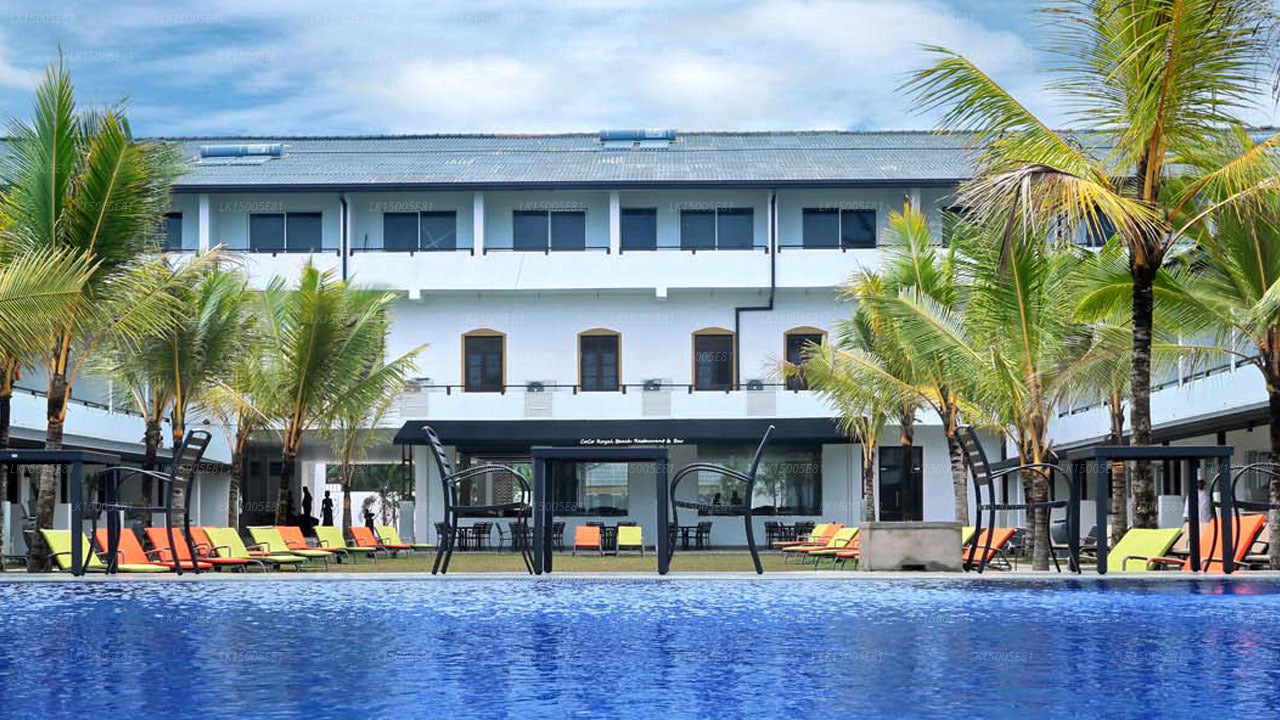
Kalutara is a coastal resort town with a full range of accommodation options, from boutique villas to larger beach hotels strung along a sandy stretch south of the river mouth. The beach at Kalutara North and Kalutara South is backed by coconut groves and is relatively calm compared to beaches further south. Water-based activities, river cruises on the Kalu Ganga, and visits to nearby gem and craft workshops can fill out a stay of one or two nights comfortably.
Day trips from Kalutara connect easily to the Madu River Safari at Balapitiya to the south, the turtle hatchery at Hikkaduwa, and the broader cultural heritage of the Southern Province. To the north, Colombo is close enough for a day visit if Kalutara is being used as a beach base.