

Few wildlife encounters in Sri Lanka feel as immediate or as meaningful as feeding an elephant by hand. Watching a five-tonne animal accept a bunch of bananas from your palm — its trunk curling with surprising delicacy — leaves an impression that outlasts any photograph. At its best, elephant feeding is also an act of conservation: revenue from responsibly managed programs funds veterinary care, daily feeding costs, and the long-term rehabilitation of animals that would otherwise have little chance of survival in the wild.
What do elephants eat during a feeding session?
Sri Lankan elephants are herbivores with sizeable appetites — a healthy adult can consume over 150 kilograms of plant matter per day. During supervised feeding sessions, visitors typically offer fruit and vegetables that complement the animals' broader diet of grass, foliage, and browse. Common items include:
- Bananas and banana stems
- Sugarcane stalks
- Jackfruit and pineapple
- Coconut fronds and leafy branches
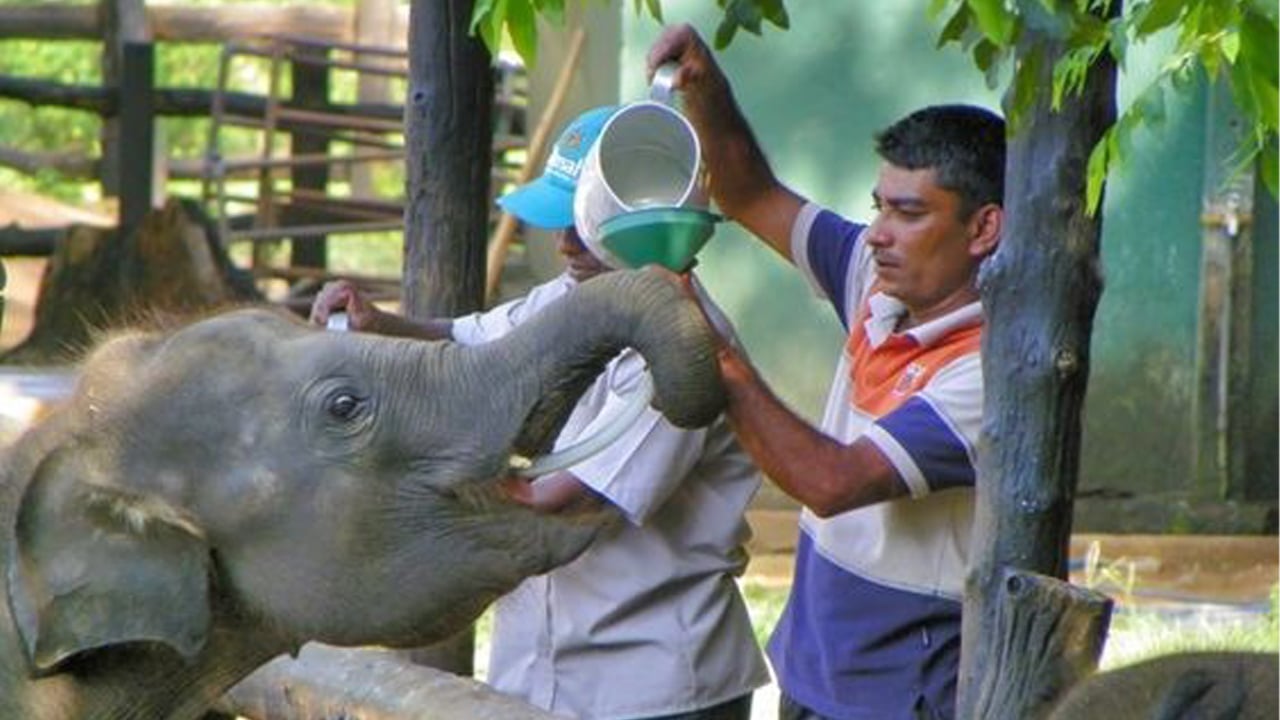
Trained caretakers guide visitors on how to hold food safely and at the right angle, so the interaction is comfortable for both the elephant and the person offering it. Staff at reputable centers will also explain the nutritional role of each item, turning a simple handout into a small lesson in elephant biology.
Where can you experience elephant feeding in Sri Lanka?
Two government-managed facilities stand out for the quality of their conservation work and the transparency of their operations.
Pinnawala Elephant Orphanage
Established in 1975 in the Kegalle district, Pinnawala is the older and better-known of the two. The orphanage cares for elephants that have been abandoned, injured, or separated from their herds. Feeding sessions take place along the banks of the Maha Oya River, and twice a day the herd walks down to bathe — a spectacle that draws as many visitors as the feeding itself. Pinnawala is around 90 kilometres from Colombo and is frequently combined with a visit to the Kandy city tour circuit.
Elephant Transit Home, Udawalawe
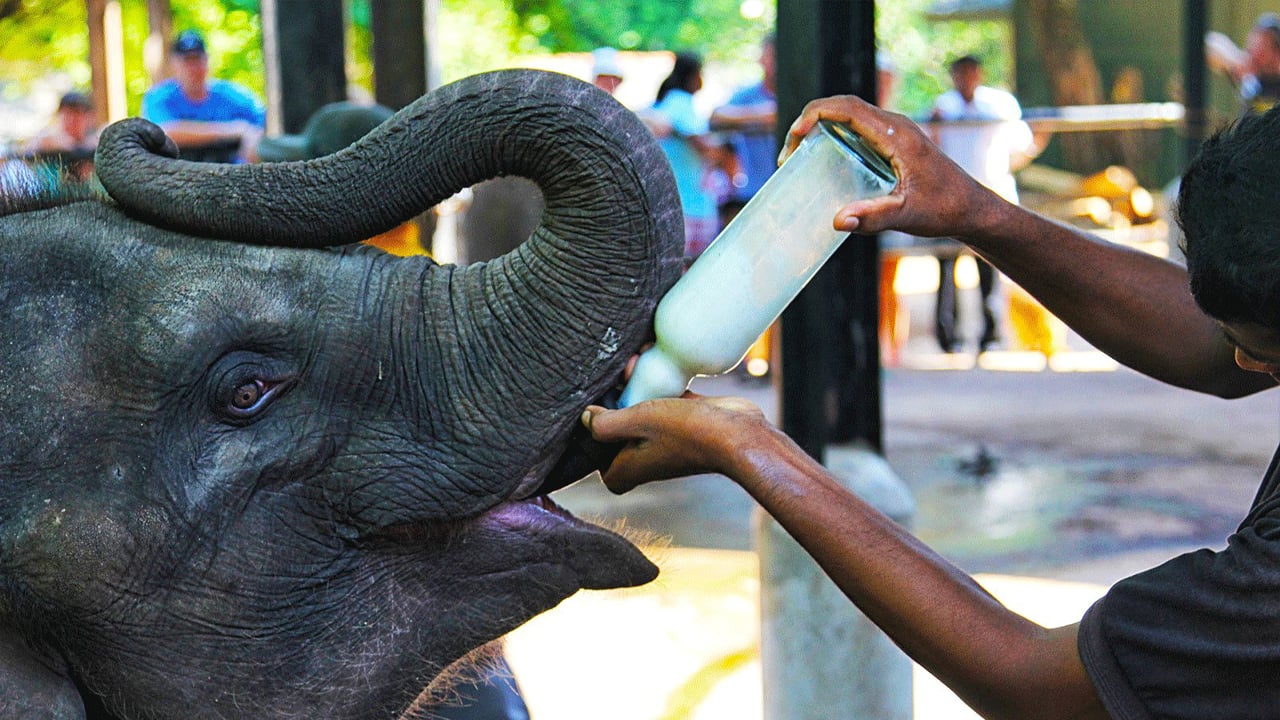
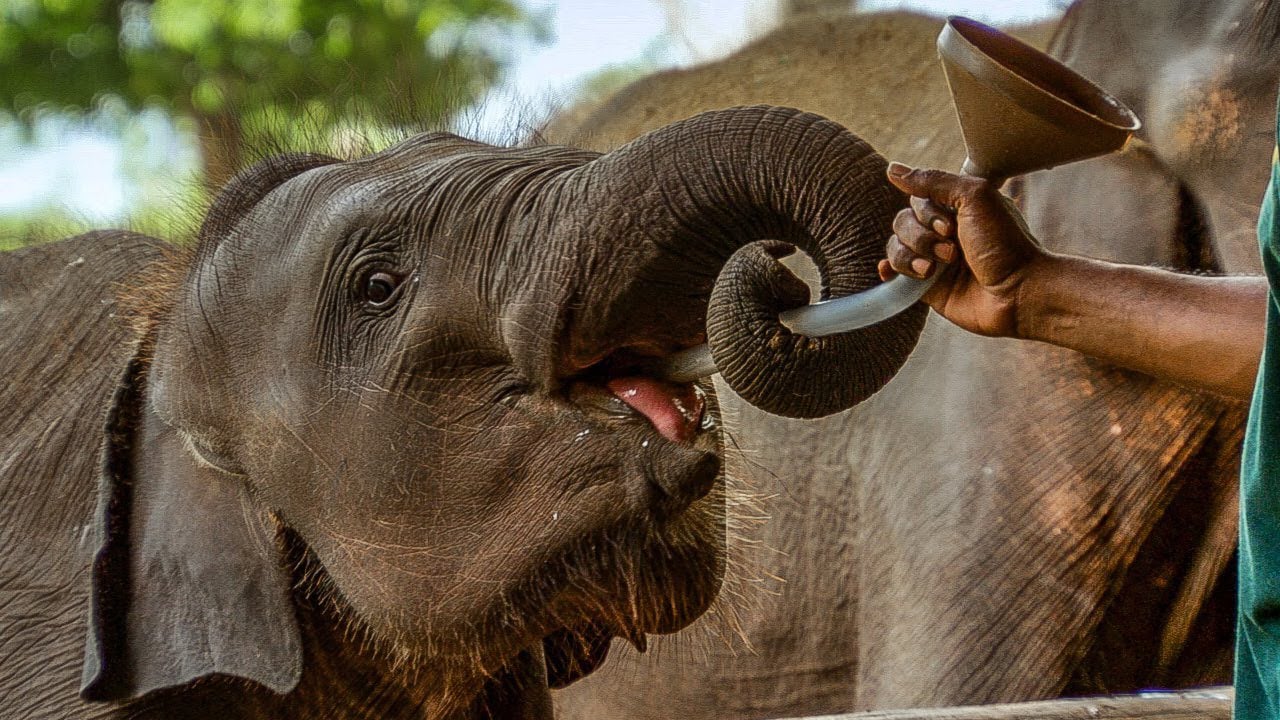
The Elephant Transit Home near Udawalawe operates on a different philosophy: its explicit goal is to release rehabilitated elephants back into the wild. Orphaned calves rescued from the surrounding national park are bottle-fed and gradually weaned until they are ready for release. Viewing is conducted from a raised platform to minimise human imprinting on the young animals — a deliberate choice that reflects the facility's release-focused mission. For visitors who want to observe rather than handle, this is often the more rewarding experience. The Transit Home sits close to Udawalawe National Park, making it easy to pair a morning feeding visit with an afternoon jeep safari.
When is the best time to attend an elephant feeding session?
Feeding sessions at both facilities are generally scheduled in the morning and afternoon, timed around the animals' natural eating rhythms. Arriving early in the morning tends to mean smaller crowds and better light for photography. Sessions run throughout the year, though the dry season between December and April brings the most settled weather and is generally considered the most comfortable time to travel in Sri Lanka's hill country and southern regions. That said, the wet season is not a barrier — elephants feed regardless of the rain, and visitor numbers are noticeably lower from May to October.
How does elephant feeding support conservation?
Both Pinnawala and the Elephant Transit Home are funded in part by entrance fees and tourism activity, which means a visit contributes directly to the daily care of resident animals. Feeding programs also generate data: caretakers monitor weight, appetite, and social behavior during sessions, catching early signs of illness or stress. Several of the elephants at Pinnawala were born on-site, and the orphanage has contributed to the broader understanding of elephant reproductive health in captivity.
Beyond the two flagship centers, a handful of smaller private sanctuaries and eco-lodges in the Habarana and Kaudulla areas offer structured elephant interactions set against a backdrop of dry-zone forest. These tend to be smaller-scale and more immersive, with an emphasis on elephant behavior rather than spectacle.
What should visitors know before going?
A few practical points help ensure the experience goes smoothly for everyone:
- Follow staff instructions precisely. Elephants are strong and their moods can shift; caretakers read the animals constantly and their guidance is not optional.
- Keep noise levels low. Loud sounds can startle the animals and create an unsafe situation, particularly around calves.
- Do not bring your own food. Items offered to elephants should come from facility staff, who know which foods are safe and in what quantities.
- Wear subdued colours. Bright clothing can agitate some animals.
- Allow time. Feeding sessions often run alongside other scheduled activities such as bathing. A half-day is typically the minimum to experience a meaningful visit.
Is elephant feeding ethical?
This is a question worth asking, and the answer depends entirely on the facility. Government-run rehabilitation centers with clear conservation mandates — such as Pinnawala and the Elephant Transit Home — operate under veterinary oversight and national wildlife regulations. They exist because wild elephants in Sri Lanka face genuine threats from habitat loss and human-elephant conflict, and the animals in their care would not survive in the wild unaided.
The picture is less clear at some privately run venues that use elephant contact primarily as a commercial draw. When choosing where to go, look for facilities that limit direct contact, employ trained mahouts with long-term relationships with individual animals, and can explain their conservation outcomes in concrete terms. Lakpura selects partners based on these criteria and can advise on which experiences meet responsible tourism standards.
How do I get to Pinnawala or Udawalawe from Colombo?
Pinnawala is roughly a 2.5-hour drive from Colombo via the Kandy highway, making it a viable half-day excursion or a stop en route to the hill country. Udawalawe is further — around four hours by road — and is best treated as an overnight destination, particularly if you plan to visit the national park as well. Both locations are accessible by private vehicle; a Lakpura driver can be arranged to combine either site with nearby attractions into a comfortable itinerary.
Related reading
7 pages on closely related subjects.