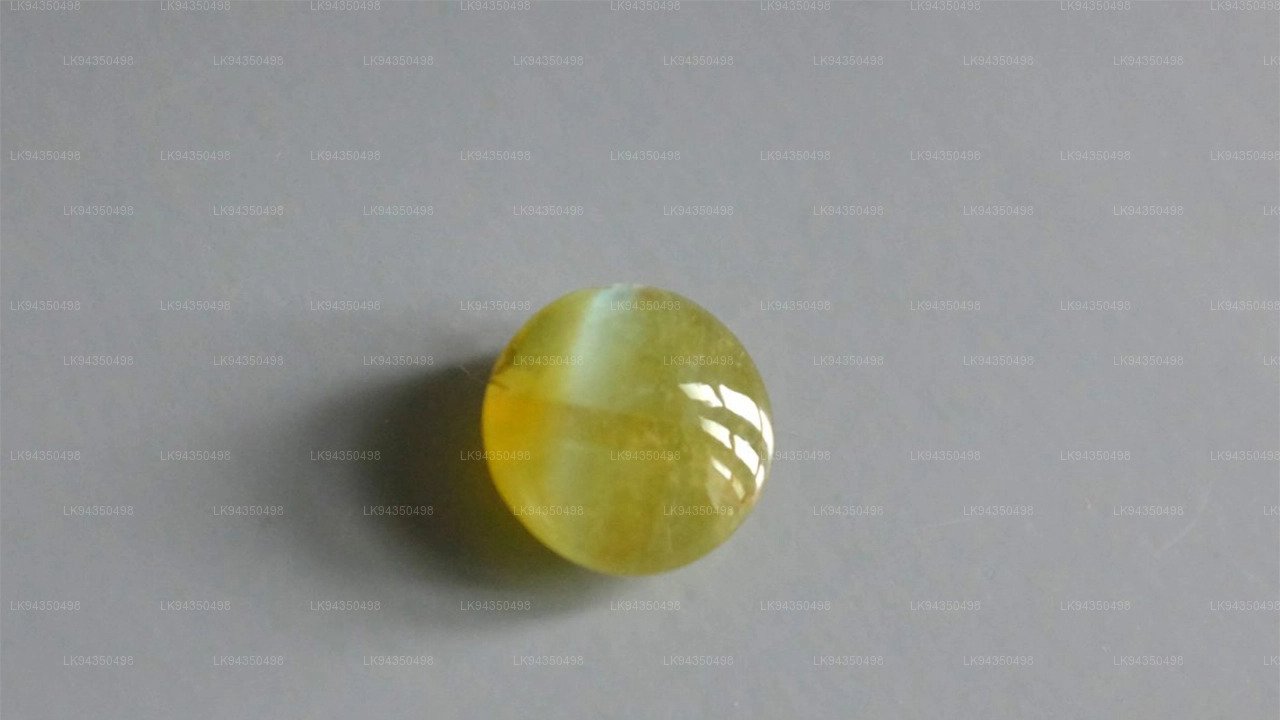
Zircon holds a distinction no other gemstone can claim: it is the oldest mineral ever found on Earth, with crystals dating back more than 4.4 billion years. Long before it became a collector's gem, zircon was forming deep in the Earth's crust as magma crystallised and metamorphic processes reshaped ancient rock. Today it is found across the world, but Sri Lanka — long celebrated as the Isle of Gems — remains one of its most important sources.
What makes zircon different from other gemstones?
Zircon is a silicate mineral with a tetragonal crystal structure: a short, stocky four-sided prism typically capped by a pyramid. Its chemical formula, ZrSiO₄, allows it to incorporate trace amounts of uranium and thorium during formation. The very low levels of radioactivity this produces are considered negligible for jewellery purposes and pose no recognised health risk.
What genuinely sets zircon apart is a rare optical property called birefringence, or double refraction. When light enters the stone, it splits into two rays travelling in slightly different directions. The result is an exceptional play of brilliance and fire — flashes of spectral colour that rival far more expensive gems. Its refractive index is among the highest of any natural gemstone, and its vitreous (glassy) lustre adds to the overall visual intensity.
What colours does zircon come in?
Zircon occurs in a wider colour range than many people realise. Natural stones appear in shades of golden yellow, reddish brown, orange, pale green, and colourless. The blue zircon commonly seen in the gem trade is almost always the result of heat treatment: stones are heated under reducing conditions at around 800–1,000 °C, transforming brownish material into a stable, vivid blue. A lighter brownish-orange can be produced at lower temperatures (200–500 °C under oxidising conditions), though this colour is less stable and can revert towards the original hue with prolonged exposure to bright light.
- Blue: heat-treated; the most commercially popular variety
- Colourless (Matura diamond): historically used as a diamond simulant; prized for its brilliance
- Golden/yellow: natural; associated with Sri Lankan alluvial deposits
- Brown/orange: common in untreated form; sometimes called hyacinth or jacinth
- Green: relatively rare; low zircon with metamict structure
How hard and durable is zircon?
Zircon rates 6 to 7.5 on the Mohs hardness scale, depending on variety. Stones categorised as "high" zircon (fully crystalline) sit at the harder end and exhibit the strongest brilliance; "low" zircon (partially metamict, meaning radiation has disrupted the crystal lattice) tends to be softer and less optically active. "Medium" zircon falls between these two extremes.
Toughness is fair to good overall. The main practical concern is the stone's tendency to chip along facet edges with hard knocks, so protective settings are advisable for rings worn daily. Zircon is chemically stable and holds up well to cleaning agents, but it should be kept away from prolonged direct sunlight if heat-treated to blue or other light-sensitive colours.
Where is zircon found?
The principal gem-quality sources are Sri Lanka, Cambodia, Burma (Myanmar), Thailand, and Vietnam. Sri Lanka's gem-bearing gravels — particularly in the Ratnapura district of Sabaragamuwa Province — have yielded fine zircon alongside sapphires, rubies, and cat's-eye chrysoberyls for centuries. The island's alluvial deposits carry zircon as rounded grains eroded from metamorphic and igneous host rocks and transported by ancient river systems.
The gem trade at Ratnapura, whose name translates literally as "City of Gems", is one of the oldest in the world. Sri Lanka's gem heritage is deeply woven into its history — medieval traders, including those who supplied the courts of Polonnaruwa, prized the island's stones above almost all other exports.
How is zircon cut and polished?
Because of zircon's high refractive index and birefringence, lapidaries take particular care with the orientation of the cut. An incorrectly oriented stone can show doubling of the back facets — a blurry, doubled appearance visible through the table. Skilled cutters orient the stone so that the table facet is placed at right angles to the optic axis, maximising visual clarity.
The three foundational cut styles used for zircon are:
- Brilliant cut — designed to maximise reflected light; round brilliant and oval are common choices that emphasise zircon's fire
- Step cut — long, parallel facets running parallel to the girdle; used in emerald and baguette shapes to highlight colour depth
- Mixed cut — brilliant-style crown combined with a step-cut pavilion; offers a balance between brilliance and colour saturation
The goal for any competent cutter is to retain as much of the rough's weight as possible while achieving the orientation and proportions that best reveal the stone's optical character.
How does zircon differ from cubic zirconia?
This is a common source of confusion. Zircon is a naturally occurring mineral that has been valued as a gemstone for thousands of years. Cubic zirconia (CZ) is a synthetic material — zirconium oxide — manufactured in a laboratory specifically as a diamond simulant. Despite sharing "zirc" in both names, they are entirely different substances with different chemistry, physical properties, and value. Natural zircon, particularly fine blue or colourless specimens from Sri Lanka, commands genuine collector interest and is classified as a genuine precious gemstone.
What should buyers look for in a quality zircon?
Colour saturation and clarity are the primary value drivers. In blue zircon, a vivid medium to medium-dark tone with strong saturation is preferred; stones that appear too pale or too dark lose the brilliance that makes the species distinctive. Colourless zircon is judged almost entirely on cut quality and freedom from inclusions, since its appeal lies entirely in its optical performance.
Buyers should ask whether a stone has been heat-treated (most blue zircon has) and seek stones with a certificate from a recognised gemmological laboratory. When purchasing in Sri Lanka, dealing through the National Gem and Jewellery Authority (NGJA) — the country's official gem regulatory body — provides an additional layer of assurance.