Quartz is one of the most familiar minerals on Earth, and one of the most varied. From the glassy clarity of rock crystal to the deep purple of amethyst, it appears in an extraordinary range of forms, colours, and geological settings. As the second most abundant mineral in Earth's crust after feldspar, quartz turns up in nearly every rock type — igneous, metamorphic, and sedimentary — and has been valued by human cultures for thousands of years.
What exactly is quartz, and how does it form?
Quartz is a crystalline form of silicon dioxide (SiO₂). It forms when silica-rich fluids cool slowly within the Earth, allowing well-defined crystals to grow. It is an essential component of felsic rocks such as granite, granodiorite, and rhyolite, and also appears in sandstone, quartzite, and many metamorphic formations. Because of its hardness and chemical stability, it survives weathering that destroys softer minerals, which is why quartz grains dominate many of the world's sandy beaches and river beds.
The name quartz comes from an old German word of uncertain origin, first used in print by the mineralogist Georgius Agricola in 1530. The ancient Greeks called water-clear crystals krystallos — meaning ice — believing them to be a form of permanently frozen water. That word lives on today in the term "rock crystal."
What are the main varieties of quartz?
Quartz divides broadly into two structural categories: macrocrystalline (visible crystals) and microcrystalline (cryptocrystalline, where individual crystals are too small to see with the naked eye).
Macrocrystalline varieties
- Rock crystal — colourless and transparent; historically prized for carvings and optical lenses
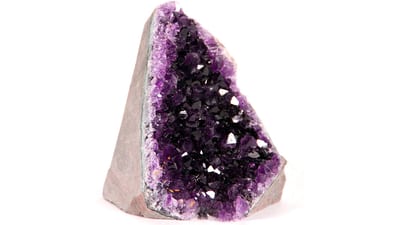
- Amethyst — violet to deep purple, coloured by iron impurities and natural irradiation
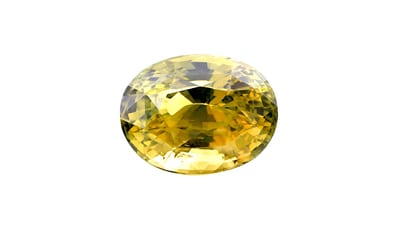
- Citrine — yellow to orange-yellow; rarer in nature than amethyst, with which it is sometimes confused
- Rose quartz — soft pink, typically translucent rather than transparent
- Smoky quartz — brownish-grey to near-black, caused by natural irradiation of aluminium-bearing crystals
- Morion — an opaque black variety of smoky quartz
- Ametrine — a bicoloured stone showing both amethyst and citrine zones in a single crystal
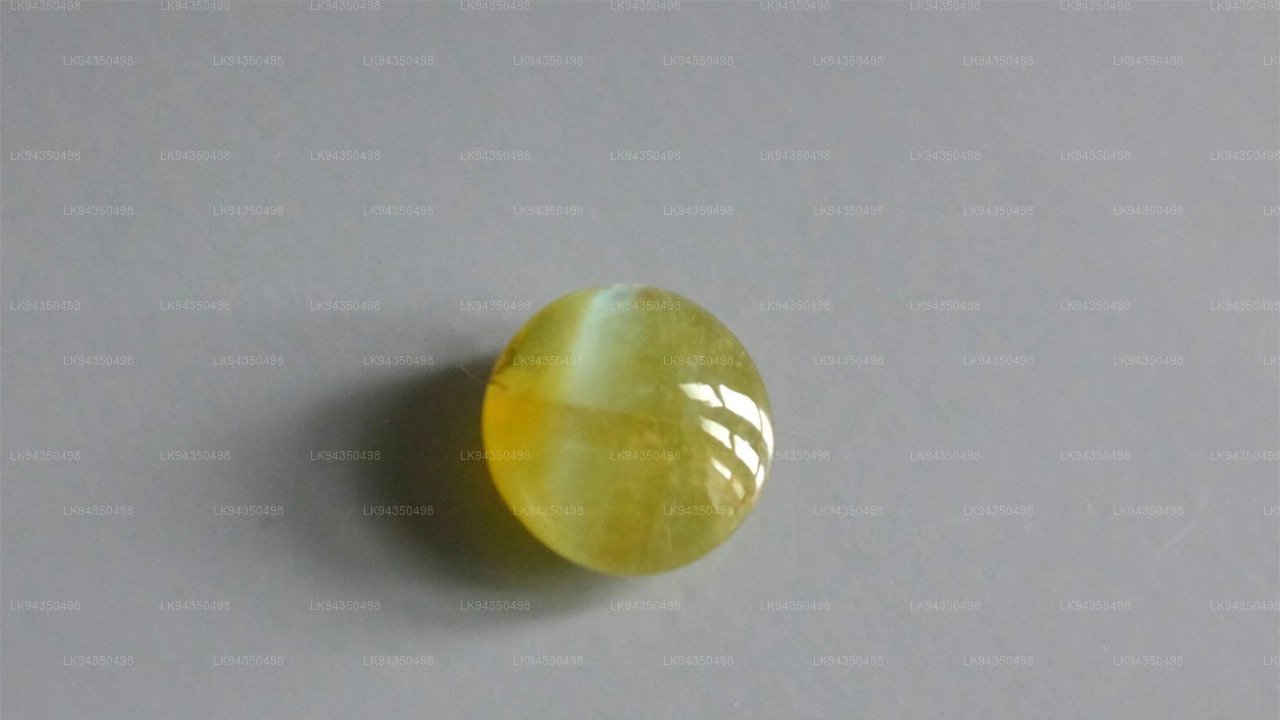
- Tiger's eye — golden-brown with a silky chatoyancy, formed by the replacement of crocidolite fibres with quartz
- Hawk's eye — similar to tiger's eye but retaining the blue-grey colour of the original crocidolite
- Aventurine — typically green or orange, with a sparkling shimmer caused by reflective mineral inclusions
- Milk quartz — white and opaque, with its colour produced by tiny fluid inclusions
Microcrystalline (cryptocrystalline) varieties
- Chalcedony — a fine-grained, waxy variety that forms the basis for many of the sub-types below
- Agate — banded chalcedony, often with concentric rings of different colours
- Jasper — opaque, impure chalcedony with colours ranging from red and yellow to green and brown
- Carnelian — translucent orange-red chalcedony; long used as a gemstone and seal material
- Onyx — banded chalcedony with parallel, typically black-and-white layers
- Chert and flint — dense, microcrystalline forms; flint was among humanity's earliest tool-making materials
High-pressure structural varieties
Under extreme pressure conditions deep in the Earth or at meteorite impact sites, quartz converts into denser structural polymorphs. These include tridymite and cristobalite (high-temperature forms), as well as coesite and stishovite, which form only under the intense pressures of deep-focus earthquakes or asteroid impacts.
How hard is quartz on the Mohs scale?
Quartz registers 7 to 7.5 on the Mohs hardness scale, making it harder than steel and capable of scratching glass. This hardness, combined with its lack of cleavage in most directions, gives quartz strong durability as both a gemstone and an industrial material. For context, diamond sits at 10, feldspar at around 6, and talc at 1.
What colours does quartz come in?
The colour of quartz is determined by trace impurities, radiation exposure, or structural defects within the crystal lattice. The principal colour varieties are summarised below.
| Variety | Colour | Primary cause |
|---|---|---|
| Rock crystal | Colourless | High chemical purity |
| Amethyst | Violet to purple | Iron impurities + irradiation |
| Citrine | Yellow to orange | Iron in a different oxidation state |
| Rose quartz | Pink | Titanium or manganese traces |
| Smoky quartz | Brownish-grey to black | Natural irradiation of aluminium defects |
| Milk quartz | White | Microscopic fluid inclusions |
Where is quartz mined in the world?
China, Japan, and Russia are the world's primary producers of quartz, particularly the high-purity varieties used in electronics and optics. Significant quantities are also mined in Brazil, South Africa, Germany, France, Bulgaria, Belgium, and the United Kingdom. Brazil is especially noted for large, gem-quality amethyst and citrine deposits. High-purity quartz sand — used in semiconductor manufacturing and solar panels — is a strategically important industrial commodity produced in several additional countries.
How is quartz used in industry and technology?
The piezoelectric properties of quartz — its ability to generate an electric charge when mechanically stressed, and vice versa — make it indispensable in modern electronics. Quartz oscillators control the frequency in watches, clocks, radios, GPS units, and computers. The angle at which a crystal blank is cut relative to the main crystal axes has a major influence on its performance characteristics, including frequency stability, temperature coefficient, and the quality factor (Q).
Beyond electronics, quartz is used as an abrasive, as a filler in paints and rubber, in glassmaking, and in the production of silicon metal for semiconductors. Crushed and powdered quartz — silica — is one of the most widely traded industrial minerals in the world.
What is the history and cultural significance of quartz?
Few minerals have a longer relationship with human civilisation. Flint and chert, both microcrystalline forms of quartz, were among the first materials shaped into tools by early hominids. Rock crystal carvings and vessels appear across ancient Egyptian, Greek, Roman, and East Asian cultures. Amethyst was considered a symbol of sobriety in ancient Greece and was set into the jewellery of bishops in the medieval Christian church. Carnelian and agate were used as seal stones throughout the ancient Near East and South Asia.
In more recent centuries, quartz crystals became central to scientific understanding of crystallography and piezoelectricity. The piezoelectric effect was first demonstrated experimentally in quartz by Pierre and Jacques Curie in 1880, a discovery that eventually enabled the entire field of precision timekeeping and frequency-control technology.