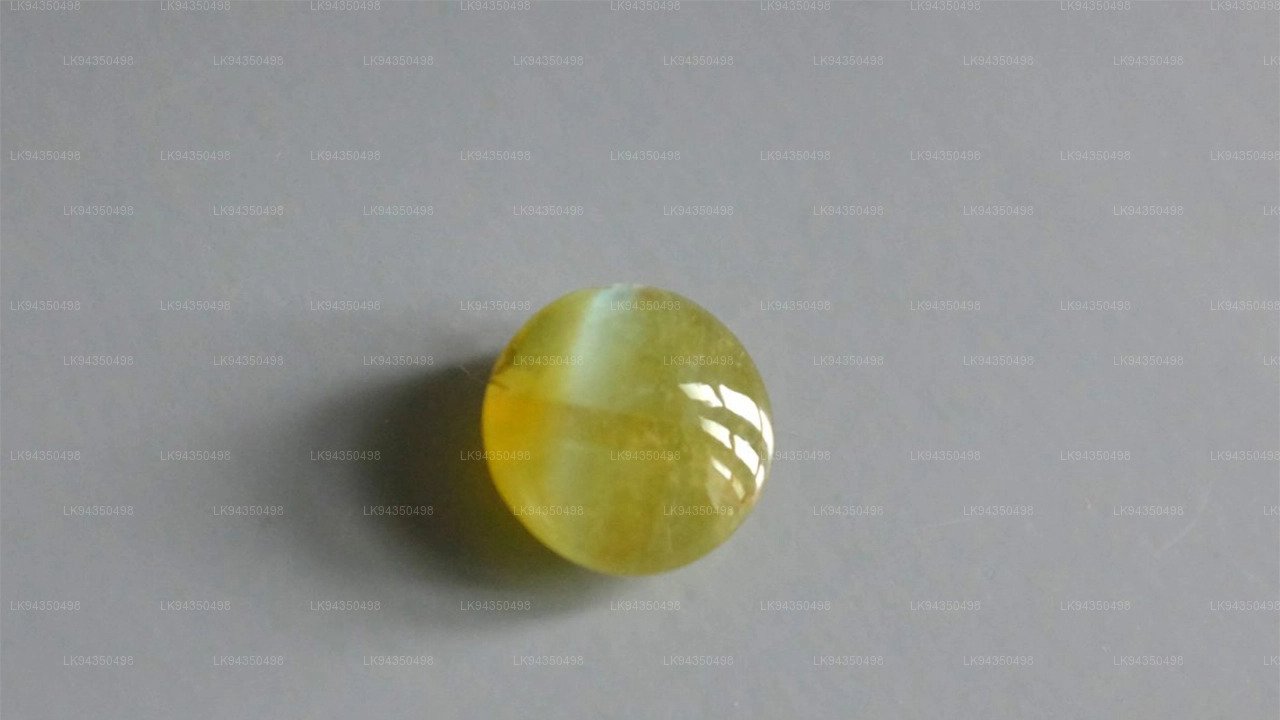
Chrysoberyl is one of the most underappreciated gemstones in the world of coloured stones, yet among gem connoisseurs it commands respect for its exceptional hardness, brilliant optical properties, and a family of varieties that includes two of the most coveted gems on earth. Sri Lanka — known for centuries as Ratna Dweepa, or Island of Gems — has long been a natural source of fine chrysoberyl in all its forms.
What exactly is chrysoberyl?
The species name chrysoberyl refers specifically to the transparent, faceted variety that shows no colour change between daylight and artificial light. This distinguishes it from its more famous sibling, alexandrite, which is technically a colour-change variety of the same mineral species. Chrysoberyl belongs to the oxide mineral group and owes its composition to beryllium aluminium oxide — a combination that produces a stone of remarkable density and toughness.
The ideal hue for faceted chrysoberyl falls in the green to yellowish-green range, though golden yellow and honey-toned stones are also well regarded. Strong dichroism — the property of showing two different colours when viewed along different optical axes — occasionally produces attractively bi-coloured specimens that collectors prize for their visual complexity.
What are the main varieties of chrysoberyl?
Three distinct varieties fall under the chrysoberyl species, each with its own character and following among gem buyers:
- Ordinary chrysoberyl — The transparent, yellowish-green to golden-yellow faceting material. Well-cut stones display considerable life and brilliance owing to the gem's high refractive index. Colour saturation and clarity are the primary value factors.
- Cat's eye (cymophane) — When chrysoberyl contains fine parallel needle-like inclusions or hollow tubes, a properly oriented cabochon displays a sharp, floating band of light across its dome — the chatoyancy effect that jewellers call a cat's eye. In the gem trade, when someone says simply "cat's eye" without qualification, they mean chrysoberyl cat's eye; no other species earns that unmodified honour. Honey yellow to greenish-yellow examples with a sharply defined eye command premium prices.
- Alexandrite — The colour-change variety, typically green in daylight and red to purplish-red under incandescent light. Fine alexandrite from Sri Lanka is among the most valuable coloured stones by weight in the world, frequently exceeding comparable rubies or sapphires at auction.
How hard and durable is chrysoberyl?
Chrysoberyl registers 8.5 on the Mohs hardness scale, placing it between topaz (8) and corundum — sapphire and ruby — at 9. In practical terms, this means everyday wear carries very low risk of surface scratching from dust or handling. The stone's toughness (resistance to chipping or breaking) is also excellent, making it one of the more forgiving gems for use in rings and bracelets, where harder wear is inevitable.
General gemstone care is entirely sufficient: warm soapy water and a soft brush. Ultrasonic and steam cleaners are generally considered safe, though caution is warranted for stones with surface-reaching fractures that may have been treated.
Is chrysoberyl typically treated?
Chrysoberyl varieties respond poorly to heat treatment and are not routinely enhanced in that way — a significant point in their favour when compared with many other coloured stones that undergo widespread, sometimes undisclosed heating. When a stone does have surface-reaching fractures, fracture filling can be used to improve apparent clarity; this treatment is detectable under a standard gemological microscope and should be disclosed at point of sale. Buyers of fine chrysoberyl — particularly alexandrite — should always request a certificate from a recognised laboratory confirming the absence of treatments.
Where does chrysoberyl come from?
Significant deposits occur across several continents. The main sources currently include:
| Country | Notable output |
|---|---|
| Brazil | Large volumes of faceting-grade chrysoberyl and alexandrite |
| Sri Lanka | Cat's eye, yellowish-green chrysoberyl, alexandrite |
| Madagascar | Fine yellowish and greenish faceting material |
| Myanmar | Chrysoberyl and cat's eye from alluvial deposits |
| Russia (Ural Mountains) | Historically important alexandrite, now largely exhausted |
| Pakistan | Smaller quantities of transparent chrysoberyl |
| Zimbabwe & United States | Occasional gem-quality material |
Sri Lankan chrysoberyl is recovered from the island's gem-bearing gravel deposits — known as illam — concentrated in the Ratnapura district of Sabaragamuwa Province and certain areas of Uva Province. The Ratnapura gem fields have been worked continuously for at least two thousand years, making Sri Lanka one of the world's oldest documented sources of chrysoberyl cat's eye.
What is the history behind the name chrysoberyl?
The name derives from two Greek words: chrysos, meaning golden, and beryllos, a reference to the beryllium content shared with the beryl family (emerald, aquamarine) — though chrysoberyl is a chemically distinct mineral group. Despite the etymological link, chrysoberyl and beryl are not the same mineral species and should not be confused.
In Asia, chrysoberyl has been valued for thousands of years as a talisman believed to protect the wearer from the evil eye. This protective symbolism helped sustain demand long before the Western gem trade developed systematic appreciation for the stone's optical qualities. In Sri Lanka and India, cat's eye chrysoberyl in particular carries strong astrological significance and is prescribed as a remedial gemstone in Vedic astrology, associated with the celestial body Ketu.
How does chrysoberyl compare to other yellow-green gemstones?
Buyers exploring the yellow-to-green colour range often encounter chrysoberyl alongside peridot, yellow sapphire, tourmaline, and demantoid garnet. Chrysoberyl holds several advantages: its hardness surpasses peridot and most tourmalines, it lacks the dispersion-masking colour of demantoid, and fine cat's eye examples have no meaningful competition in any other species for chatoyancy quality. Alexandrite is sui generis — no other gemstone reproduces its dramatic daylight-to-incandescent colour shift with the same completeness in fine specimens.
What should I look for when buying chrysoberyl?
For faceted stones, prioritise colour saturation (a clean, medium-toned yellowish-green or golden hue) and eye-clean clarity. Cut quality matters considerably because the high refractive index rewards a well-proportioned facet arrangement with strong brilliance. For cat's eye stones, look for a sharp, centred eye that moves fluidly as the stone tilts, combined with a translucent body colour in the honey-yellow range — the finest examples display what traders call the "milk and honey" effect, where one side of the eye appears whitish and the other golden. Laboratory certification is strongly recommended for alexandrite and for any cat's eye stone of significant size, both to confirm species and to verify treatment status.