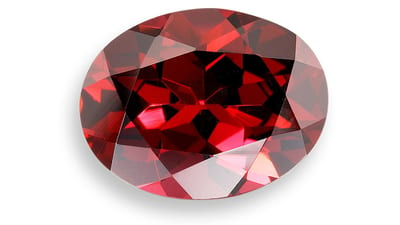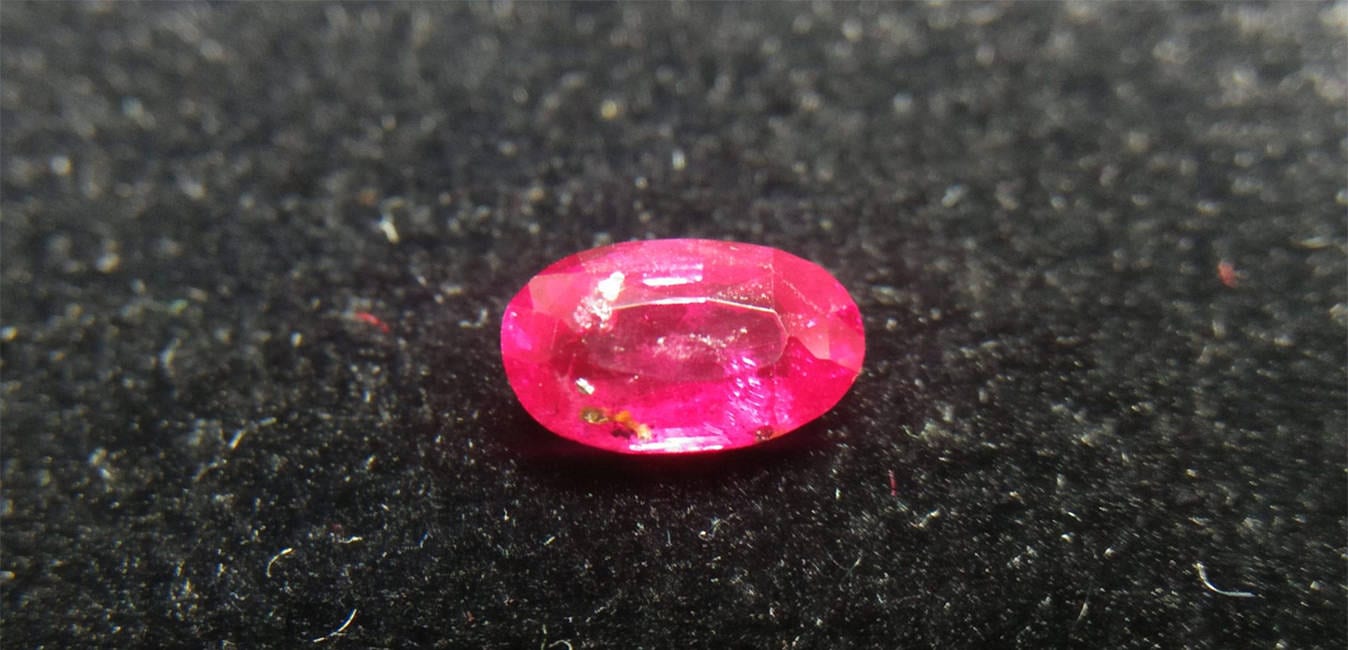

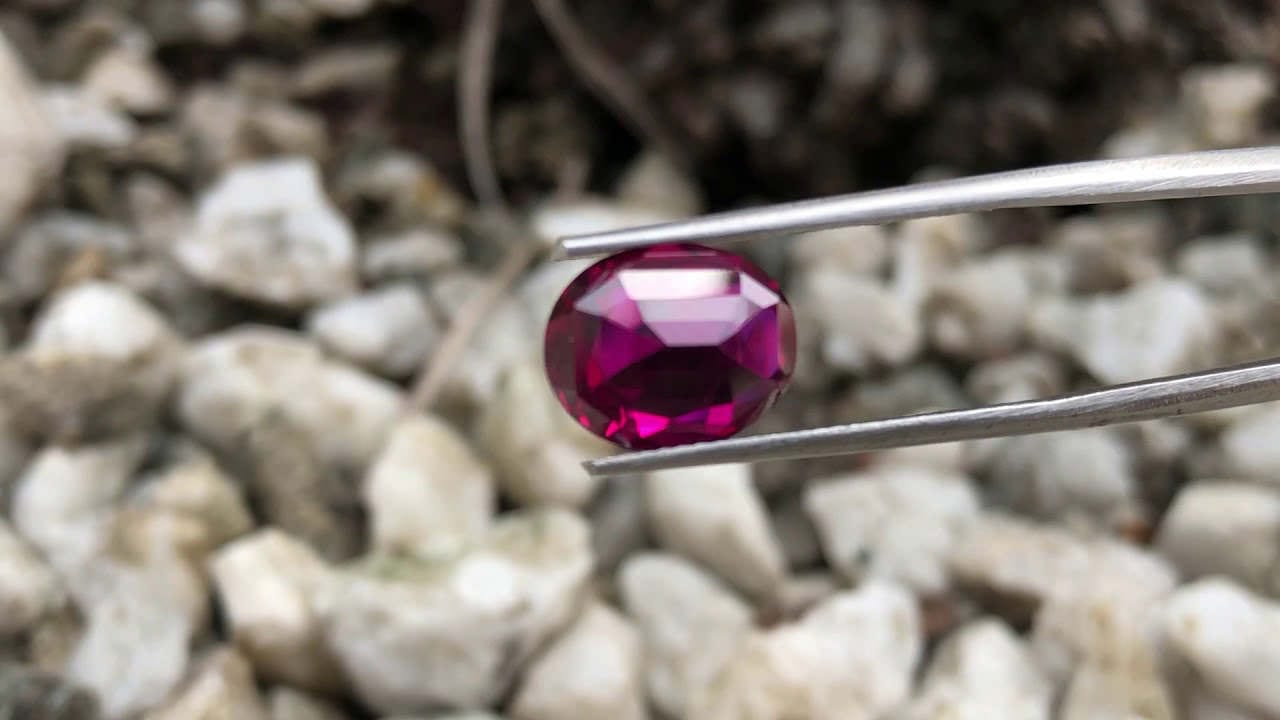
Ruby ranks among the most coveted gemstones on earth. A variety of the mineral corundum — the same family as sapphire — ruby owes its rich red colour to traces of the element chromium. The greater the chromium content, the deeper and more saturated the red. Rubies range from a delicate pinkish red through to the intense, almost luminous tone historically described as "pigeon's blood," long considered the benchmark of finest quality.
Where Do Rubies Come From?
Gem-quality rubies occur in a handful of locations worldwide. Sri Lanka (historically known as Serendib) has been a source of fine rubies for centuries, producing stones prized for their clarity and subtle, warm hue. Other significant sources include Burma (Myanmar), Thailand, India, Kenya, Tanzania, and Madagascar. Each origin tends to impart distinctive characteristics: Burmese rubies are often noted for their intense fluorescence in sunlight, while Sri Lankan stones frequently display exceptional transparency.
What Determines the Value of a Ruby?
Value in a ruby is governed by the same four criteria used for most coloured gemstones — colour, clarity, cut, and carat weight — with colour carrying the greatest weight of all.
- Colour: The ideal ruby is a pure, saturated red with no visible undertone of brown or blue. Gemologists assess both hue and tone; a stone that is too dark loses brilliance, while one that is too pale edges toward the classification of pink sapphire.
- Clarity: Rubies are rarely entirely inclusion-free. Stones that are eye-clean — meaning no inclusions are visible to the naked eye — command a significant premium. Inclusions are not always a drawback: fine needle-like inclusions called "silk" (composed of rutile) can scatter light attractively and, in the right orientation, produce the optical phenomenon of asterism.
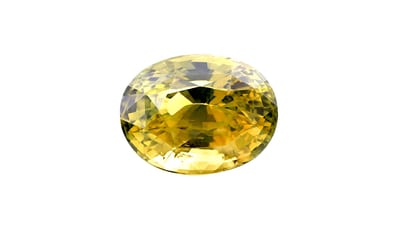
- Cut: A well-executed cut returns light evenly across the entire face of the stone. A pavilion that is too shallow or too deep creates a washed-out or overly dark centre. The most common cutting style is a mixed cut — a brilliant-style crown combined with a step-cut pavilion — which balances brilliance with colour saturation.
- Carat weight: Like all gemstones, rubies are sold by the carat, a unit of weight equal to one-fifth of a gram. Large rubies of fine quality are significantly rarer than large sapphires or emeralds, so price per carat escalates steeply with size.
What Is a Star Ruby?
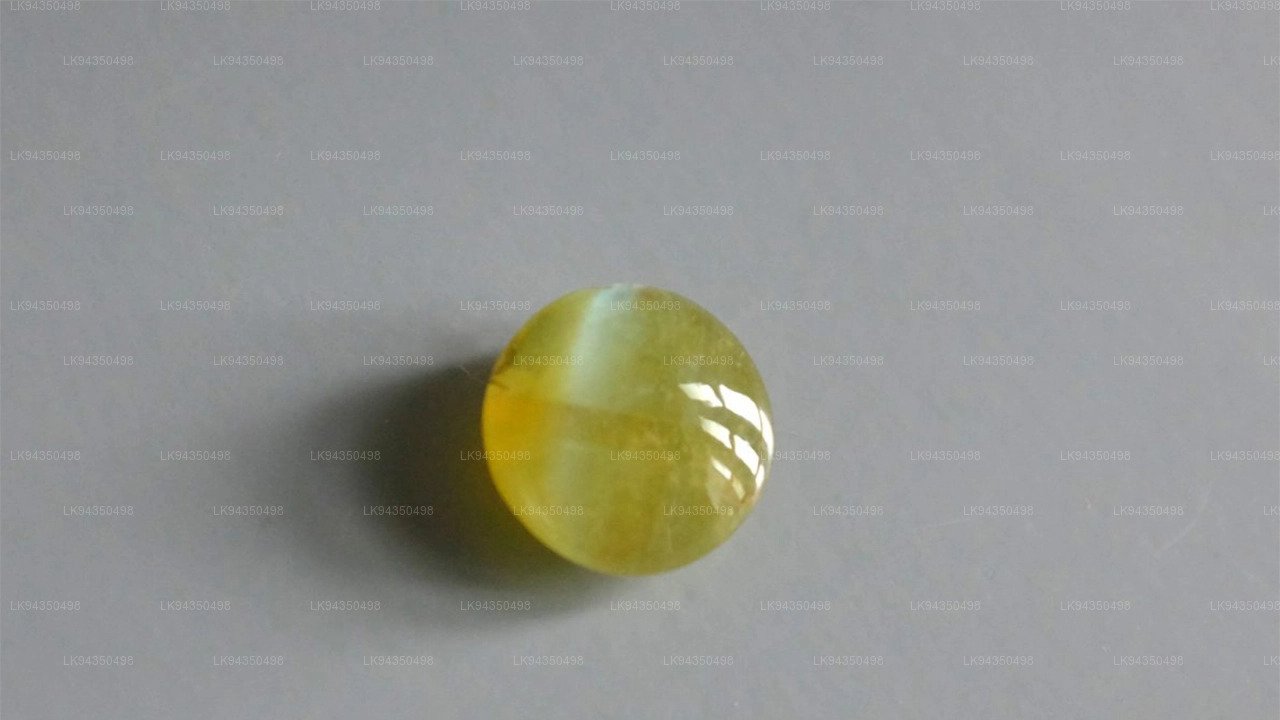
Certain rubies display a six-rayed star that appears to float across the surface of the stone when viewed under a single, direct light source. This effect, known as asterism, is caused by light reflecting off microscopic rutile needles oriented along the crystal's axes. To showcase the star, these stones are cut in a smooth, dome-shaped style called a cabochon rather than a faceted cut.
When evaluating a star ruby, two elements matter most: the quality of the body colour and the sharpness of the star. All six legs of the star should be straight, evenly spaced, and equally prominent. A strong star combined with a deep, even red body colour places a stone at the top of the market for this variety.
How Are Rubies Cut and Used?
Rubies appear in virtually every jewellery form — rings, pendants, earrings, and bracelets — as well as in carved decorative objects. Fine-quality material is typically faceted, while lower-grade or heavily included rough is often shaped into beads or carved. Symmetry matters in finished stones: any chips, scratches, or asymmetry in the outline reduce both beauty and resale value.
Ruby Versus Pink Sapphire — Where Is the Line?
Both ruby and pink sapphire are gem-quality corundum coloured by chromium. The distinction between the two is not universally agreed upon and varies by national standard and gemological laboratory. In broad terms, if the dominant colour is unambiguously red, the stone is a ruby; if it reads as pink, it is classified as a pink sapphire. The boundary matters commercially — rubies typically command higher prices than equivalent pink sapphires — so reputable laboratory certification is important when purchasing stones at the higher end of the market.
What Treatments Are Applied to Rubies?
The majority of rubies on the commercial market have been heat-treated. Heating corundum at high temperatures can dissolve rutile silk, improve clarity, and intensify colour. This treatment is widely accepted in the trade provided it is disclosed. More controversial treatments include fracture filling with glass or resin, which can dramatically improve the apparent clarity of heavily included stones. Laboratory reports from recognised gemological institutes, such as the Gemological Institute of America (GIA), will identify the presence of any significant treatment and are strongly recommended before any high-value purchase.
Ruby in History and Culture
The English word "ruby" derives from the Latin ruber, meaning red — a root shared with related words in Persian, Hebrew, and Sanskrit, reflecting how widely the stone was known and traded across the ancient world. Many early cultures attributed protective and even curative properties to rubies; warriors believed rubies worn in battle would make them invincible. In the Royal Collection of England there is a gold ring set with a pale but nearly flawless ruby into which a portrait of Louis XII of France is carved — a testament to the gem's association with royalty across centuries. Among the traditional "cardinal gems" (ruby, sapphire, emerald, amethyst, and diamond), ruby has consistently held a position of prestige.
How Should I Care for a Ruby?
Ruby scores 9 on the Mohs hardness scale, making it the second-hardest natural mineral after diamond and highly resistant to scratching in everyday wear. Toughness is generally excellent, though stones with significant fractures or lamination can be more vulnerable to chipping under impact. Clean rubies with warm soapy water and a soft brush; ultrasonic cleaning is usually safe for untreated or heat-treated stones, but should be avoided for fracture-filled material. Store rubies separately from other jewellery to prevent contact abrasion.