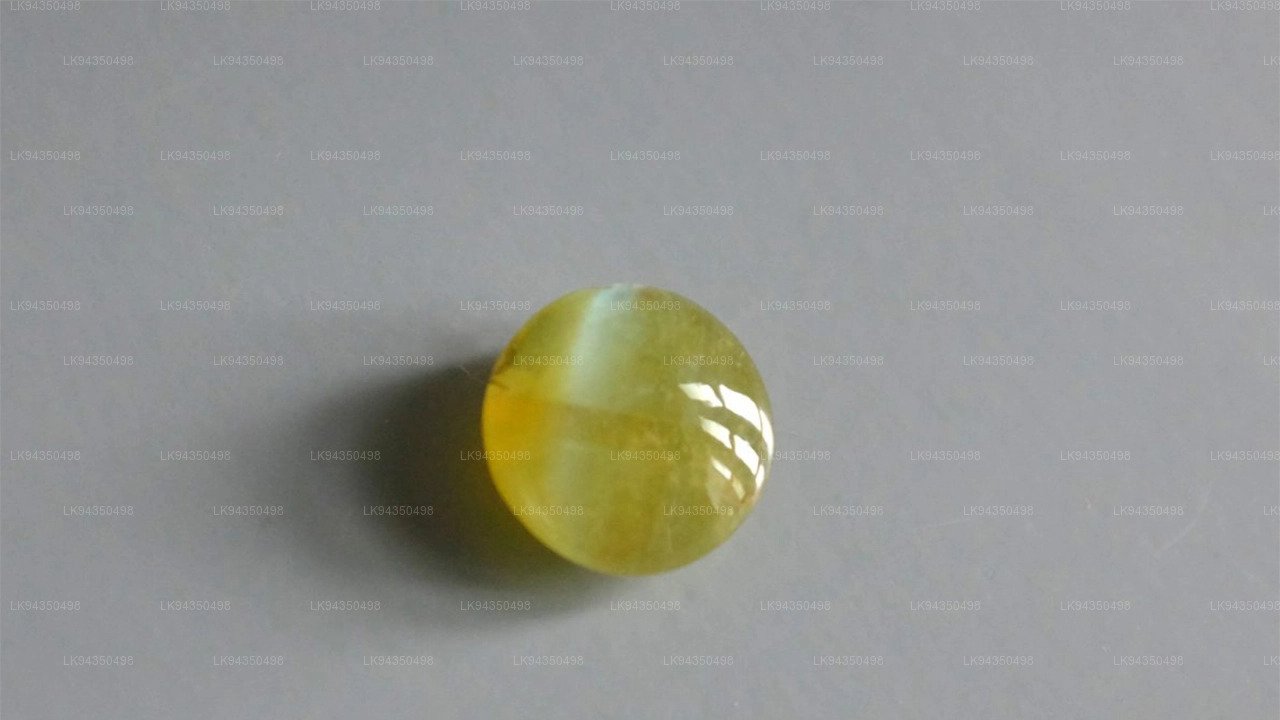
Amethyst is a variety of quartz — chemically silicon dioxide — distinguished by its characteristic purple colour, which ranges from pale lilac to deep violet. The colour arises from trace amounts of iron and natural irradiation within the crystal lattice. Transparent specimens show the purple most clearly when light passes through them, while opaque material is typically fashioned into beads or cabochons. Sri Lanka has been a respected source of fine amethyst for centuries, and the island's gem trade remains one of the most regulated and traceable in the world.
What gives amethyst its purple colour?
The purple hue in amethyst results from iron impurities (Fe³⁺) substituting for silicon within the quartz structure, combined with natural gamma irradiation. The depth of colour varies from stone to stone and even within a single rough crystal. Gem cutters working with Sri Lankan rough often orient the stone so that the most saturated zone sits beneath the table facet, maximising the visible colour in the finished piece.
When needle-like inclusions are present — as they sometimes are in Sri Lankan material — the lapidary should orient the cabochon so that the long axis of the stone runs perpendicular (90 degrees) to the direction of those needles. This preserves the stone's clarity and, in the case of chatoyant material, positions any optical effect correctly.
Where does amethyst come from?
Amethyst is found on several continents, each producing material with subtly different characteristics:
- Sri Lanka — typically produces lighter, more transparent stones prized for fine faceting
- Brazil & Uruguay — major producers of deeply saturated violet material; often found in large geodes
- Russia (Siberia) — historically prized for a rich reddish-purple tone sometimes called "Siberian amethyst"
- Mexico — known for pale lavender to medium purple stones
- Zambia — produces a distinctive deep bluish-purple with excellent clarity
- Zimbabwe — smaller production but with fine colour saturation
- Arizona, USA — native deposits, mostly in the Four Peaks area, yield a vibrant reddish-purple
Sri Lanka's gem industry, centred in and around Ratnapura in the Sabaragamuwa Province, has traded amethyst alongside sapphires, spinel, and other corundum for well over a thousand years. The country's alluvial gem gravels — known locally as illam — yield a wide range of quartz varieties alongside more commercially prominent stones.
What is the history of amethyst?
Few gemstones carry as rich a cultural legacy as amethyst. Archaeological evidence places amethyst jewellery as far back as roughly 2000 BC, found in burial sites and royal collections across the ancient world. In ancient Greece and Rome, amethyst was associated with sobriety — the word derives from the Greek amethystos, meaning "not intoxicated" — and wine cups were sometimes carved from the stone on the belief it would prevent drunkenness.
In Christian tradition, amethyst held particular significance. Historical accounts record that Saint Valentine wore an amethyst ring engraved with an image of Cupid. The stone also appears in the Old Testament as one of the twelve gems set in the High Priest's breastplate, each representing one of the twelve tribes of Israel. During the medieval period, amethyst was considered a stone of royalty and ecclesiastical authority — purple dye was expensive, and the gem's colour made it a natural symbol of high rank.
By the early 19th century, large Brazilian and Uruguayan deposits had become commercially accessible, reducing amethyst's rarity and repositioning it as a widely available semi-precious stone. Its popularity, however, has never diminished — it remains one of the most commercially traded coloured gemstones in the world.
How is amethyst treated?
Some amethyst, particularly material with very deep saturation that appears almost opaque in normal lighting, is heat-treated to lighten the colour to a more commercially desirable mid-purple. Heat treatment can also convert some amethyst into a yellow or orange quartz called citrine, or into a greenish form marketed as prasiolite.
Any treatments applied to an amethyst should be disclosed to the buyer at the point of sale. Reputable Sri Lankan gem dealers adhere to the disclosure standards set by trade bodies such as the Gemmological Institute of America (GIA) and the Sri Lanka Gem and Jewellery Association. When purchasing amethyst in Sri Lanka, ask for a written description of any known treatments — a trustworthy dealer will provide this without hesitation.
What are the main cuts and uses of amethyst?
Amethyst's good toughness and wide availability of large, clean rough make it one of the most versatile gemstones for cutters and designers. In principle, it can be fashioned into any shape or cutting style used for diamonds or other transparent stones:
- Faceted cuts — oval, round brilliant, cushion, emerald cut, pear, and marquise are all common
- Cabochons — used for lower-clarity material or where a smooth, domed surface suits the jewellery design
- Beads — round or rondelle beads are popular for necklaces and bracelets; lower-grade material that would not produce a clean faceted stone is often used here
- Carvings & intaglios — amethyst has been carved into figurines, cameos, and decorative objects for millennia
- Large decorative pieces — uncut geodes and polished slabs are sold as ornamental objects
Unlike diamonds, where low-quality rough is typically redirected to industrial abrasive use, amethyst of nearly any quality level finds an aesthetic application. This makes it an economical material for designers working at every price point, from fine jewellery to fashion accessories.
What should buyers know about amethyst quality?
When evaluating amethyst, gem traders and gemmologists consider four main factors:
| Factor | What to look for |
|---|---|
| Colour | Medium to medium-dark purple with good saturation; even distribution throughout the stone |
| Clarity | Eye-clean is standard for faceted stones; some inclusions are acceptable in large pieces |
| Cut | Well-proportioned with good symmetry; orientation chosen to maximise colour |
| Carat weight | Large clean stones are available; price per carat increases modestly with size compared to rarer gems |
Amethyst rates 7 on the Mohs hardness scale — adequate for most jewellery use, including rings worn occasionally, but owners should avoid prolonged exposure to strong sunlight, which can fade the colour over time, and should store pieces away from harder stones that could scratch the surface.
Is Sri Lanka a good place to buy amethyst?
Sri Lanka's gem trade is one of the oldest and most established in Asia. The National Gem and Jewellery Authority (NGJA) of Sri Lanka regulates the industry and provides certification services. Buying certified stones from licensed dealers — particularly those in Colombo's dedicated gem quarter or in Ratnapura — offers a reasonable level of consumer protection. Tourists are advised to avoid purchasing gems from informal street vendors or unsolicited approaches, and to request an NGJA certificate for any significant purchase.
For travellers keen to see gem mining and cutting firsthand, Ratnapura — whose name translates literally as "City of Gems" — offers organised visits to alluvial mining sites and lapidary workshops. It sits within comfortable driving distance of Sinharaja Forest Reserve, making it a natural addition to a southern or hill-country itinerary.