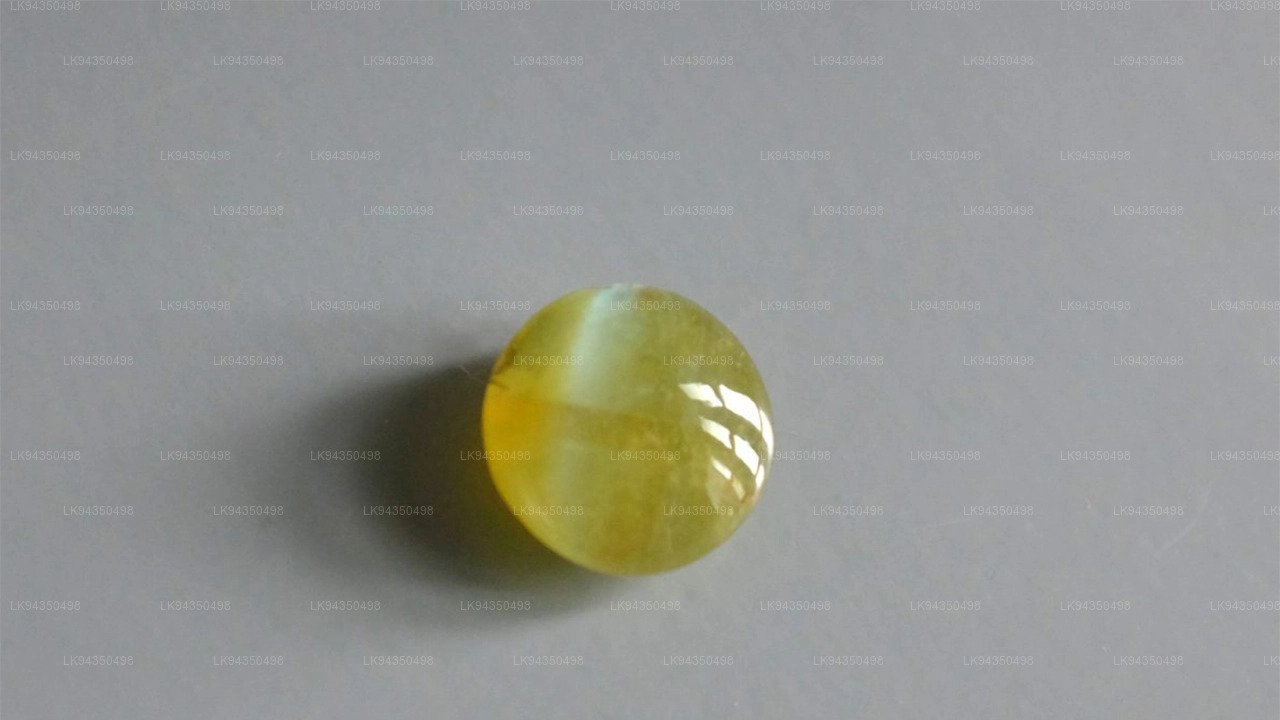
Citrine belongs to the quartz mineral family, distinguished by traces of iron that give it a warm colour range spanning pale lemon yellow through rich amber and reddish-brown. As one of the more accessible and widely appreciated yellow gemstones, citrine has a long history across cultures and continues to be a popular choice for jewellery designers today.
What Exactly Is Citrine?
Citrine is a silicon dioxide mineral — the same fundamental composition as amethyst, rose quartz, and smoky quartz — differentiated primarily by its iron content. The percentage of iron and the oxidation state it occupies within the crystal lattice determine whether the resulting stone is a pale champagne yellow or a deep burnt orange. In its natural, uncut state, citrine often has a slightly hazy or smoky appearance; well-formed crystals follow the hexagonal system characteristic of all quartz varieties.
Natural citrine is considerably rarer than its prevalence in the gem trade might suggest. A significant proportion of citrine sold commercially is produced by heat-treating lower-grade amethyst or smoky quartz. The heat alters the iron molecules in the crystal, shifting the colour toward yellow and amber tones. Reputable gem dealers disclose this treatment, and well-treated material is generally considered stable and durable.
What Are the Main Varieties of Citrine?
Two trade names are commonly used to describe the most sought-after colour grades:
- Madeira citrine — named after the colour of the Portuguese wine, this variety shows a deep, bright reddish-brown or orange-brown and is generally the most valued grade in the market.
- Palmyra citrine — a medium yellowish-brown, warmer than a standard yellow citrine but lacking the reddish saturation of Madeira. Popular in commercial jewellery for its approachable colour.
Pale yellow stones closer to lemon are sometimes marketed simply as lemon citrine. While these carry less per-carat value, they suit contemporary minimalist jewellery well.
Where Does Citrine Come From?
Brazil is the world's dominant producer, particularly the state of Rio Grande do Sul, which yields large quantities of heat-treated amethyst that enters the market as citrine. Other meaningful sources include Madagascar, Russia, and Sri Lanka. Sri Lankan citrine — often recovered alongside sapphires, spinels, and other gems in the gem-rich gravels of the island's Sabaragamuwa Province — tends to be naturally occurring, though volumes are modest compared to Brazilian output.
The geological conditions that concentrate gem-quality minerals across Sri Lanka have made the island notable for a broad spectrum of precious and semi-precious stones for thousands of years. Citrine recovered here shares the alluvial deposit environments typical of Sri Lankan gem mining.
What Is the Symbolic Meaning of Citrine?
Across cultures and centuries, citrine has accumulated a consistent cluster of associations: prosperity, optimism, mental clarity, and energy. Its sunny colour made it a natural candidate for symbolism tied to warmth and abundance, and those associations have proven remarkably durable.
Ancient Greek craftspeople used citrine as a decorative gem, carving intaglios and setting it in ornamental pieces as early as several hundred years BCE. Roman culture attributed protective qualities to the stone — specifically, the belief that it could guard against malicious thoughts. Other traditions held that carrying citrine attracted financial good fortune, a belief that persists in certain metaphysical communities today where it is sometimes called the "merchant's stone."
In modern birthstone conventions, citrine is recognised as the birthstone for November (alongside topaz), and it marks the thirteenth wedding anniversary in some traditions.
How Is Citrine Typically Cut and Used in Jewellery?
Citrine is well-suited to a wide variety of cuts. Its relatively good toughness — comparable to other quartz varieties — means it withstands everyday wear reasonably well, though it is softer than corundum (sapphire and ruby) and should be protected from hard knocks. It rates 7 on the Mohs hardness scale.
The most common applications include:
- Ring stones — citrine is frequently cut into oval, cushion, and emerald cuts for solitaire or cocktail rings.
- Pendant stones — larger faceted stones or freeform cuts translate well into statement pendants.
- Earring drops — teardrop and briolette cuts are popular for dangling earrings.
- Collector pieces — natural, uncut citrine crystal clusters or points are collected as mineral specimens.
An important practical note for buyers: the per-carat value of faceted citrine typically decreases beyond the size of an average ring stone. Very large citrine pieces — while visually impressive — do not command proportionally higher prices in the way that fine sapphire or emerald of equivalent weight would. This makes citrine an accessible gemstone for bold, large-format jewellery designs.
How Does Citrine Compare to Similar Yellow Gemstones?
| Gemstone | Hardness (Mohs) | Typical colour | Common treatments |
|---|---|---|---|
| Citrine | 7 | Pale yellow to reddish-brown | Heat treatment of amethyst |
| Yellow sapphire | 9 | Light to deep yellow | Heat treatment, sometimes beryllium diffusion |
| Yellow topaz | 8 | Straw yellow to golden | Irradiation and heat (for imperial topaz) |
| Yellow tourmaline | 7–7.5 | Canary to golden yellow | Occasionally heated |
Citrine is often chosen over yellow topaz or yellow sapphire when budget is a primary consideration, as comparable colour saturation can be achieved at a fraction of the cost. Buyers should note that citrine can fade with prolonged exposure to intense sunlight or heat.
What Should Buyers Know Before Purchasing Citrine?
When evaluating citrine, colour is the primary value driver. Rich, evenly saturated amber or Madeira tones are preferred. Look for stones without visible brown masking or dull zones. Citrine is generally eye-clean — inclusions visible to the naked eye reduce value and are not typical of good commercial material.
Ask the seller whether the material is natural citrine or heat-treated amethyst. Both are legitimate in the trade, but the distinction matters for transparency. A reputable gem dealer will identify the origin of treatment. For Sri Lankan citrine in particular, documentation from a recognised gemmological laboratory adds assurance about origin.