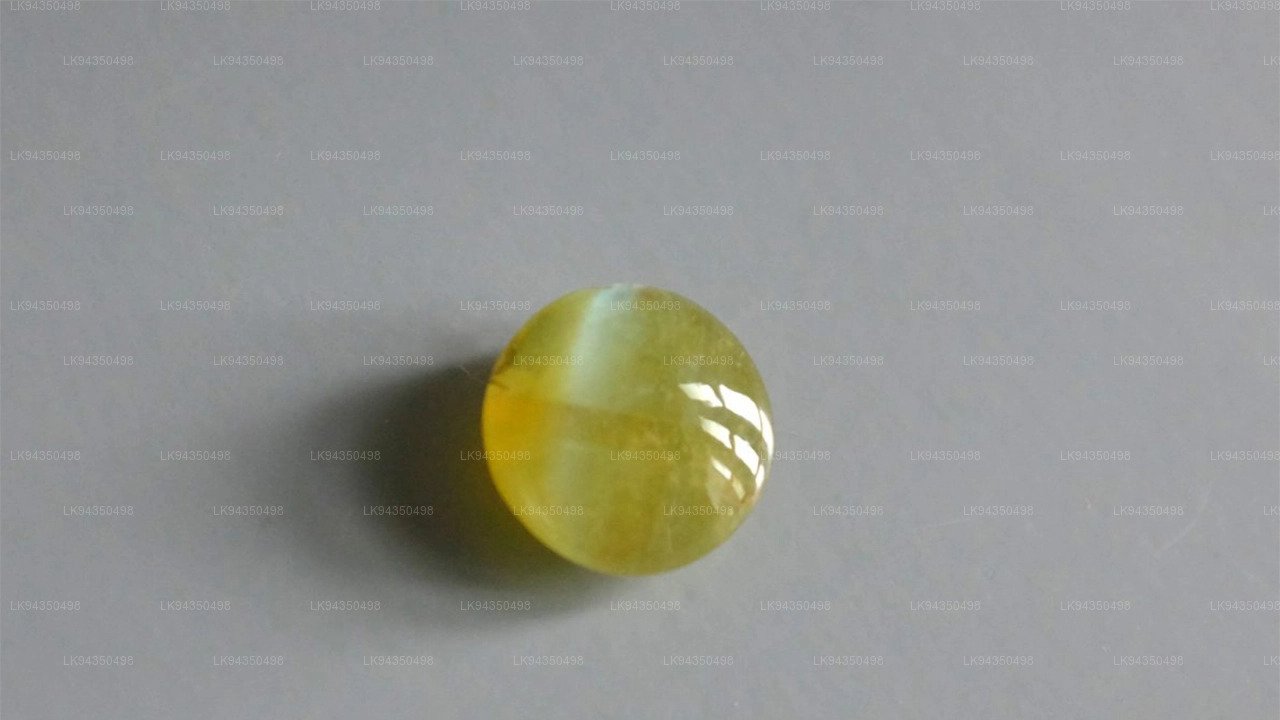
Sri Lanka has been producing some of the world's finest gemstones for more than two thousand years, and among them the star sapphire holds a particularly revered place. Known locally as tharu nil manikaya, these stones are prized not just for their colour but for a rare optical phenomenon that gives them the appearance of carrying a living star within the gem itself.
What Is a Star Stone?
The term "star stone" typically refers to a gemstone that displays asterism — a star-shaped light pattern visible on the surface of the cut stone when illuminated by a single overhead light source. In Sri Lanka, the most celebrated example is the star sapphire, though star rubies and other corundum varieties exhibiting asterism are also found on the island.
When held under a penlight, a halogen bulb, or natural direct sunlight, a well-cut star sapphire reveals a crisp six-rayed star that appears to float across the dome of the stone as you tilt it. The star is not painted on or added — it is an intrinsic optical property of the gem itself.
What Causes the Star Effect in Sapphires?
The asterism in a star sapphire is caused by microscopic needle-like inclusions of rutile — a titanium dioxide mineral — arranged in three intersecting orientations within the crystal lattice of the corundum. Gemologists call this internal network of needles "silk." When light enters the cabochon, it reflects off the silk in three directions simultaneously, producing the characteristic six-rayed star at the apex of the dome.
Unlike faceted sapphires, which are prized for transparency and brilliance, star sapphires are typically translucent to slightly opaque. The very inclusions that would diminish an ordinary sapphire's value are, in a star stone, the source of its most distinctive quality. The density and alignment of the silk directly determines how sharp and centred the star appears.
Why Must Star Sapphires Be Cut as Cabochons?
A cabochon is a smooth, rounded cut with a flat base and a convex dome — the opposite of a faceted cut. For a star sapphire, the cabochon is not a stylistic choice but a technical necessity. Only when the stone is fashioned into a high dome with the crystal's c-axis aligned precisely perpendicular to the base will the asterism be visible from directly above.
If the dome is too flat, the star loses definition. If it is too steep, the star may become sharp but the stone loses carat weight unnecessarily. Striking the right balance between dome height, carat retention, colour saturation, and star sharpness is a skill that takes years to develop. For this reason, miners and rough-stone dealers in Sri Lanka will only trust a small group of highly experienced cutters with their finest material. Many rough stones remain uncut for months until the right cutter is available.
Where in Sri Lanka Are Star Sapphires Found?
Sri Lanka's gem-bearing gravels are concentrated in the Ratnapura district of Sabaragamuwa Province, whose very name — Ratna-pura — translates from Sanskrit as "City of Gems." The alluvial deposits in and around Ratnapura, Elahera, and Okkampitiya have yielded star sapphires for centuries, including several of the world's most famous examples.
The Kandy region also has a long association with the gem trade, and the National Gem and Jewellery Authority of Sri Lanka — a government body that certifies and regulates the trade — operates testing laboratories that issue internationally recognised certificates of authenticity.
What Colours Do Star Sapphires Come In?
The most coveted star sapphires from Sri Lanka are a medium to medium-dark blue — a colour sometimes described in the trade as "cornflower blue with asterism." However, the island produces a wide range of colours:
- Blue — the classic and most valuable colour
- Grey and silver-blue — common and accessible; often display a very sharp star
- Pink and purple — rarer and increasingly sought after
- Black — opaque stones in which the star is highly visible against the dark body colour
- White or colourless — sometimes called "geuda" in the rough, occasionally displaying a faint star
A deep, saturated blue body colour combined with a bright, perfectly centred six-rayed star represents the pinnacle of the category, and such stones command significant premiums.
How Is a Star Sapphire's Quality Assessed?
Evaluating a star sapphire involves different criteria from those used for faceted gems. The key factors are:
| Quality Factor | What to Look For |
|---|---|
| Star sharpness | Each ray should be well-defined, not blurry or broken |
| Star centring | The star should sit at the centre of the dome, not off to one side |
| Number of rays | Six rays is standard; twelve-rayed stars (rare) command a premium |
| Body colour | Depth and evenness of colour across the stone |
| Transparency | Some translucency adds life; heavily included stones can look dull |
| Cabochon symmetry | The dome should be even and well-proportioned |
Always view a star sapphire under a single point light source — a torch or a single overhead lamp — rather than diffused ambient light. Diffused light will suppress the star effect and make even a fine stone appear ordinary.
How Should I Buy a Star Sapphire in Sri Lanka?
Sri Lanka's gem market is generally reputable, but buyers unfamiliar with the trade can find it confusing. A few practical guidelines reduce the risk of overpaying or purchasing a synthetic or treated stone:
- Purchase from a dealer registered with the National Gem and Jewellery Authority (NGJA) of Sri Lanka.
- Request a laboratory certificate from the NGJA or another internationally accredited gemological laboratory (such as GIA or Gübelin) for any significant purchase.
- Be aware that synthetic star sapphires — produced in laboratories since the mid-twentieth century — are available in the market and are visually very similar to natural stones. A certificate distinguishes them definitively.
- Heat-treated star sapphires exist, though treatment of star stones is less common than with faceted sapphires because high heat destroys the silk inclusions that create the star.
- Unusually low prices for a large stone with a sharp star and vivid colour are a reliable warning sign.
Are There Famous Star Sapphires from Sri Lanka?
Several of the world's most celebrated star sapphires originated in Sri Lanka. The Star of India — a roughly 563-carat blue-grey star sapphire now housed at the American Museum of Natural History in New York — was almost certainly mined on the island. The Star of Bombay, a 182-carat violet-blue star sapphire in the collection of the Smithsonian Institution, is also attributed to Sri Lanka. These stones illustrate the scale and quality that Sri Lanka's gem fields have historically produced.
Can I Visit Gem Mines and Workshops in Sri Lanka?
Yes. The Ratnapura area welcomes visitors who want to observe traditional gem mining — typically carried out by hand using shallow pit excavations and water-sieving techniques that have changed little over centuries. Cutting and polishing workshops in Ratnapura and Beruwala offer a close view of the cabochon process, including how a cutter orients a rough stone to centre the star before committing to the cut.
A visit to the gem markets can be combined with broader itineraries across the hill country, including stops at Horton Plains National Park and the tea estates of the central highlands, making it a natural part of a longer cultural and nature tour of the island.