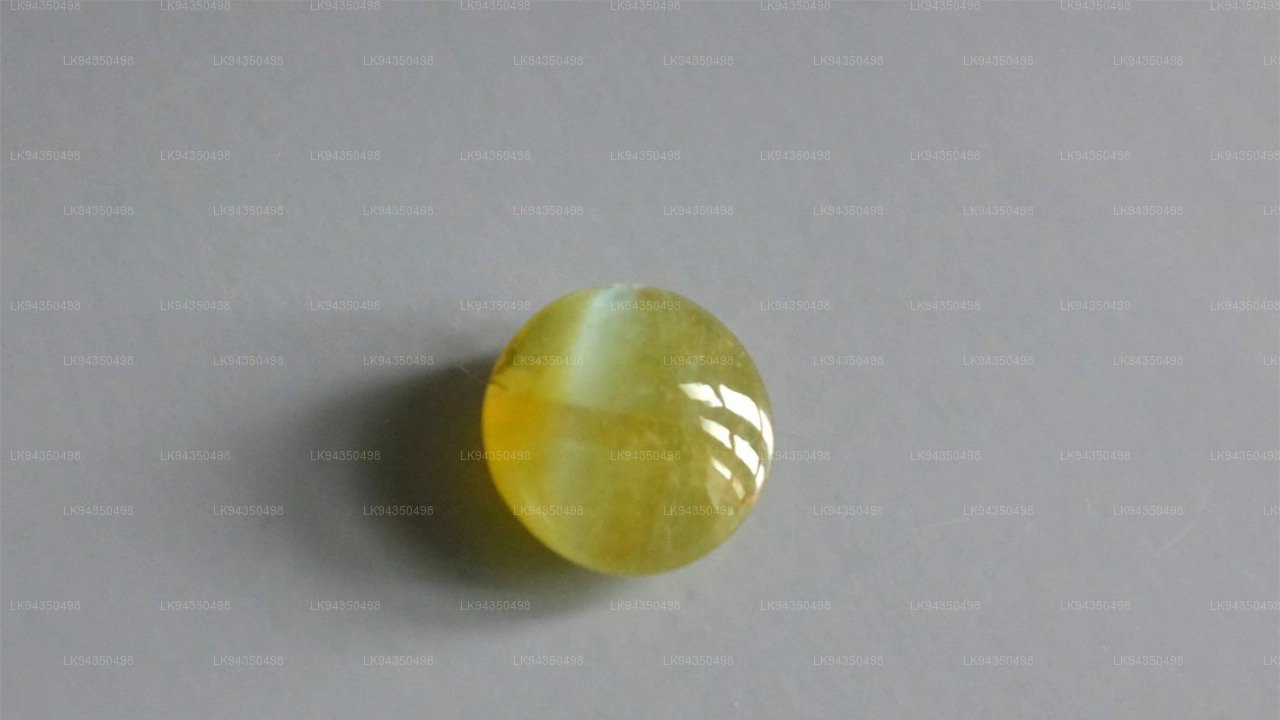
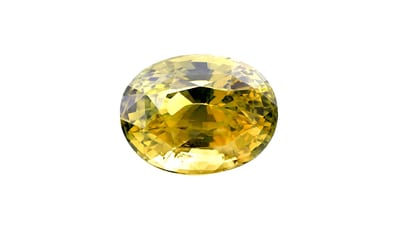
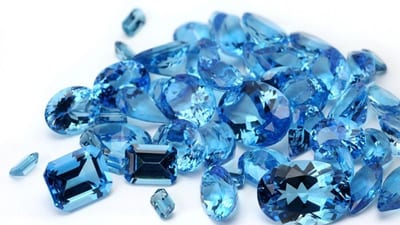
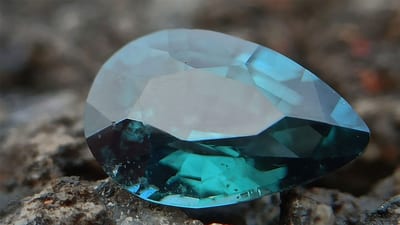
Peridot is one of the few gemstones that occurs in only a single color family — a range of greens running from pale yellow-green through to deep olive — making it immediately recognizable and historically prized. Unlike many gems whose appearance can be dramatically altered by treatment or enhancement, peridot is almost always sold in its natural state, which lends it a particular integrity in the gemstone trade.
What determines the color of peridot?
Peridot is the gem-quality variety of the mineral olivine, a magnesium iron silicate. The green color comes entirely from iron within the crystal's chemical structure — not from trace impurities as in many other colored gems. The higher the iron content, the deeper and more saturated the green. Stones with a medium-to-dark, slightly yellowish-green tone are considered the most desirable and typically command the highest prices. Very pale, yellowish, or brownish-green stones are valued lower on the market.
- Top-grade peridot: medium to dark, slightly yellowish-green — the benchmark for fine specimens.
- Chrysolite: an older trade name covering lighter greenish-yellow to brownish-green stones; less prized today.
Because color is iron-dependent and not induced by heat or irradiation, peridot's hue is considered entirely natural. This also means color grading is straightforward: deeper olive-green tones are more valuable, lighter yellowish-greens less so.
Where does peridot come from?
Peridot forms deep in the Earth's mantle and reaches the surface through volcanic activity or, in rare cases, arrives via meteorites — making it one of the very few gems with an extraterrestrial origin. Major sources include:
- Sri Lanka: One of the historically significant sources, producing peridot alongside its celebrated array of other colored gemstones. Sri Lanka's gem-bearing gravels, particularly in the Ratnapura district, have yielded quality peridot for centuries.
- Island of Zebargad (Egypt): The oldest known source, mined for over 3,500 years and the origin of the gem's ancient legend.
- Myanmar (Burma): Produces fine stones of good clarity and strong color.
- United States: The San Carlos Apache Reservation in Arizona is the world's largest current source by volume.
- Mexico: Yields peridot in smaller quantities, often with a distinctly warm yellow-green tone.
Pakistan's Kohistan region has also emerged as a significant modern source, producing some of the finest large peridot crystals recorded in recent decades.
What is the ancient history of peridot?
The fabled history of peridot stretches back to ancient Egypt and the volcanic island of Zebargad in the Red Sea. Egyptian miners worked the island for millennia, and the pharaohs so valued the gem that they reportedly kept the island's location a state secret. With the eventual decline of the Egyptian empire, knowledge of the source faded entirely; the island was not rediscovered until 1906.
Peridot held a place in early Christian and medieval European traditions as well, with many large "emeralds" in cathedral treasuries later identified as peridot — including some in Cologne Cathedral, Germany. The gem was also carried along Silk Road trade routes, reaching markets in the Middle East and South Asia long before its origins were scientifically understood.
The name itself likely derives from the Arabic word faridat, meaning "gem," though this etymology remains debated among historians.
How is peridot treated and enhanced?
Peridot is one of the relatively few colored gemstones that is not routinely heat-treated or irradiated. Its color is entirely natural and stable. Occasionally, surface-reaching fractures or voids are filled with colorless oil, wax, or resin to improve apparent clarity and surface luster — a treatment that should always be disclosed at the point of sale. When purchasing peridot, buyers should confirm in writing whether any such filling has been applied.
Peridot rates 6.5 to 7 on the Mohs hardness scale, giving it fair to good toughness. It is somewhat sensitive to acids and to rapid temperature changes, which affects how it should be cleaned and stored. Ultrasonic cleaners are generally not recommended; warm soapy water and a soft brush are safer.
What cuts and jewelry styles suit peridot?
Peridot's relatively high refractive index gives it good brilliance when well cut, though it is not as fiery as diamond or as deeply saturated as fine emerald. Cutters typically favor oval, cushion, and round brilliant shapes that maximize the green color and minimize windowing. Larger stones show the color most effectively; smaller peridot, particularly under one carat, can appear quite pale.
Because peridot crystals often emerge from the ground in elongated forms, cutters must work carefully with the rough to avoid wasting material. The gem suits both yellow gold settings, which warm its olive tones, and white metal settings, which highlight its cooler green aspects.
Peridot is the birthstone for August, a designation formalized by the American National Association of Jewelers in 1912 and still observed worldwide. Its association with summer foliage and warmth has kept it a consistent choice for rings, pendants, and earrings across different jewelry traditions.
How does Sri Lanka's peridot compare to other sources?
Sri Lanka has been a recognized source of fine colored gemstones — including sapphire, ruby, alexandrite, and cat's eye — for over two thousand years, earning the island the historic title "Ratna Dweepa" (Island of Gems). Sri Lankan peridot typically appears in the island's alluvial gem gravels alongside other minerals and is often well-crystallized, yielding clean stones of good transparency. While Sri Lanka is not the dominant global source by volume, its peridot is valued within the broader context of the island's exceptional gem heritage.
The Ratnapura district in Sabaragamuwa Province remains the heartland of Sri Lanka's gemstone industry. Visitors to Sri Lanka can observe traditional gem mining and purchase certified stones through reputable dealers — a meaningful souvenir that connects directly to the island's ancient trading history.
Is peridot a good investment gemstone?
Peridot is generally considered an affordable colored gemstone rather than a collector investment vehicle in the way that fine rubies or Kashmir sapphires are. However, exceptional large stones — those over five carats with deep, saturated color and high clarity — have appreciated in value as the supply from the historically rich Egyptian source is now essentially exhausted. Pakistani stones of exceptional size and quality occasionally attract serious collector interest. For most buyers, peridot represents excellent value as a natural, untreated gemstone with a history spanning thousands of years.