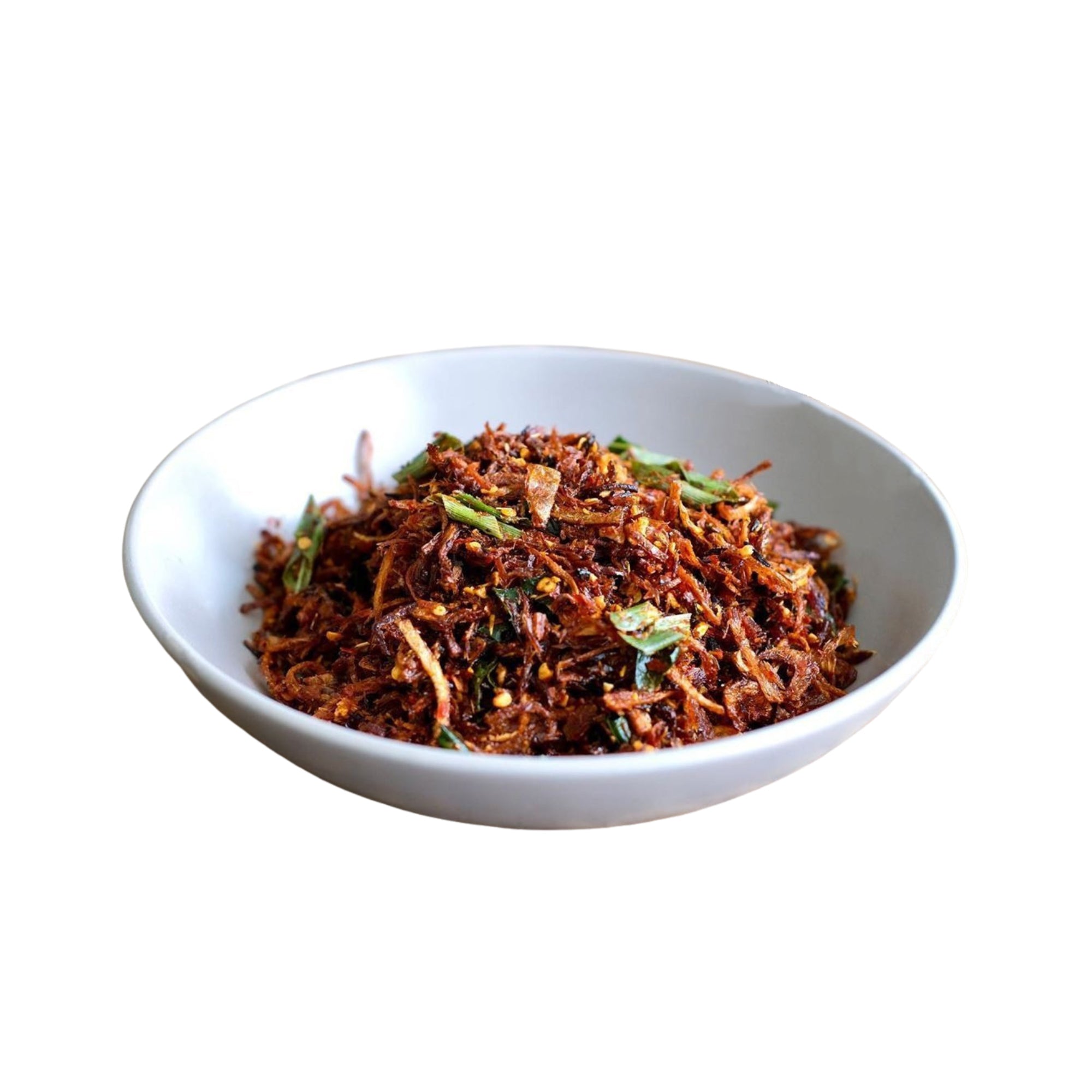
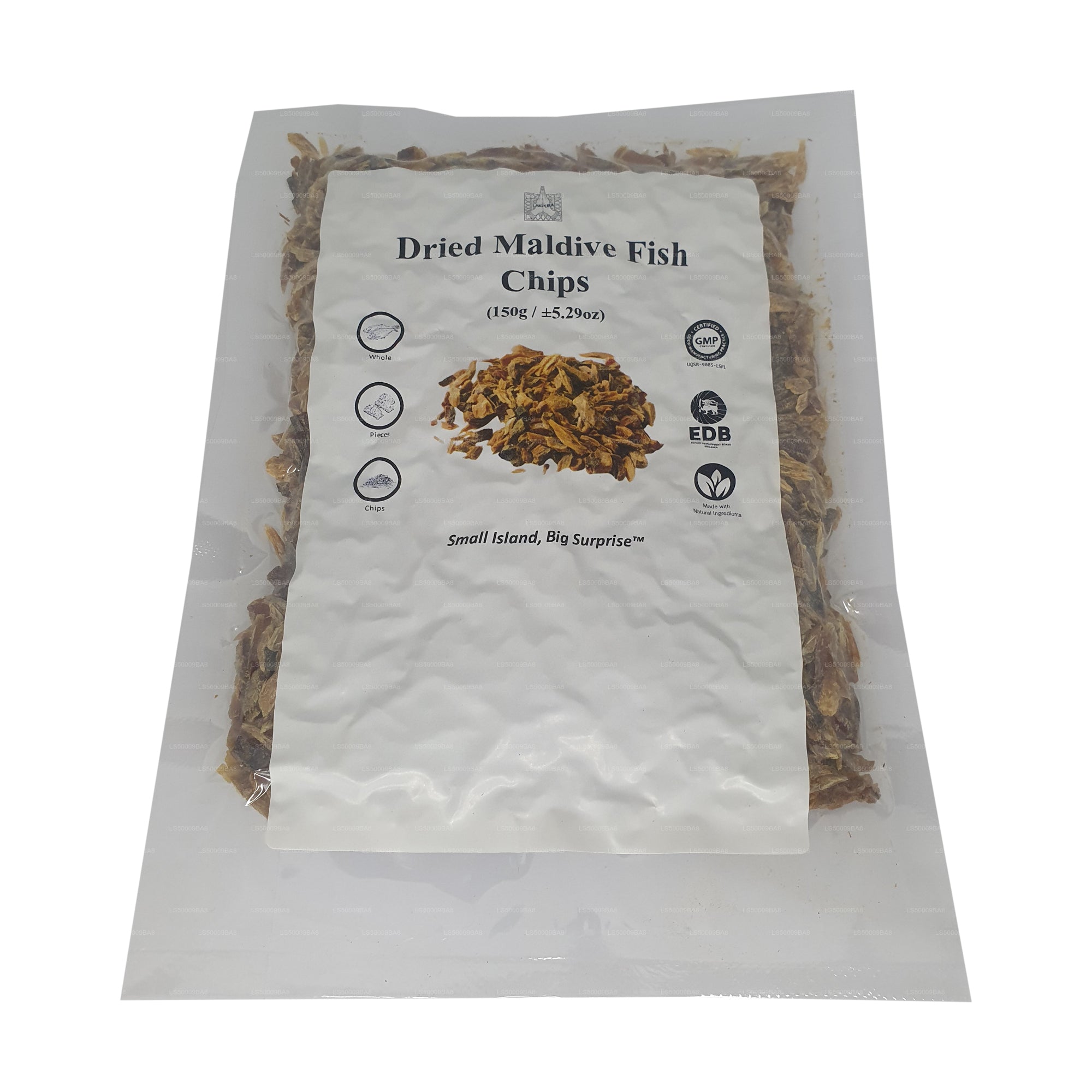
Maldive fish sambol, umbalakada sambol in Sinhala (උම්බලකඩ සම්බෝල), is a fried Sri Lankan relish of crisp golden onions, garlic, curry leaves and chilli flakes tossed with flakes of Maldive fish, the hard, cured tuna that seasons so much of the island's cooking. It is dry rather than wet, salty, smoky and hot, with a little lime squeezed over at the end.
It is especially popular as a side for biryani, ghee rice and other festive rice dishes, and is also eaten with kiribath, coconut roti and bread. In Tamil and Sri Lankan Muslim homes a similar fried relish is called maasi sambal. Because it is cooked until dry, it keeps for a few days, unlike the raw pounded sambols.
How to make Maldive fish sambol
- Serves 4
- Prep: 10 minutes
- Cook: 25 minutes
- Difficulty: Easy
Ingredients
- 2 large red onions (about 300 g), halved and thinly sliced
- 250 ml vegetable oil or coconut oil, for frying
- 50 g (about 1/2 cup) Maldive fish (umbalakada) chips, broken into small flakes
- 2 garlic cloves, finely chopped
- 1 sprig curry leaves
- 1 tbsp dried red chilli flakes
- 1/4 tsp salt, or to taste (the fish is already salty)
- 1 tbsp lime juice
Method
- Fry the onions. Heat the oil in a wok or deep pan over a medium-high heat. Fry the onions in two or three batches for 5 to 7 minutes each, stirring, until evenly golden brown. Lift out and drain on kitchen paper; they crisp as they cool.
- Clear the pan. Pour off all but about 2 tbsp of the oil and return the pan to a medium heat.
- Fry the aromatics. Add the garlic and curry leaves and fry for 1 to 2 minutes, until the garlic is pale golden and the leaves crackle.
- Add the Maldive fish. Add the Maldive fish and fry for 2 to 3 minutes, stirring, until it smells toasty and turns a shade darker.
- Add the chilli. Stir in the chilli flakes and cook for 30 seconds, taking care not to let them scorch.
- Combine. Take the pan off the heat, add the fried onions and salt and toss until everything is evenly coated.
- Finish with lime. Sprinkle over the lime juice just before serving, toss and taste for salt.
What is Maldive fish?
Maldive fish, umbalakada in Sinhala, is tuna that has been boiled, smoked and sun-dried until it is rock hard. Traditionally produced in the Maldives and long traded to Sri Lanka, it is sold as whole pieces, chips or flakes. Sri Lankan cooks use small amounts to add a savoury, smoky depth to curries, sambols and vegetable dishes. For sambols it is best broken into coarse flakes rather than a fine powder, so it keeps a little texture.
How is it different from katta sambol and pol sambol?
The name "Maldive fish sambol" can mean more than one thing, so it helps to know the family:
- Fried umbalakada sambol is the version on this page: onions and fish fried until crisp and dry.
- Katta sambol uses the same fish, raw, pounded with dried chilli, shallots, salt and lime into a wet paste. It is sometimes also called umbalakada sambol, and many people treat it as the same thing as lunu miris.
- Pol sambol is freshly grated coconut pounded with chilli, onion, lime and often a spoonful of Maldive fish. A version heavy on the fish and red chilli is known in Jaffna as maasi sambal.
- Seeni sambol is also cooked with onions and sometimes Maldive fish, but slowly, with tamarind and sugar, until soft and jammy rather than crisp.
What do you serve it with?
A spoonful sits well beside any rice dish that needs a salty, crunchy contrast: biryani, ghee rice or yellow rice, or plain rice with dhal curry. It is also good with kiribath, coconut roti, string hoppers and hoppers, and as a filling for bread.
Tips for a crisp sambol
- Slice the onions evenly so they brown at the same rate, and fry them in batches so the oil stays hot.
- Take the onions out when they are golden rather than dark brown; they carry on colouring as they drain and turn bitter if overcooked.
- Go easy on the salt until the end. Maldive fish varies in saltiness.
- Add the lime only to the portion you are serving if you plan to keep the rest; lime softens the onions.
How do you store it?
Cool the sambol completely and keep it in a clean, airtight jar in the fridge for up to 3 days, using a dry spoon. The onions soften as they stand; warm the sambol briefly in a dry pan to crisp it again before serving. Because it is made with cured fish, it is not vegetarian.
Related reading
1 pages on closely related subjects.