
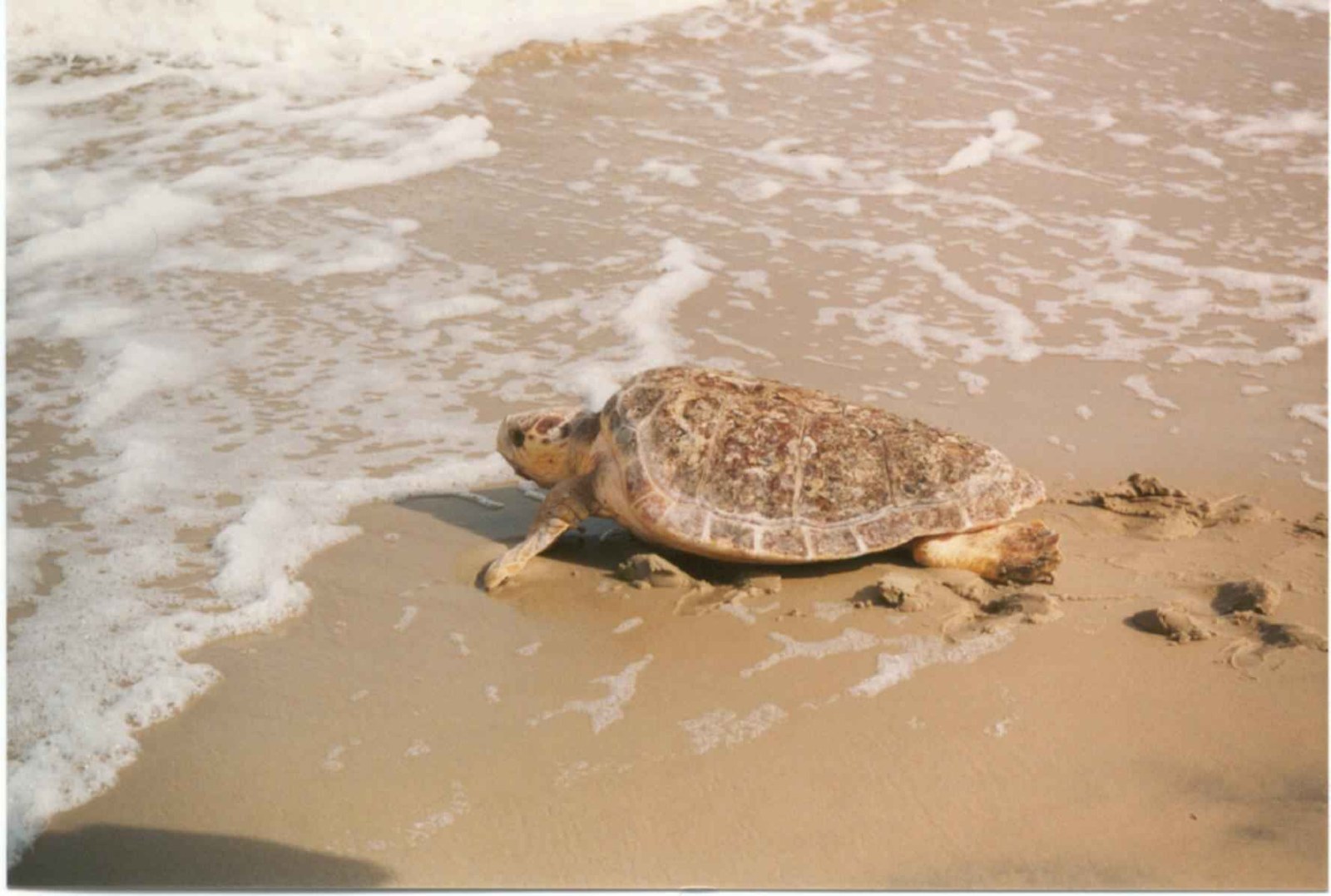
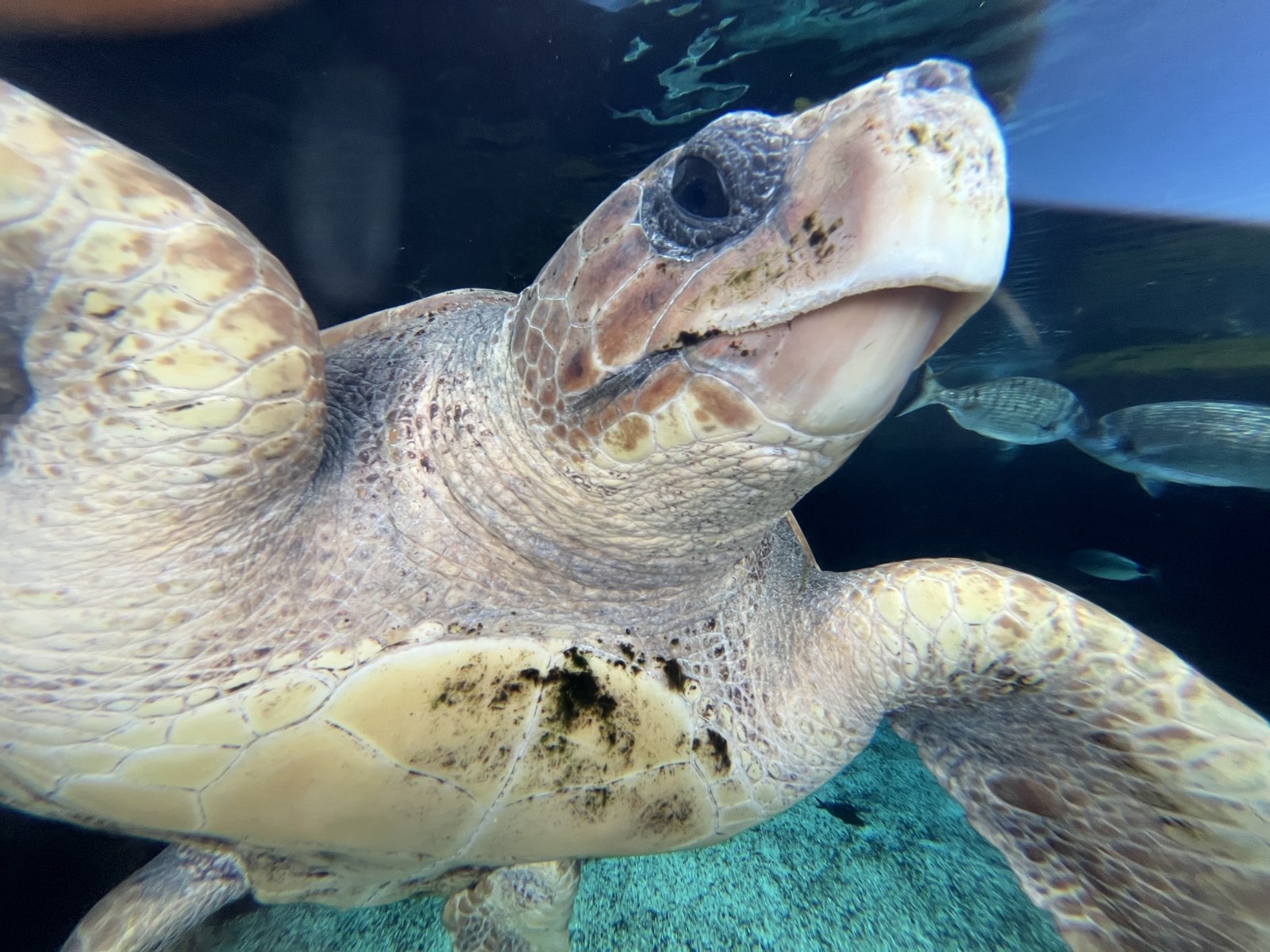
The Loggerhead Turtle (Caretta caretta) is a powerful, reddish-brown sea turtle named for its very large head. It is found in oceans around the world, but it is an uncommon visitor to Sri Lanka, where it nests only occasionally. Seeing one here is a matter of luck, which makes it one of the more special records on the island's coast.
How do you identify a Loggerhead Turtle?
The head gives it away. It looks too big for the body, and the broad jaws behind it are built for crushing shells.
- Size: adults have a shell of about 70 to 95 cm and usually weigh 80 to 200 kg, with an average of about 135 kg.
- Shell: yellow-orange to reddish-brown, with five pairs of plates along the sides. The Green Turtle and the Hawksbill Turtle have four.
- Skin: the neck and flippers are brown above and yellow on the sides and below.
What does the Loggerhead Turtle eat?
Loggerheads feed mainly on animals that live on the sea floor, such as whelks, conchs and clams, cracking them with their strong jaws. On long journeys across the open ocean they also eat jellyfish, squid and flying fish. No other sea turtle is known to eat such a wide range of prey.
How do Loggerhead Turtles nest?
Females nest at night, about every 12 to 17 days during the season, and usually lay about four clutches of around 112 eggs. They then rest for two or three years before nesting again. The eggs take about 80 days to hatch, and the temperature of the sand sets the sex of the young: about 32 °C gives females, about 28 °C gives males. Loggerheads take a long time to mature, about 17 to 33 years.
Where can you see Loggerhead Turtles in Sri Lanka?
There is no reliable place to see one. Loggerheads have been recorded on beaches at Kosgoda, Induruwa, Rekawa and Bundala, but most nesting on the island is by the Green Turtle and the Olive Ridley Turtle. The species' main Indian Ocean nesting grounds are elsewhere, including Oman.
To plan a visit, see our guides to turtle watching and the baby turtle release, or read about all the sea turtles of Sri Lanka.
Is the Loggerhead Turtle endangered?
The IUCN Red List classes it as Vulnerable worldwide, and it is on CITES Appendix I, which bans international commercial trade. The main threat is fishing gear, as turtles drown in nets and on longlines. Beach development, plastic waste and artificial lights also take a toll, and bright lights can lead hatchlings away from the sea. All sea turtles are protected by law in Sri Lanka.
What should you do if you see a Loggerhead Turtle?
- Stay back. Keep well away from a nesting female and do not stand in her path to the sea.
- Keep lights off. Use no flash or white torch on a nesting beach.
- Tell someone. Sightings of rare species are useful, so report one to your guide or to a local conservation project.
Sri Lanka's other sea turtles are the Green Turtle, the Olive Ridley Turtle, the Leatherback Turtle and the Hawksbill Turtle.
Related reading
2 pages on closely related subjects.

