
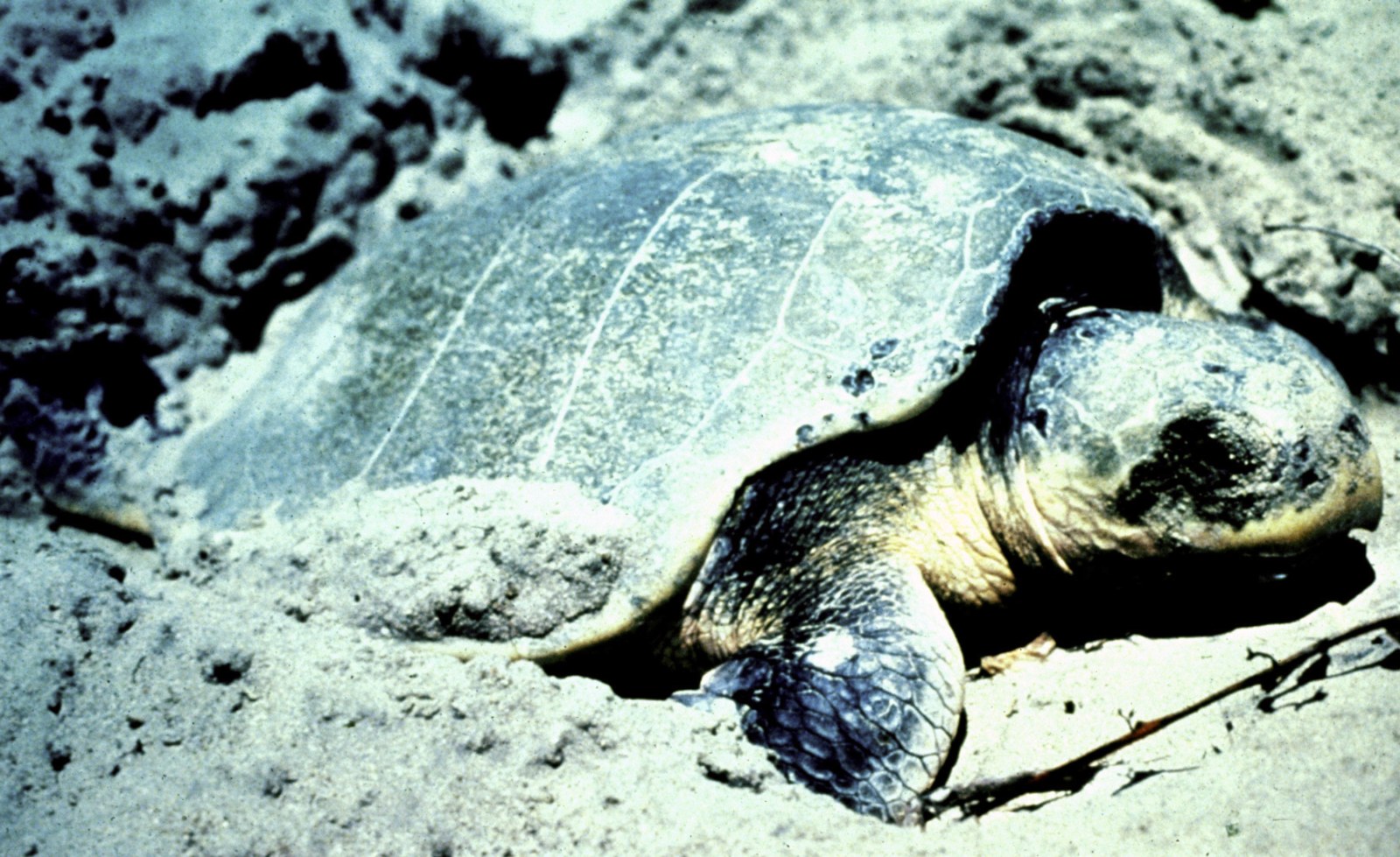
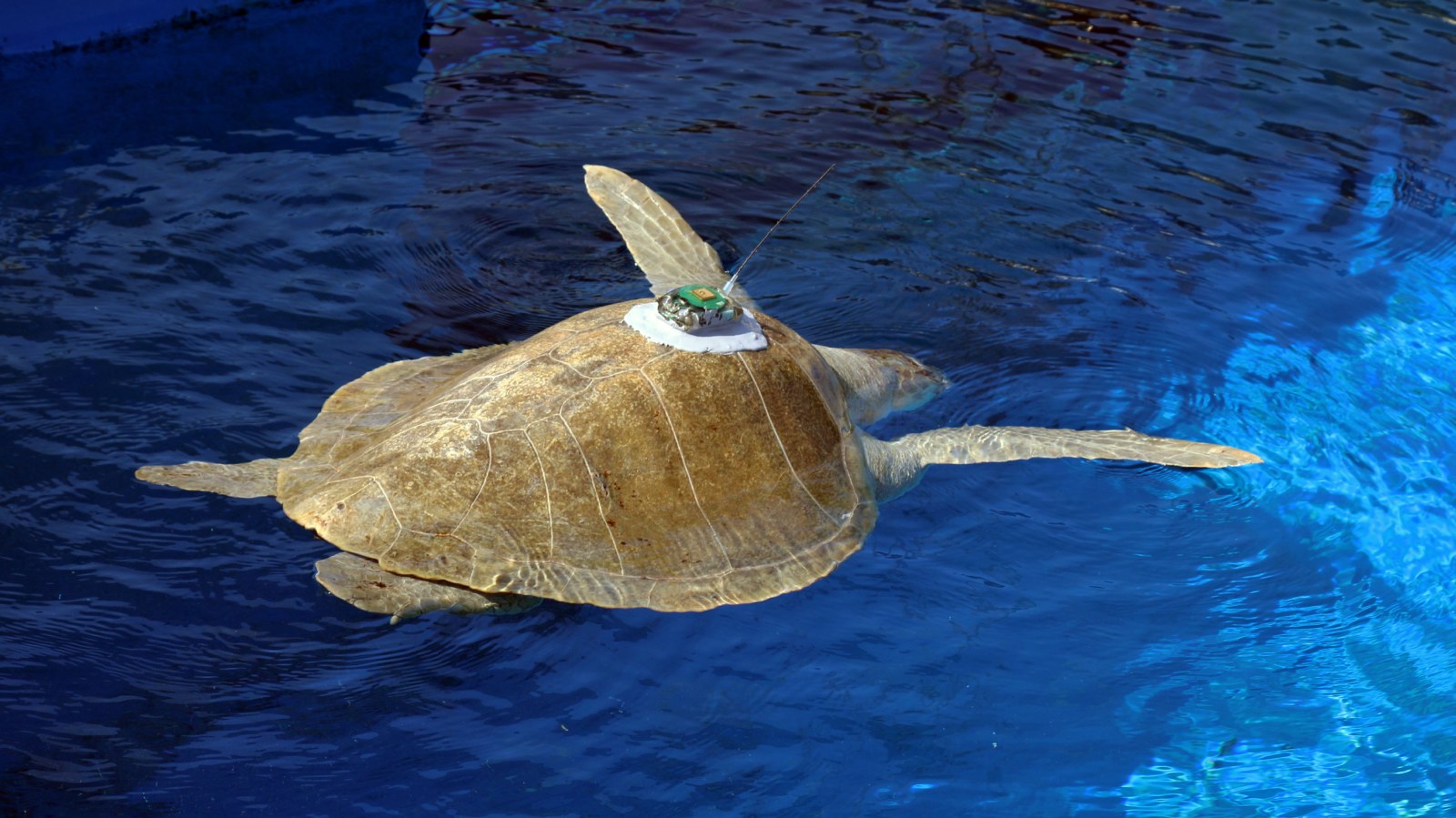
The Olive Ridley Turtle (Lepidochelys olivacea) is the smallest of the five sea turtles found in Sri Lanka, and after the Green Turtle it is the one that nests here most often. It takes its name from its olive-green shell. Elsewhere in the Indian Ocean it is famous for mass nesting, but on Sri Lankan beaches the females usually come ashore alone.
How do you identify an Olive Ridley Turtle?
Its small size and rounded, almost heart-shaped shell are the best clues.
- Size: the shell measures about 61 cm, and adults rarely weigh more than 50 kg.
- Shell: olive-green and nearly as wide as it is long, sometimes reddish from algae.
- Plates: usually six to eight pairs along the sides of the shell, more than on any other sea turtle.
- Hatchlings: dark grey, and they look black when wet.
What does the Olive Ridley Turtle eat?
Olive Ridleys mostly eat animals, including jellyfish, sea squirts, sea urchins, squid, snails, shrimp and crabs. They also take fish and fish eggs, and they will eat algae where other food is scarce.
What is an arribada?
An arribada, Spanish for "arrival", is a mass nesting in which thousands of females come ashore on the same beach within a few days. The largest known site is Gahirmatha in Odisha, India, where an annual count can reach 100,000 to 500,000 turtles. Sri Lanka has no arribada. Here Olive Ridleys nest singly on scattered beaches, so you should not expect to see large numbers together.
How do Olive Ridley Turtles nest?
Females lay one or two clutches in a season, and sometimes three, with about a month between them. A clutch usually holds around 105 to 116 eggs. The eggs hatch quickly for a sea turtle, usually in 45 to 51 days, though poor weather can stretch this to 70.
Where can you see Olive Ridley Turtles in Sri Lanka?
One review put Olive Ridleys at about 30% of nesting turtles on the island, with the peak from about November to March.
- Kosgoda: a well-known nesting beach on the southwest coast, with hatcheries nearby.
- Rekawa: a protected beach on the south coast, where you can watch turtles nest at night.
- Bundala National Park: the beaches of this south coast park are also used for nesting.
To plan a visit, see our guides to turtle watching and the baby turtle release, or read about all the sea turtles of Sri Lanka.
Is the Olive Ridley Turtle endangered?
The IUCN Red List classes it as Vulnerable, and it is on CITES Appendix I, which bans international commercial trade. It is one of the most abundant sea turtles in the world, but it is under pressure from egg collecting, hunting and above all fishing, as many turtles drown in trawls and gill nets. All sea turtles are protected by law in Sri Lanka.
Tips for watching Olive Ridley Turtles
- Go with a guide. Nesting beaches are best visited at night with a local guide or conservation project.
- Keep lights off. Bright lights can disturb nesting females and confuse hatchlings.
- Choose a good hatchery. Reputable hatcheries release hatchlings soon after they emerge rather than keeping them on display.
Sri Lanka's other sea turtles are the Green Turtle, the Loggerhead Turtle, the Leatherback Turtle and the Hawksbill Turtle.
Related reading
2 pages on closely related subjects.

