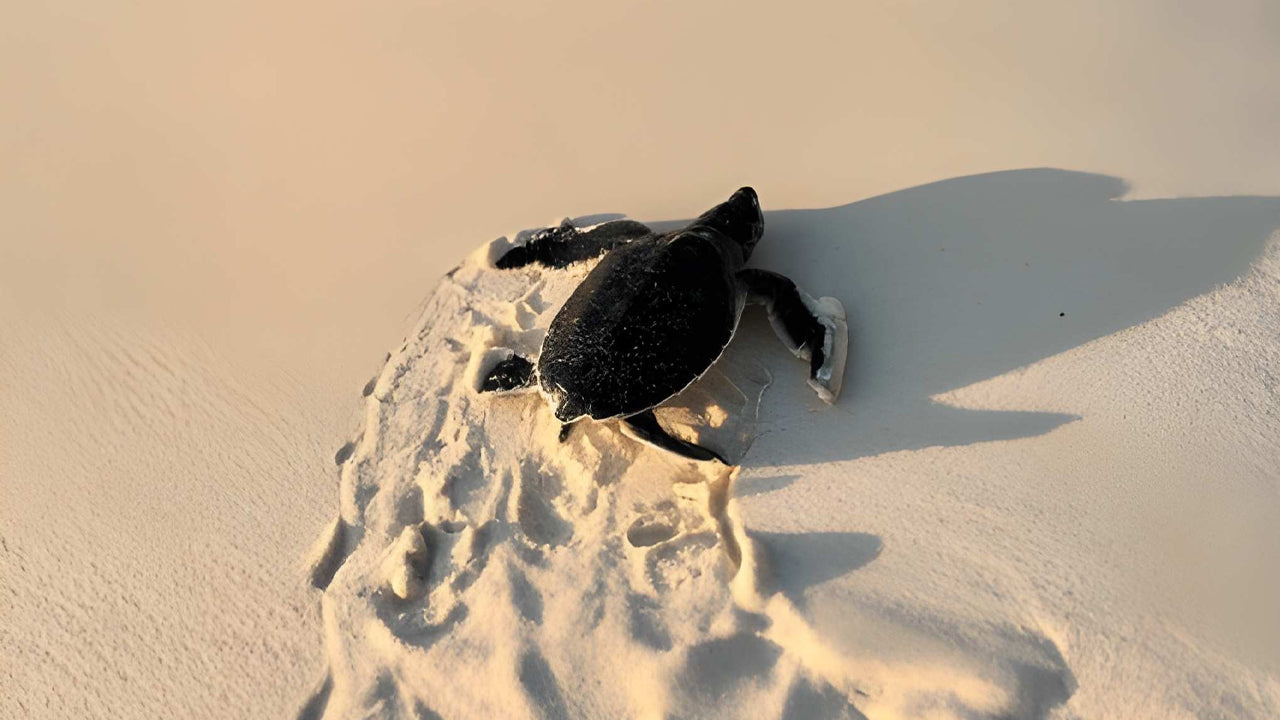
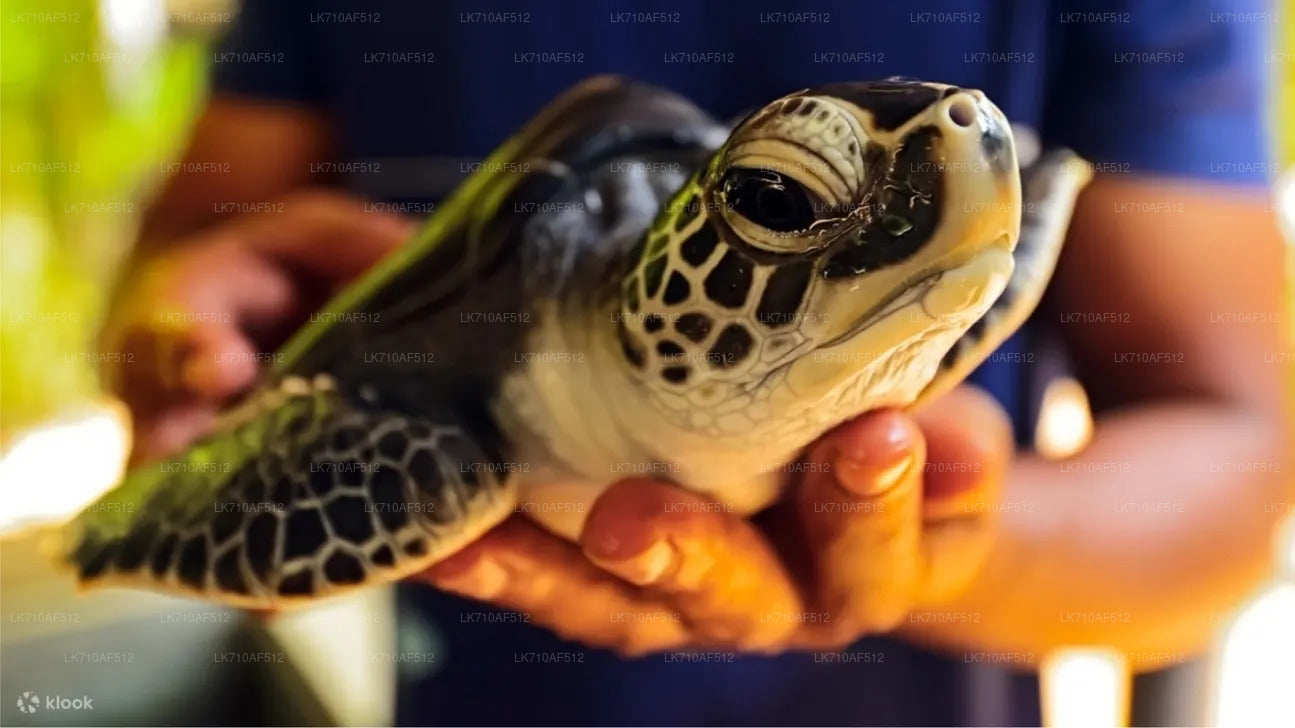
Along Sri Lanka's southwestern coast, between the busy beach town of Bentota and the quieter shoreline settlements nearby, a small but significant conservation facility works quietly against the odds. The Bentota Turtle Hatchery protects eggs laid by nesting sea turtles, raises hatchlings in controlled conditions, and releases them into the Indian Ocean — giving each young turtle a measurably better chance of survival than they would have had in the wild.
Why does Sri Lanka need turtle hatcheries?
Five of the world's seven sea turtle species visit Sri Lankan waters, with the green turtle (Chelonia mydas) and the olive ridley (Lepidochelys olivacea) among the most frequently sighted along the southwest coast. Leatherback and hawksbill turtles also nest here, though less commonly. All are listed as vulnerable, endangered, or critically endangered under IUCN classifications.
The threats these animals face are well documented: egg collection for food, accidental capture in fishing nets, coastal development that shrinks nesting habitat, marine debris ingestion, and light pollution that disorients hatchlings making their first dash to the sea. Without intervention, survival rates from egg to adulthood are estimated at roughly one in a thousand. Hatcheries don't solve every problem, but they address the most immediate one: protecting eggs and newly hatched turtles during the period when they are most vulnerable.
Sri Lanka now has several such facilities along the southwest coast, including the well-established Kosgoda Sea Turtle Conservation Project and the Hikkaduwa Turtle Hatchery, as well as the Bentota facility described here.
What happens at the Bentota Turtle Hatchery?
The core process begins on the beach at night. Staff and volunteers patrol the shoreline during nesting season — typically between November and April on this part of the coast — to locate freshly laid clutches before poachers or scavengers find them. Eggs are carefully relocated to the hatchery's protected sandy enclosures, where temperature and humidity replicate natural nesting conditions as closely as possible.
Incubation takes around 55 to 65 days depending on species and conditions. Once hatchlings emerge, staff monitor them briefly before organising a supervised release into the sea — usually at dusk or dawn, when predation risk from seabirds is lower. Visitors who time their trip correctly can witness or participate in this release, which is the experience most people come for.
Beyond eggs and hatchlings, the facility also functions as a small rehabilitation centre. Injured turtles — those caught in nets, struck by boat propellers, or weakened by illness — are brought here for treatment and kept in holding tanks until they are strong enough to return to the ocean. At any given time, there are typically several adult and juvenile turtles in residence, which visitors can observe at close range.
What can visitors expect during a visit?
A visit to the hatchery is informal and relatively brief — most people spend between 30 and 60 minutes on site. The experience typically includes:
- A guided walk through the egg incubation beds, where staff explain the nesting cycle and incubation process
- Close observation of rescued turtles in rehabilitation tanks, including turtles of different species and sizes
- Information panels and informal explanation from staff covering the major threats to sea turtle populations
- The opportunity — if timed correctly and if hatchlings are ready — to take part in a supervised release into the sea
The atmosphere is educational rather than theatrical. Staff are knowledgeable and the facility is modest in scale, which suits the subject matter. Children generally find the experience engaging and memorable, particularly the rehabilitation tank viewing.
When is the best time to visit the Bentota Turtle Hatchery?
The southwest coast nesting season runs broadly from November through to April, peaking around January and February. Visiting during these months increases the likelihood of seeing hatchlings and, depending on the facility's schedule, of witnessing or joining a release. Outside nesting season, visits are still worthwhile because rehabilitating adults and juveniles are present year-round — but hatchling releases are less frequent.
If witnessing a release is your priority, contact the hatchery or your tour operator in advance. Release timing depends on when clutches naturally hatch, so it cannot be guaranteed on a given day, but informed planning significantly improves your chances.
How do I get to the Bentota Turtle Hatchery from Colombo?
Bentota is located roughly 65 kilometres south of Colombo along the coastal highway. By private vehicle the journey takes around 90 minutes to two hours depending on traffic, which can be heavy on weekends. The southern expressway (E01) reduces travel time considerably if joined from Kottawa.
Trains on the Colombo–Matara coastal line stop at Bentota station, making rail a practical option for independent travellers. Journey time from Colombo Fort is typically around two hours on express services. From the station, the hatchery is reachable by tuk-tuk.
The hatchery visit pairs naturally with other experiences in the area. The Madu River Safari — a boat journey through the Madu Ganga lagoon system — is a popular combination, often done on the same day. The lagoon lies just a few kilometres north of central Bentota and the journey between the two is short.
Is the Bentota Turtle Hatchery suitable for children?
Yes — the hatchery is one of the more child-friendly stops on the southwest coast. Seeing live turtles at close range, handling hatchlings under staff supervision (where permitted), and releasing them into the sea are experiences that tend to stay with younger visitors long after the holiday ends. The educational content is delivered accessibly, and there are no age restrictions. The site is compact and easy to navigate with small children.
For families interested in wildlife conservation more broadly, Elephant Transit Home in Udawalawe offers a comparable experience focused on orphaned baby elephants, and can be combined with a visit to the south coast within a longer itinerary.
How does the hatchery contribute to marine conservation?
The cumulative impact of hatchery operations along Sri Lanka's southwest coast is meaningful. Tens of thousands of hatchlings have been released into the Indian Ocean over the decades these facilities have operated — a number that, even accounting for natural attrition, translates into a genuine contribution to population stability. Equally important is the role these sites play in shifting local attitudes. Fishermen and coastal residents who once collected turtle eggs for supplementary income have, in many cases, become the most effective conservation advocates in their communities, because hatchery employment and responsible tourism have made conservation economically viable.
The Bentota facility, like others along the coast, also generates data on nesting patterns, clutch sizes, and species distribution that informs broader research into sea turtle ecology in South Asian waters.
Nearby places
13 places within about 25 km, nearest first.
- Galapatha Raja Maha Viharayaunder 1 km
- Bentota Railway Stationunder 1 km
- Paramotoringunder 1 km
- Bentota Cityunder 1 km
- Gamini National School Grounds (VCCN)under 1 km
- Bentota Riverunder 1 km
- Bentota Beachunder 1 km
- Diyakawa Water Sports Centreunder 1 km
- Aluthgama Railway Stationunder 1 km
- Bentota River Airportunder 1 km
- Aluthgama Cityunder 1 km
- Bentara River1 km
- The Brief Garden, Bentota2 km