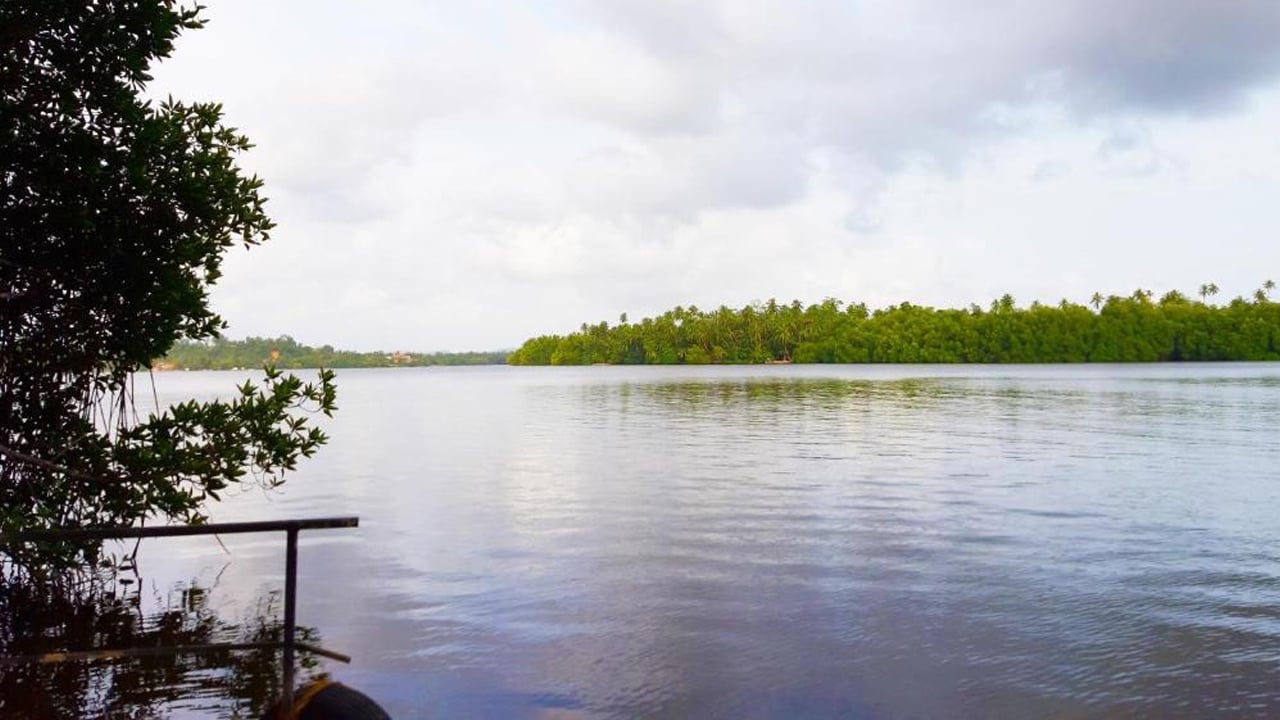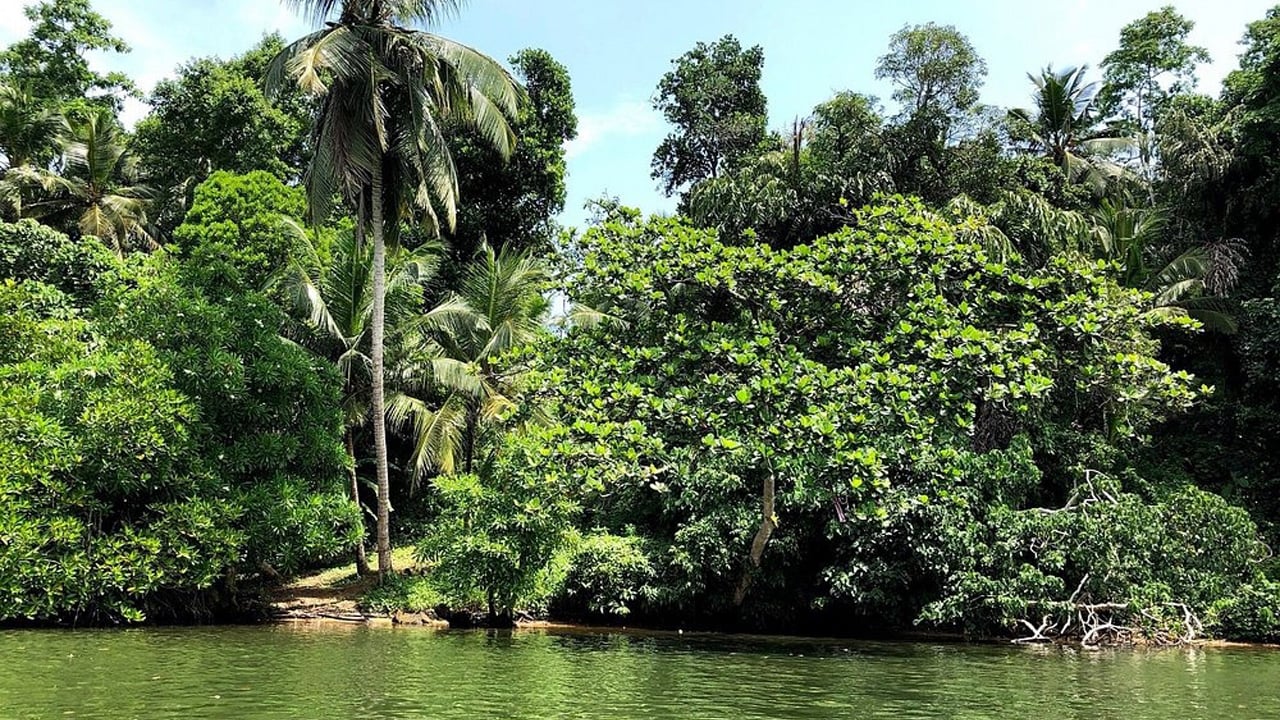
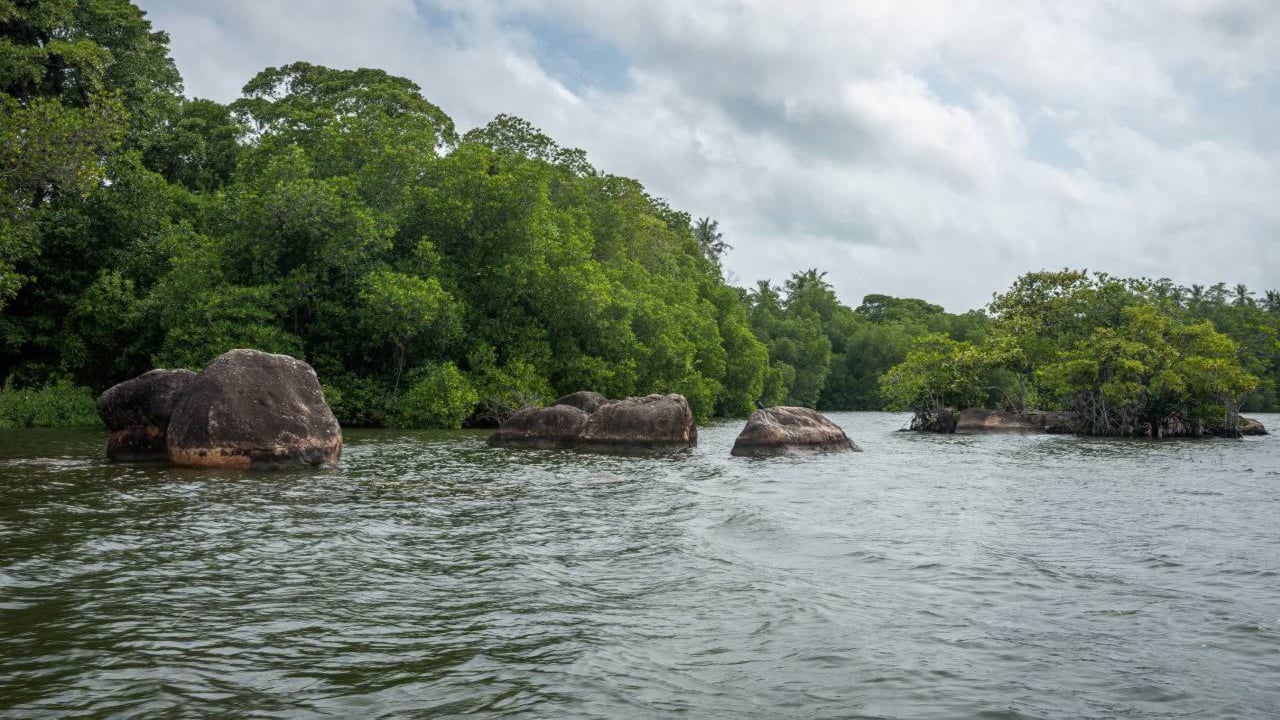


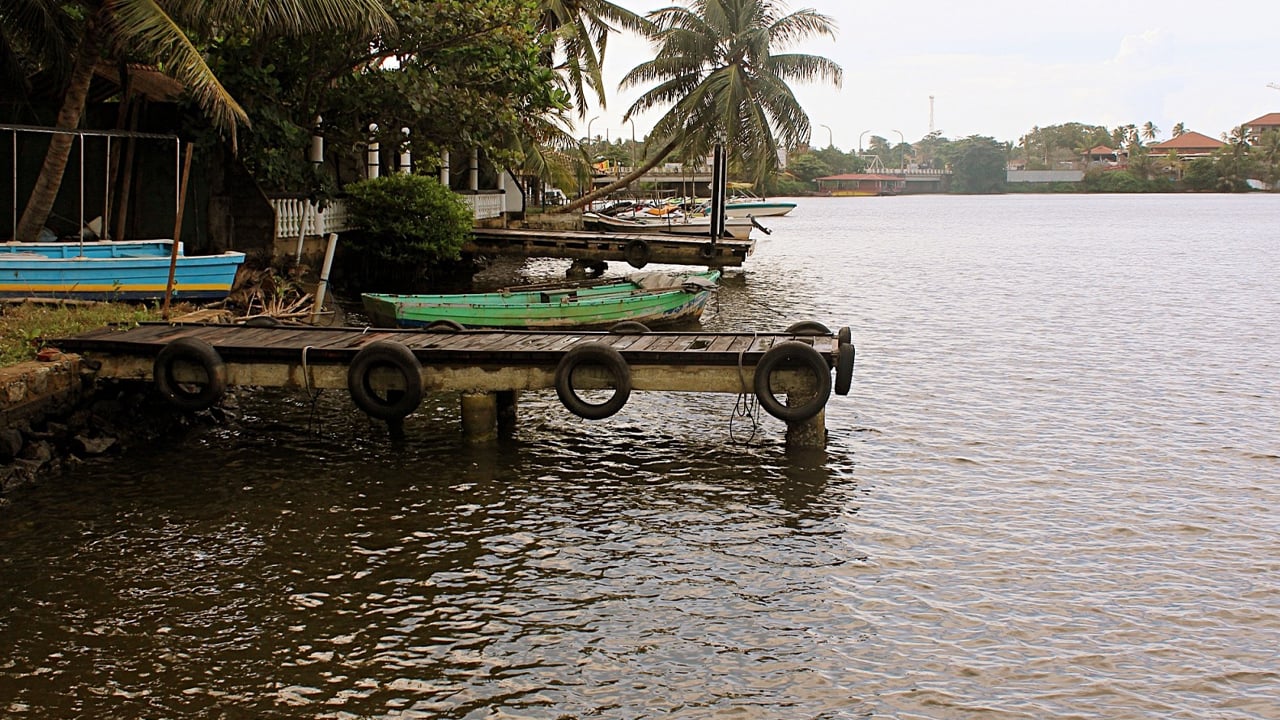
The Bentota River winds through the coastal lowlands of Sri Lanka's Southern Province before emptying into the Indian Ocean near the town of Bentota. It is one of the more rewarding river environments on the island's southwest coast — a place where tidal estuaries, dense mangrove corridors, and shallow lagoons converge to create an ecosystem that is both ecologically significant and genuinely pleasant to spend time in. Visitors come for the guided boat safaris, the birdwatching, and the slower pace that contrasts sharply with the surf beaches a short distance away.
What wildlife can I see along Bentota River?
The river's mangrove forests and brackish wetlands support a surprisingly diverse range of species. Birdwatchers will find grey herons, purple herons, little egrets, and several species of kingfisher patrolling the banks throughout the day. Osprey and brahminy kites are common overhead, particularly in the early morning. Monitor lizards bask on exposed roots and are frequently spotted from passing boats.
The river also holds a healthy population of estuarine crocodiles. Crocodile watching from a flat-bottomed boat is a popular activity and a safe, low-impact way to observe these reptiles in a natural setting. Otters, water monitors, and various freshwater fish species are present but less reliably encountered. The mangrove root systems provide important nursery habitat for juvenile fish, which in turn supports the local fishing community.
What activities are available on the Bentota River?
River boat safaris are the most popular way to explore the waterway. Operators typically run trips in flat-bottomed motorboats or traditional wooden vessels, navigating through mangrove channels and open lagoon sections. Guided trips usually last between one and two hours and cover the main wildlife areas upstream from the estuary.
- Kayaking and canoeing: The calm upper reaches of the river are well suited to paddling, particularly in the early morning before motorboat traffic picks up.
- River safaris: Guided motorboat tours that focus on wildlife observation, mangrove ecology, and visits to small islands within the estuary.
- Boat rides to Buddhist island temples: Several small river islands host ancient shrines and meditation hermitages accessible only by boat, giving excursions a cultural dimension alongside the natural one.
- Water sports: The river mouth and the adjacent lagoon are used for jet-skiing and windsurfing, with equipment typically available through hotels along the beach strip.
- Fishing: Artisanal fishing trips on the river can be arranged locally; guests catch and sometimes cook their haul on the spot.
For those interested in comparing Sri Lanka's river ecosystems, the nearby Madu River Safari on the Madu Ganga offers a similar experience with a UNESCO-recognised wetland setting and a wider network of mangrove channels.
When is the best time to visit Bentota River?
The dry season on Sri Lanka's southwest coast runs roughly from December to April. During these months, rainfall is low, skies are generally clear, and river levels are stable — ideal conditions for boat safaris and outdoor activities. The river remains navigable year-round, but the inter-monsoon period from May through July can bring unpredictable afternoon showers that shorten boat excursion windows.
Birdwatching is productive throughout the year, though migrant waders and shorebirds swell numbers between October and March. Early mornings — before 8 a.m. — consistently offer the best wildlife sightings regardless of season.
Why do mangroves matter here?
The mangrove forest lining much of the Bentota River estuary serves several critical ecological functions. The interlocking root systems trap sediment, reducing coastal erosion along a stretch of shoreline that has historically been vulnerable to storm surge. The canopy provides nesting sites for colonially breeding waterbirds and shade that keeps water temperatures suitable for juvenile fish. Sri Lanka has lost a significant proportion of its mangrove cover over recent decades, making intact systems like Bentota's ecologically and scientifically valuable.
Several tour operators and local conservation groups run informal mangrove awareness tours alongside standard river safaris. These short guided walks through the root systems add an educational layer to what would otherwise be a purely recreational outing.
How do I get to Bentota River from Colombo?
Bentota is approximately 65 kilometres south of Colombo along the coastal highway. By car or private transfer the journey typically takes around 90 minutes, depending on traffic through the Kalutara area. The Bentota train station sits close to the river mouth and is served by intercity express trains from Colombo Fort; the journey by train takes around two hours and is widely considered one of the more scenic rail routes in Sri Lanka.
Once in Bentota, the river is effectively in the centre of town. Most hotels on the beach strip have direct river access or can arrange boat transfers to the main safari departure points. The Galle city tour is a natural pairing for visitors spending several days in the area, as Galle is roughly 40 kilometres further south.
What else is near Bentota River?
Bentota sits within a stretch of the Southern Coast that concentrates a range of natural and cultural attractions within a short drive of each other.
- Kosgoda: Home to one of Sri Lanka's most active sea turtle conservation projects. The Kosgoda Sea Turtle Conservation Project is around 10 kilometres north of Bentota and is a rewarding stop, especially at dusk during nesting season.
- Beruwala: Immediately north of Bentota, Beruwala has a fishing harbour and a historic lighthouse. The town also has a concentration of Ayurvedic wellness hotels.
- Brief Garden: An eccentric tropical garden created by artist Bevis Bawa, located a short inland drive from Bentota town. Not a Lakpura page, but worth noting as it is one of the more distinctive heritage gardens in Sri Lanka.
- Sinharaja Forest Reserve: For visitors with more time, the Sinharaja Forest Reserve — Sri Lanka's primary lowland rainforest and a UNESCO World Heritage Site — lies roughly two hours inland. The biodiversity contrast with the coastal river ecosystem is striking.
Practical information for visiting Bentota River
| Detail | Information |
|---|---|
| Distance from Colombo | Approximately 65 km south via Southern Expressway or coastal highway |
| Best months to visit | December to April (southwest dry season) |
| Recommended activity duration | Half day for river safari; full day if combining beach, river, and cultural stops |
| Nearest train station | Bentota Railway Station (served from Colombo Fort) |
| Wildlife highlights | Kingfishers, herons, estuarine crocodiles, monitor lizards |
| Swimming in the river | Not generally recommended near the estuary due to currents and crocodile presence |
Boat operators are concentrated near the bridge and the lagoon edge. It is advisable to book through your hotel or a licensed operator to ensure boats are maintained and guides are knowledgeable about the ecosystem. Early morning departures offer the calmest conditions and the most active wildlife.
Nearby places
12 places within about 25 km, nearest first.
- Gamini National School Grounds (VCCN)under 1 km
- Bentota Cityunder 1 km
- Paramotoringunder 1 km
- Galapatha Raja Maha Viharayaunder 1 km
- Bentota Turtle Hatcheryunder 1 km
- Bentota Beachunder 1 km
- Bentota Railway Stationunder 1 km
- Aluthgama Railway Stationunder 1 km
- Diyakawa Water Sports Centreunder 1 km
- Aluthgama Cityunder 1 km
- Bentota River Airport1 km
- Kande Vihara2 km
Related reading
1 pages on closely related subjects.