Cassia sophera is a native shrub of Sri Lanka belonging to the family Fabaceae, the large pea and legume family known worldwide for compound leaves and pod-like fruit. Locally it is known as Uru thora (ඌරු තෝර), and in Sanskrit it carries the name Kasamarda. The species is assessed as of Least Concern in Sri Lanka's National Conservation Status list (2012).
What does Cassia sophera look like?
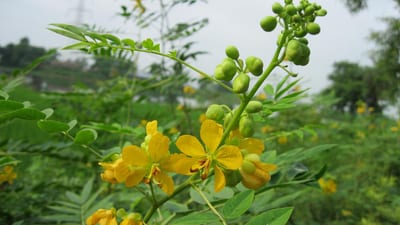
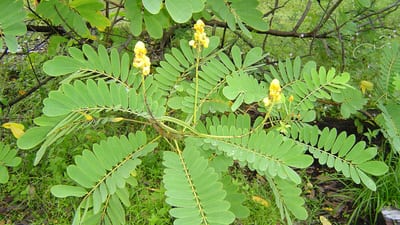
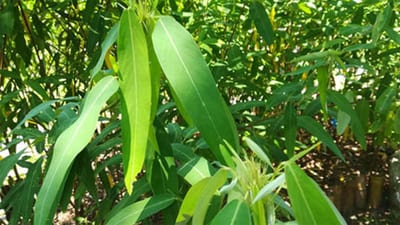
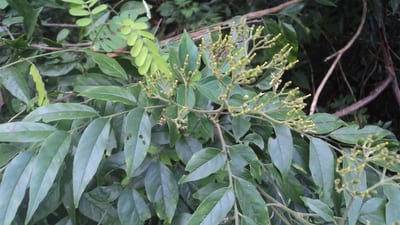
Cassia sophera grows as a shrub reaching about 3 metres in height, with young stems that are glabrous (hairless). The compound leaves are (7-)15-25 cm long and carry 6-10 pairs of leaflets, with a gland present at the base of the petiole, a trait typical of many Cassia species. Individual leaflets measure (2-)3-9 cm long and 1-2.5 cm wide.
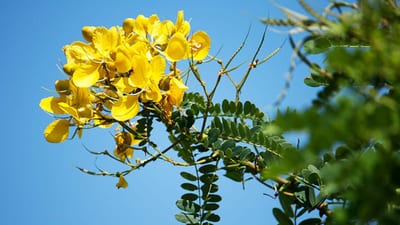
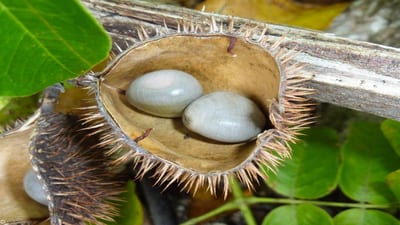
Flowers appear in simple or compound inflorescences of roughly 4-10 blooms, each held on a pedicel (8-)10-15(-18) mm long, with yellow petals characteristic of the genus. The fruit is a pod 5-10 cm long and 0.5-1 cm wide, containing 30-40 seeds. Each seed measures 4-4.5 mm long and 3.5-4.5 mm wide.
Where does Cassia sophera grow?
Cassia sophera is recorded as native to Sri Lanka. As with many shrubs in the Fabaceae family, it is typically found as part of open scrub or secondary vegetation.
What is its conservation status?
Under Sri Lanka's National Conservation Status assessment published in 2012, Cassia sophera is listed as Least Concerned. This designation indicates the species is not currently considered at risk within the country.
What is it called in Sinhala and Sanskrit?
In Sinhala, Cassia sophera is known as Uru thora (ඌරු තෝර). In Sanskrit, it is referred to as Kasamarda. These names identify the plant within local and classical botanical traditions.
Can Cassia sophera be eaten?
No edible parts are recorded for Cassia sophera. It should not be consumed as food.
| Attribute | Recorded detail |
|---|---|
| Scientific name | Cassia sophera |
| Family | Fabaceae |
| Sinhala name | Uru thora (ඌරු තෝර) |
| Sanskrit name | Kasamarda |
| Status in Sri Lanka | Native |
| Conservation status (NCS 2012) | Least Concerned |
| Edible parts | None |
| Habit | Shrub, to about 3 m tall |
| Leaves | (7-)15-25 cm long, 6-10 pairs of leaflets, gland at petiole base |
| Leaflets | (2-)3-9 cm long, 1-2.5 cm wide |
| Inflorescence | Simple or compound, 4-10 flowered |
| Flowers | Pedicels (8-)10-15(-18) mm long; petals yellow |
| Fruit | 5-10 cm long, 0.5-1 cm wide, 30-40 seeded |
| Seeds | 4-4.5 mm long, 3.5-4.5 mm wide |
Other species in this genus
11 more, sharing the same genus.