

Ceylon cinnamon — known botanically as Cinnamomum verum and locally as කුරුඳු (kurundu) — is one of the world's most historically significant spices and one of Sri Lanka's defining agricultural exports. Unlike the cassia varieties sold as cinnamon across much of the world, C. verum is the original, the true cinnamon, and Sri Lanka remains its primary source.
What makes Ceylon cinnamon different from other cinnamon?
Cinnamomum verum belongs to the laurel family (Lauraceae) and is the species that gave the word "cinnamon" its global currency. Several other Cinnamomum species — most notably C. cassia (Chinese cinnamon) and C. aromaticum — are also harvested for their bark and sold as cinnamon in many markets, but they carry a sharper, more pungent flavour and higher levels of coumarin, a naturally occurring compound.
Ceylon cinnamon has a lighter, more complex sweetness with delicate floral notes. Its quills, formed by rolling multiple thin layers of inner bark, are softer and can be ground easily by hand. This subtlety makes it the preferred choice for fine baking and delicate spice blends. Sri Lanka currently produces an estimated 80–90% of the world's supply of C. verum, with smaller commercial cultivation established in the Seychelles, Madagascar, and Tanzania.
What does the Ceylon cinnamon tree look like?
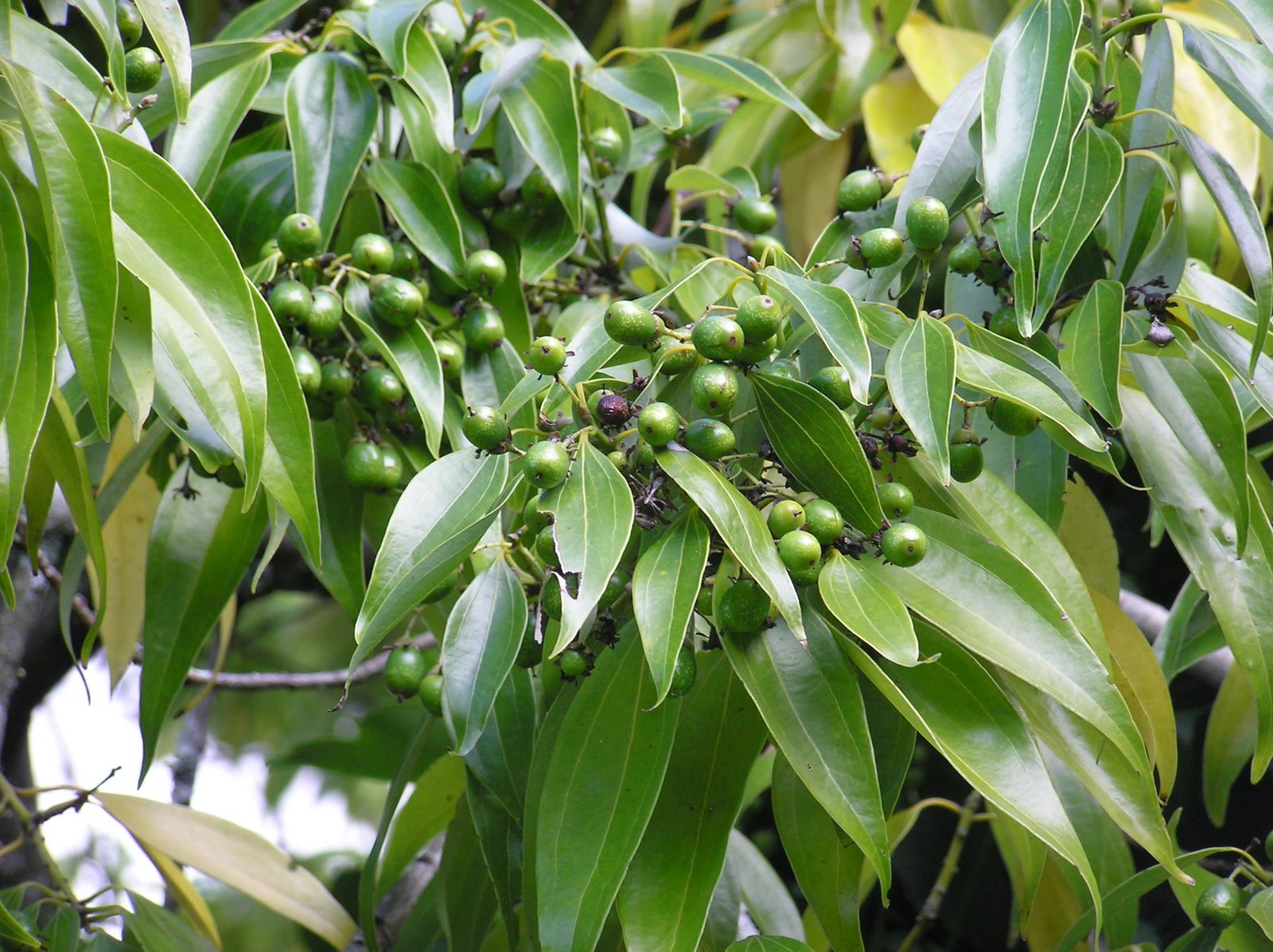
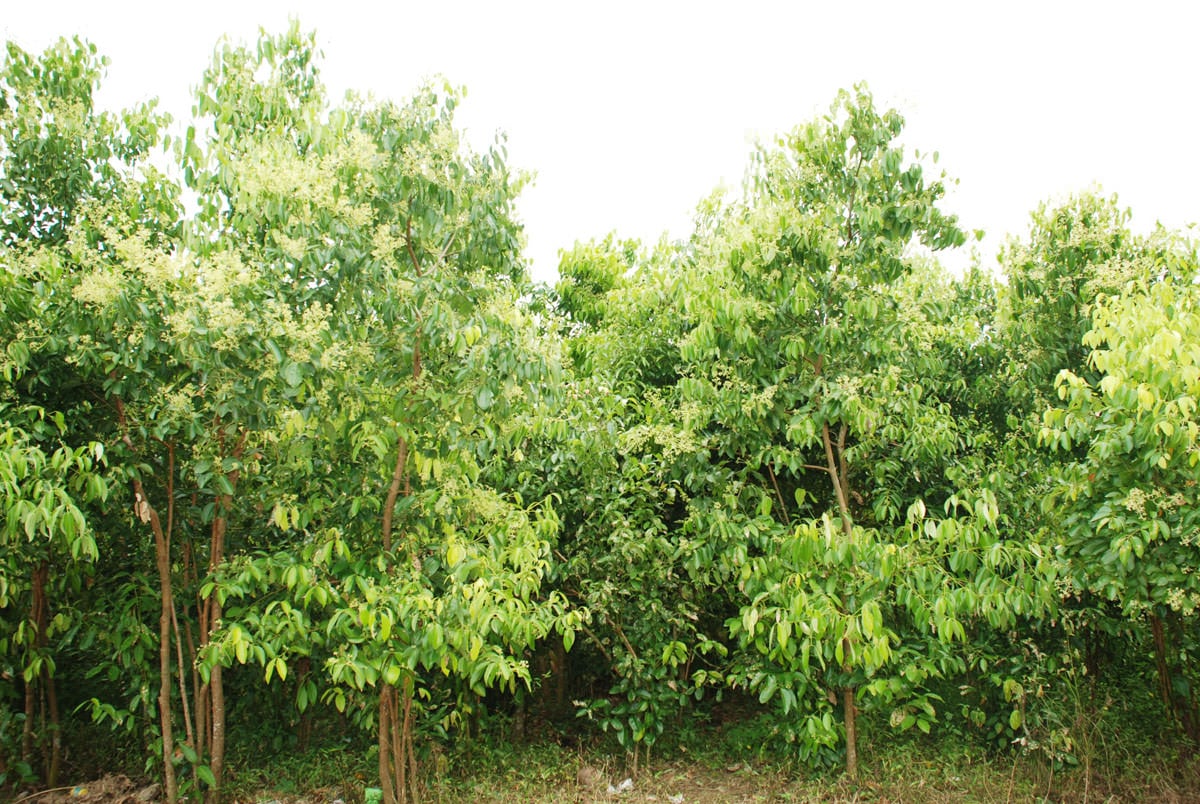
Cinnamomum verum is a small, bushy evergreen tree that typically reaches 10–15 metres in height when left to grow freely, though cultivated trees are regularly coppiced to encourage fresh shoot growth. The leaves are ovate-oblong, 7–18 cm long, and a glossy dark green on top with a paler underside. Young leaves are often flushed with a distinct reddish tone.
The flowers are small, greenish-yellow, arranged in loose panicles, and carry a slightly unpleasant odour despite the tree's aromatic bark. The fruit is a small purple drupe, roughly 1 cm across, each containing a single seed. The old botanical synonym Cinnamomum zeylanicum — still encountered in older texts and Ayurvedic references — derives directly from Ceylon, Sri Lanka's colonial-era name.
Where is Ceylon cinnamon grown in Sri Lanka?
The spice has been cultivated on the island for centuries. Its heartland lies in the wet zone of the southwestern lowlands, particularly in and around the Galle, Matara, and Kalutara districts. The coastal strip between Ambalangoda and Hikkaduwa, and the wetlands adjoining the Madu Ganga lagoon, have long been associated with cinnamon cultivation. The humid, sandy-loam soils and consistent rainfall of this region produce bark with consistently high essential-oil content.
Small-holder family farms account for the majority of production. Trees are coppiced on roughly two-year cycles, and the harvested shoots are stripped of their outer bark by skilled peelers who carefully separate the fragile inner bark and roll it into the familiar quills while still moist.
How is Ceylon cinnamon harvested and processed?
Harvesting is an almost entirely manual craft. After coppiced stems are cut, the outer bark is scraped away and the inner bark is carefully peeled in long strips using a brass-handled knife. While the strips are still pliable, peelers roll them into tight cylinders, stacking multiple strips concentrically to form a single quill. The quills are then shade-dried to prevent splitting.
- Quills (sticks): The standard export form, graded by diameter and quality.
- Ground cinnamon: Milled from broken quill pieces; Ceylon cinnamon grinds easily due to its thin bark layers.
- Cinnamon oil: Steam-distilled from bark chips and leaves; used in flavouring, cosmetics, and aromatherapy.
- Cinnamon leaf oil: Higher in eugenol than bark oil and used separately in perfumery and as a eugenol source.
Sri Lanka's cinnamon industry is governed by grading standards set by the Sri Lanka Standards Institution, with export grades ranging from Alba (the finest, tightest quills) through Continental, Mexican, and Hamburg grades down to featherings and quillings from offcuts.
What are the culinary uses of Ceylon cinnamon?
In Sri Lankan cooking, cinnamon appears in rice dishes, curries, and sweet festival foods, often paired with other whole spices such as cardamom, cloves, and Ceylon black pepper. Internationally, its mild sweetness suits pastry, chocolate, mulled drinks, and Middle Eastern spice blends.
Because Ceylon cinnamon contains significantly lower levels of coumarin than cassia varieties, it is generally considered suitable for regular dietary consumption, whereas health authorities in some European countries have issued guidance recommending limits on cassia cinnamon intake. This distinction has driven growing consumer demand for correctly labelled Ceylon cinnamon in European and North American markets.
What is the role of Ceylon cinnamon in Ayurveda?
Cinnamomum verum holds an established place in the Ayurvedic pharmacopoeia of Sri Lanka and South Asia. In traditional medicine it is classified as having warming, digestive, and carminative properties. Practitioners have used bark preparations to support digestion, ease flatulence, and address respiratory congestion. Cinnamon bark oil is employed in some formulations alongside other botanical ingredients.
Modern pharmacological research has investigated compounds found in Ceylon cinnamon — including cinnamaldehyde, cinnamic acid, and various polyphenols — for their antioxidant and antimicrobial properties. While findings are promising, it is important to distinguish between traditional use and clinically proven therapeutic claims. Anyone seeking Ayurvedic treatment should consult a qualified practitioner.
What is the history of Ceylon cinnamon as a trade commodity?
Few spices have shaped geopolitical history as dramatically as Ceylon cinnamon. Arab traders controlled its early movement to Europe via overland spice routes, and the spice was valuable enough to be listed in ancient records from Egypt and Rome. When Portuguese navigators reached Sri Lanka in the early 16th century, control of the cinnamon trade was a primary motivation. The Dutch East India Company (VOC) subsequently seized the trade in the 17th century, establishing the cinnamon gardens of the Colombo region and maintaining a near-monopoly.
British colonial rule brought the monopoly to an end and opened the trade more broadly, but Sri Lanka — as Ceylon — retained its dominance simply through the quality and climate advantages of its southwestern wet zone. Today the industry supports thousands of farming families and remains one of Sri Lanka's most recognisable agricultural identities alongside Ceylon tea.
Can visitors see cinnamon cultivation in Sri Lanka?
Yes — the cinnamon-growing districts of the southwest are accessible on a day trip from Colombo or as a stop on a coastal itinerary. Several small farms near Ambalangoda, Balapitiya, and the areas around the Madu Ganga wetlands welcome visitors to observe the peeling process and learn about grading. The Sinharaja Forest Reserve, not far inland, offers a broader perspective on Sri Lanka's wet-zone biodiversity, of which cinnamon is a cultivated extension.
Visiting a working cinnamon garden — watching a skilled peeler produce a perfect quill in minutes — gives a vivid sense of how labour-intensive and artisanal the production of authentic Ceylon cinnamon remains, even at commercial scale.