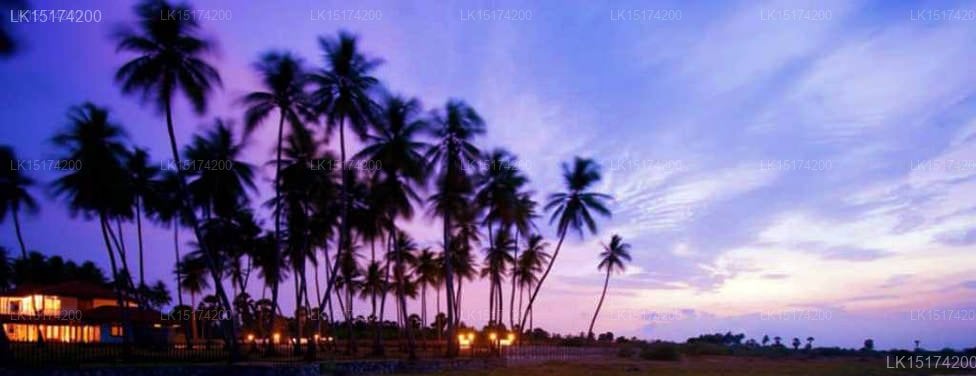
Sri Lanka's coastline stretches for more than 1,300 kilometres around an island that sits at the meeting point of the Indian Ocean and the Bay of Bengal. That geography produces something genuinely useful for travellers: distinct seasonal windows on opposite sides of the island, which means a beach holiday here is viable almost any month of the year. Whether you want to watch blue whales off the southern tip, surf a point break on the east coast, or drift through a mangrove estuary before reaching the ocean, Sri Lanka's beaches reward more than a single-resort stay.
Which Sri Lanka beach region is right for you?
The island's beaches fall into four broad zones, each with a different character and a different best season.
- West coast — Negombo, Kalutara, Beruwala, Bentota. Calm, sheltered waters from November through April. Convenient for arrivals into Colombo's Bandaranaike International Airport. Good for families and resort-style stays.
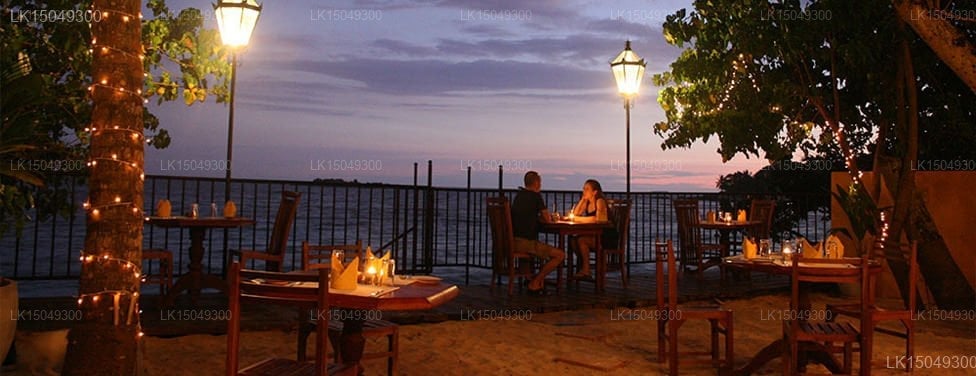
- South coast — Hikkaduwa, Unawatuna, Mirissa, Tangalle, Kirinda. Sri Lanka's most developed stretch of beach tourism. Best November to April. Ideal for snorkelling, whale watching, and seafood dining.
- East coast — Arugam Bay, Pasikudah, Nilaveli, Uppuveli. The east's season runs May to October, making it the natural complement to a west or south coast start. Arugam Bay draws serious surfers; Pasikudah is flat and lagoon-calm.
- North coast — Casuarina, Manalkadu, areas around Jaffna. Remote, largely undeveloped, and increasingly accessible. Suited to travellers who want solitude rather than resort infrastructure.
When is the best time for a beach holiday in Sri Lanka?
Sri Lanka has two main monsoon patterns, which is what makes the double-season system work. The south-west monsoon (roughly May to September) brings rain to the west and south coasts while leaving the east coast clear. The north-east monsoon (roughly November to February) reverses the pattern. As a practical rule:
| Coast | Best months | Avoid |
|---|---|---|
| West & South | November – April | June – September |
| East | May – October | November – February |
| North | April – September | November – January |
The shoulder months of October–November and April–May can offer good conditions on both coasts simultaneously, and accommodation rates are often more competitive during these windows.
What can I see and do on the south coast?
The south coast between Colombo and Yala packs in more variety than almost any equivalent stretch of coastline in South Asia. Hikkaduwa is known for its reef: the coral sanctuary close to shore holds hawksbill turtles and a wide range of reef fish, and the Hikkaduwa Turtle Hatchery gives visitors a chance to learn about marine conservation efforts that protect nesting sites along this stretch.
Further south, Unawatuna sits inside a sheltered bay that makes it one of the calmest swimming spots on the island. Mirissa, a short drive east, is the main departure point for blue whale and spinner dolphin watching between December and April — the submarine canyon off the southern tip brings deep-water species unusually close to shore.
Tangalle marks a transition to quieter territory: the beaches are longer and less busy, the accommodation more spread out, and the pace slower. Kirinda, near Yala, is a working fishing village where colourful outrigger boats launch at dawn and return by mid-morning. It also acts as a useful base for combining a beach stay with a safari at Yala National Park, which lies only a short drive inland.
Travellers interested in more than sand can take a day trip along the Madu River Safari from Balapitiya or Bentota, threading through mangrove channels and quiet islets before the river meets the sea — a calm counterpoint to a day on the beach.
What makes Arugam Bay different from the south-coast beaches?
Arugam Bay on the south-east coast has a reputation that has spread well beyond Sri Lanka's borders. The main point break — locally known as Main Point — consistently produces long, right-hand waves that work from May through to October. Intermediate and experienced surfers will find several other breaks nearby, including Pottuvil Point and Elephant Rock, which are quieter and often less crowded.
Beyond surfing, the surrounding landscape is unusually diverse for a beach destination. Kumana National Park borders the bay to the south, and the lagoon system behind the town holds crocodiles, a large resident bird population, and elephants that move through at dusk. It is one of the few places in Sri Lanka where you can genuinely combine quality waves with wildlife in a single day.
How do I get to the east coast beaches from Colombo?
The drive from Colombo to Arugam Bay takes around six to seven hours on a good day, crossing the central highlands or skirting around them via Wellawaya. Trincomalee, which is the gateway to Nilaveli and Uppuveli, is around five hours by road or accessible by train — the Colombo-Trincomalee rail route passes through some of the island's most scenic countryside. If you are short on time, domestic flights operate to Batticaloa (for Arugam Bay) and Trincomalee on a seasonal schedule.
What water sports and activities are available at Sri Lanka's beaches?
The range of water-based activities across the island is broad. Snorkelling and diving are well established at Hikkaduwa and at Pigeon Island, a marine national park off Nilaveli that holds one of the best-preserved hard coral reefs in the country, along with blacktip reef sharks and sea turtles. Dive sites on the west and south coast include several wrecks accessible to Open Water level divers.
Kitesurfing has grown considerably at Kalpitiya on the north-west coast, where the lagoon between the peninsula and the mainland creates ideal flat-water conditions from May to September — the same window when kite-season winds blow reliably from the south-west. Deep sea fishing charters operate year-round from various points along the coast and target yellowfin tuna, wahoo, and barracuda depending on the season.
Kayaking and stand-up paddleboarding are offered at most larger resort beaches. For something quieter, the lagoons and estuaries along the south-west coast — including the waterways around Madu Ganga — can be explored by boat and reward a slower pace.
Are there turtle conservation sites near the beaches?
Sri Lanka's south-west coast is one of the most important nesting zones in the Indian Ocean for five species of marine turtle, including leatherback, loggerhead, and olive ridley. Several community and NGO-run hatcheries operate along this stretch. The Kosgoda Sea Turtle Conservation Project and the Koggala Sea Turtle Conservation Project both allow responsible visitor access, where you can learn about egg relocation, incubation, and the release of hatchlings. Visiting at the right time of year — nesting peaks between November and April — significantly increases the chance of seeing turtles on the beach at night.
Can I combine a beach holiday with other parts of Sri Lanka?
Most visitors do exactly that. The island is compact enough that a two-week itinerary can reasonably take in the Cultural Triangle, hill country, and a beach segment without feeling rushed. A common circuit runs from the west coast (arrival, first nights in Negombo or Colombo) through Sigiriya and the ancient cities, across to Kandy and the hill country, then down to the south coast for the final beach days. The Galle City Tour slots naturally into any south-coast beach stay — the Dutch fort and the old town are less than an hour from Unawatuna or Koggala.
If you are basing yourself on the east coast, combining Trincomalee's beaches with a visit to Wilpattu National Park to the west is feasible on a longer itinerary, though distances across the north are greater than they appear on a map.
Nearby places
9 places within about 25 km, nearest first.
Related reading
7 pages on closely related subjects.