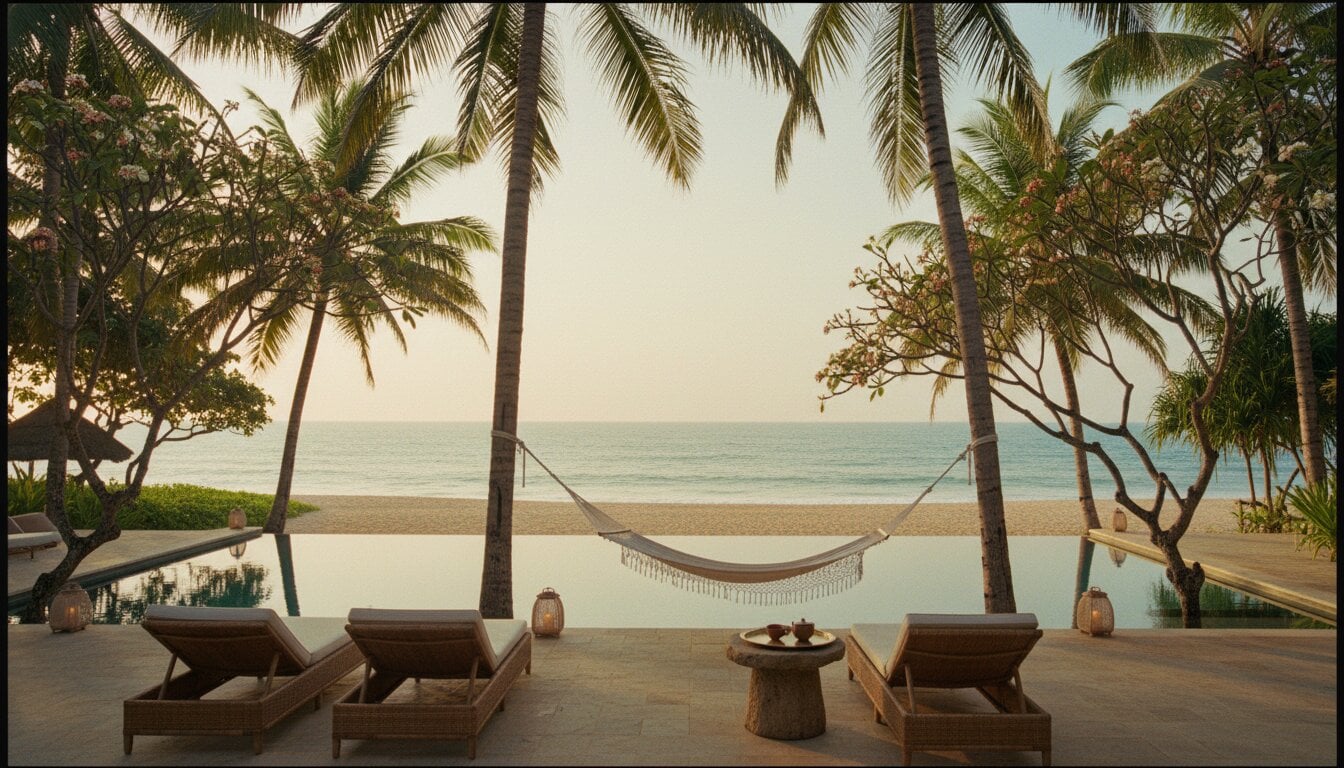
Nilaveli stretches along Sri Lanka's northeastern coastline as one of the island's most rewarding beach destinations — long, largely uncrowded, and backed by swaying palms rather than resort towers. The water here is calm and clear enough that you can see the sandy bottom well beyond the shoreline, and Pigeon Island National Park sits just two kilometres offshore, making this one of the few places in Sri Lanka where world-class snorkelling is a short boat ride from your hotel door.
What makes Nilaveli different from other Sri Lankan beaches?
Many of Sri Lanka's popular beaches have grown busy over the past decade. Nilaveli has developed more gradually, partly because the northeast remained off most tourist routes until infrastructure improved in the years following 2009. The result is a beach that still feels genuinely relaxed: the sand is wide and pale, the sea is shallow enough for safe swimming well into the bay, and the horizon is clean. Uppuveli Beach, a short drive to the south, shares a similar character and is worth a morning visit for comparison, though Nilaveli's direct access to Pigeon Island gives it a distinct edge for marine activity.
What can you do at Nilaveli Beach?
- Swimming and sunbathing — The bay faces west-northwest, sheltering it from the swell that affects the east coast in rougher months. Water depth increases gradually, making conditions suitable for non-swimmers and children.
- Snorkelling — The fringing reef visible from shore holds reef fish, sea turtles, and hard coral. Gear is available through most beachfront hotels and tour operators in the area.
- Scuba diving — Several dive centres operate from Nilaveli and nearby Uppuveli. Dive sites include the offshore reef system and a number of wrecks in Trincomalee Bay, one of the finest natural deep-water harbours in Asia.
- Pigeon Island day trips — The island is protected as a national park and access is managed. Entry fees apply and are collected at the boat launch near the beach. Boats typically take around 15 minutes.
- Deep-sea fishing — The waters off Trincomalee are productive for larger pelagic species. If you are interested in heading further offshore, arrangements can be made through local operators. See our deep-sea fishing guide for what to expect on an organised trip.
What is Pigeon Island National Park like?
Pigeon Island is a small, protected marine national park managed by Sri Lanka's Department of Wildlife Conservation. It covers two tiny islands and the surrounding reef system. The reef here is among the healthiest on the east coast and regularly visited by blacktip reef sharks and hawksbill turtles in addition to the dense population of reef fish. The park takes its name from the rock pigeon colonies that nest on the larger island — the white-naped pigeon is the notable endemic species. Visitors are asked to stay on designated paths on the island itself and to avoid touching or standing on coral while in the water. Entry fees and conservation levies apply; rates are set by the Department of Wildlife Conservation and are subject to periodic revision, so confirm the current figures with your hotel or boat operator before departure.
When is the best time to visit Nilaveli Beach?
The northeast coast follows a different seasonal pattern from the south and west of Sri Lanka. The dry season runs roughly from May through September, when the southwest monsoon that affects most of the island brings calm, settled weather to this coastline. These months offer the best conditions for swimming, snorkelling, and diving, with good underwater visibility and minimal swell.
October marks the shift toward the northeast monsoon, which typically brings increased rainfall and rougher seas through to January or February. Most beachfront properties along Nilaveli remain open year-round but activities on the water become limited during the peak monsoon weeks. Travellers planning primarily a beach-and-diving trip should aim for June to August, when conditions are most reliably good and Pigeon Island sees its highest underwater visibility.
| Month | Weather | Sea Conditions | Recommended for |
|---|---|---|---|
| May – September | Warm, dry | Calm, clear | Swimming, snorkelling, diving, Pigeon Island |
| October – January | Wet periods, occasional storms | Rougher, reduced visibility | Cultural touring; limited beach activity |
| February – April | Transitional, generally pleasant | Improving | Early-season beach visits with fewer crowds |
What attractions are near Nilaveli Beach?
Trincomalee lies roughly 16 km south of Nilaveli and rewards a half-day excursion. The Koneswaram Temple, perched dramatically on Swami Rock above the sea, is one of the five ancient Shaivite temples of Sri Lanka. Fort Frederick, a colonial fortification with commanding views over the bay, is nearby. The city also has a natural harbour that has been strategically significant since ancient times and is mentioned in accounts by European, Portuguese, Dutch, and British colonial administrators.
Kanniya Hot Springs, located a short drive inland from Trincomalee, consist of a series of wells fed by thermal springs. The temperature of each well varies slightly and the site has been a place of local pilgrimage for centuries. It is a modest but authentic cultural experience rather than a spa destination.
Uppuveli Beach is around 12 km south of Nilaveli and shares the same north-facing bay. It is marginally busier and has a wider range of guesthouses and small restaurants, making it a good base if you prefer more dining options within walking distance.
For those with extra time, the ancient city of Polonnaruwa is reachable in roughly two to three hours by road — a worthwhile addition for travellers combining a northeast coast stay with a cultural circuit.
How do I get to Nilaveli Beach from Colombo?
The most practical option for most international visitors is a private transfer from Bandaranaike International Airport or central Colombo. The road distance is around 270 km and the journey takes approximately five to six hours depending on traffic and road conditions. A private air-conditioned vehicle is the most comfortable choice; Lakpura arranges transfers directly to properties along Nilaveli.
An alternative is to travel by train to Trincomalee, which has a direct rail connection from Colombo Fort station. Journey times vary but the route passes through inland scenery and is a pleasant option for independent travellers willing to manage their own luggage. From Trincomalee bus and tuk-tuk services run north to Nilaveli. There is no commercial airport currently serving Trincomalee with regular scheduled services.
Where should I stay at Nilaveli Beach?
Accommodation ranges from small guesthouses set back from the beach to established resorts with direct beachfront access. Properties are spread along a roughly 5 km coastal strip, so location relative to the Pigeon Island boat launch matters if that is your priority. Most beachfront hotels can arrange snorkelling equipment, boat tickets to Pigeon Island, and diving through on-site or affiliated operators. Nilaveli Beach Resort and Nilaveli Beach Hotel are among the longer-established properties on this stretch and offer a range of room categories with sea-view options.
What should I eat near Nilaveli Beach?
The Trincomalee district has a Tamil-majority culinary tradition alongside Sinhalese and Muslim influences, producing a range of seafood preparations that differ from the southern coast's style. Look for crab curry cooked in a drier, spicier style, devilled prawns, and grilled reef fish. Rice and curry — typically served on a banana leaf at local restaurants — is a filling and inexpensive option. Several hotels along Nilaveli offer both Sri Lankan and continental menus. The freshest seafood is generally available at smaller family-run restaurants in Uppuveli and Trincomalee town rather than the beach strip itself.
Nearby places
10 places within about 25 km, nearest first.
- Nilaveli Cityunder 1 km
- Pigeon Islandunder 1 km
- Pigeon Island National Parkunder 1 km
- Arisimale Beach11 km
- Kanniya Hot Springs11 km
- Uppuveli11 km
- Trincomalee War Cemetery12 km
- Velgam Vehera12 km
- Kuchchaveli City15 km
- Kuchchaveli Pradeshiya Saba Ground17 km
Related reading
4 pages on closely related subjects.