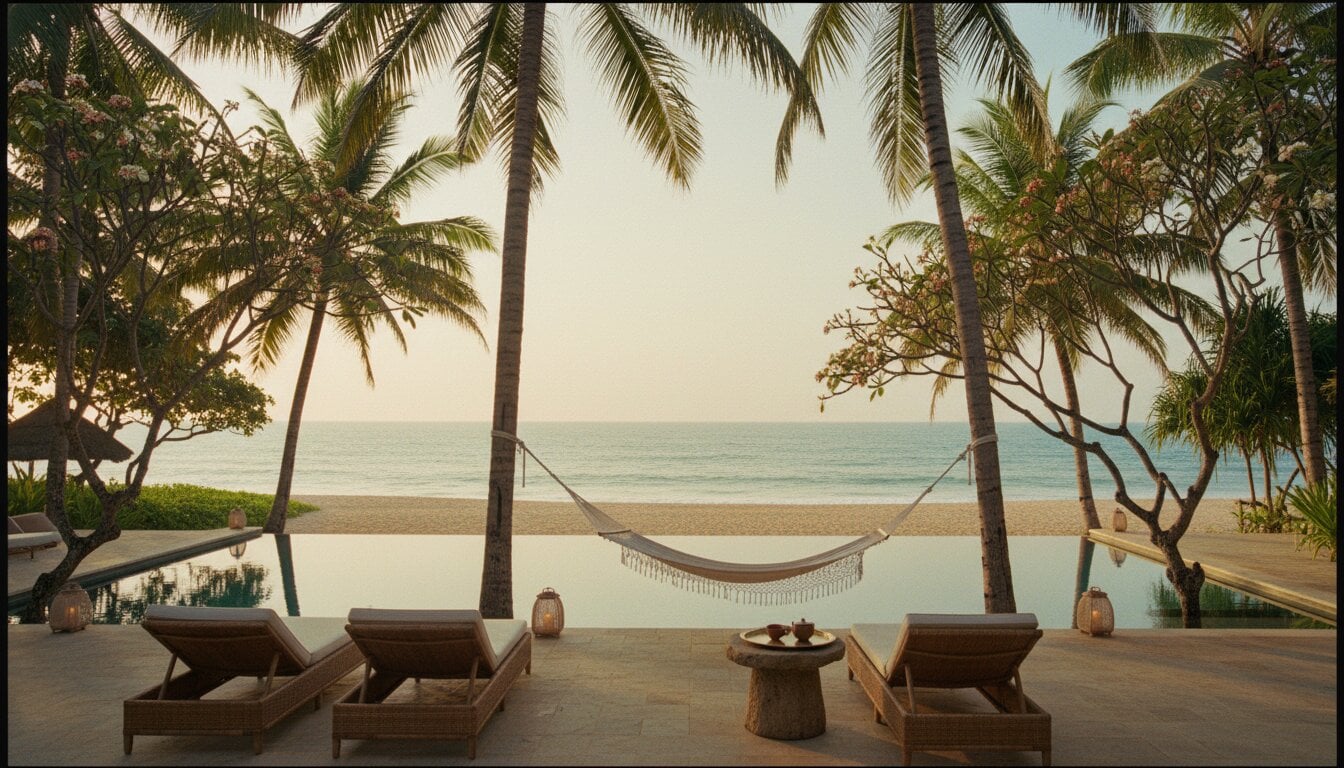
Uppuveli Beach sits roughly 6 kilometres north of Trincomalee town on Sri Lanka's eastern seaboard — far enough from the harbour bustle to feel genuinely quiet, close enough to use the city as a convenient base. The beach is a long, gently curving strip of fine golden sand backed by coconut palms, facing a bay whose shallow, calm waters make swimming safe and comfortable for most of the year. It lacks the infrastructure of Hikkaduwa or Mirissa, and that restraint is precisely its appeal.
When is the best time to visit Uppuveli Beach?
The eastern coast follows a different seasonal rhythm from the southwest. Uppuveli's dry season runs from approximately May through September, when skies are clear, seas are flat, and conditions for snorkelling and diving are at their best. During these months the southwest monsoon keeps the popular southern beaches overcast and rough, making Uppuveli a natural alternative for travellers flexible enough to follow the weather.
From October to January the northeast monsoon brings heavier rainfall and stronger swells to the east coast. The beach is still accessible, accommodation rates typically drop, and the landscape turns lush, but open-water activities become less predictable. Most marine excursion operators reduce schedules during this window.
What can you do at Uppuveli Beach?
The beach rewards both those who want to do very little and those who want an active day on or under the water.
- Swimming: The bay's gentle gradient and relatively calm inshore waters suit families and less confident swimmers. Lifeguard coverage is limited, so local advice on daily conditions matters.
- Snorkelling and diving: A short boat ride from Uppuveli brings you to Pigeon Island, one of Sri Lanka's two marine national parks. The reef system there supports blacktip reef sharks, hawksbill turtles, and dense aggregations of reef fish around living coral heads — among the most intact reef ecosystems on the island's coast.
- Whale and dolphin watching: Trincomalee's deep offshore waters are a reliable feeding ground for blue whales between February and April, and spinner dolphins are encountered throughout the main season. Day trips depart from Trincomalee harbour and typically last four to six hours.
- Deep-sea fishing: The offshore waters hold yellowfin tuna, wahoo, and dorado. Operators based in Trincomalee offer deep-sea fishing charters with bilingual crew, typically departing before dawn.
- Beach walks and cycling: The flat coastal road between Uppuveli and Nilaveli to the north passes fishing hamlets, small Hindu shrines, and stretches of undeveloped shoreline. Many guesthouses rent bicycles by the day.
How do I get to Uppuveli from Colombo?
Trincomalee is connected to Colombo by rail and road. The train journey from Colombo Fort takes around seven to eight hours via Habarana and is widely considered one of Sri Lanka's more scenic longer routes, passing through the dry-zone heartland. By road, Colombo to Trincomalee covers roughly 260 kilometres and typically takes five to six hours depending on traffic and route. From Trincomalee town a tuk-tuk or taxi to Uppuveli takes around fifteen minutes and costs very little.
For travellers arriving via Bandaranaike International Airport in Colombo, a private transfer is the most direct and comfortable option — Lakpura operates point-to-point transfers that cover the full distance without changes.
Where should you stay at Uppuveli?
Accommodation along Uppuveli's beachfront ranges from simple, family-run guesthouses to small boutique hotels with swimming pools and direct beach access. Standards have risen steadily over the past decade, and several properties now offer air-conditioned rooms, in-house restaurants, and organised excursion booking. There is currently no large international chain resort on this stretch, which preserves the low-density feel that defines the area.
Nilaveli, the next beach village north of Uppuveli, offers a similarly quiet atmosphere with its own cluster of hotels and is often visited as a day trip or as an alternative base.
What should you eat at Uppuveli?
The kitchens at beachside cafés and guesthouses draw on the east coast's strong tradition of seafood cookery. Crab curry, devilled prawns, and grilled fish served with rice and coconut-based curries are staples. The region's Tamil and Muslim culinary influences add variety — string hoppers, pittu, and kottu roti appear alongside the more familiar Sri Lankan rice-and-curry plate. Eating at small locally run spots generally delivers better value and more authentic flavour than hotel dining.
What else is near Uppuveli Beach?
Trincomalee town, a short ride south, holds Fort Frederick — a Portuguese-then-Dutch-then-British fortification that now houses the Sri Lanka Army — as well as the Koneswaram Temple, a Hindu cliff-top shrine with sea views and considerable cultural significance to Tamil communities across the north and east. The town's natural harbour, said to be one of the deepest in the world, has shaped the area's history across multiple colonial periods.
Inland from Trincomalee, the ancient tank and city ruins of Polonnaruwa are around two hours by road — a practical half-day or full-day excursion for heritage-minded travellers who want to balance beach time with history.
Is Uppuveli Beach suitable for families?
The beach's calm, shallow water makes it more suitable for children than many alternatives on the island. There are no strong rip currents in the main bay under normal dry-season conditions, though parents should remain attentive. The relaxed pace of the area — no jet-ski concessions, no aggressive beach vendors — makes it easier to spend a day here without constant negotiation. Snorkelling trips to Pigeon Island are manageable for older children who are comfortable in open water.
Practical information for visiting Uppuveli
| Detail | Notes |
|---|---|
| Best season | May – September (dry, calm seas) |
| Distance from Trincomalee town | Around 6 km north |
| Distance from Colombo | Around 260 km (5–6 hours by road) |
| Marine park entry (Pigeon Island) | Government fee applies; confirm current rate at the park office |
| Currency | Sri Lankan Rupee; ATMs available in Trincomalee town |
| Language | Tamil widely spoken; English understood at most tourist-facing businesses |
Nearby places
9 places within about 25 km, nearest first.
- Trincomalee War Cemeteryunder 1 km
- Uppuveli2 km
- Lanka Pattuna3 km
- Trincomalee Beach3 km
- Trincomalee District3 km
- Hoods Tower Museum3 km
- Kanniya Hot Springs4 km
- Orr's Hill Army Museum4 km
- Akbopura Railway Station12 km
Related reading
6 pages on closely related subjects.