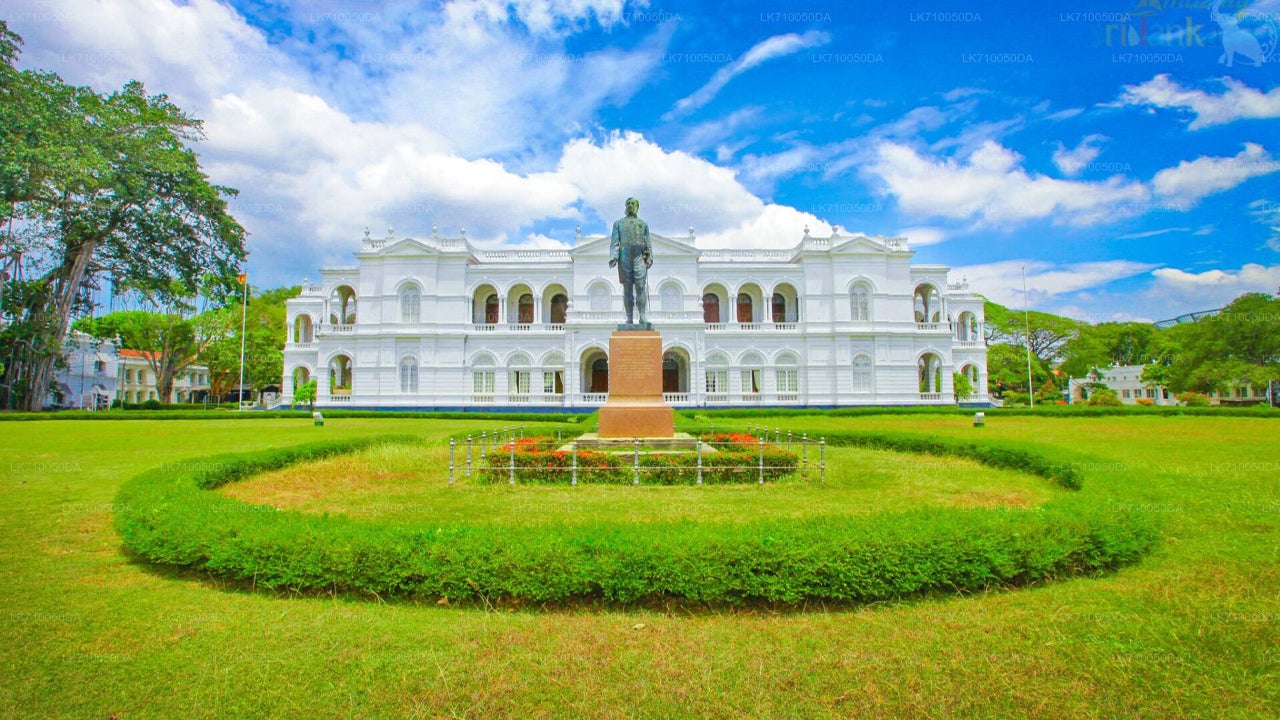
Perched on a high ridge at Ostenburg on the Trincomalee peninsula, the Hoods Tower Museum offers one of the more quietly compelling heritage experiences on Sri Lanka's northeast coast. Run by the Sri Lanka Navy within the SLN Dockyard complex, this naval museum overlooks the entrance to Trincomalee's inner harbour — a vantage point that has shaped the strategic history of the Indian Ocean for centuries.
What is the history behind Hoods Tower Museum?
The museum takes its name from Hood's Tower, an observation tower erected in honour of Vice-Admiral Sir Samuel Hood, who commanded the East Indies Station during the late 18th century. Hood's tenure coincided with a period of intense British naval activity in South Asian waters, and Trincomalee's deep natural harbour was considered one of the finest anchorages in the region — a fact that made it fiercely contested by European colonial powers.
The dockyard and its fortifications at Ostenburg passed through Portuguese, Dutch, and eventually British hands before coming under Sri Lankan sovereignty after independence. The physical fabric of Hood's Tower reflects this layered colonial past, and the museum has been developed to tell that story through artefacts, navigational instruments, historical records, and naval memorabilia.
What can visitors see at the Hoods Tower Museum?
The collection focuses on the maritime and naval history of Trincomalee and the broader region. Exhibits typically include period naval instruments, archival photographs, uniforms, models of historical vessels, and documentation of the harbour's role during the Second World War — when Trincomalee served as a major Allied naval base and came under Japanese air attack in April 1942.
Beyond the exhibits inside, the ridge location itself is worth noting. The elevated position provides clear sightlines across the inner harbour and the surrounding coastline, giving visitors a genuine sense of why this promontory was strategically significant for so many centuries of maritime history.
Where exactly is the Hoods Tower Museum located?
The museum sits within the Sri Lanka Navy Dockyard at Ostenburg, on the western side of the Trincomalee peninsula. Because it is inside an active naval facility, access is controlled and visitors are generally required to obtain clearance before entering the dockyard grounds. It is advisable to confirm visiting arrangements in advance, either through official naval channels or through a local tour operator familiar with the site.
Trincomalee town itself is easily reachable by road from Colombo (typically around six to seven hours) or by train from Colombo Fort via Gal Oya Junction. The town's other well-known attraction, Pigeon Island, lies just offshore and can be combined with a visit to the museum on a longer stay in the district.
When is the best time to visit Trincomalee?
Trincomalee's climate differs from much of Sri Lanka because the northeast monsoon (roughly October to January) brings heavier rainfall to this coast, while the southwest monsoon that dominates the rest of the island largely bypasses the area. The dry season for Trincomalee runs broadly from May to September, when seas are calmer and the weather is more reliably clear. This period also coincides with the best conditions for snorkelling around Pigeon Island's reef.
How does the Hoods Tower Museum fit into a broader Trincomalee itinerary?
Trincomalee rewards visitors who allow at least two full days. The town combines several distinct layers of interest: the Koneswaram Hindu temple at Swami Rock, the beach stretches at Uppuveli and Nilaveli, the coral reefs of Pigeon Island, and the naval heritage represented by the Hoods Tower Museum. Taken together, these sites cover religious history, colonial maritime history, natural history, and marine ecology in a relatively compact area.
For travellers who want to pair cultural heritage with wildlife, the broader North Central and Eastern provinces also offer access to ancient archaeological sites. The ruined city of Polonnaruwa, a UNESCO World Heritage Site, lies around two to three hours inland by road and makes a logical extension from a Trincomalee base.
Is photography permitted inside the museum?
As with most facilities within active Sri Lanka Navy installations, photography policies can be strict and are subject to change. Visitors should assume that photography inside the dockyard perimeter may be restricted and should follow instructions from navy personnel on site. Asking at the entrance before raising a camera is always the sensible approach.
What should visitors know before going?
- The museum is inside the SLN Dockyard — entry requires passing through a naval checkpoint, so carry a valid national identity card or passport.
- Dress modestly; as a formal military installation, neat and conservative clothing is expected.
- Guided visits or prior arrangements through a reputable tour operator can simplify access and provide context that self-guided visits lack.
- The site is not widely publicised on commercial tourism channels, which means visit numbers remain low — an advantage for those who prefer unhurried heritage experiences.
- Allow roughly one to two hours for the museum and the surrounding ridge views.
Nearby places
13 places within about 25 km, nearest first.
- Trincomalee Districtunder 1 km
- Trincomalee Beachunder 1 km
- Orr's Hill Army Museumunder 1 km
- Trincomalee Railway Station1 km
- Lanka Pattuna2 km
- China Bey Railway Station2 km
- Kinniya2 km
- Marble Beach2 km
- Trincomalee War Cemetery3 km
- Uppuveli Beach3 km
- Uppuveli4 km
- Kanniya Hot Springs5 km
- China Bay Airport6 km
Related reading
3 pages on closely related subjects.