A short drive inland from Trincomalee, Kanniya Hot Springs is one of Sri Lanka's most quietly compelling heritage sites. Seven shallow wells, arranged in a rough square, bubble up warm mineral water from deep within the earth. Pilgrims, history-seekers, and curious travellers have been stopping here for centuries — and the site carries enough layered history, legend, and archaeological significance to reward anyone who takes time to look beyond the surface.
What exactly are the Kanniya Hot Springs?
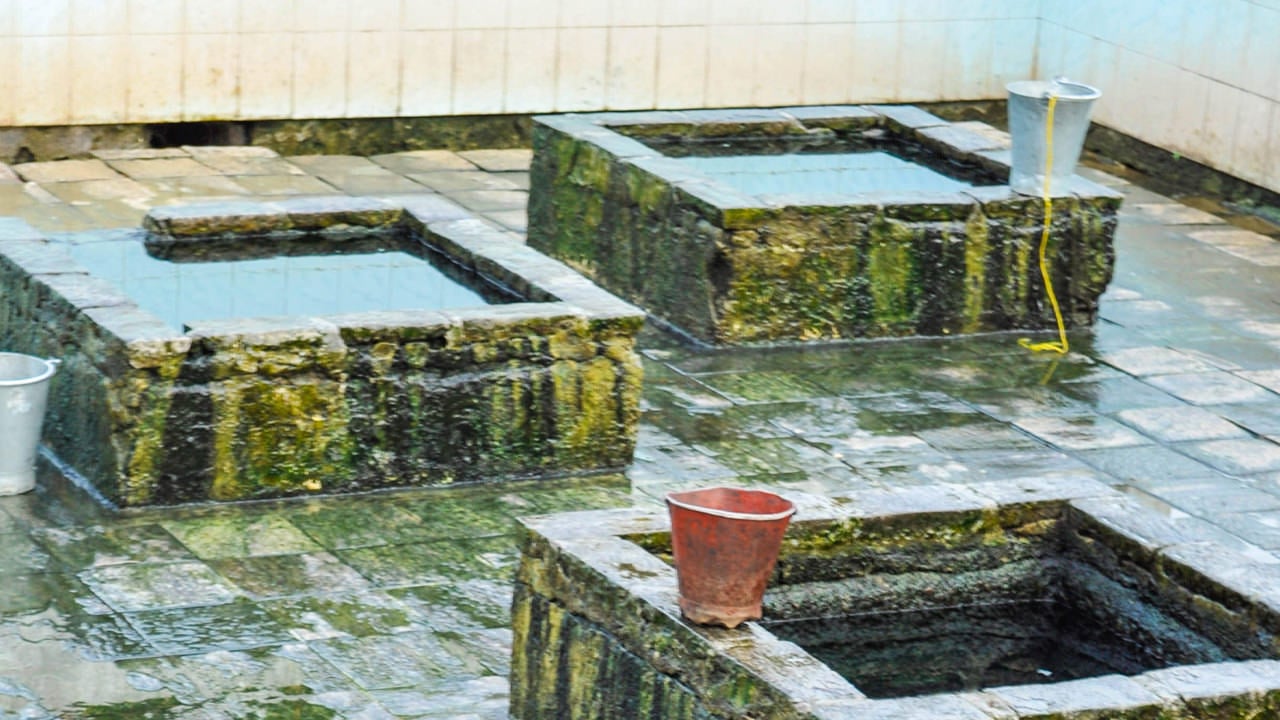
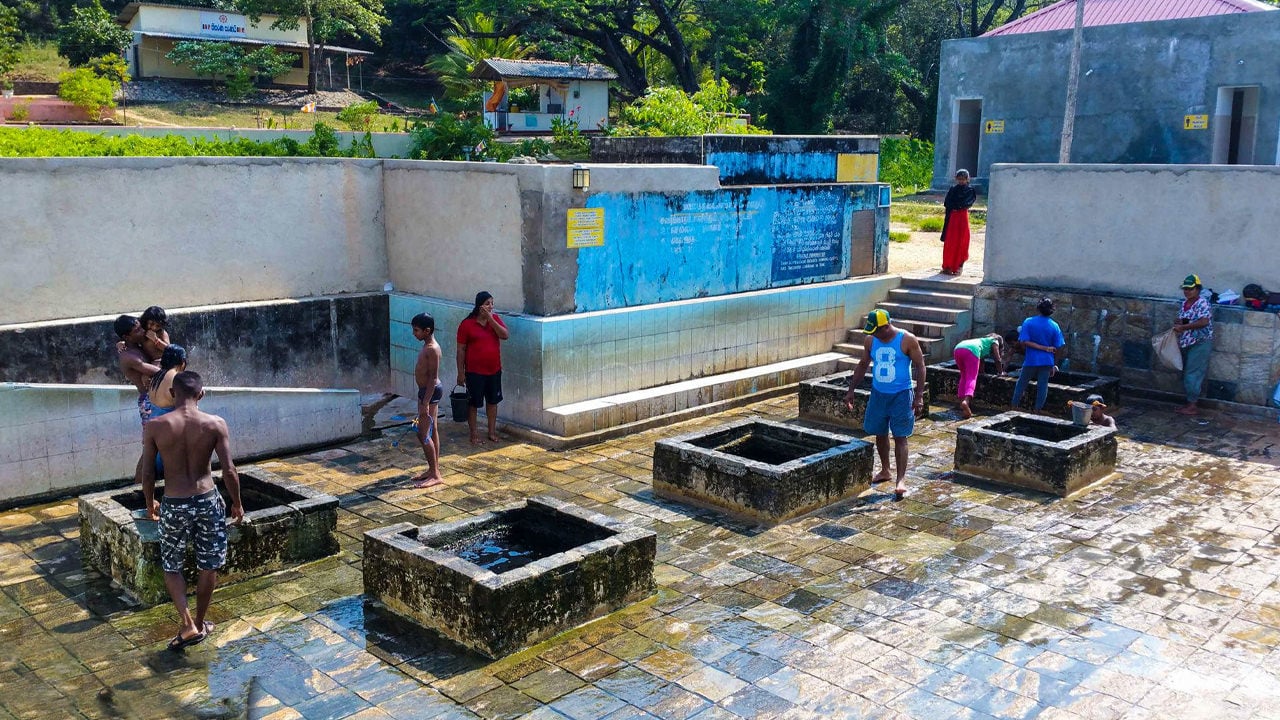
The springs consist of seven individual wells, each no more than 3–4 feet deep, meaning the sandy bottom is clearly visible through the warm water. The temperature varies slightly from well to well — a detail that has puzzled and fascinated visitors for generations. When a significant number of buckets are drawn in quick succession the water level drops noticeably, though the wells refill before long.
Unlike the dramatic geothermal features found in volcanic countries, Kanniya is understated: a cluster of brick-lined wells set within a modest compound. What makes the site remarkable is not spectacle but the depth of human meaning attached to it across multiple faiths and more than two millennia of recorded history.
How old is the site, and what do archaeologists say?
Formal archaeological interest in Kanniya accelerated in the early twenty-first century. On 9 September 2011, the seven hot-water wells, a stupa mound, and scattered building ruins across the compound were gazetted by the Sri Lankan government as protected archaeological monuments (Gazette No. 1723A).
Excavations at the site have uncovered a stupa mound consistent with the early Anuradhapura period, suggesting occupation stretching back roughly two thousand years. An inscription dated to the first or second century AD was also recovered; it records that the waters of five nearby tanks were reserved for the use of Buddhist monks residing at a temple on this land. The ruins of the monastery are still partly visible, though many structures suffered damage during the decades of civil conflict that affected the Northern and Eastern provinces.
The Ceylon Gazetteer of 1834 also documents the remains of a temple sacred to Ganesha at the hot-wells site, evidence of the Hindu devotional tradition that has long run parallel to the Buddhist presence here. A mid-twentieth-century travellers' handbook noted ruins of a dagoba, a Vishnu temple, and a mosque standing in close proximity — a rare convergence that reflects the multi-faith character of Trincomalee itself.
What is the legend of Ravana and Kanniya?
The most widely repeated origin story for the hot springs belongs to the Hindu epic tradition and centres on Ravana, the king of Lanka whose story forms the core of the Ramayana. According to local belief, Ravana and his mother were devoted worshippers of Lord Shiva at the Koneswaram temple on Trincomalee's promontory. When his mother fell gravely ill, Ravana — in an act of filial devotion — attempted to move the sacred rock of Koneswaram so she could worship more easily. Shiva intervened, causing Ravana to drop his sword.
News of the incident reached his mother and the shock, according to the legend, proved fatal. Ravana returned to find her gone. To perform the proper funeral rites, he drove his sword into the earth at several points; at each spot a fountain of warm water rose from the ground. In the Tamil tradition, these funerary rites — tharpana — are still observed at Kanniya by Sri Lankan Tamil families honouring their departed relatives, giving the site an ongoing ritual significance that is anything but merely historical.
The Mahabharata also contains a reference that scholars associate with this locale, describing a hot well near Gokarna bay on an island shrine of Shiva — worshipped by Naga, Deva, and Yaksha peoples — and positioning Koneshwara and the hot spring as a pilgrimage destination on the route south from Kanyakumari.
Is Kanniya a religious site, and who visits it?
Yes — and it draws worshippers from more than one faith. The site's documented history includes Buddhist, Hindu, and Muslim sacred structures in close proximity, and it has been described as sacred to all three communities. Today, Hindu devotees perform rites for deceased relatives at the wells, particularly during auspicious calendar periods. Buddhist pilgrims visit the stupa mound. General visitors — local families, school groups, and international travellers — come to experience the warm water and to absorb the layered atmosphere of the place.
Visitors are welcome to dip their hands or feet in the wells. Bathing customs vary; it is worth observing what others are doing and following suit respectfully, particularly if religious ceremonies are under way.
How do I get to Kanniya Hot Springs from Trincomalee?
Kanniya lies approximately 8 kilometres north of Trincomalee town, making it an easy half-day excursion from any accommodation in the area. The most straightforward option is a tuk-tuk or private car from Trincomalee; the journey typically takes around 20 minutes on a paved road. Kanniya is almost always paired with a visit to the Pigeon Island marine national park or the Koneswaram temple on Fort Frederick, as the three sites form a natural circuit for a day in the Trincomalee district.
What is the best time to visit?
Trincomalee's dry season runs roughly from May to September, when the skies are clear and the road network in the Eastern Province is fully accessible. This period also coincides with the best conditions for snorkelling and diving at Pigeon Island nearby. The site itself can be visited year-round, but the northeast monsoon (October to January) brings heavy rain to this coast and some access roads can become difficult.
Mornings are generally quieter; visiting before 10 am gives you time at the wells before the midday heat sets in and before larger tour groups arrive.
What else is there to see near Kanniya?
Trincomalee district rewards a stay of at least two or three nights. Beyond Kanniya, highlights include the Koneswaram temple — the Ramayana-linked Shiva shrine perched on Swami Rock above the harbour — and Nilaveli and Uppuveli beaches to the north, which offer some of the calmest swimming waters on the island's east coast. Pigeon Island National Park, reachable by boat from Nilaveli, protects healthy coral gardens and is one of Sri Lanka's two marine national parks.
For travellers building a broader eastern itinerary, the ancient city of Polonnaruwa lies roughly two to three hours to the southwest and pairs naturally with a Trincomalee base.
Practical information for visitors
| Detail | Notes |
|---|---|
| Location | Kanniya, approx. 8 km north of Trincomalee town |
| Opening hours | Generally open during daylight hours; check locally for ceremonial closures |
| Entry | A modest entry contribution is typically collected at the gate |
| Dress code | Modest clothing respectful of an active religious site; remove footwear before entering the well area |
| Getting there | Tuk-tuk or private car from Trincomalee; no direct public bus stops at the site |
| Time needed | Around 30–45 minutes for most visitors; longer if religious rites are observed |
Nearby places
15 places within about 25 km, nearest first.
- Uppuveli2 km
- Lanka Pattuna3 km
- Trincomalee War Cemetery4 km
- Uppuveli Beach4 km
- Trincomalee Beach4 km
- Hoods Tower Museum5 km
- Trincomalee District5 km
- Orr's Hill Army Museum5 km
- Akbopura Railway Station8 km
- Nilaveli Beach11 km
- Nilaveli City11 km
- Pigeon Island11 km
- Pigeon Island National Park11 km
- Mavil Aru Amuna and the Reservoir18 km
- Mollipatana Railway Station19 km
Related reading
2 pages on closely related subjects.