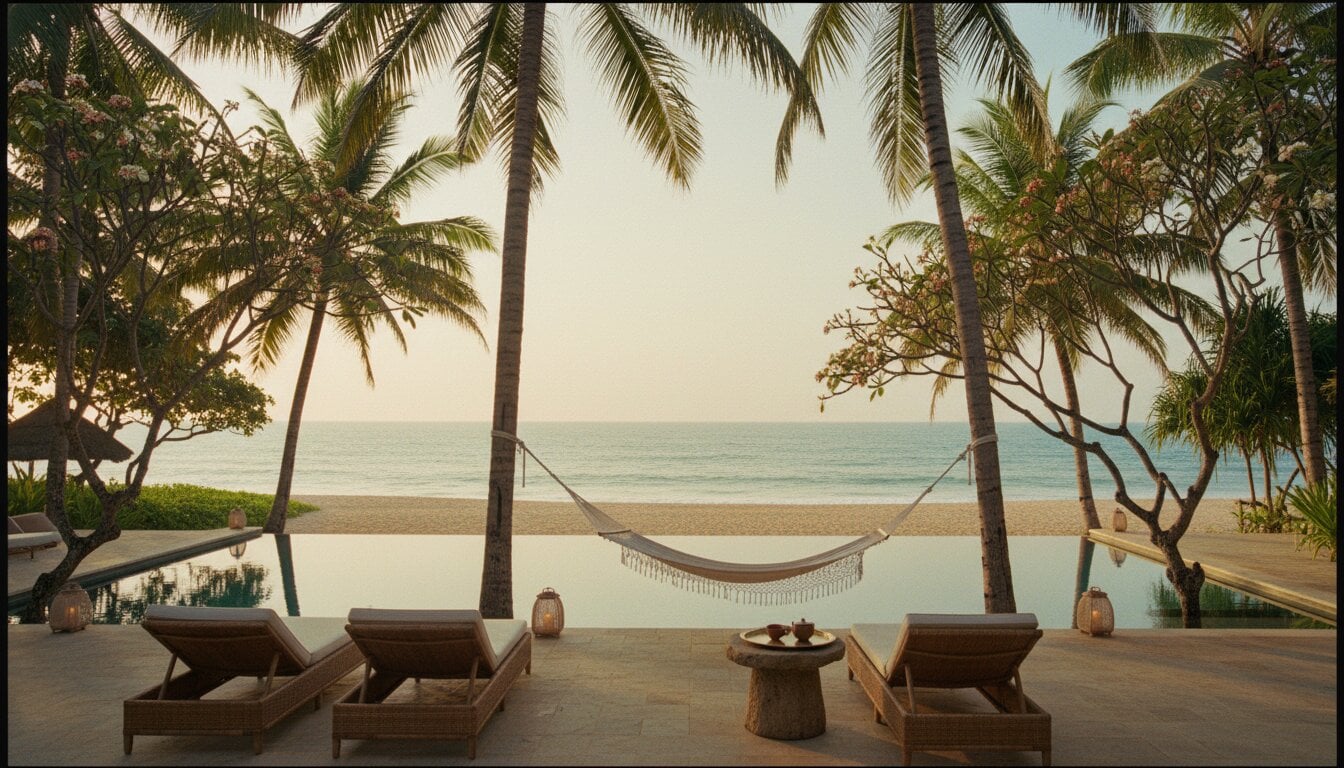
Mannar Beach stretches along the northwest coast of Sri Lanka, on a slender island connected to the mainland by a causeway. It is one of the least commercialised coastlines in the country — no sun-lounger vendors, no jet-ski operators — just long, open sand, shallow turquoise water, and the quiet rhythm of a fishing community that has worked these shores for generations. For travellers who have already ticked off the southern beach circuit, Mannar offers something genuinely different.
What makes Mannar Beach different from other Sri Lankan beaches?
Most of Sri Lanka's famous beaches sit on the south or west coasts, where infrastructure and visitor numbers have grown steadily. Mannar occupies a different world. The island's geography — flat, wind-swept, edged by saltpans and scrub jungle — gives it an almost austere beauty. The sea here is calm for much of the dry season, and the sand is pale and fine. Because tourism remains limited, the beach retains a quality that is increasingly rare: you may walk for kilometres without passing another tourist.
The northwest coast also faces the Palk Strait, which means sunsets over the water rather than sunrises — a detail worth planning around if photography matters to you.
What wildlife and birds can I see around Mannar?
Mannar is one of Sri Lanka's premier birdwatching destinations, particularly between September and April when the island sits on a major migratory flyway between India and Sri Lanka. Waders, terns, flamingos, pelicans, and painted storks congregate around the saltpans and lagoons fringing the island. The Giant Tank reservoir on the mainland side of Mannar District also attracts large flocks of waterbirds.
The scrub forests and thorny thickets around the island support dry-zone species including the Indian roller, black-headed ibis, and various raptors. Serious birders typically combine Mannar with a visit to Wilpattu National Park, which lies roughly two hours to the south and protects one of Sri Lanka's largest wilderness areas, home to leopards, sloth bears, and elephants.
Dugongs — rare sea mammals — have been recorded in the shallow waters of the Gulf of Mannar, though sightings are unpredictable and cannot be guaranteed.
What historical sites are near Mannar Beach?
Mannar Town, a short drive from the beach, holds several sites that reward a half-day of exploration.
- Mannar Fort — Built by the Portuguese in the early 17th century and later extended by the Dutch, the fort stands near the southern tip of the island. Its coral-stone walls and bastions are partially intact, and the views across the strait from the ramparts are wide and unobstructed. The fort is a quiet, unhurried place to visit.
- The Baobab Tree — A single ancient baobab stands near Mannar Town, thought to have been brought by Arab traders many centuries ago. Baobabs are not native to Sri Lanka; this specimen is believed to be among the oldest and largest on the island, and its gnarled silhouette is an arresting sight against the flat landscape.
- Adam's Bridge (Rama's Bridge) — A chain of limestone shoals and sandbanks extends northeast from Mannar towards Rameswaram in India, forming a shallow causeway that features prominently in both Hindu scripture (as the bridge built by Rama) and geological records. It is not accessible on foot, but boat trips to view the outer shoals are occasionally arranged locally. The site holds cultural significance for Tamil Hindu communities on both sides of the strait.
What is the local culture and food like in Mannar?
Mannar has a distinct cultural identity shaped by its Tamil-speaking majority, its Muslim fishing communities, and centuries of maritime trade with South India. The town's mosques and kovils (Hindu temples) sit close together, and daily life moves at a pace set by tides and fishing seasons rather than tourist schedules.
Seafood dominates the local diet. Fish curry cooked with tamarind and coconut, crab prepared with local spices, and dried fish — a staple traded across the north — are all worth seeking out at small local eateries. Portions are generous and prices modest. The quality of the catch is high: Mannar's waters are known for crab and prawn, and the proximity to India has influenced the spice profiles used in local cooking.
When is the best time to visit Mannar Beach?
November through April is the optimal window. During these months the northeast monsoon has passed and the northwest coast enjoys dry, settled weather with light breezes. Sea conditions are calm, making the beach safe for swimming, and visibility for birdwatching is at its best.
May to September brings the southwest monsoon, which does not directly strike Mannar as heavily as the south coast but still brings periods of rain and occasionally rough seas. The inter-monsoon months of October and early November can also be unsettled. If birdwatching is a priority, the peak of the migratory season — roughly October to February — overlaps well with the dry period.
| Month | Weather | Sea Conditions | Birdwatching |
|---|---|---|---|
| Nov – Feb | Dry, warm | Calm | Excellent (peak migration) |
| Mar – Apr | Dry, hot | Calm to moderate | Good |
| May – Sep | Occasional rain | Moderate to rough | Moderate |
| Oct | Transitional, showers | Variable | Good (early migrants) |
How do I get to Mannar from Colombo?
Mannar is roughly 320 kilometres north of Colombo by road, a journey of around five to six hours depending on traffic and road conditions. The A14 and A30 highways connect the capital to Mannar via Vavuniya. A private car or driver is the most practical option, as it allows stops along the way and flexibility to explore the island on arrival.
A passenger train service also connects Colombo to Medawachchiya, the nearest major rail junction, from where Mannar is accessible by road. The train journey is long but comfortable, and the landscape of the dry zone — flat, dotted with ancient tanks and thorn forest — is quietly absorbing.
Travellers combining Mannar with a wildlife itinerary often route through Wilpattu or continue north to the Jaffna Peninsula, making a logical northern Sri Lanka circuit.
Where should I stay in Mannar?
Accommodation in Mannar is limited compared to the main tourist circuits, which is part of what keeps the area off the beaten path. Options range from simple guesthouses in town to a small number of boutique properties that cater specifically to birders and nature travellers. Booking in advance is advisable during the November–April season, as quality rooms fill quickly. The Palmyrah House is one of the better-regarded options, set in an older colonial building and well-positioned for both the beach and birdwatching excursions.
For travellers who prefer greater comfort and don't mind a longer drive to reach Mannar for day trips, accommodation near Wilpattu's southern gates or in the Kalpitiya area can serve as an alternative base.
Nearby places
15 places within about 25 km, nearest first.
- Mannar Railway Stationunder 1 km
- Mannar Dutch Fortunder 1 km
- Mannar Cityunder 1 km
- Maruthanar Madam Anjanajar Templeunder 1 km
- Thiruketheeswaram Railway Stationunder 1 km
- Baobab Tree1 km
- Thiruketheeswaram Kovil1 km
- Chilawathurai1 km
- Mannar Bird Sanctuary1 km
- Pesalai Railway Station1 km
- Thiru Ketheeswaram Temple1 km
- Urumale Adams' Tomb1 km
- Mannar District2 km
- Mannar Salt Pans2 km
- Arippu Fort8 km