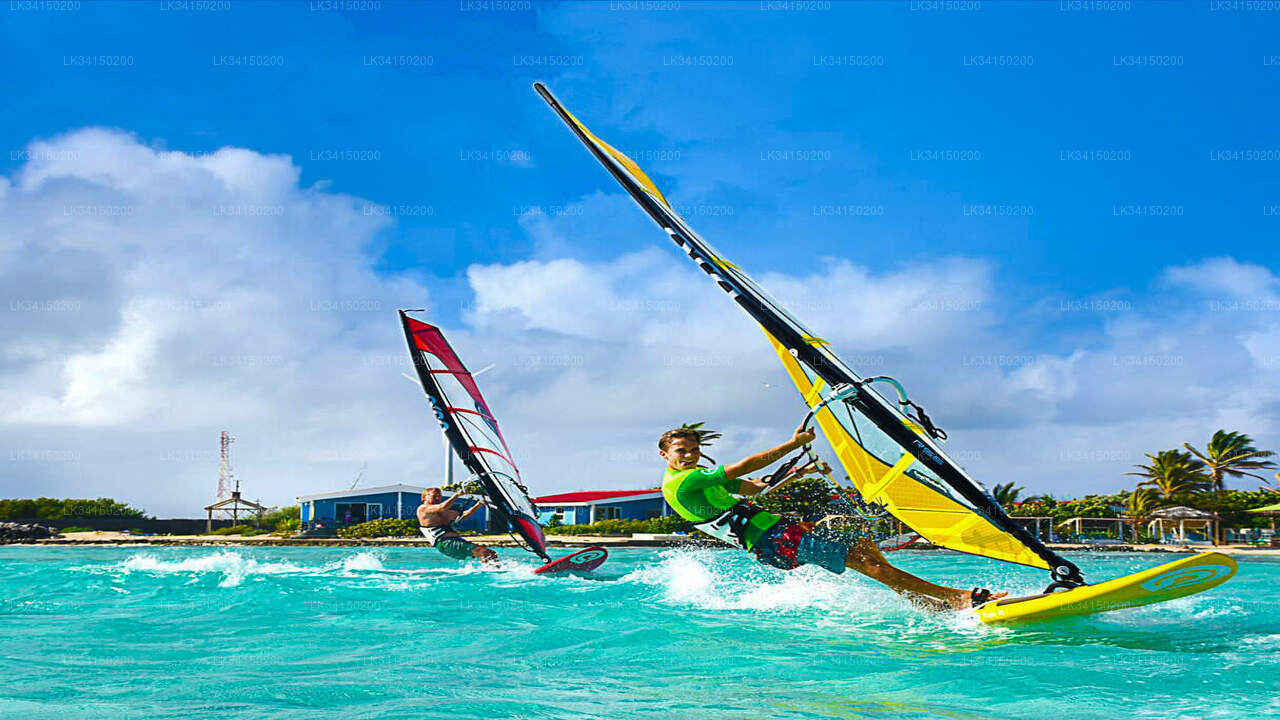
Kalpitiya sits on a narrow peninsula on Sri Lanka's northwestern coast, roughly 170 km north of Colombo, where the Indian Ocean meets the Puttalam Lagoon. Unlike the island's better-known southern resorts, it has developed slowly and deliberately — a quality that now defines its appeal. The landscape here is flat, wind-scoured, and fringed by coconut palms and mangroves, attracting a particular kind of traveller: one who comes for the water, the wildlife, and the quiet.
What makes Kalpitiya a kitesurfing destination?
The peninsula channels strong, reliable winds between May and October, when the southwest monsoon pushes steady thermals across the lagoon. Those conditions — cross-onshore winds, flat shallow water in the lagoon, and open swell on the ocean side — make Kalpitiya one of the most technically favourable kitesurfing locations in South Asia. Several established schools operate along the beach, offering instruction for complete beginners as well as coaching for advanced riders working on freestyle or wave techniques. Equipment rental is widely available, and the density of schools means standards are competitive.
The lagoon side is particularly well suited to beginners: the water is warm, waist-deep in places, and free of boat traffic during lesson windows. The ocean side offers more challenge, with choppier conditions and longer runs for experienced kiters.
When is the best time to visit Kalpitiya Beach?
Kalpitiya has two distinct seasons, each with its own draw. From May to October, the southwest monsoon delivers the consistent winds that make kitesurfing viable; skies are often overcast but conditions on the water are excellent. From November to April, the winds ease, the skies clear, and the focus shifts to marine wildlife — this is peak season for dolphin and whale watching, and the sea is generally calmer for snorkeling and diving.
| Season | Months | Main Activities |
|---|---|---|
| Wind season | May – October | Kitesurfing, windsurfing, lagoon exploration |
| Calm season | November – April | Dolphin watching, whale watching, snorkeling, diving |
Shoulder months — particularly October and November — can offer both activities in the same week, though conditions vary year to year.
Where can I see dolphins and whales near Kalpitiya?
The waters immediately off the Kalpitiya peninsula support one of the largest concentrations of spinner dolphins in Sri Lanka. During the calm season, boat tours routinely encounter pods numbering in the hundreds, often within an hour of leaving shore. Spinners are energetic animals — they leap and rotate repeatedly — and sightings at this scale are genuinely unusual by global standards.
Sperm whales and, less commonly, blue whales are also sighted in deeper offshore water between November and April. Reputable operators keep a respectful distance and do not pursue animals, which matters both for conservation and for the quality of the encounter. When booking a tour, look for operators who follow the Sri Lanka whale and dolphin watching guidelines issued by the Department of Wildlife Conservation.
What is Bar Reef, and is it worth visiting?
Bar Reef Marine Sanctuary, located roughly 25 km offshore from Kalpitiya, is one of the largest and least disturbed coral reef systems in Sri Lanka. The reef supports a wide range of hard and soft corals, and the surrounding water hosts sea turtles, reef sharks, rays, and several hundred species of fish. It is a designated marine sanctuary under Sri Lankan law, which limits extractive activities and has helped preserve the reef's health relative to more visited dive sites around the island.
Day trips by boat are available from Kalpitiya, combining snorkeling or diving with open-water dolphin watching on the way out. Visibility and conditions depend heavily on the season — the calm-season months generally offer the best underwater clarity. Dive operators based in Kalpitiya carry equipment and guide certified divers; snorkelers should confirm depth conditions before booking.
What is the Kalpitiya Lagoon, and why does it matter for eco-tourism?
The Puttalam Lagoon — the broad body of water that separates the Kalpitiya peninsula from the mainland — is edged by extensive mangrove forests. These mangroves function as nurseries for juvenile fish, buffer the coastline against erosion, and provide habitat for a range of bird species including painted storks, herons, cormorants, and several migratory waders that pass through between September and March.
Boat excursions into the mangrove channels are a quiet alternative to the more adrenaline-heavy activities on offer. Early morning departures, when bird activity peaks, are the most rewarding. The lagoon's flat, sheltered water also makes it suitable for stand-up paddleboarding and kayaking at most times of year. For those interested in similar estuarine environments elsewhere in Sri Lanka, the Madu River Safari in the southwest offers a comparable mangrove experience in a very different landscape.
What is life like in the Kalpitiya fishing community?
Fishing has been the economic backbone of Kalpitiya for generations. The village markets — most active in the early morning — give a clear picture of what the waters here produce: reef fish, prawns, crabs, and sometimes larger pelagic species. The community is predominantly Muslim, and the rhythm of daily life reflects that — mosques mark the hours, and the fish market pauses around prayer times.
Visitors who engage respectfully with the fishing village generally find it one of the more memorable parts of a Kalpitiya stay. Watching hand-line boats return at dawn, or simply sitting at a tea stall near the jetty, offers a perspective on coastal Sri Lanka that no resort pool can replicate. Dress modestly when entering village areas.
How do I get to Kalpitiya from Colombo?
Kalpitiya is approximately 170 km north of Colombo, and the journey takes roughly three to four hours by road depending on traffic and route. The most straightforward approach is via Negombo and then north along the coast road through Chilaw and Puttalam, turning onto the peninsula at Kalpitiya junction. Public buses run the route but involve at least one change and take considerably longer. Private transfers are the most practical option for most visitors arriving at Bandaranaike International Airport.
The nearby town of Iranawila sits on the same coastal corridor and is sometimes combined with Kalpitiya on a wider northwest Sri Lanka itinerary. Wilpattu National Park, Sri Lanka's largest national park, is also within reach for a day trip — the park entrance is around 60–70 km from Kalpitiya.
What accommodation options are available at Kalpitiya?
Kalpitiya's accommodation reflects its character: small-scale, often owner-operated, and positioned close to the water. Eco-lodges and beach cabanas are the dominant format, ranging from basic surf-camp style setups to more comfortable boutique properties with private beach access. Several properties work actively with conservation projects — turtle monitoring, mangrove planting, and responsible dolphin tour certification are examples — and are transparent about their practices.
There are no large international hotel chains on the peninsula as of this writing, which keeps the atmosphere low-key. Book well in advance for the peak calm season (December to February), when accommodation at the better properties fills quickly.
What else can I do at Kalpitiya beyond water sports?
- Birdwatching: The lagoon mangroves and adjacent scrubland attract resident and migratory species. A guide familiar with the area improves sightings considerably.
- Windsurfing: Conditions suit windsurfing alongside kitesurfing, and some schools offer tuition in both.
- Cycling: The flat peninsula roads are easy to navigate by bicycle, and several lodges offer rentals. The ride to the lighthouse at the peninsula's tip is straightforward.
- Sunset walks: The western-facing beaches offer unobstructed views over the Indian Ocean at dusk — a simple pleasure that most visitors rate highly.
- Day trips to Wilpattu National Park: Sri Lanka's oldest and largest national park is accessible as a long day trip, offering leopard, sloth bear, and elephant sightings in a forested landscape quite different from the coast.
Nearby places
12 places within about 25 km, nearest first.
- Kalpitiya Fortunder 1 km
- Kalpitiya Cityunder 1 km
- Coconut Pointunder 1 km
- Dolphinsunder 1 km
- Bar Tours1 km
- Manavari Kovil2 km
- Ullackalie Lagoon3 km
- Aruwakkalu Archaeological Reserve7 km
- Baththalangunduwa8 km
- Alankuda Beach10 km
- St. Anne's Reef13 km
- Bar Reef16 km
Related reading
2 pages on closely related subjects.